Chicken Pasture
Chicken pasture
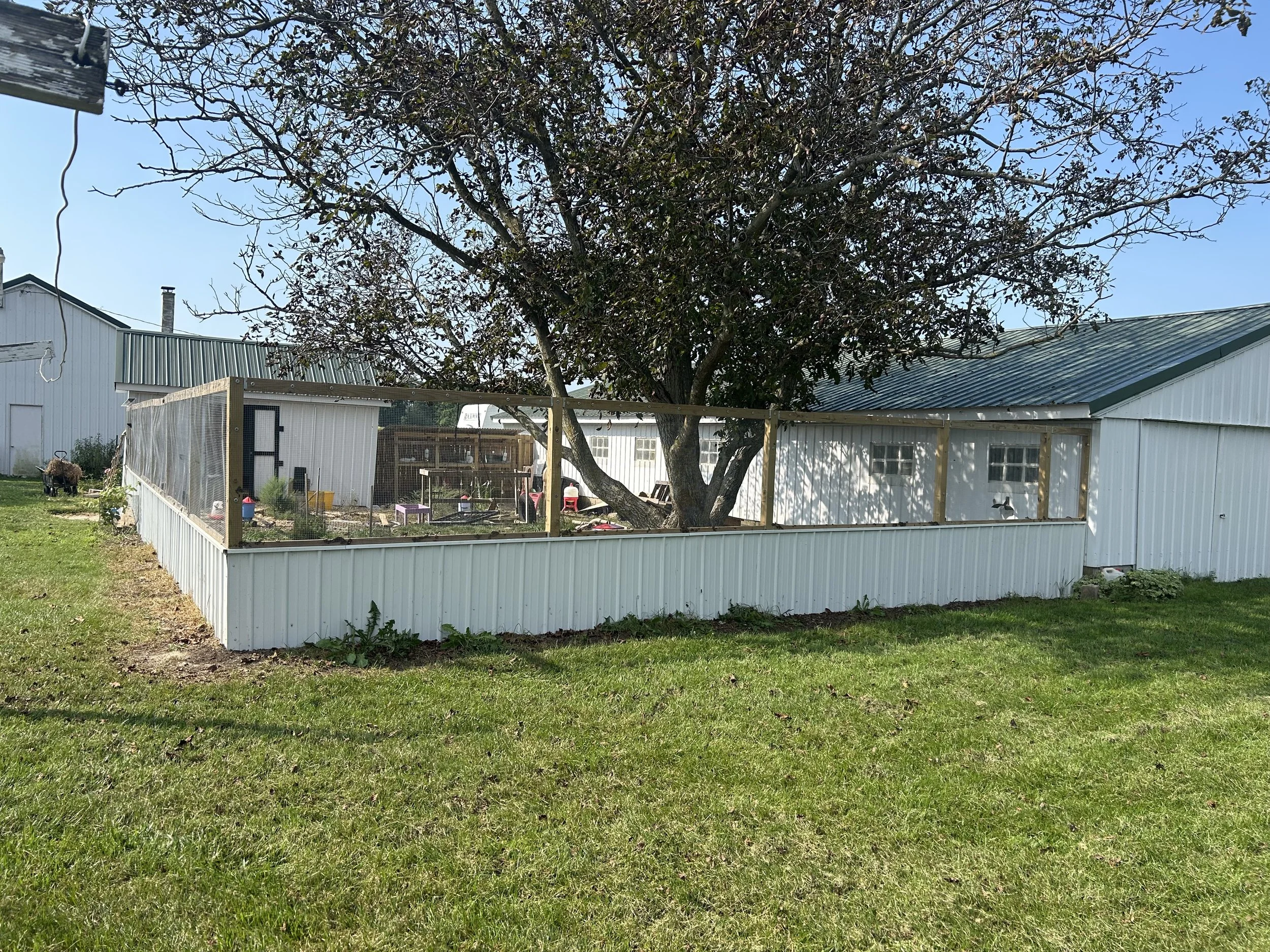
Last week, we shared the conversion of our garden shed turned chicken house. Today it's time for the final reveal of their outdoor run!
The entire enclosed area is approximately 1500 sq ft. The house can hold up to 50 chickens (though we currently only have 30). At full capacity they will have about 30sq ft per bird in the yard. We wanted to give them a large outdoor space primarily because our golden retriever and local predators make it impractical to free range them, but we also wanted a space where we could freely interact with them.
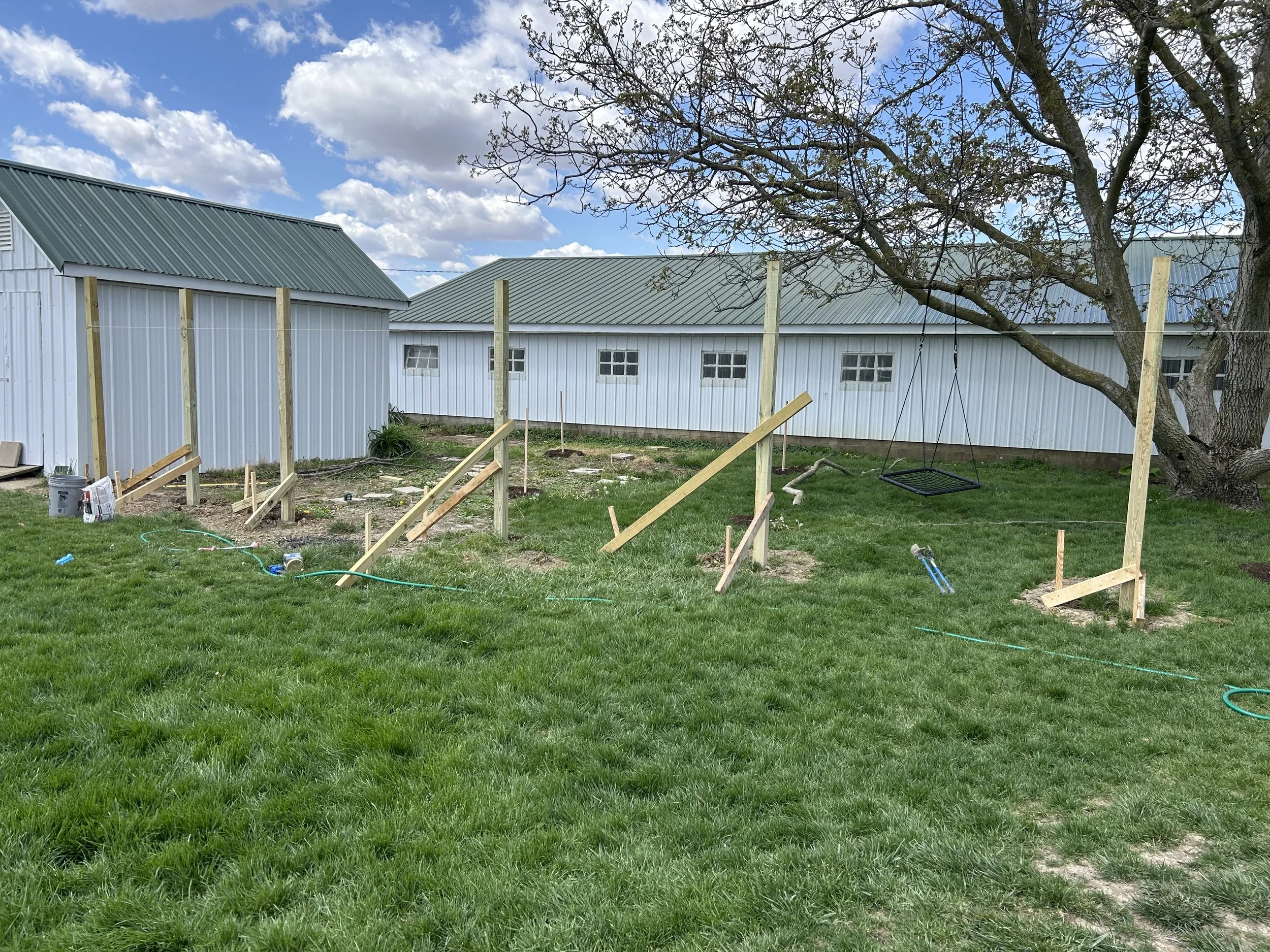
We also needed the fence to be sturdy enough to withstand the dog jumping against it, tall enough to prevent the chickens from flying over, and visually appealing enough to be the first thing you see on arrival at the farm. We applied a few things we learned from the old outdoor run area, such as bringing the bottom panels up high enough that the dog can’t simply look right over top of them and terrorize the chickens inside.
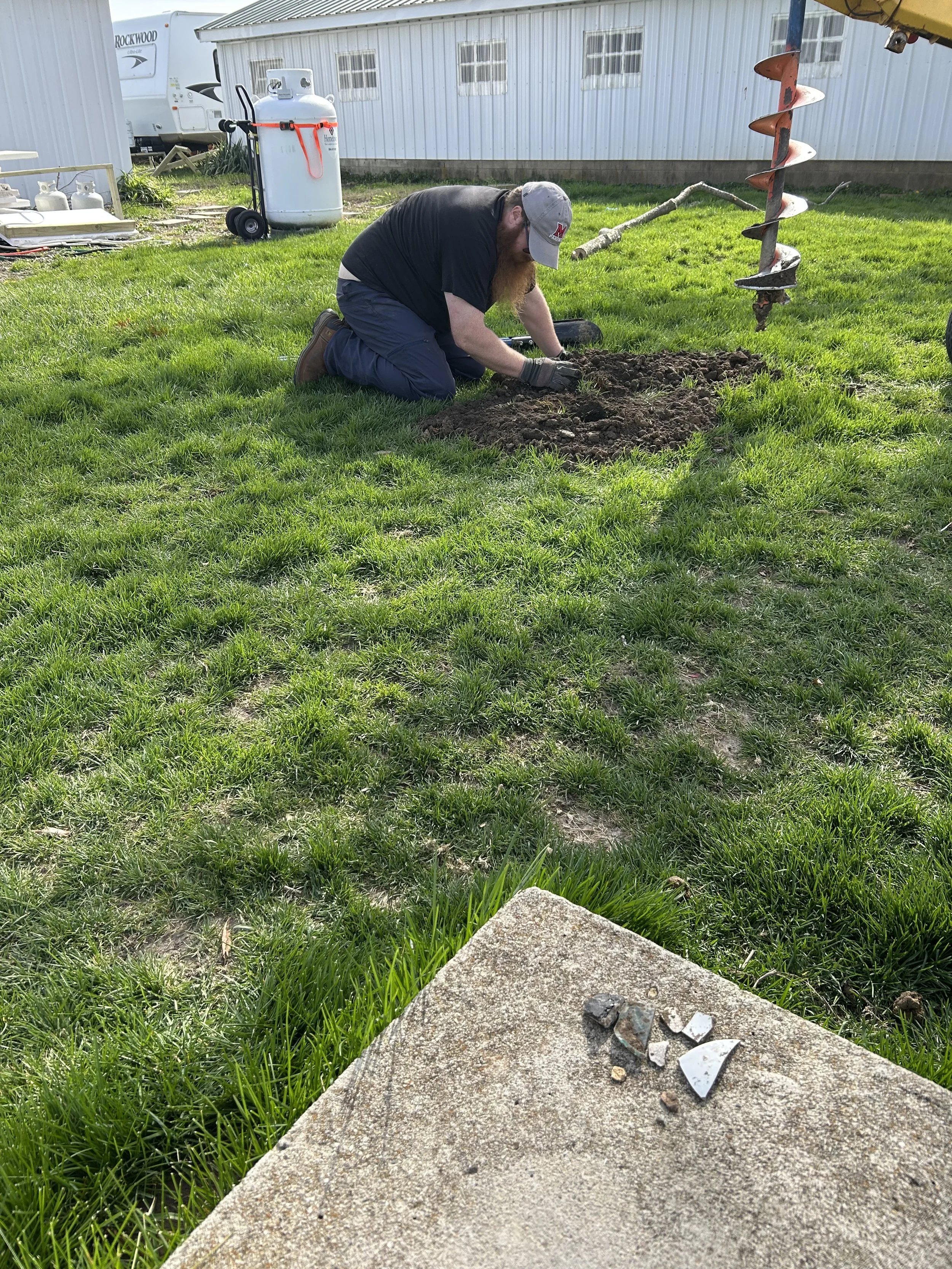
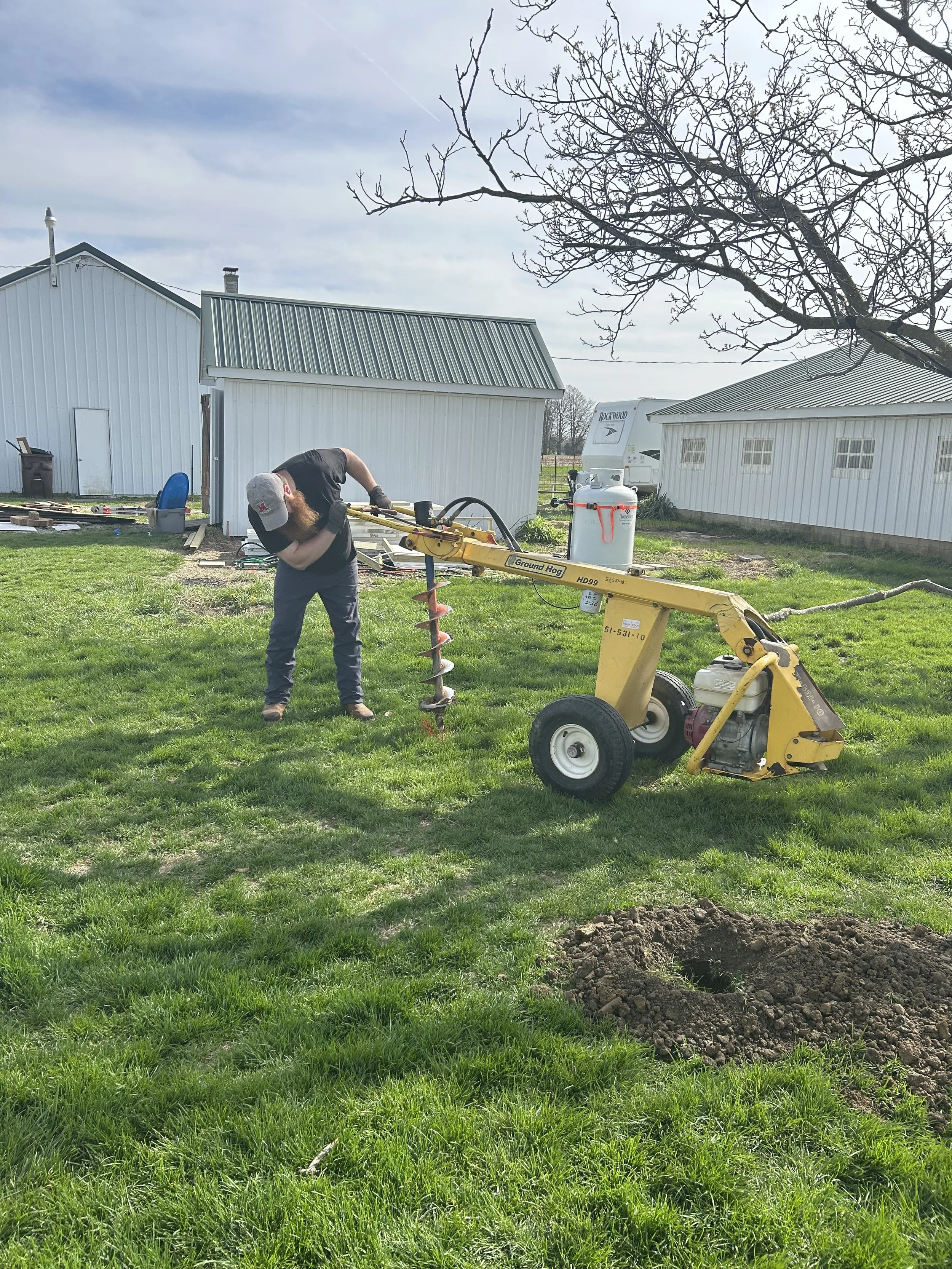
Setting the posts & adding supports:
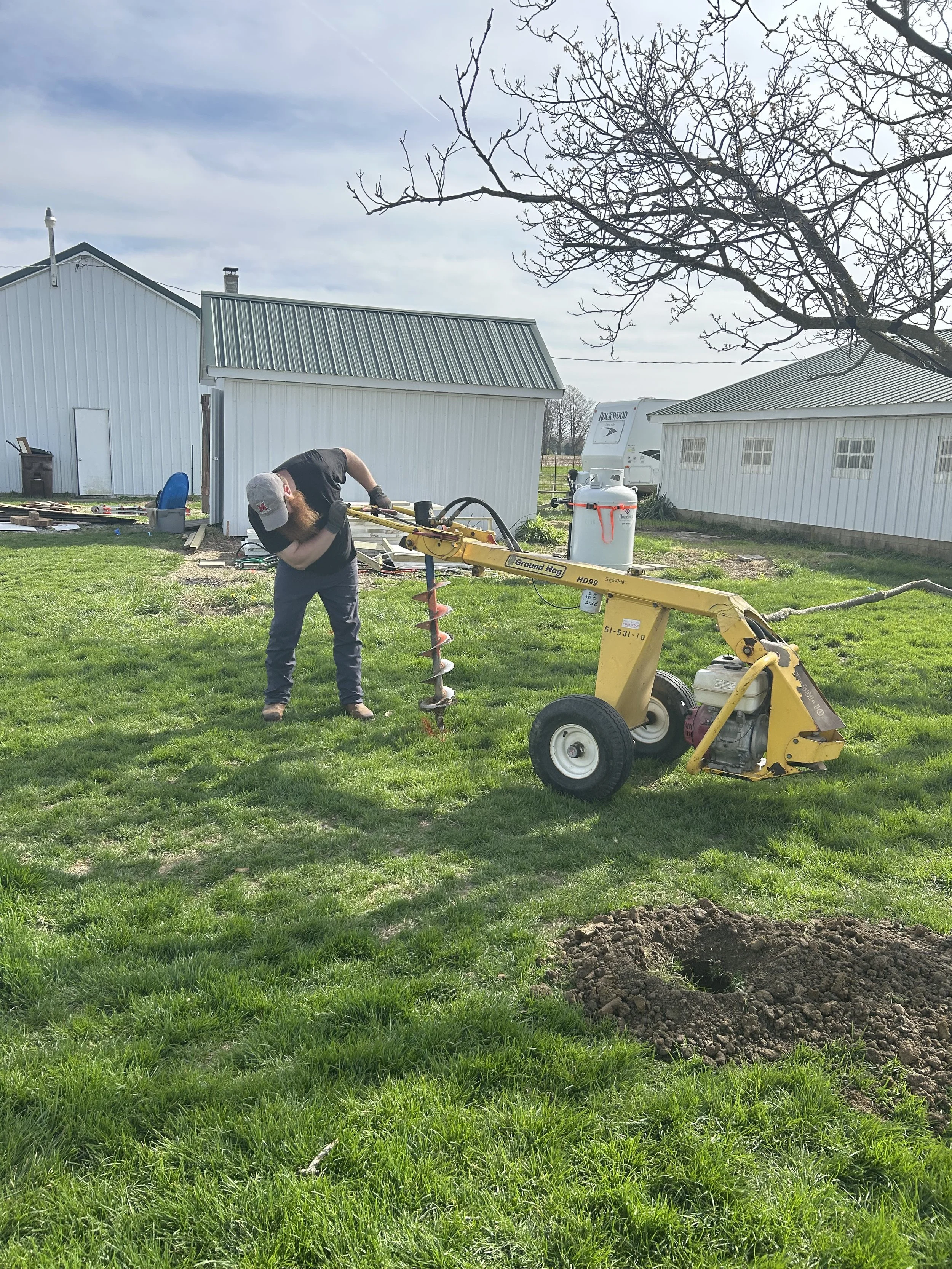
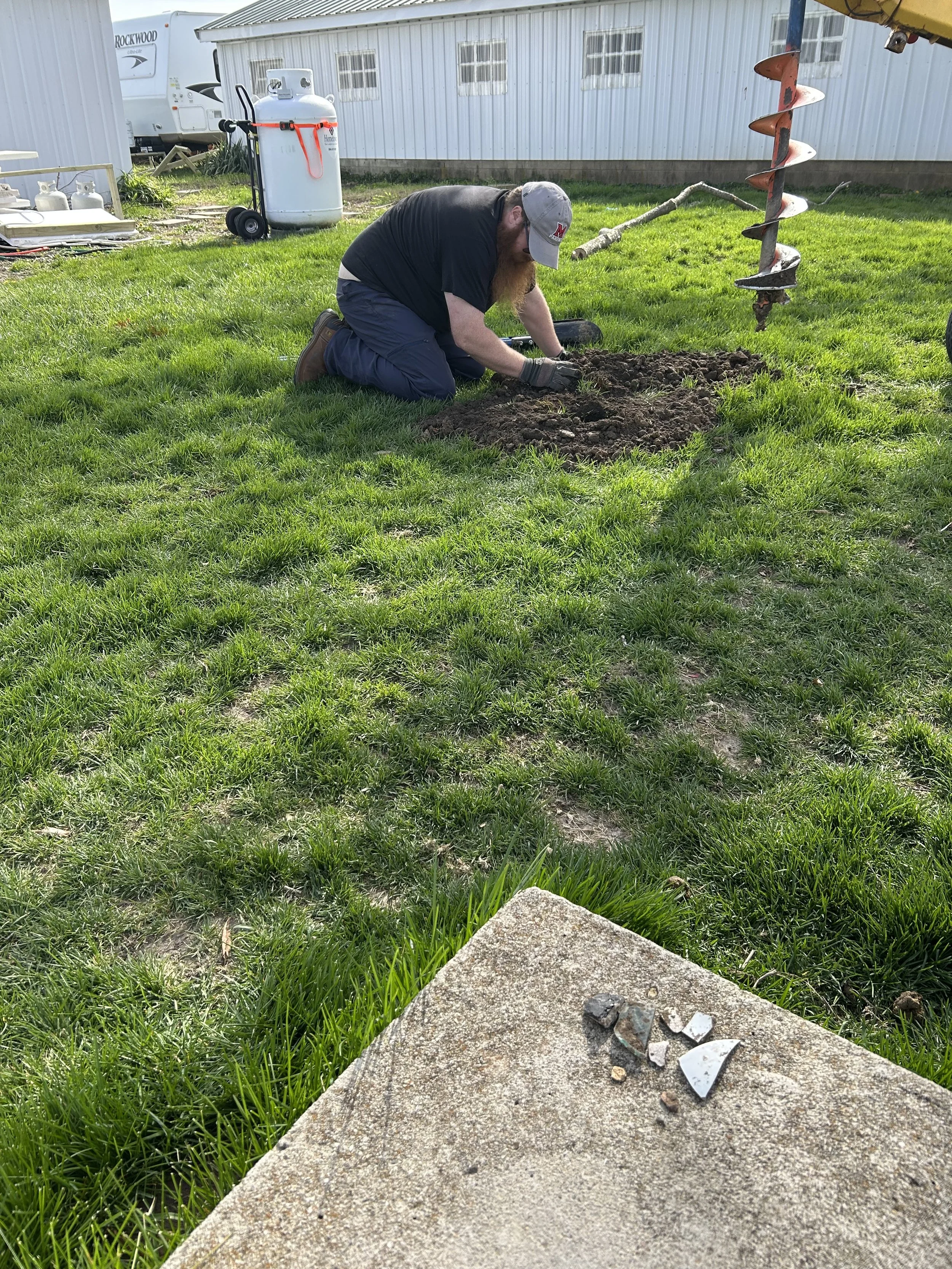
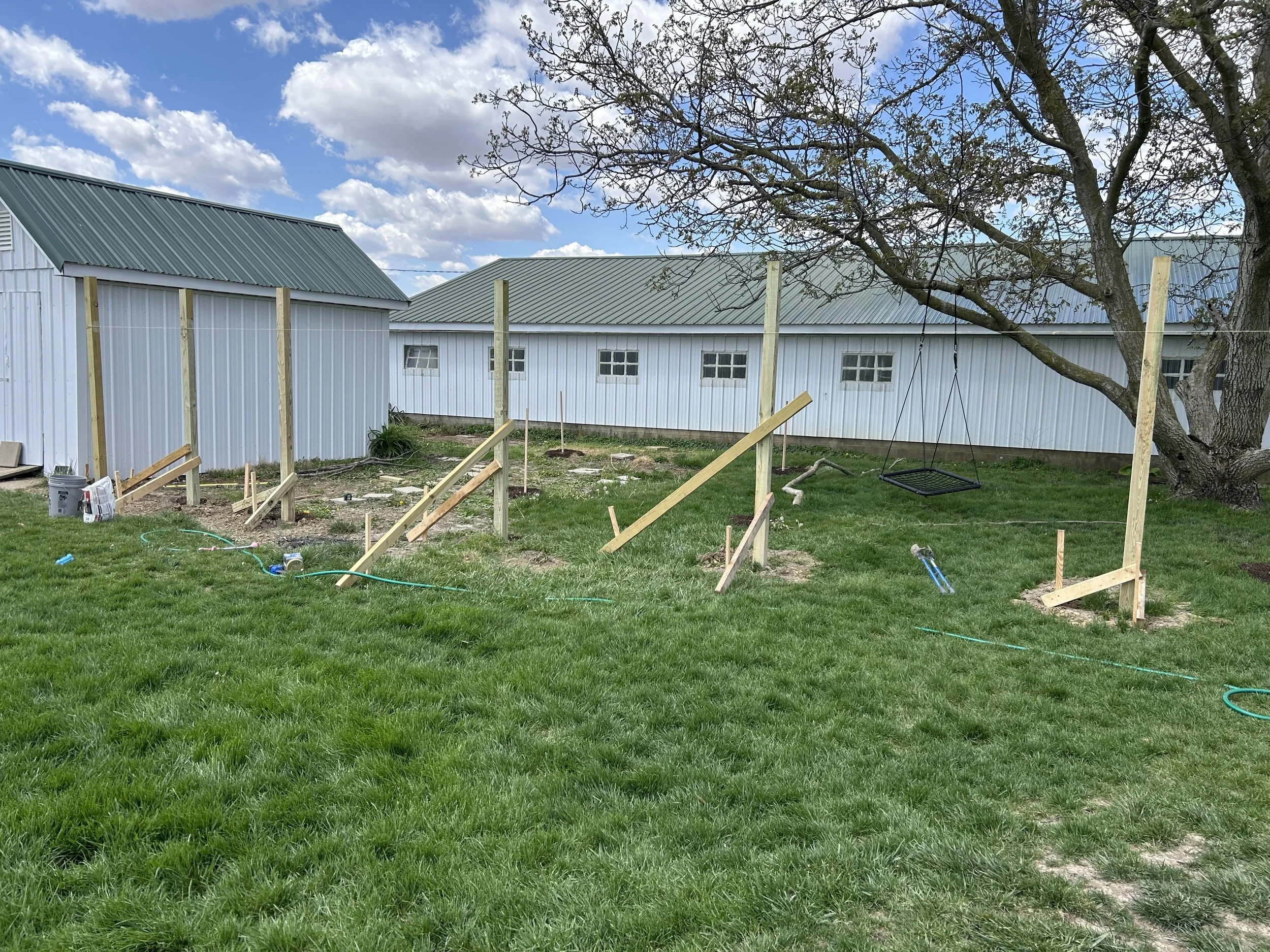
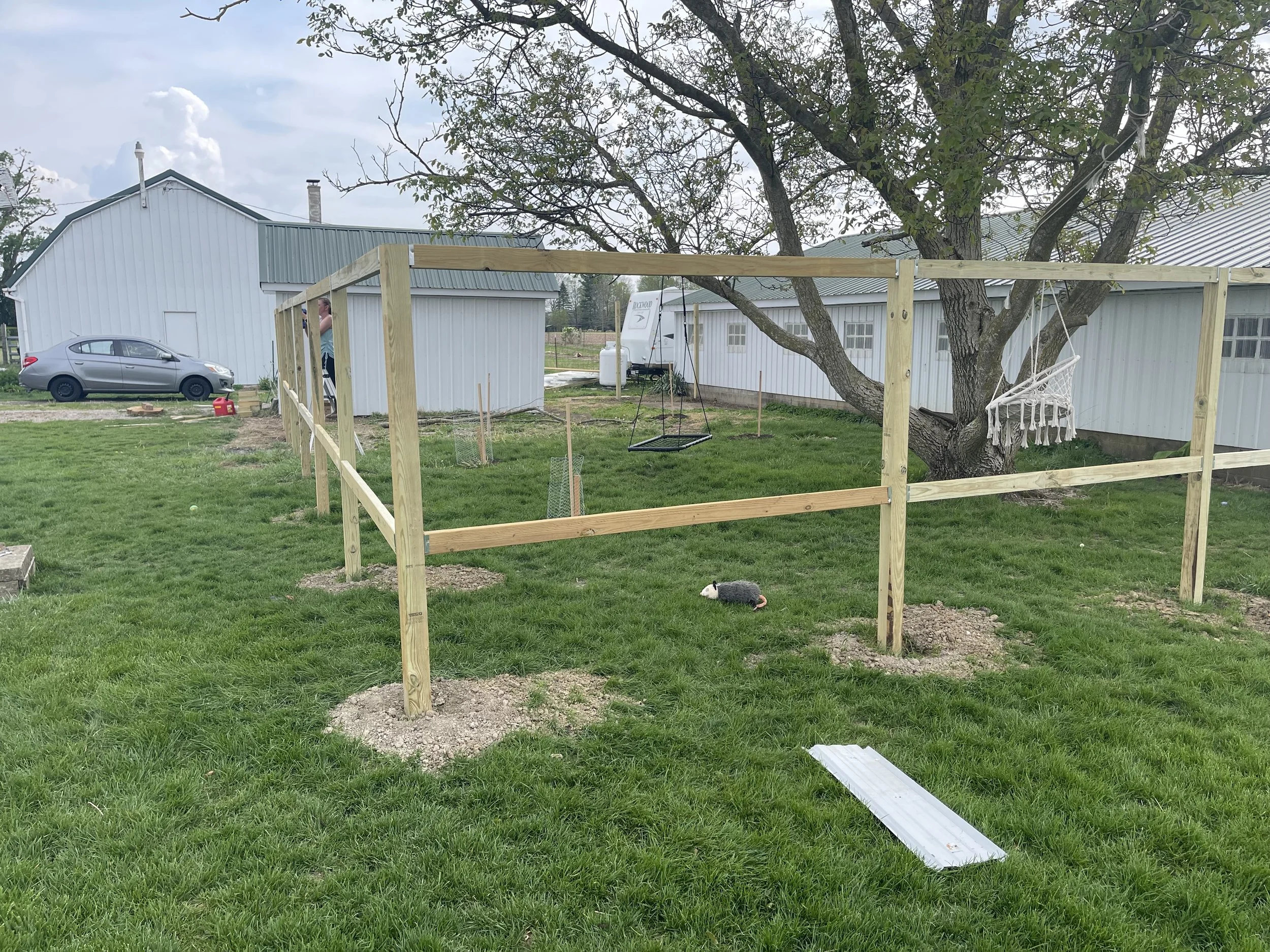
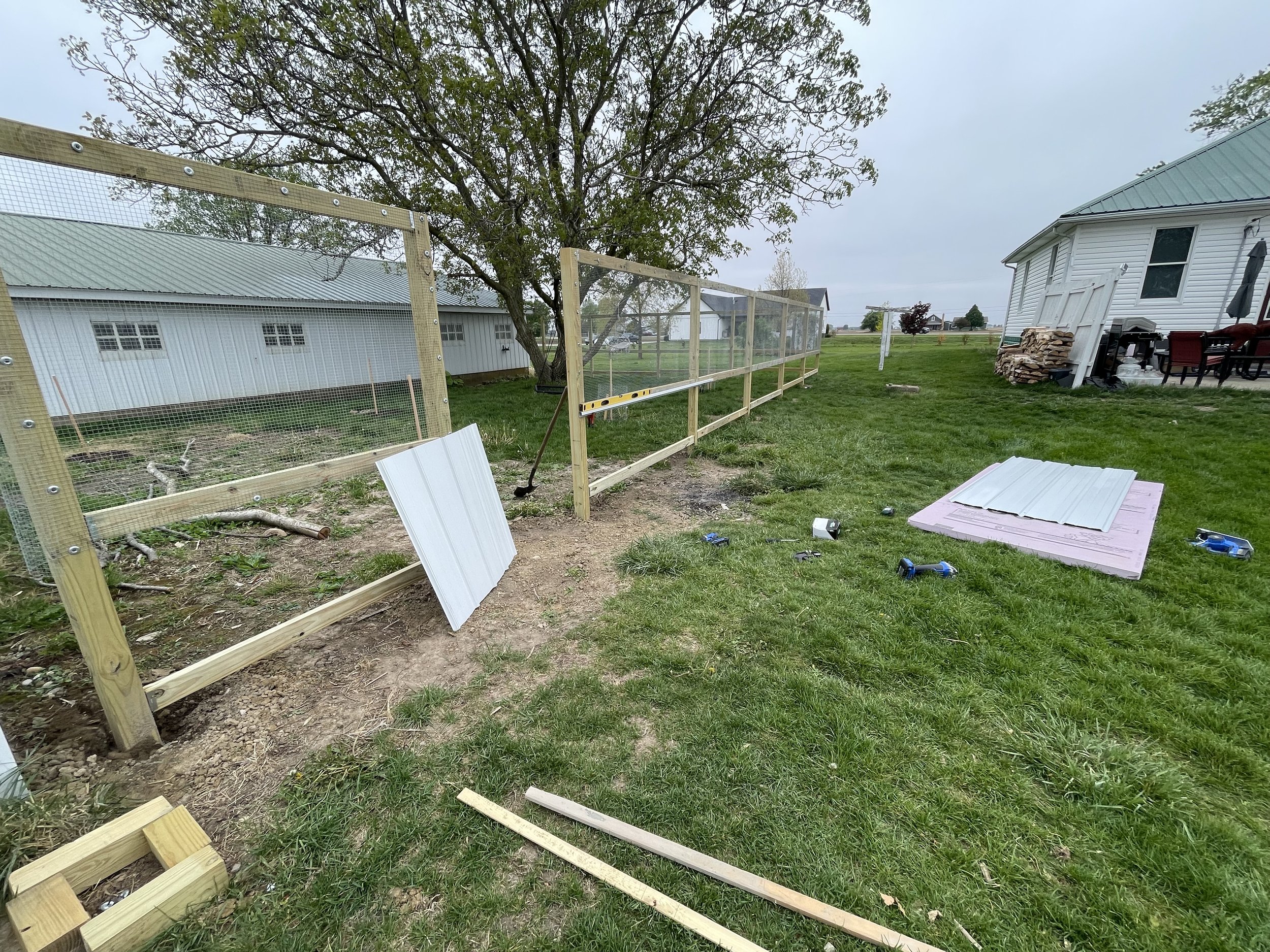
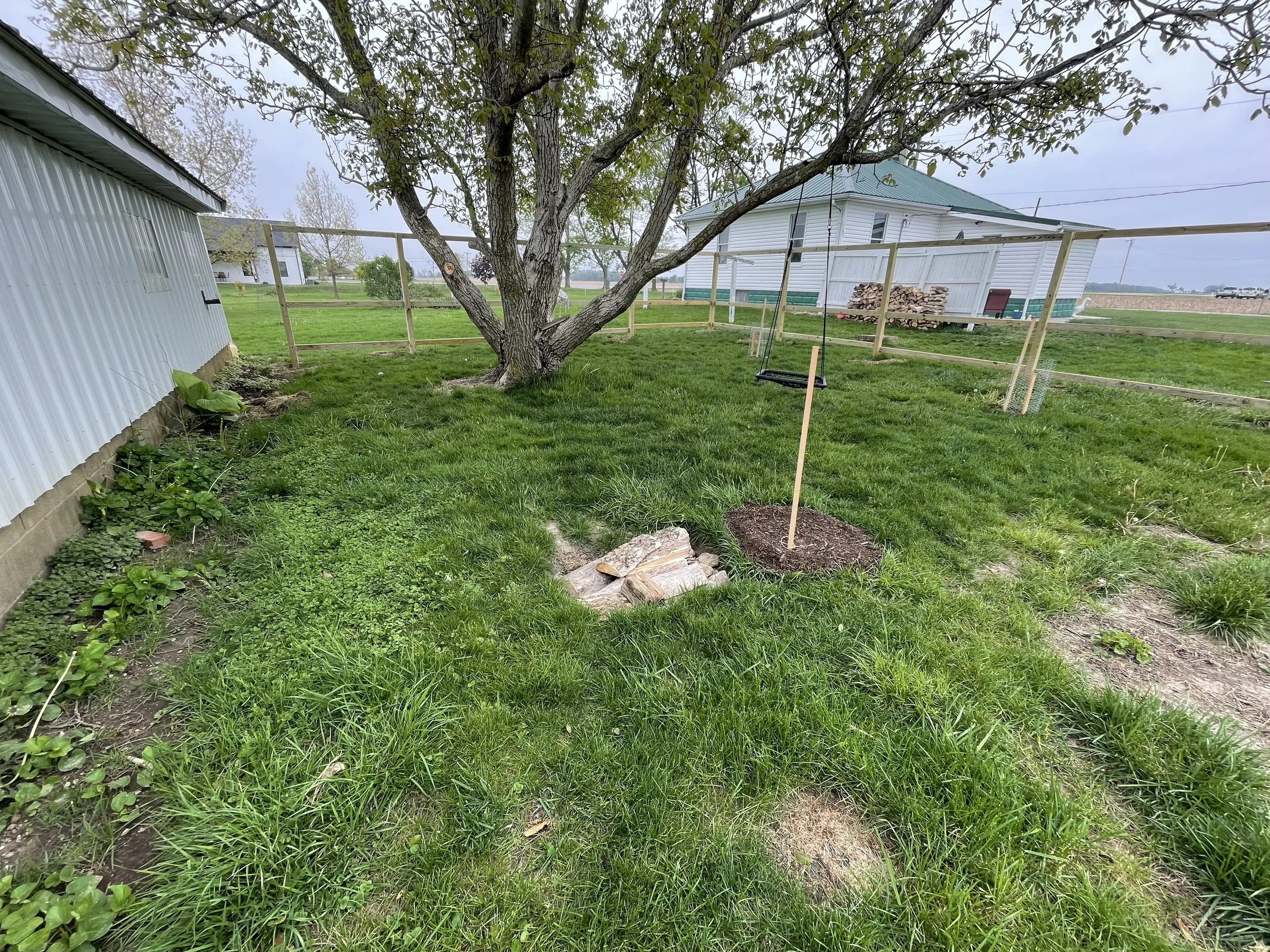
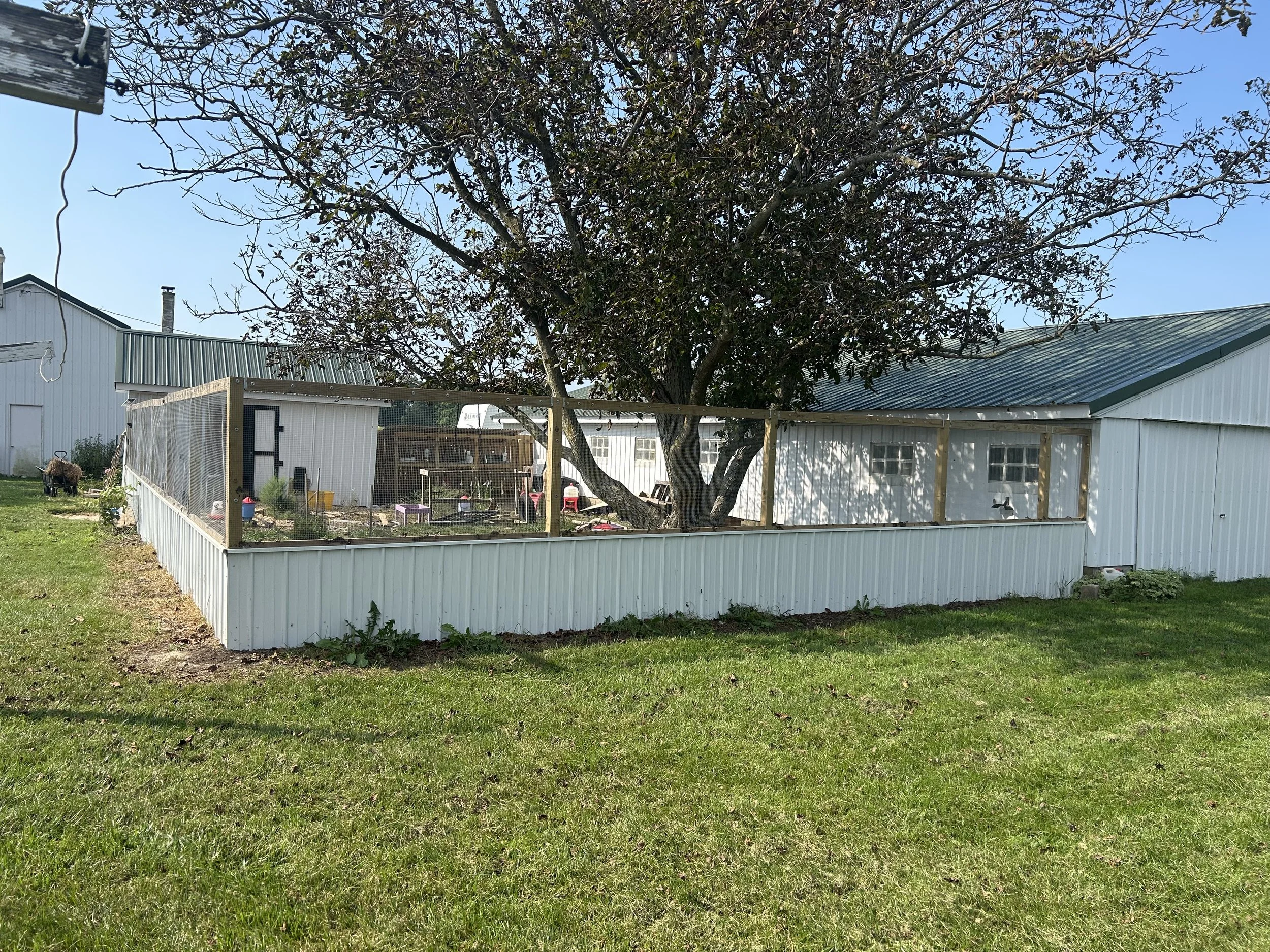
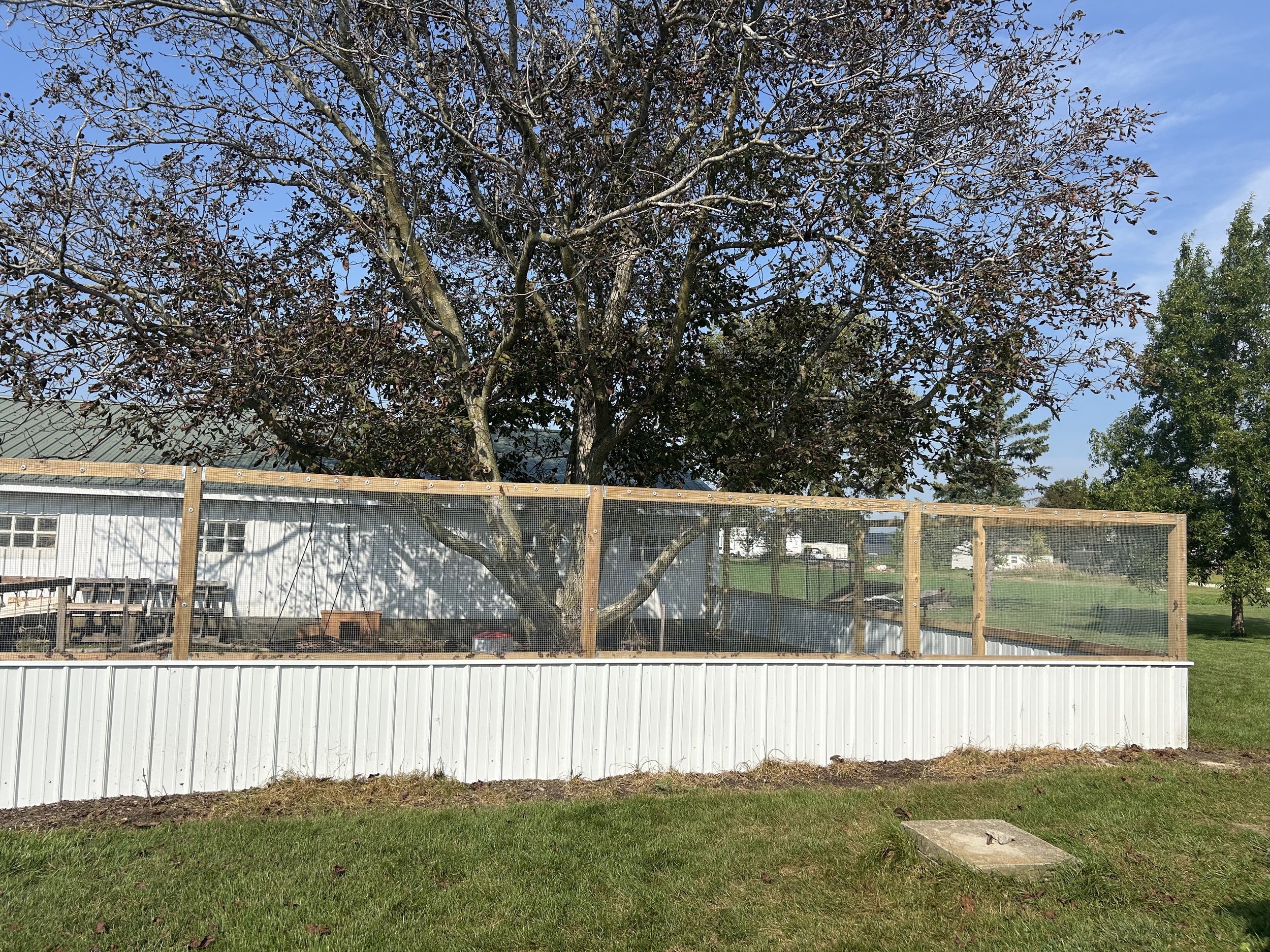
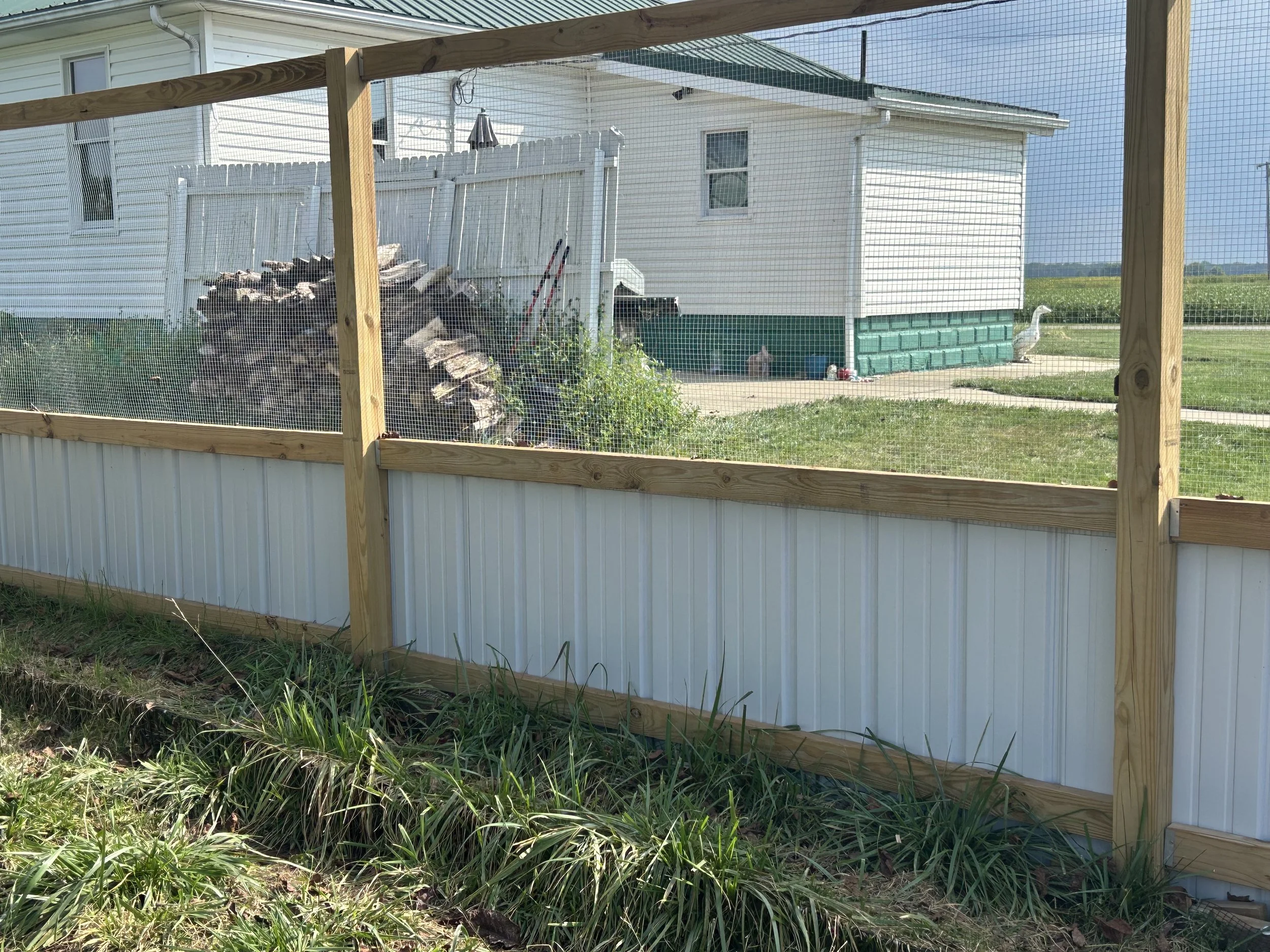
For the short section between the shed and the barn, we chose to do a privacy fence. Our children are looking forward to painting a mural here eventually and we’ll be able to do a raised bed garden in the alcove under it. But for now it separates the spaces cleanly.
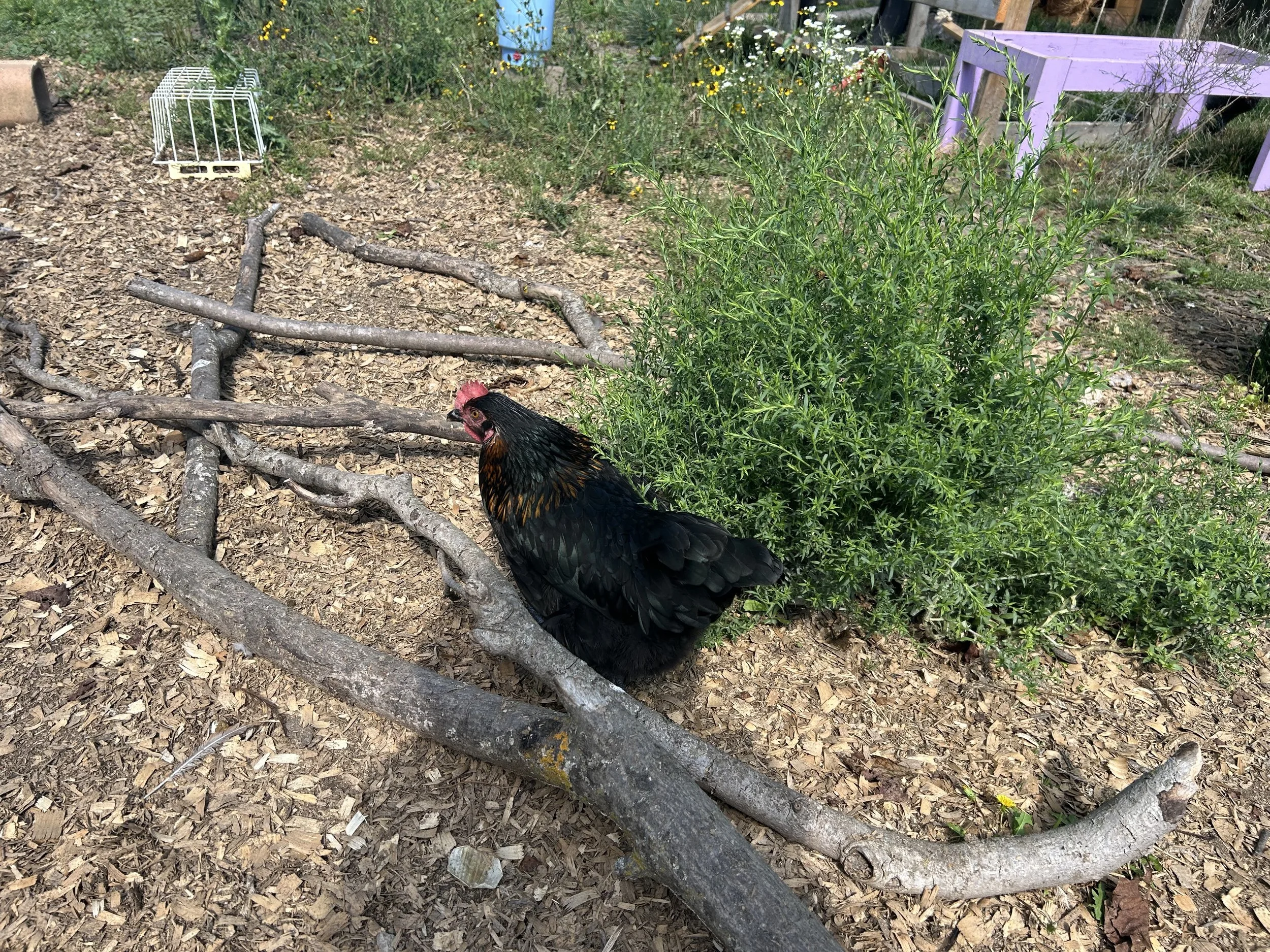
On the inside of the run, we brought all kinds of scraps in and made good use of them to provide enrichment.
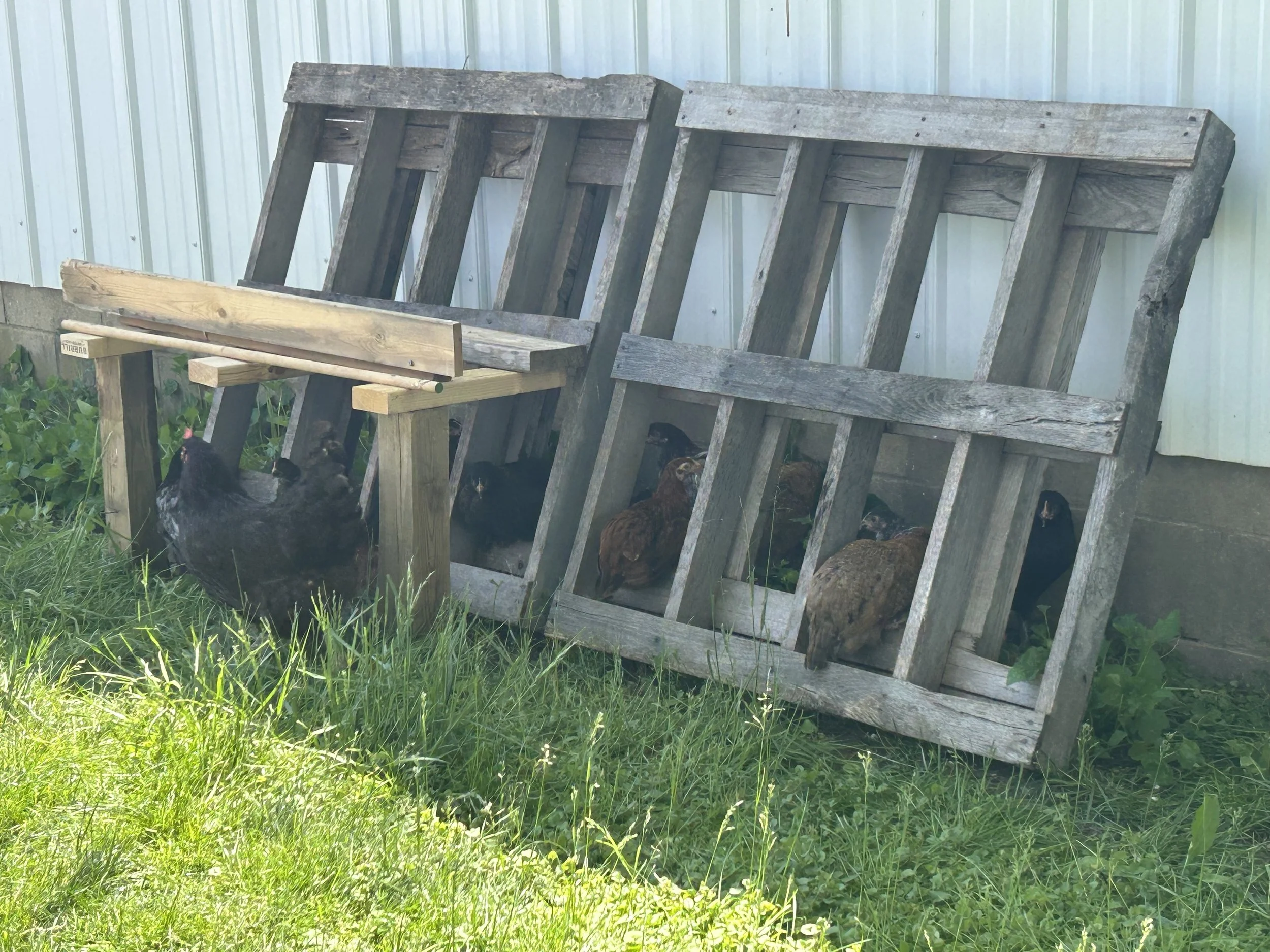
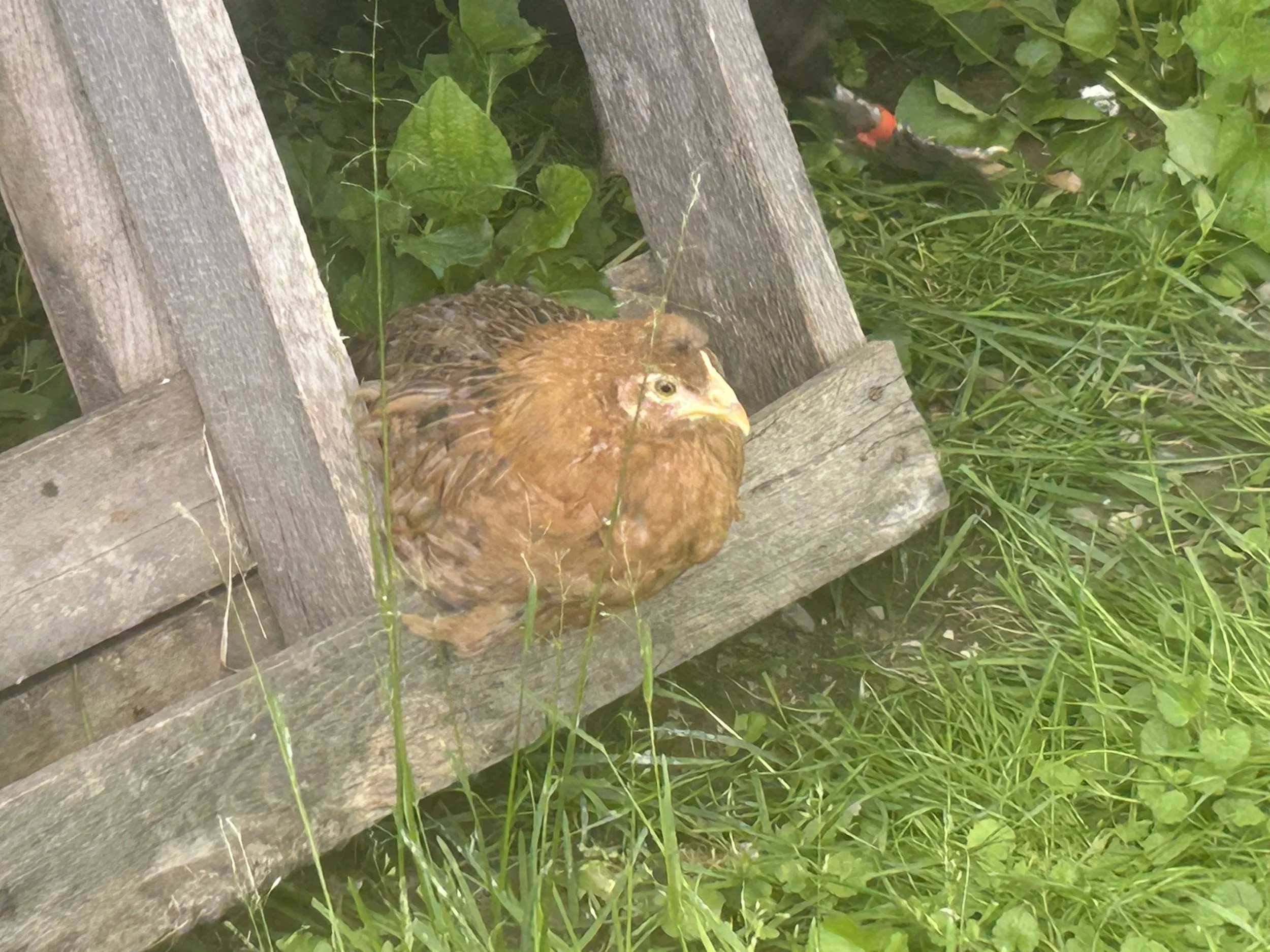
Old pallets create a bit of shelter, a small roost area, and some climbing adventures. The younger ladies especially seem to love this spot.
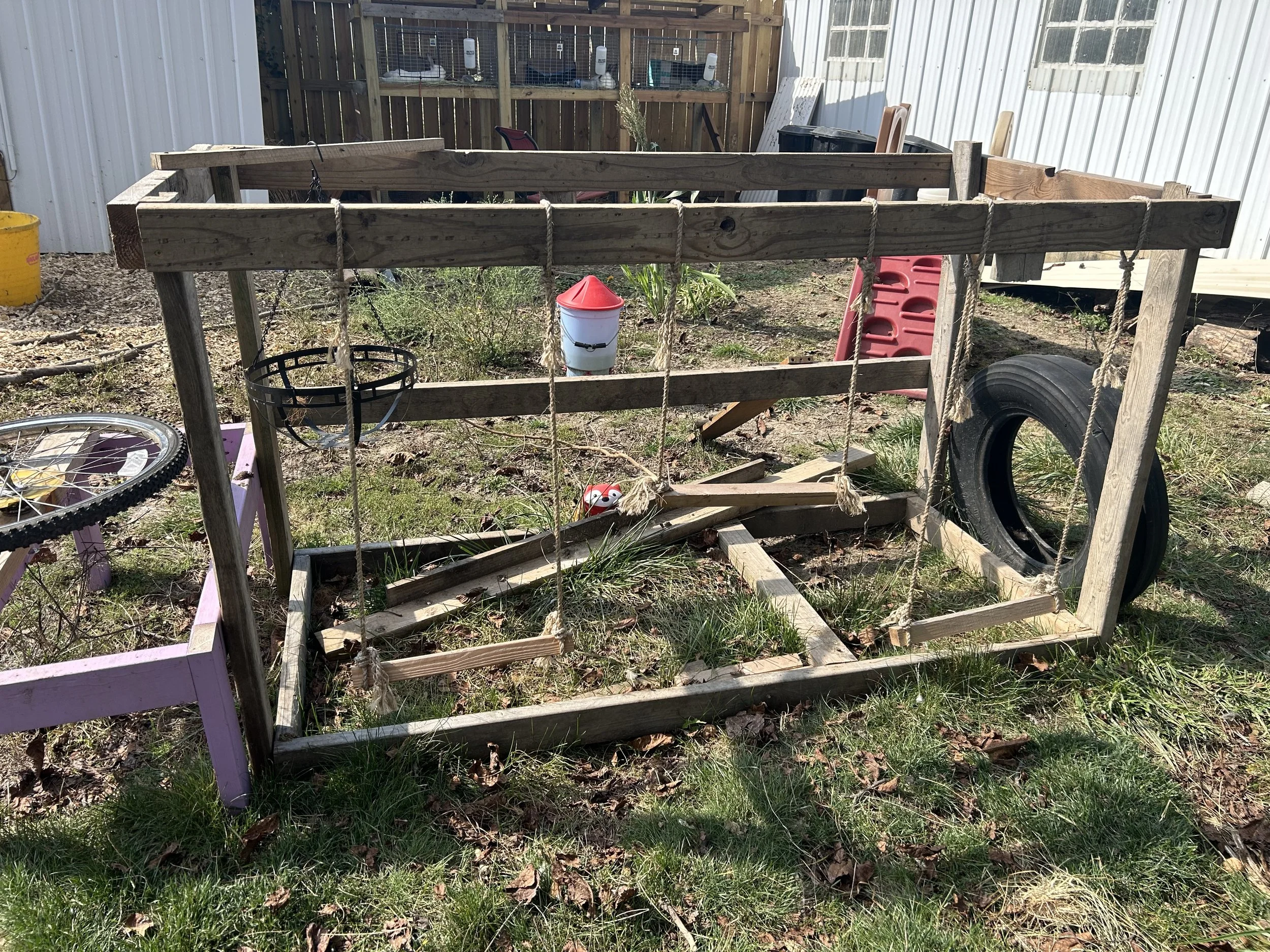
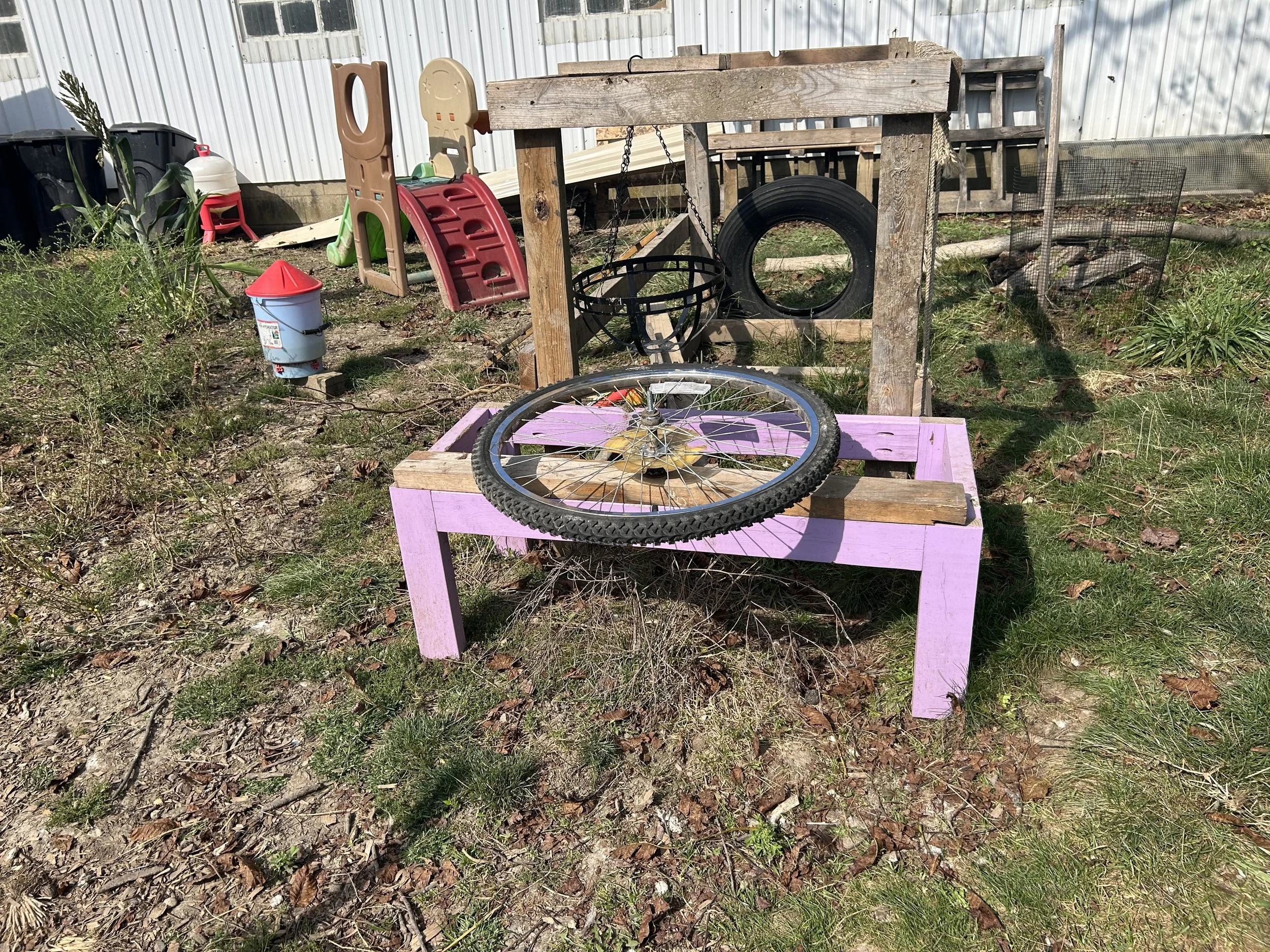
The door to our old coop is being used as a grazing box and the base for a playground. So far they are not the slightest bit interested in the swings but they regularly roost on both levels.
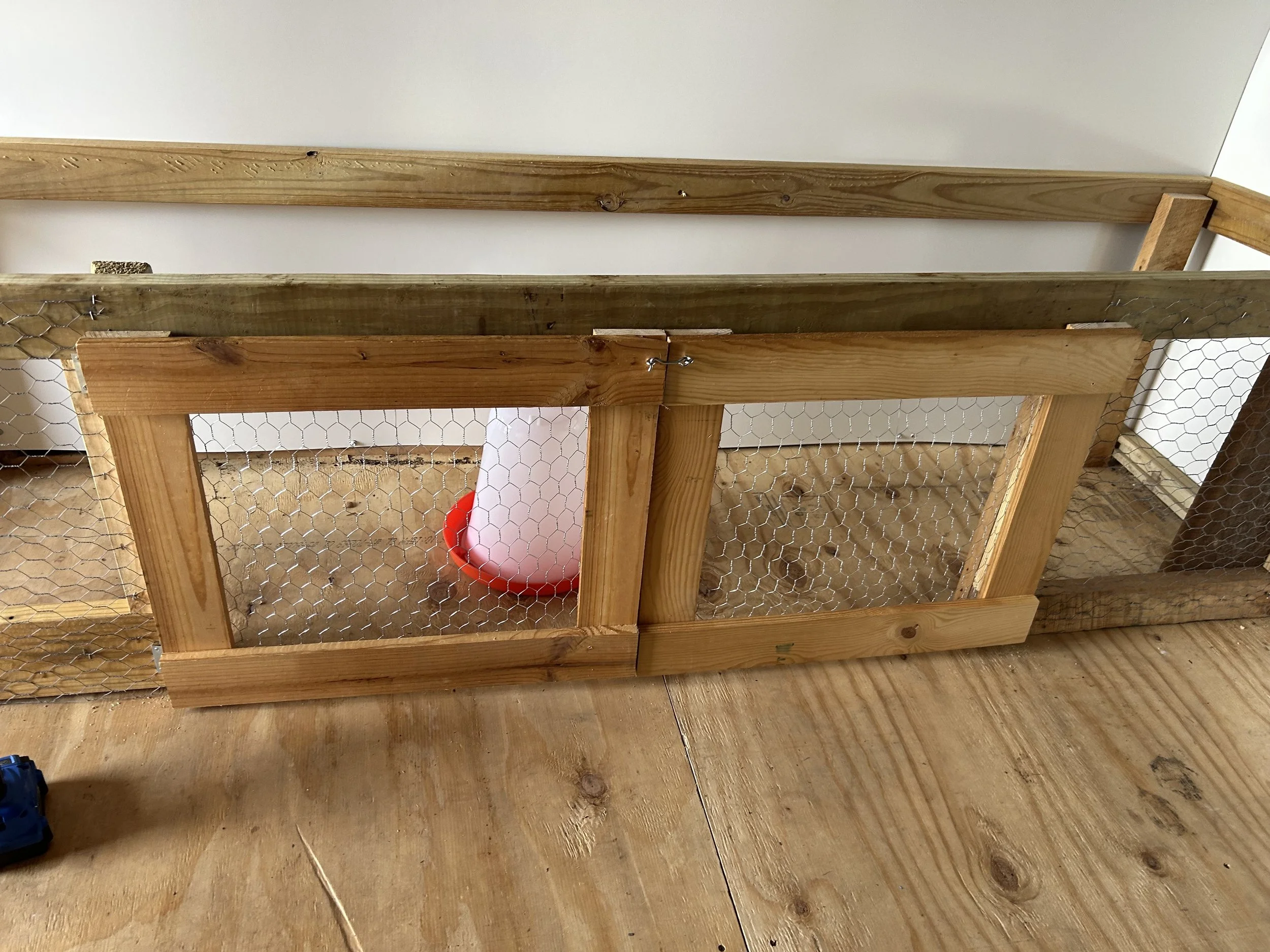
Re-used 2×4s (part of the rabbit enclosure at our old home) were used in conjunction with no-dig panels to create grazing boxes and a secure border all the way around the outside edges. Grass, leftover vegetable seeds, and other forage crops can be grown in these boxes, allowing the chickens to eat what pokes through while protecting the roots and shoots from their scratching.
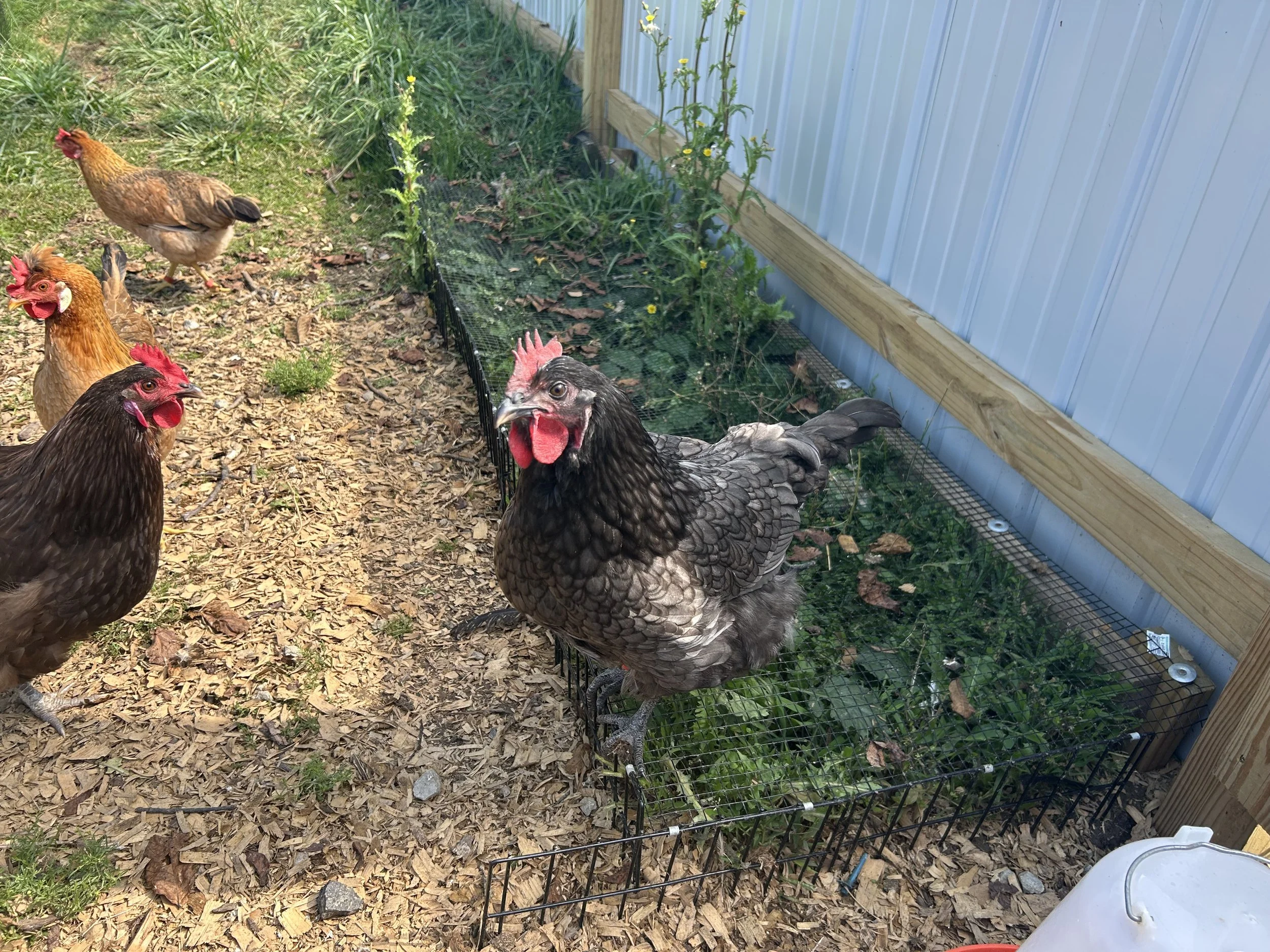
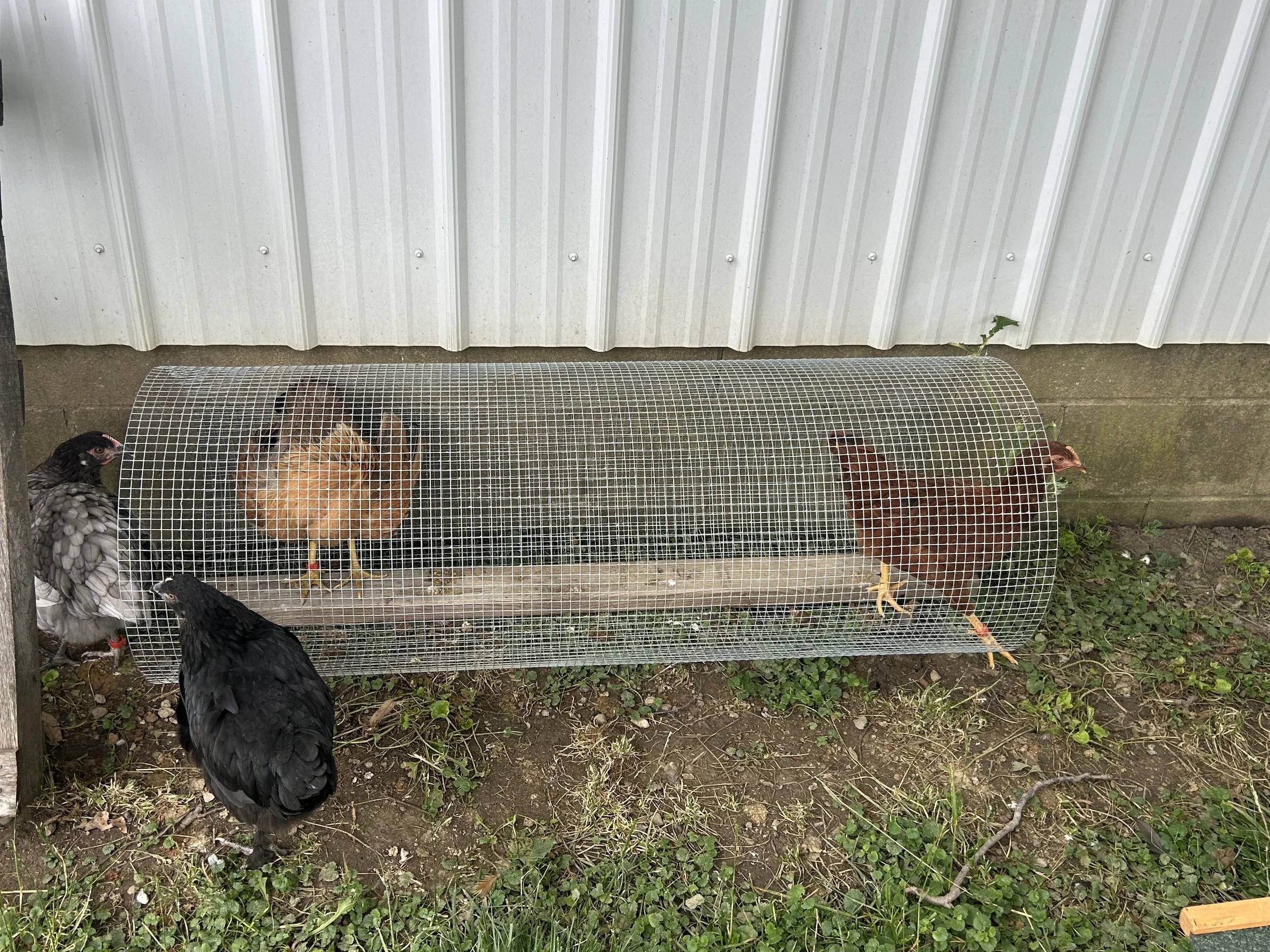
A section of hardware cloth (also from our old rabbit enclosure) makes a fun tunnel.
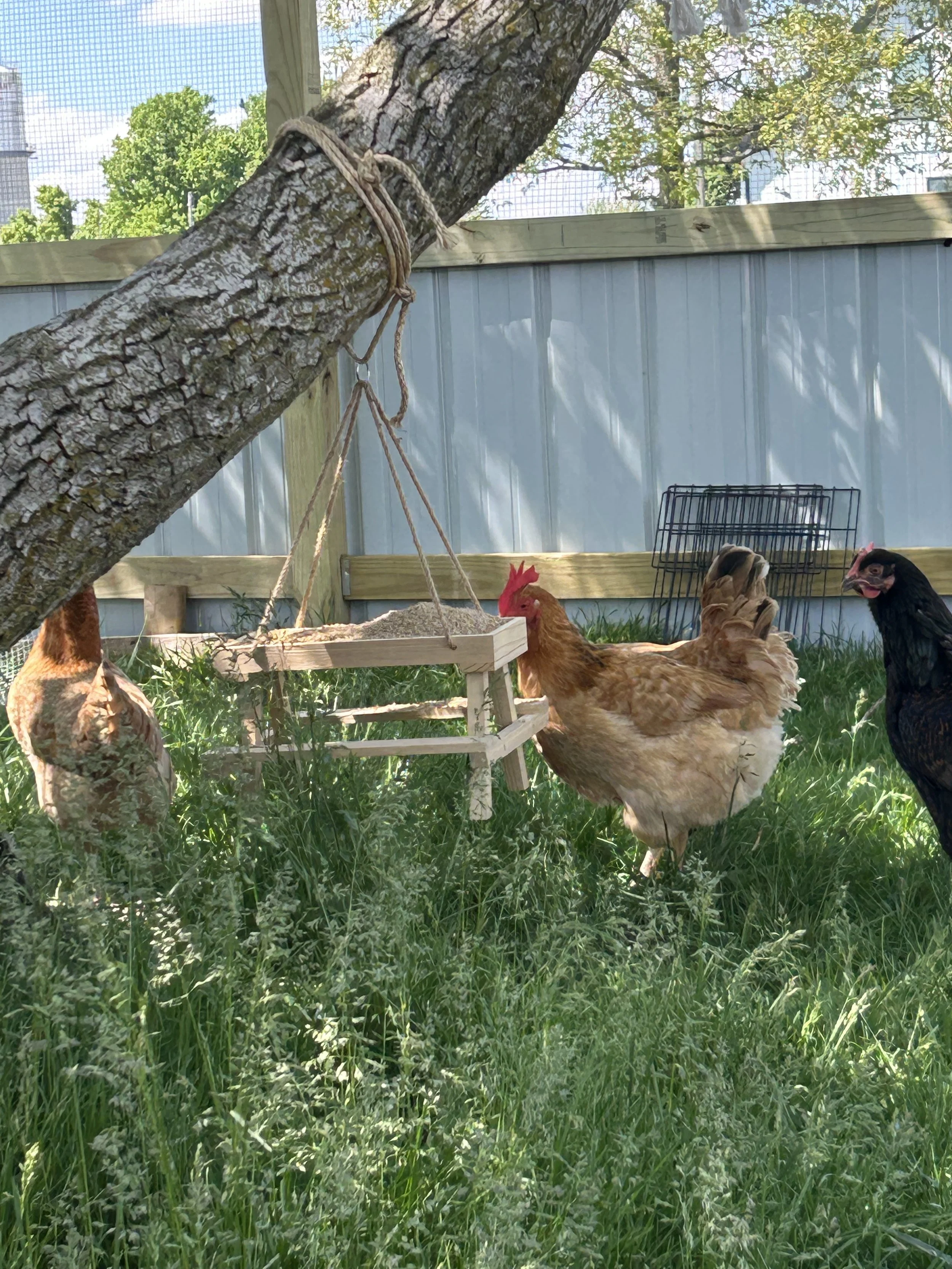
Bird feeders create fun treat stations.
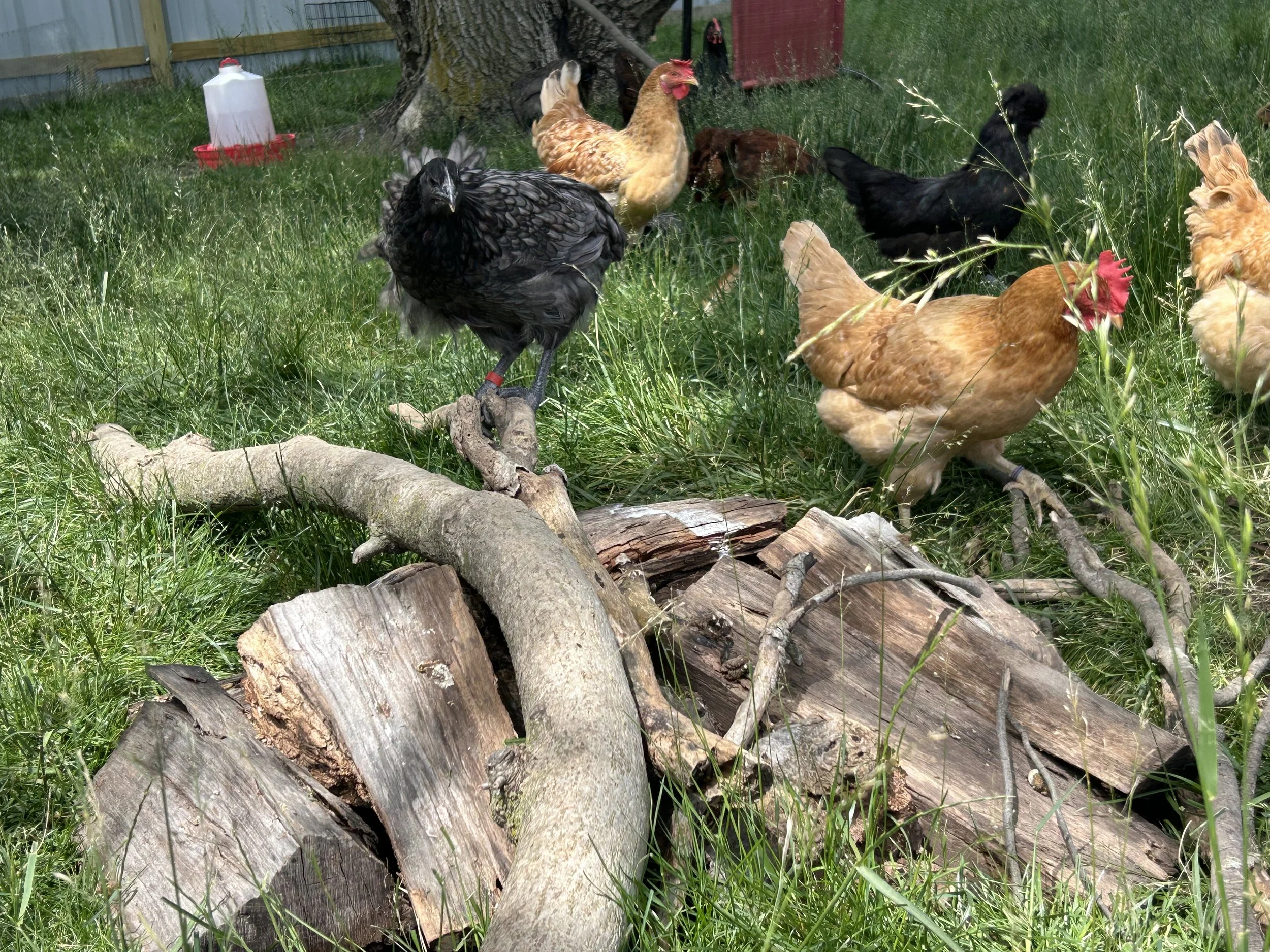
Old wood creates a climbing structure and an invitation for insects.
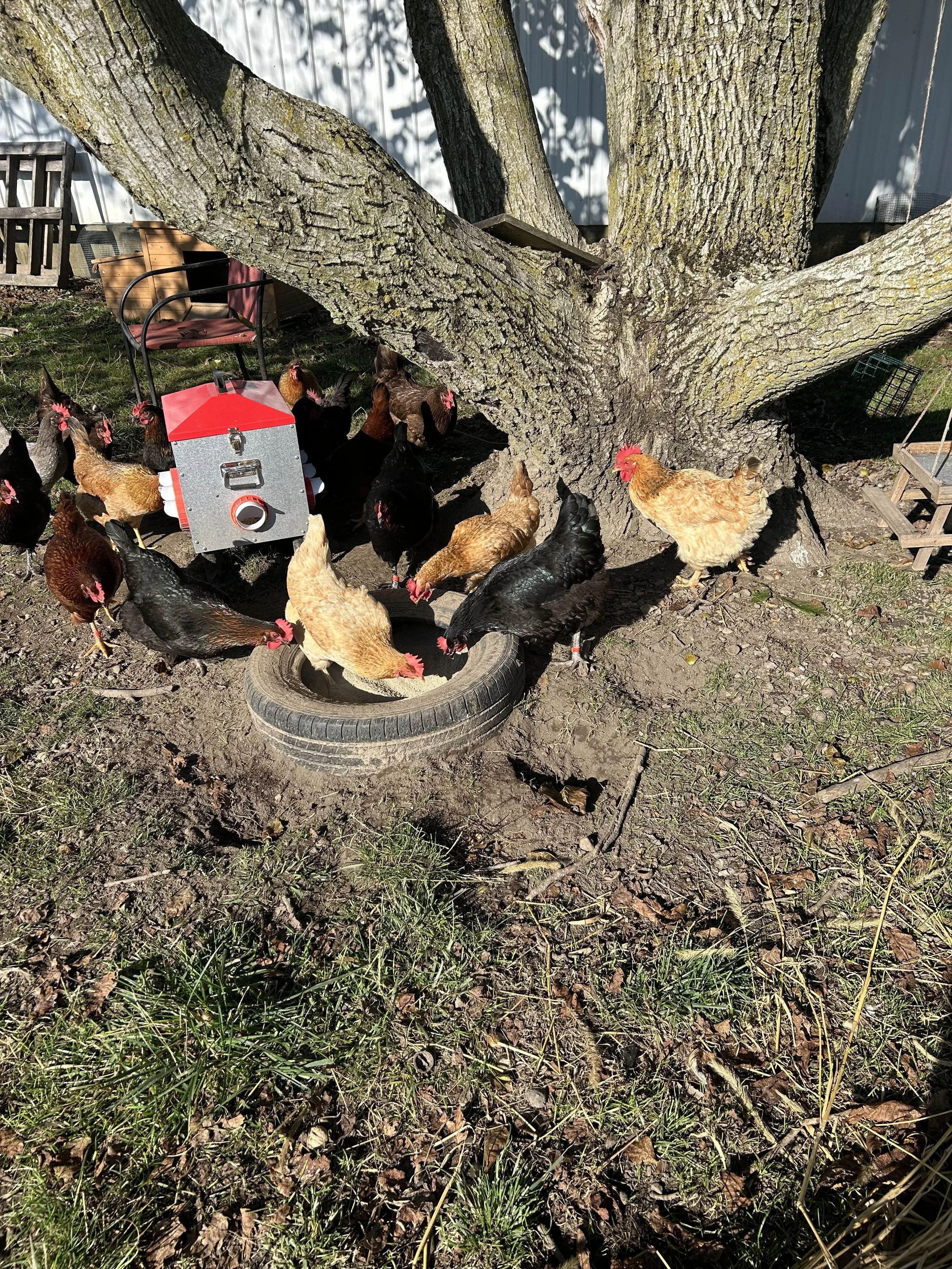
An old tire contains the dust bath.
We left one of the human swings in the tree to give us a place to sit when we visit. A chair also stays here to allow us to comfortably hang with the birds.
Small structures provide cover and quiet places to rest as well as things to climb and roost.
Serviceberry saplings will eventually mature to create a canopy and provide seasonal forage. Herbs are also seeded around these and wire cages prevent the young plants from being pecked and scratched to death.
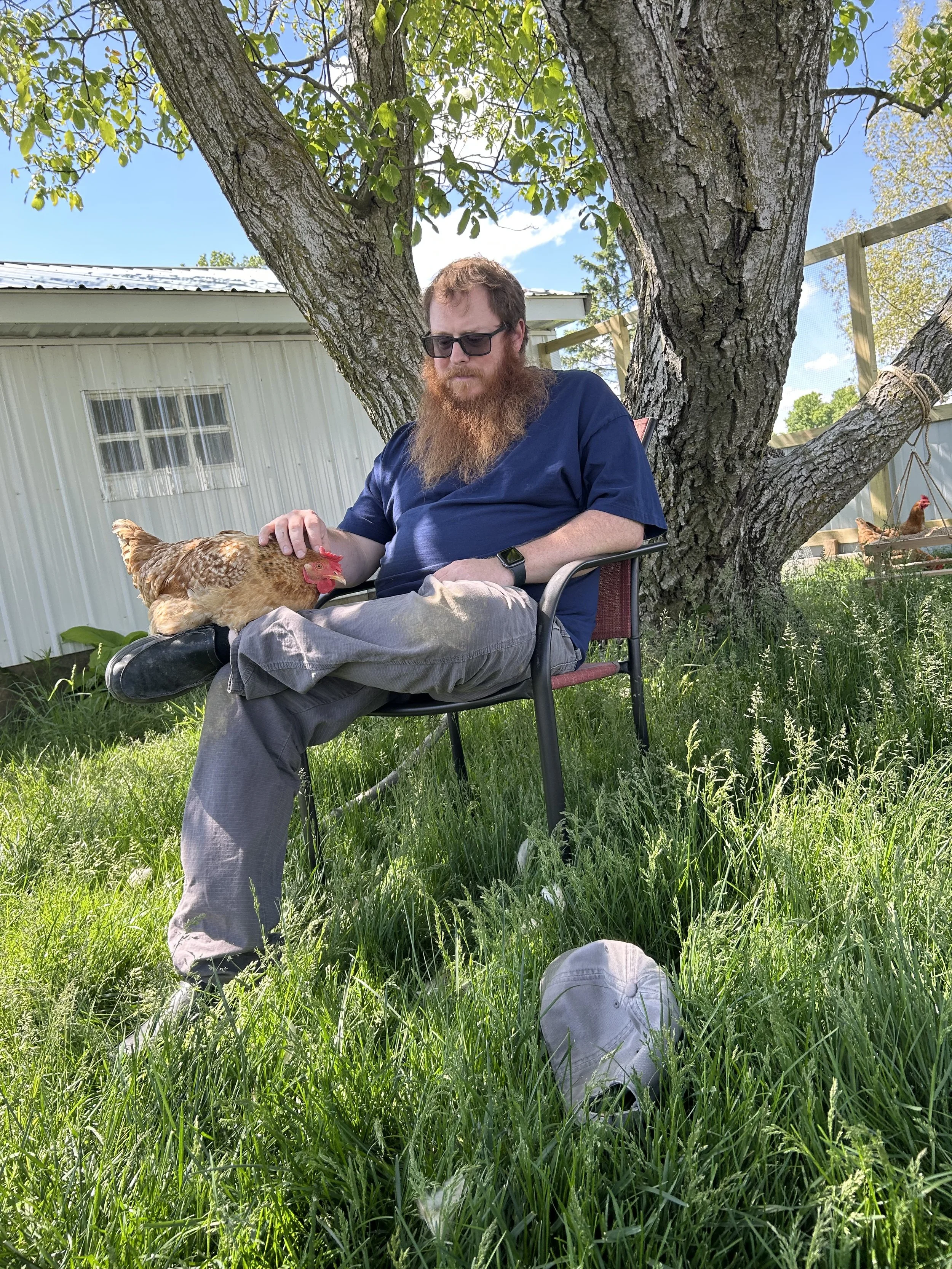
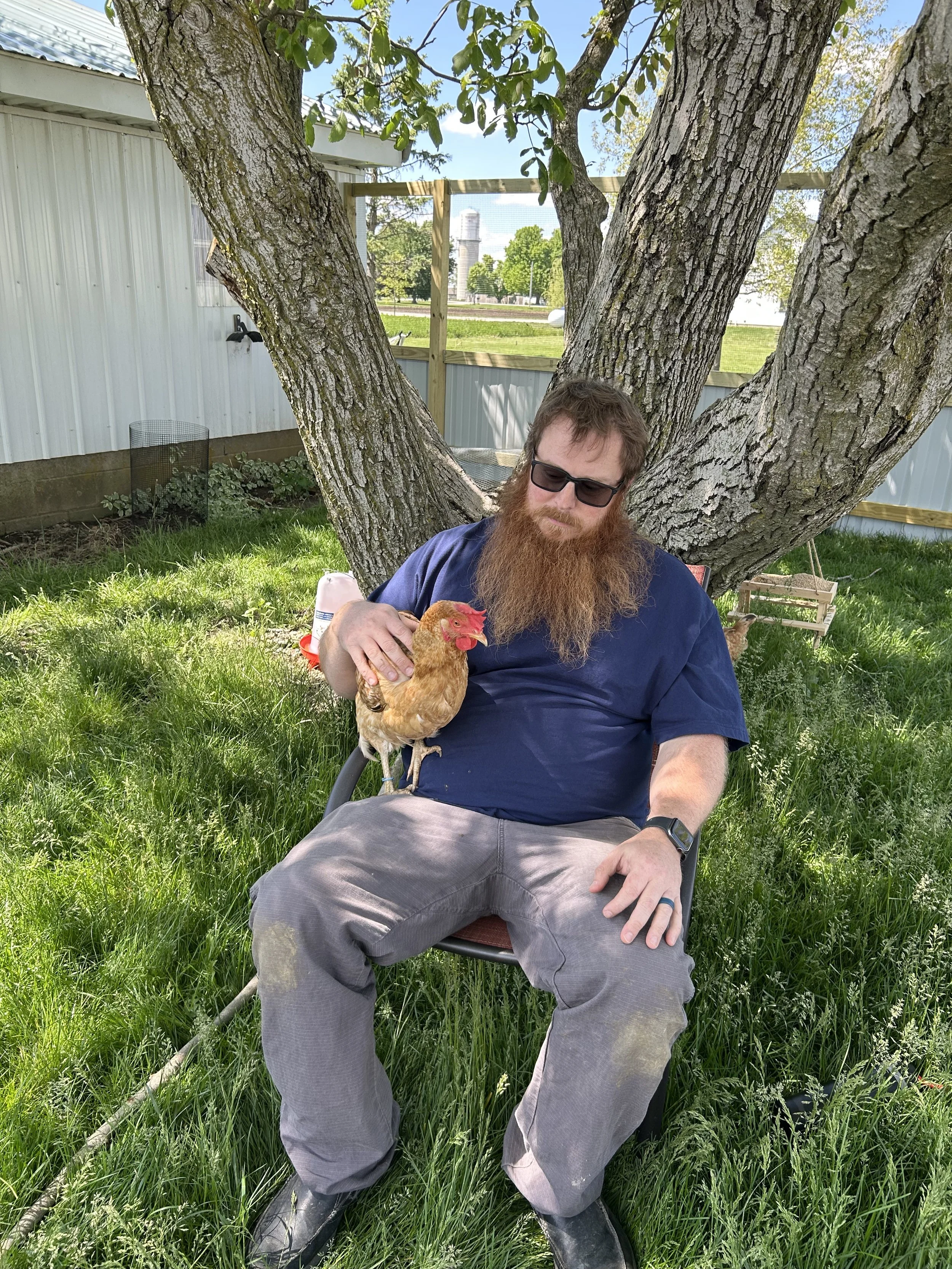
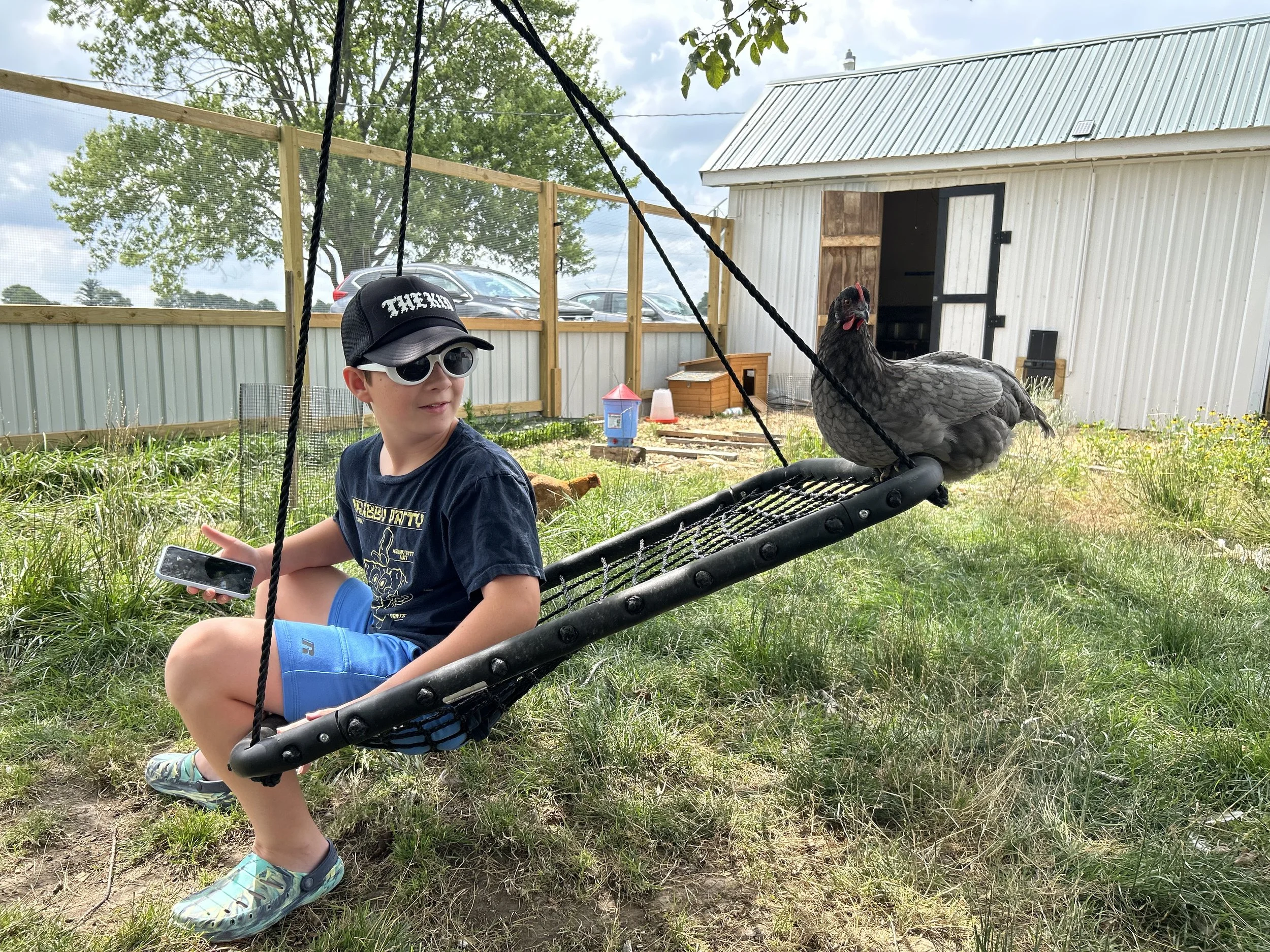
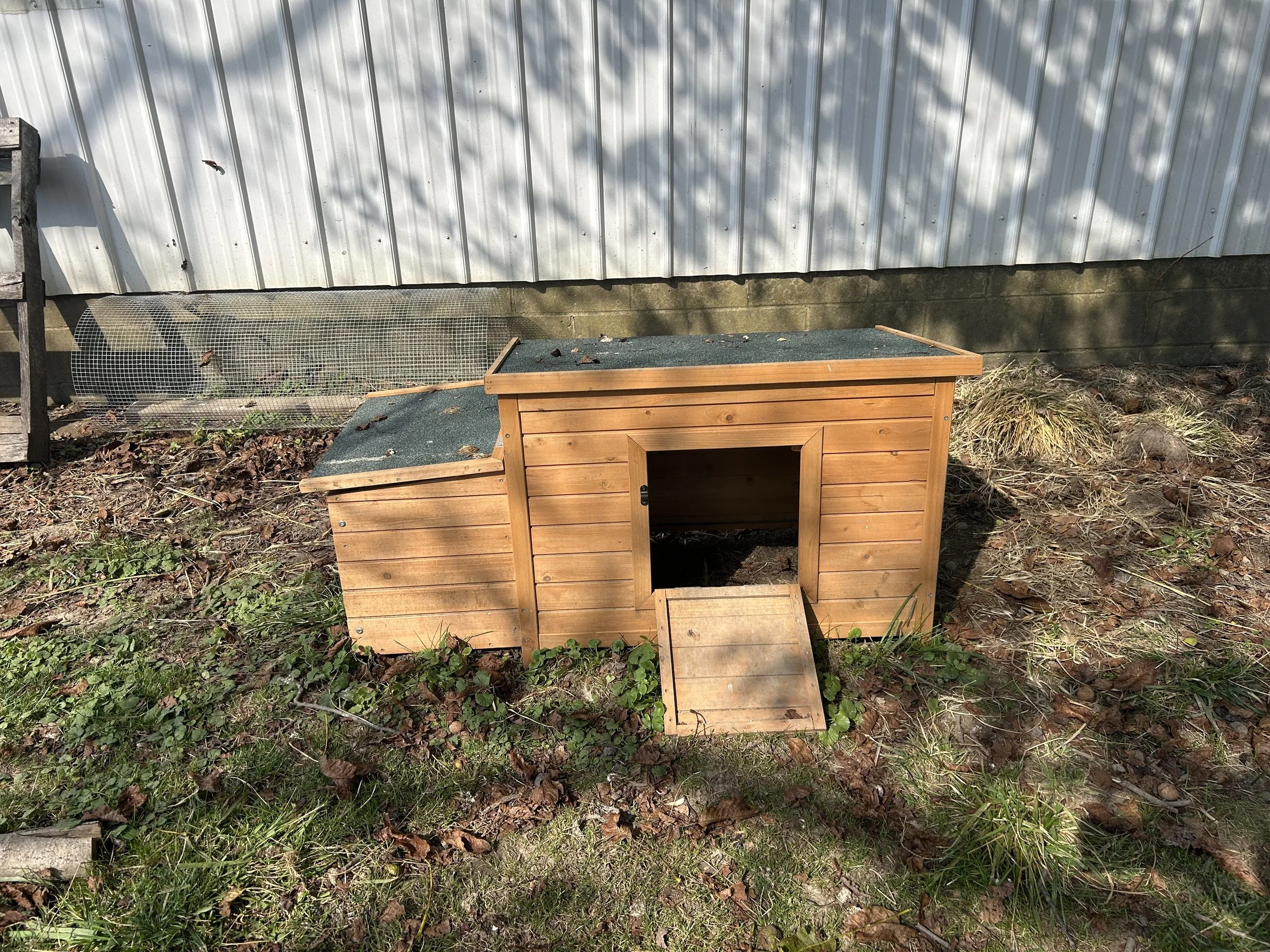
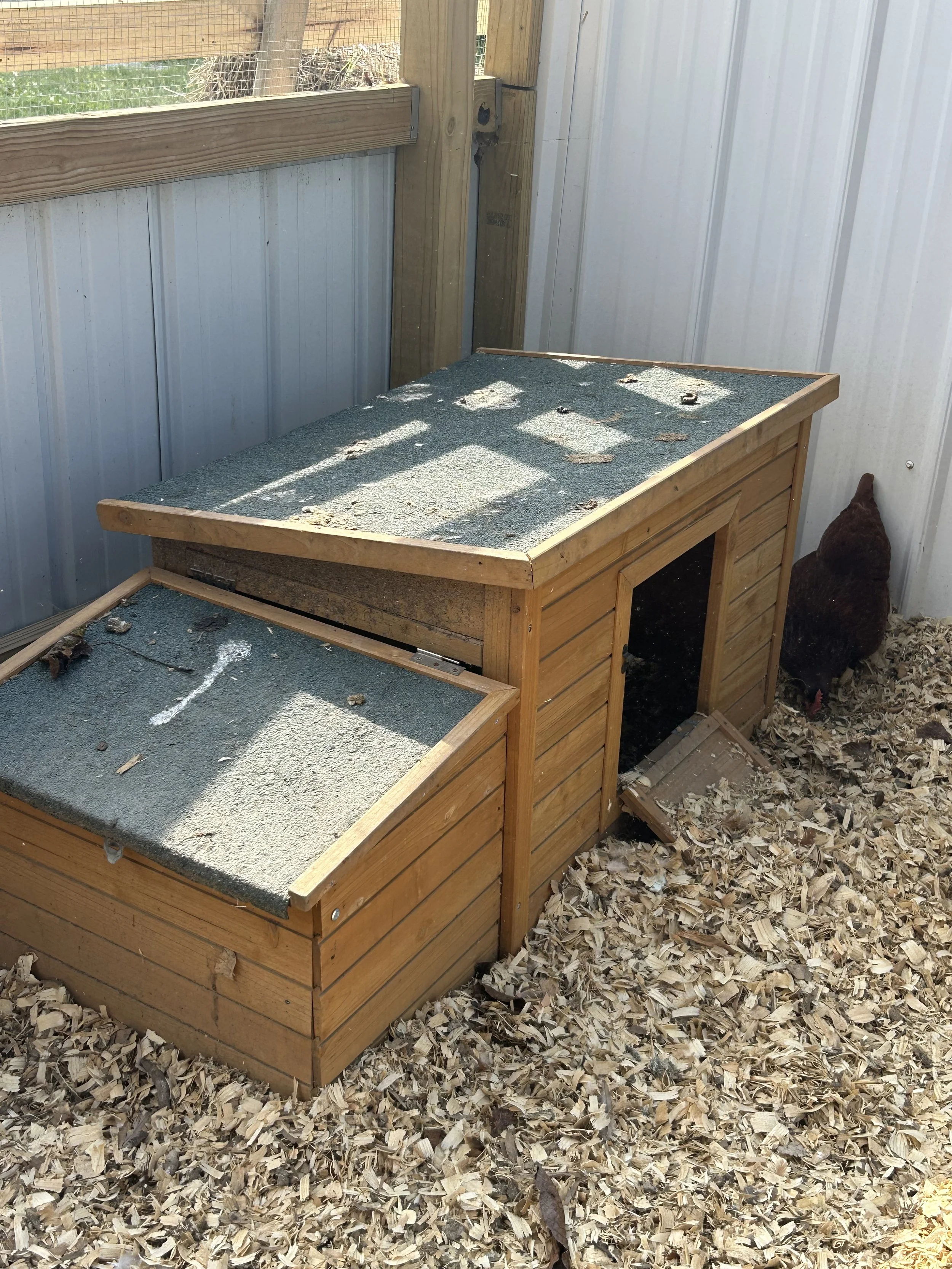
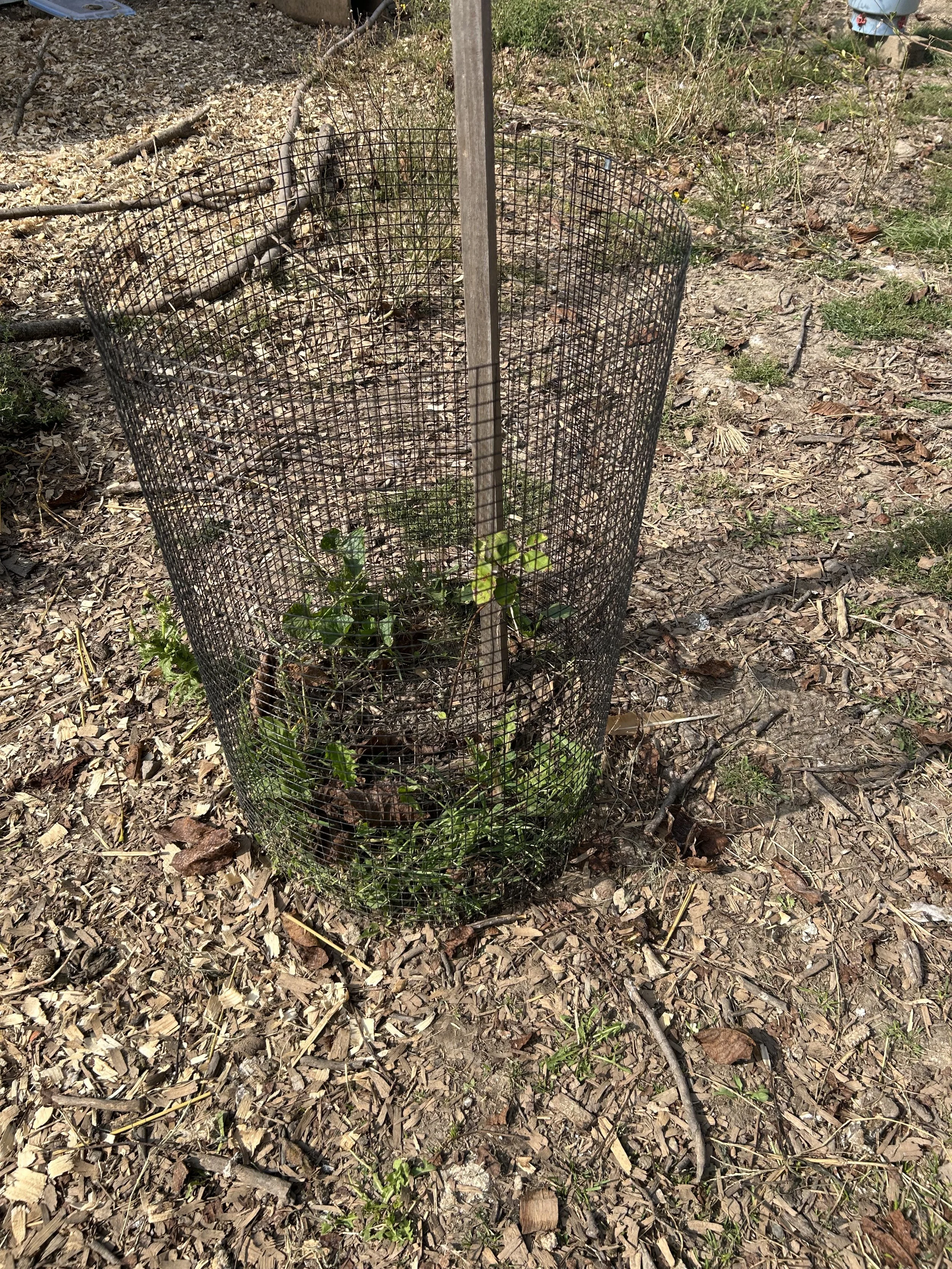
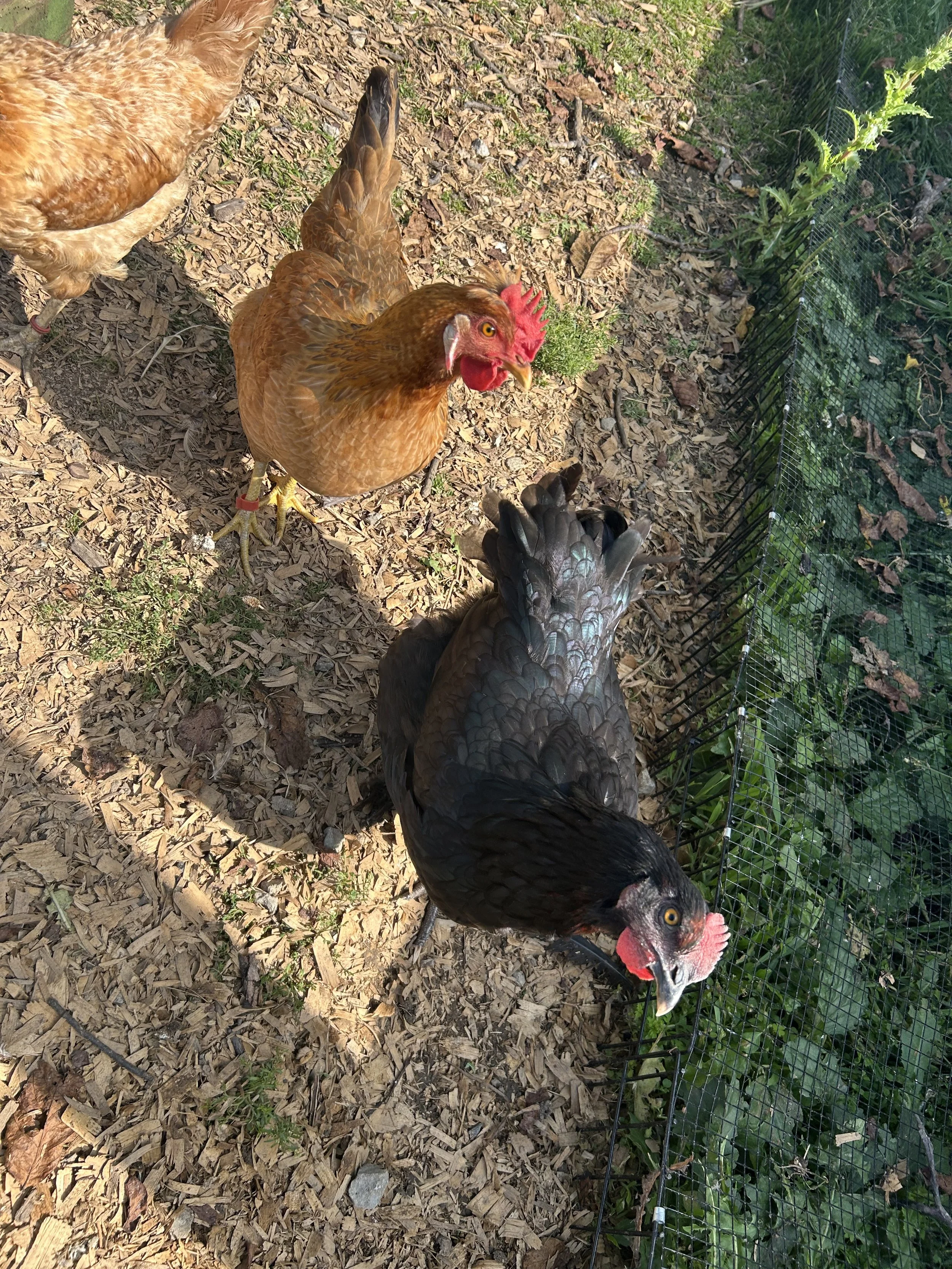
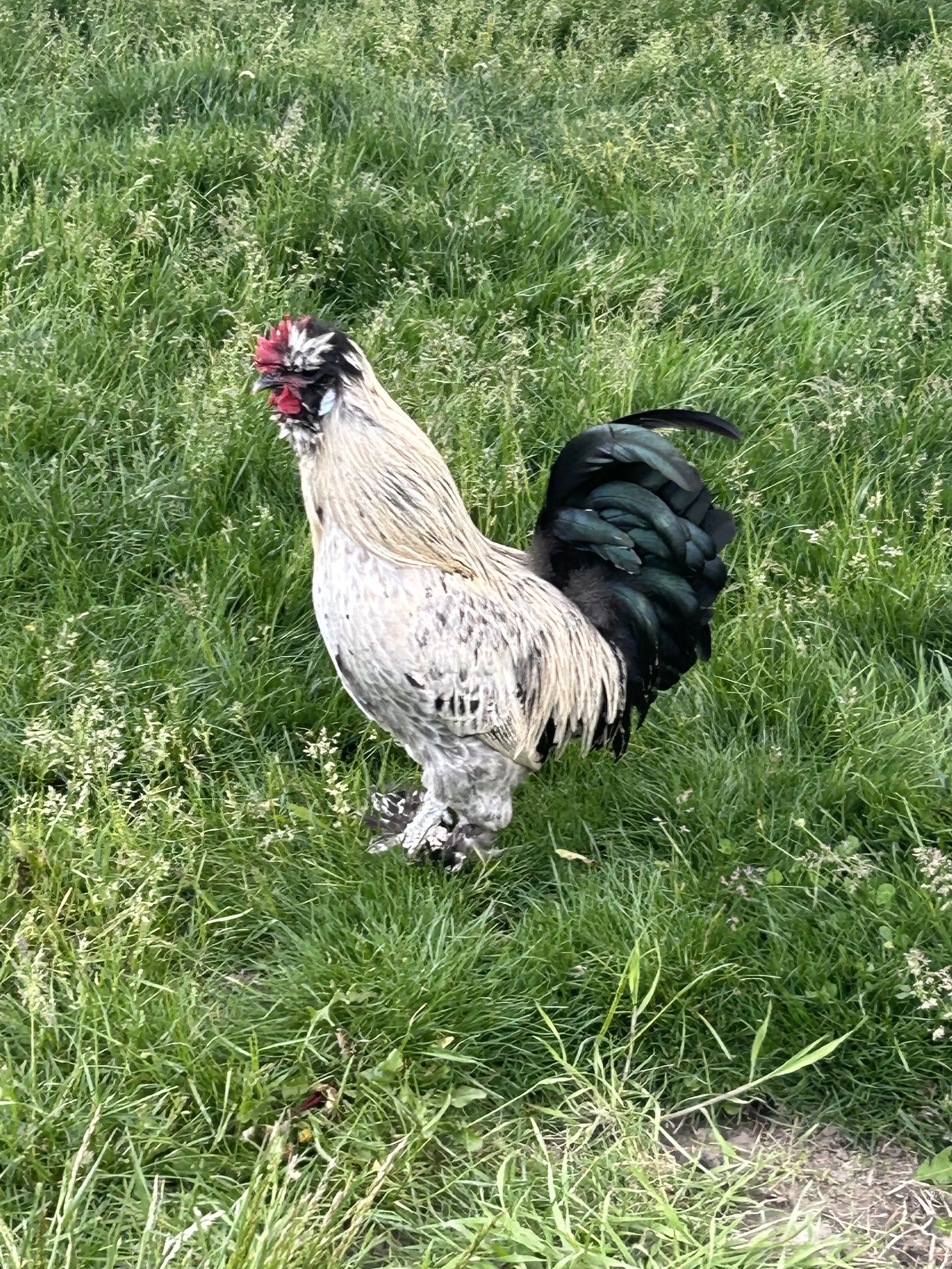
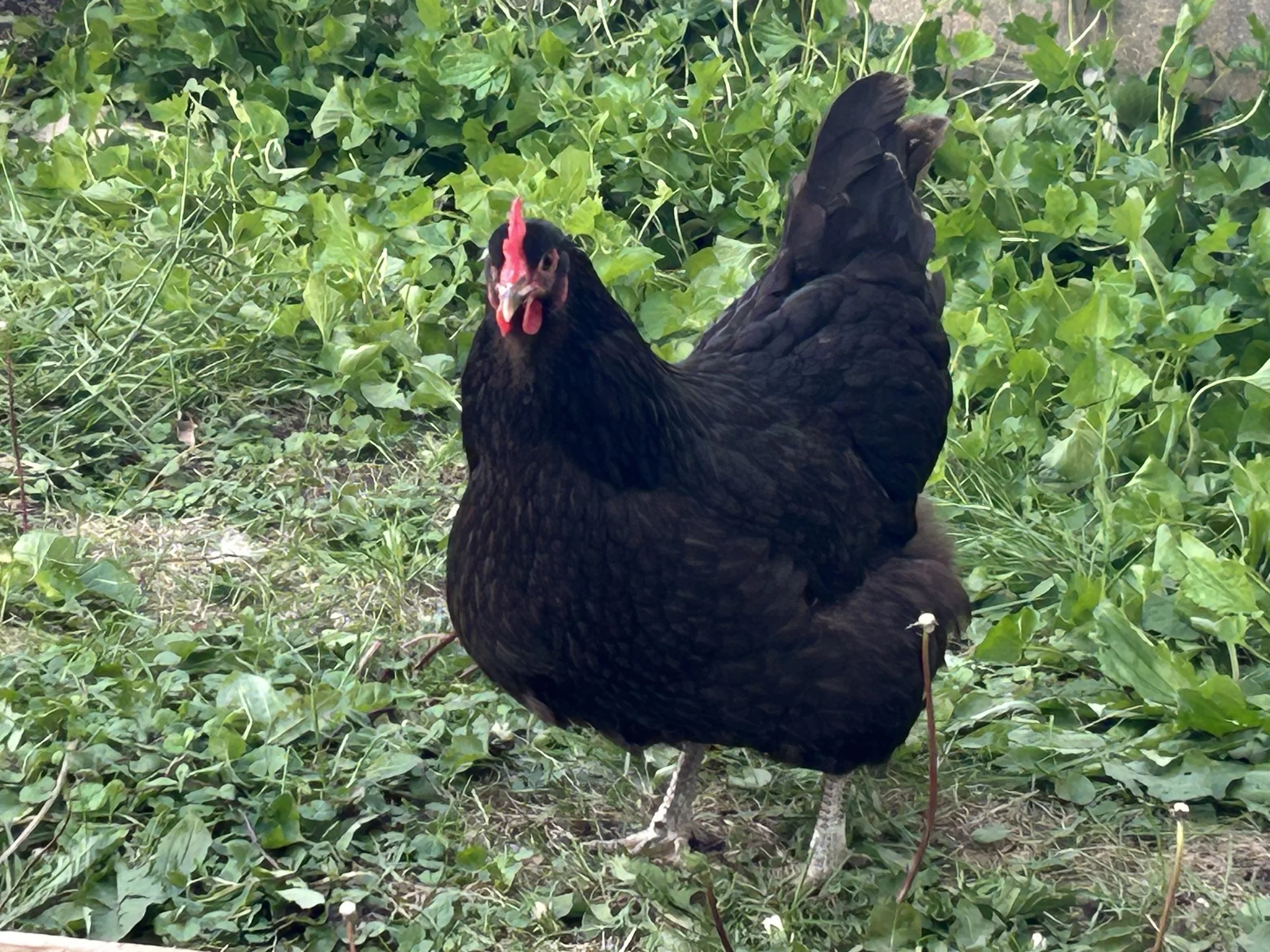
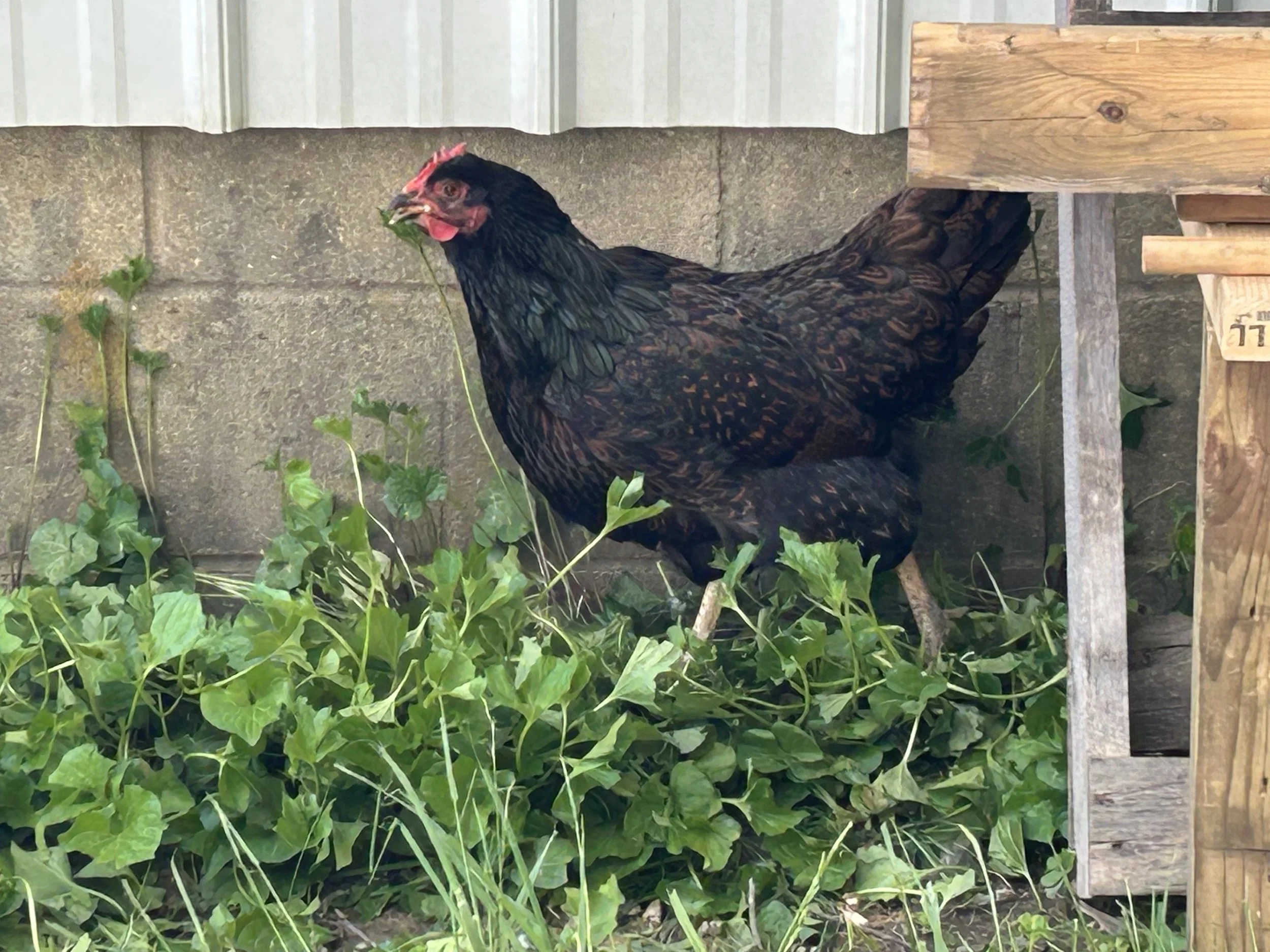
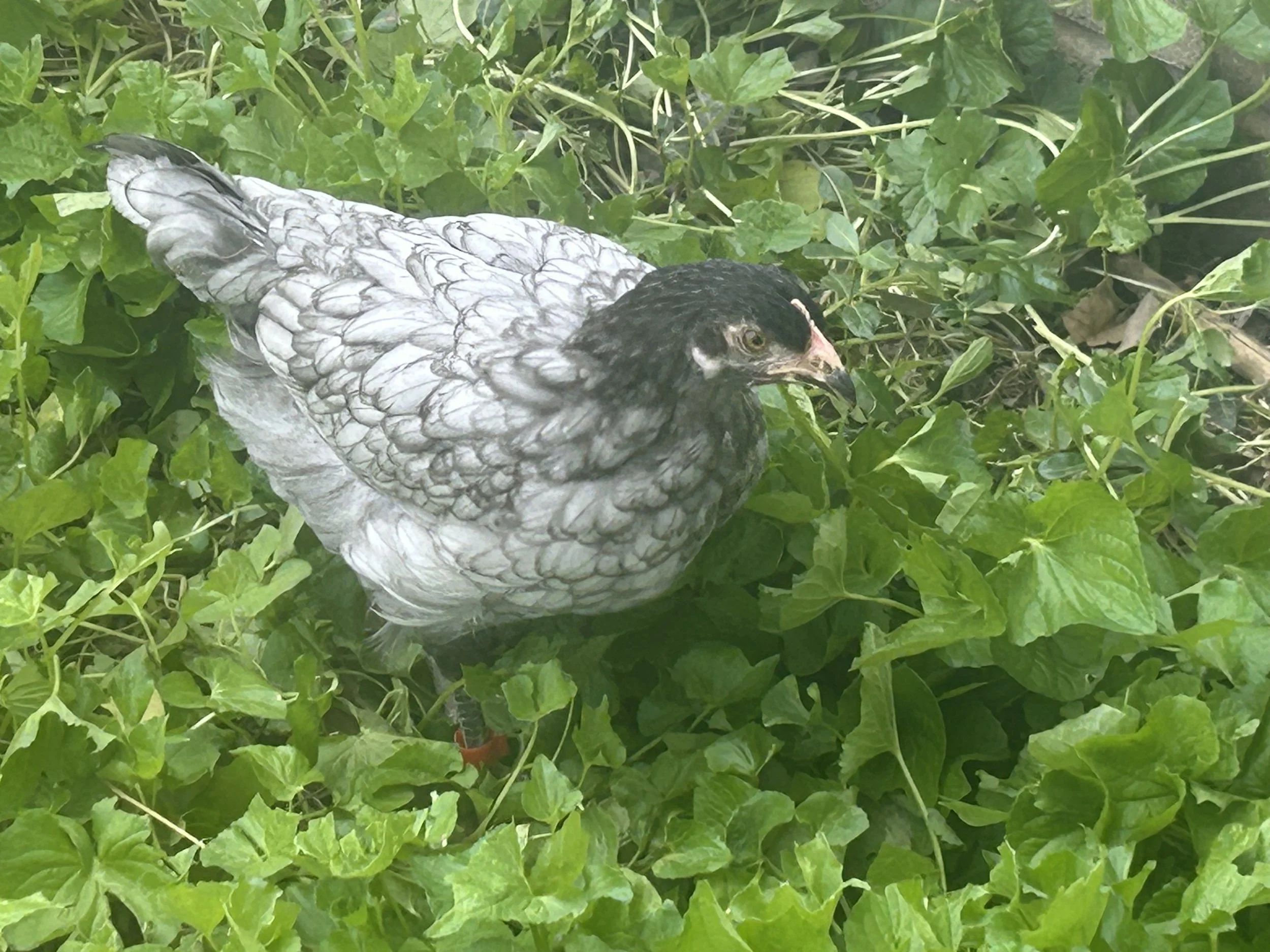
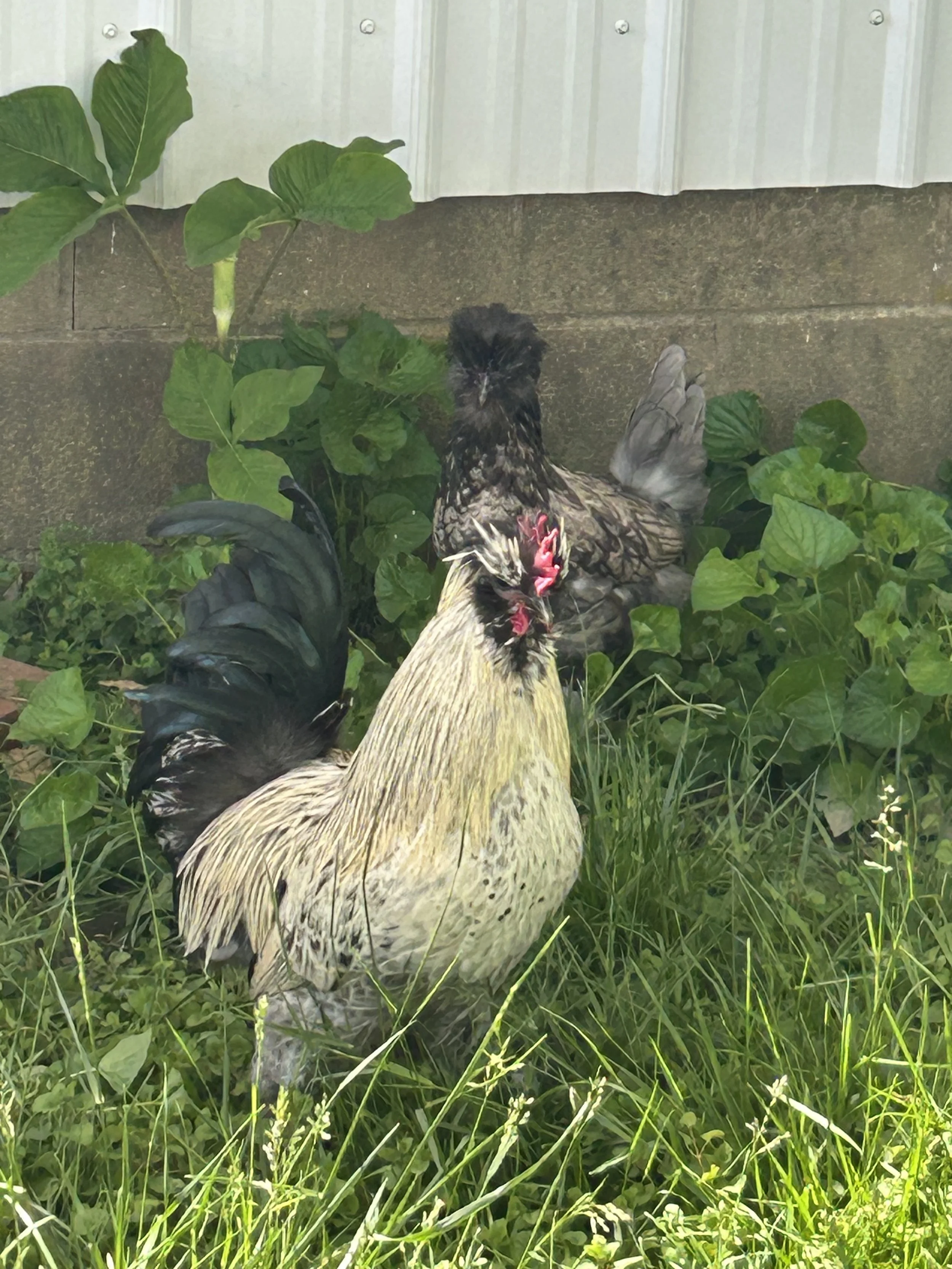
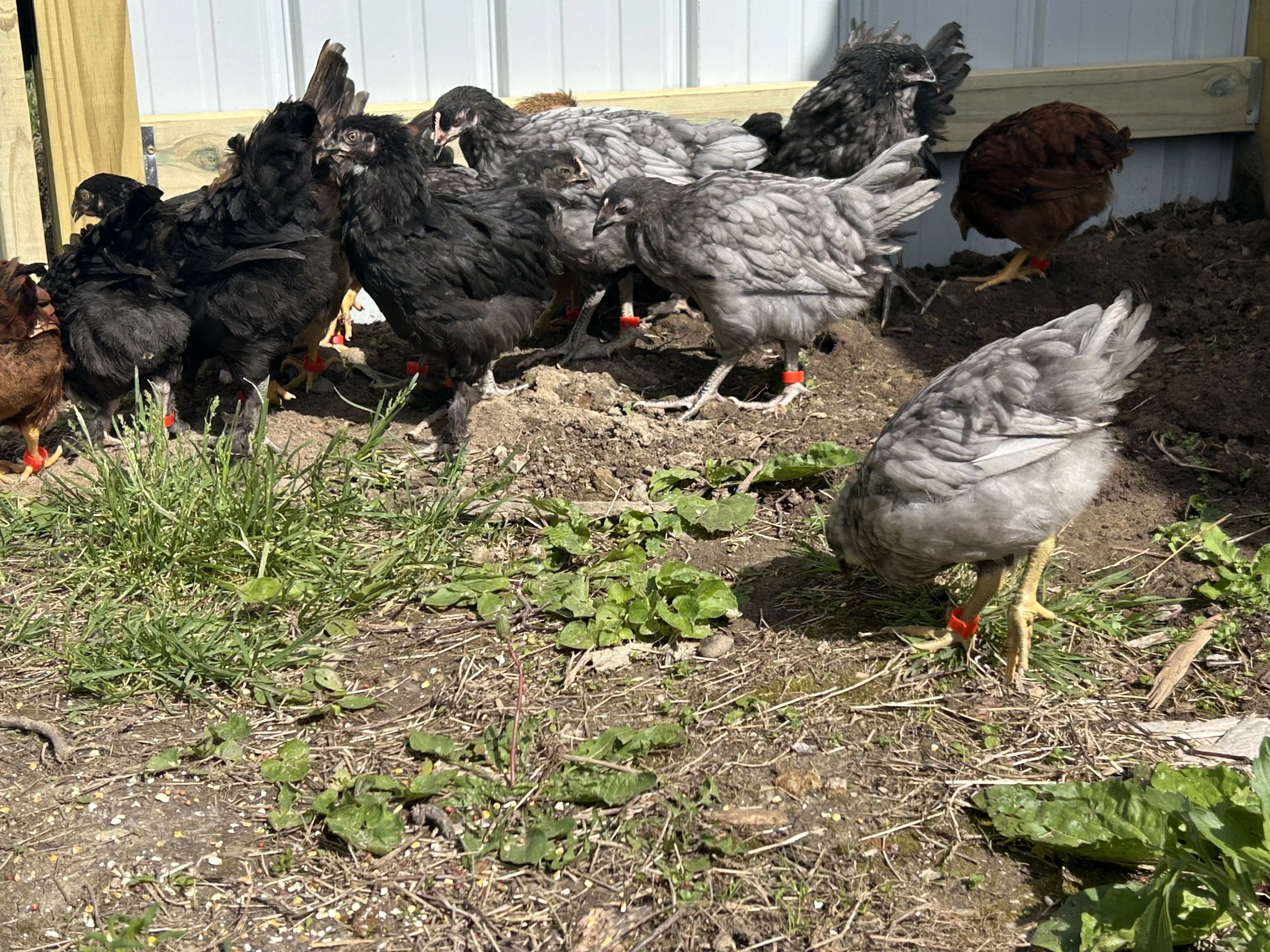
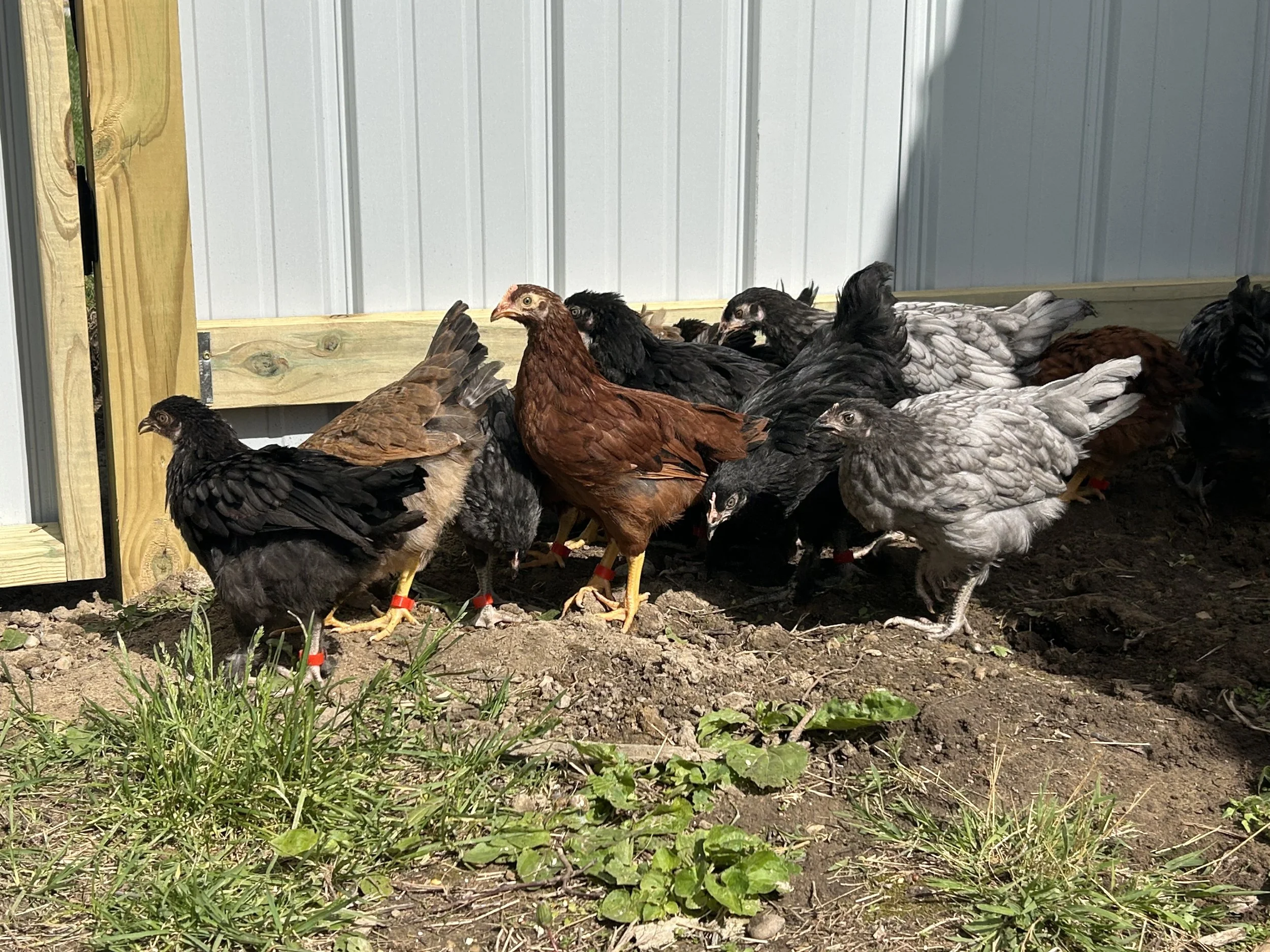
Hopefully with all the things to do and explore, the chickens will not immediately kill all the green things in their path, but we’ll see. For now they are enjoying nibbling on and napping in the tall grass.
Chicken House
Converting the old garden shed to a chicken house.
One of the first goals for our farm was eggs. My niece, knowing that I’d been dreaming of becoming a chicken mom for the majority of her life, came through in epic fashion and delivered our first set of straight run chicks in July before we’d even officially moved in ourselves.
Thankfully there was already a coop in the barn and we were able to move them right in. Over the course of the fall, we roughed out an outdoor run for them and improved it a few times as they (and our golden retriever) showed us all its weaknesses.
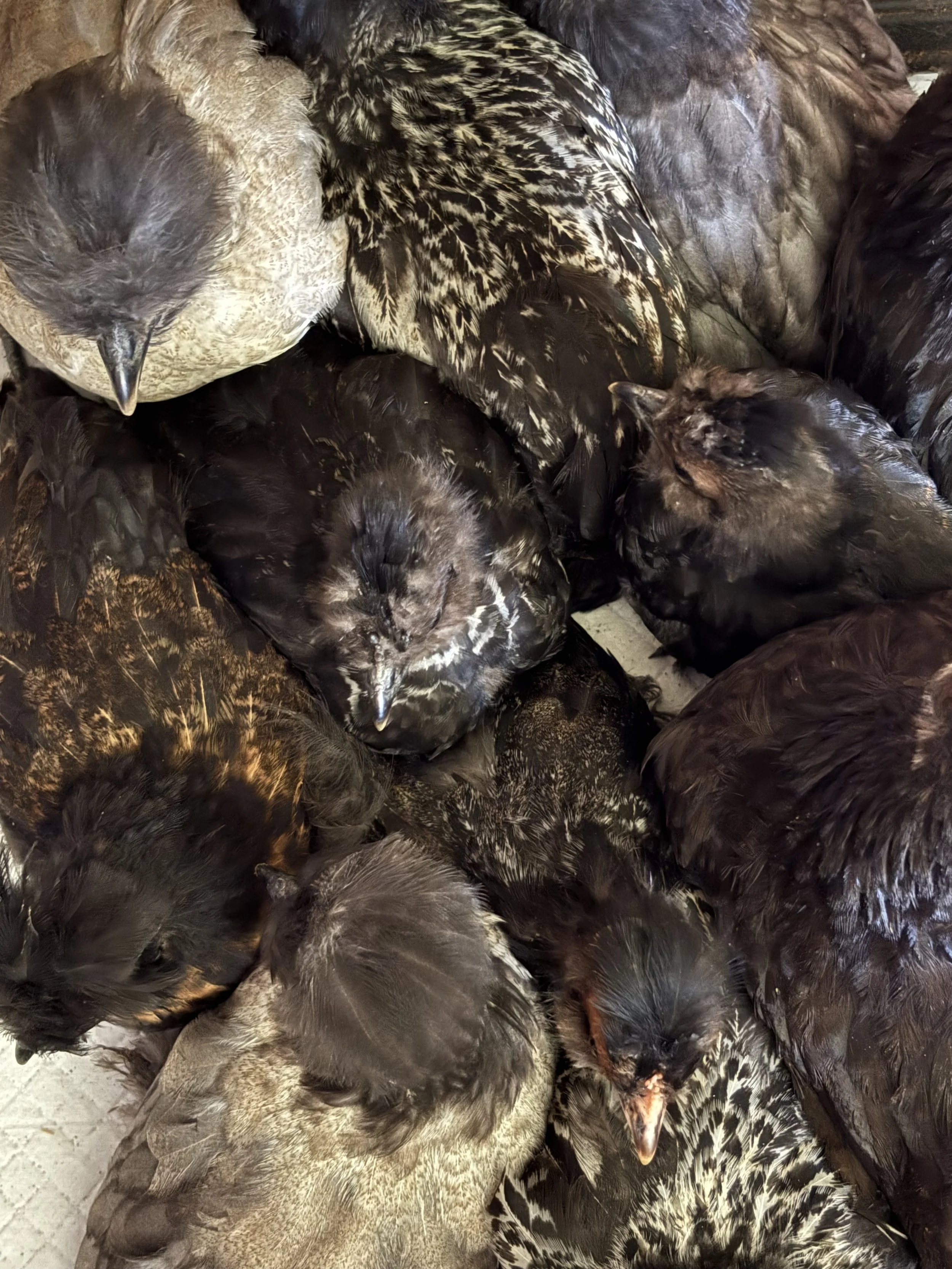
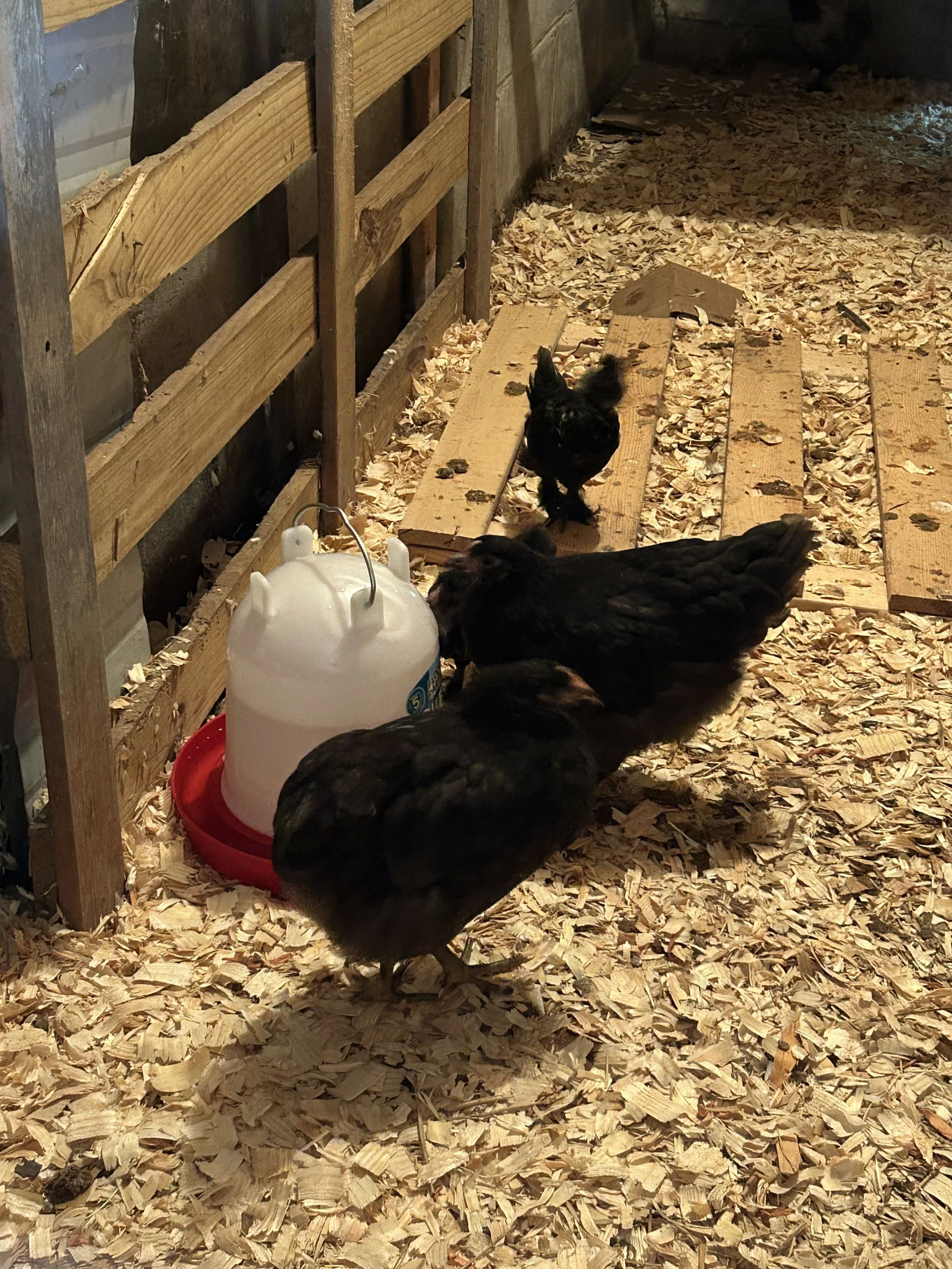
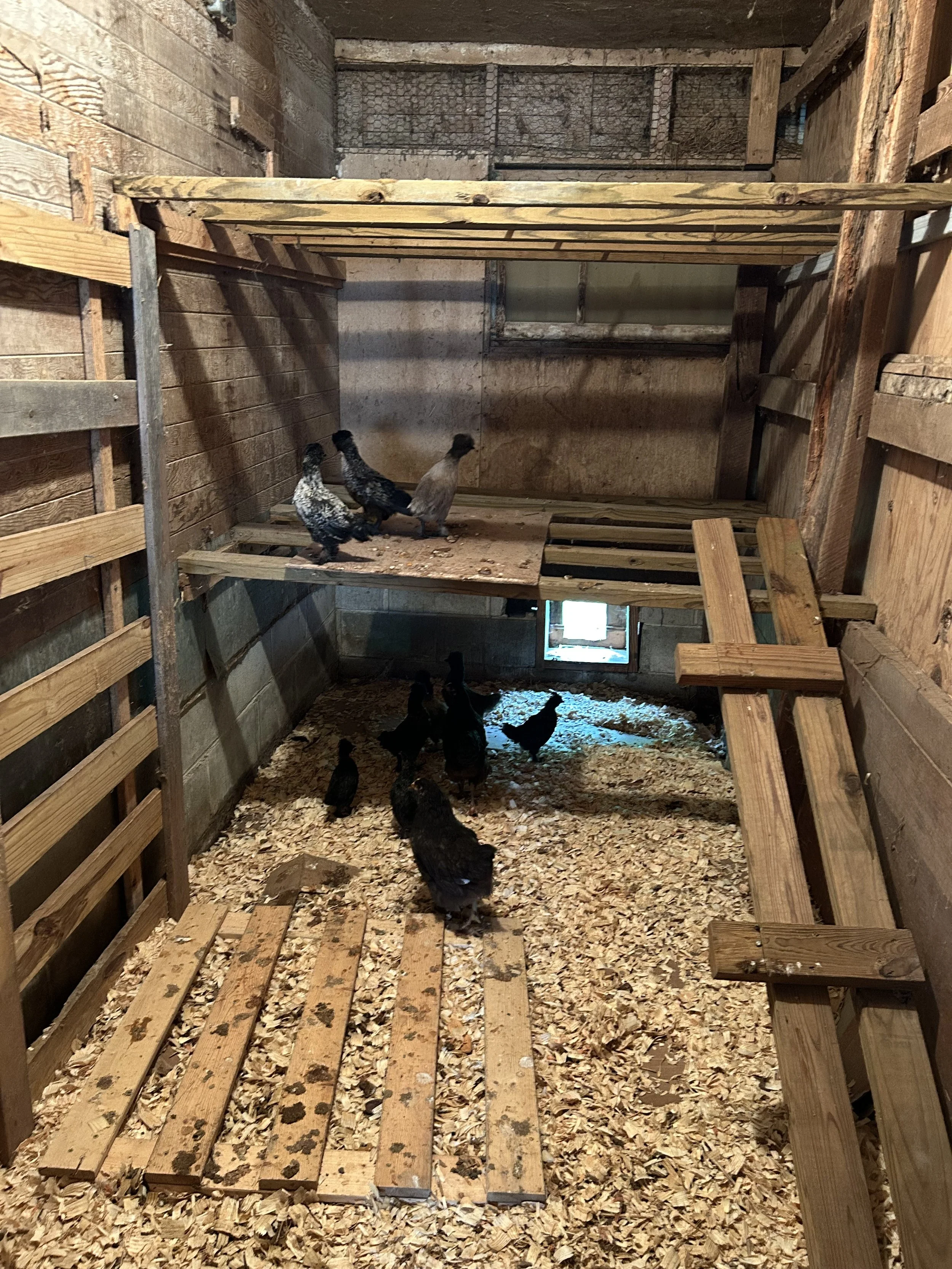
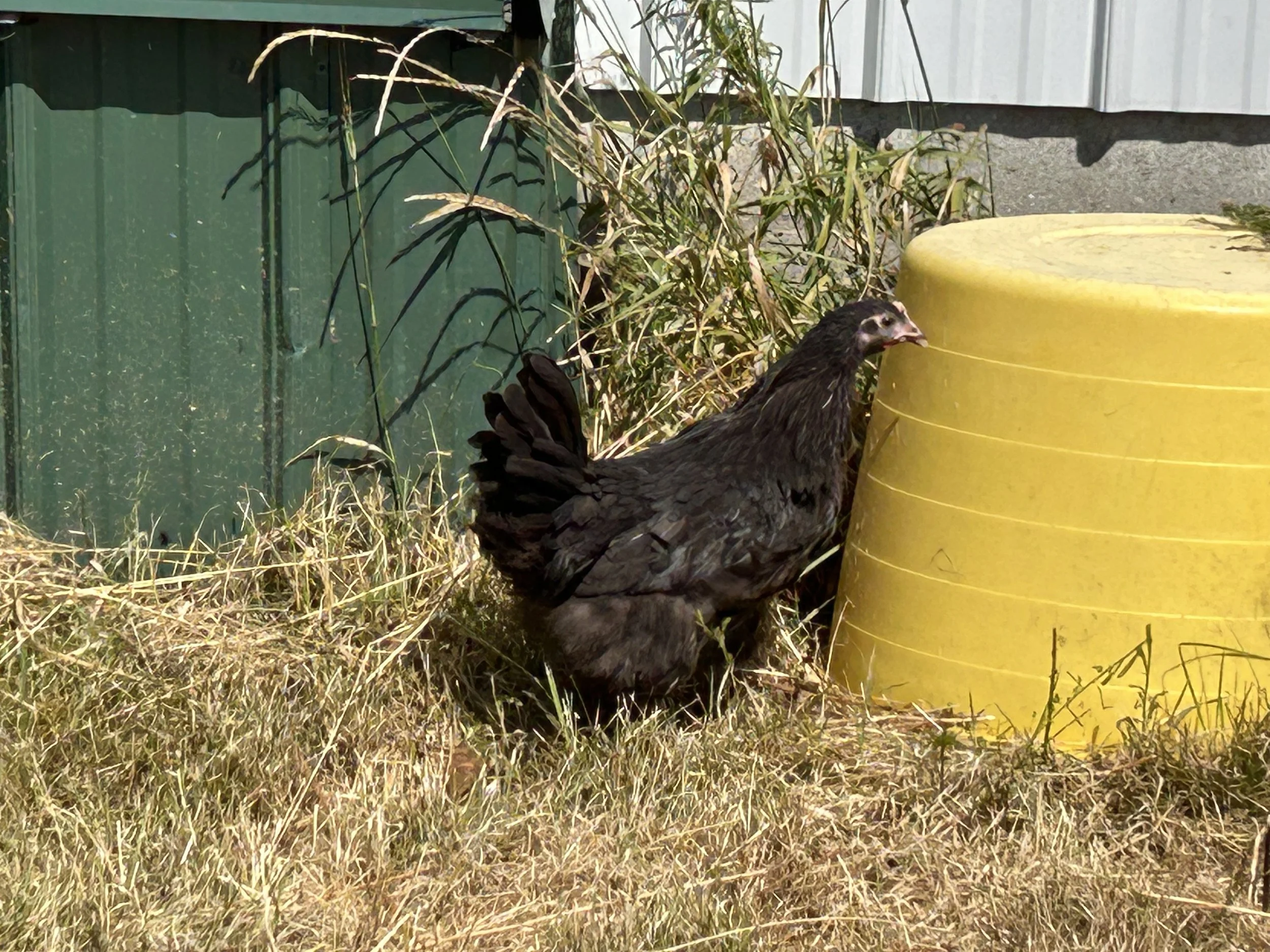
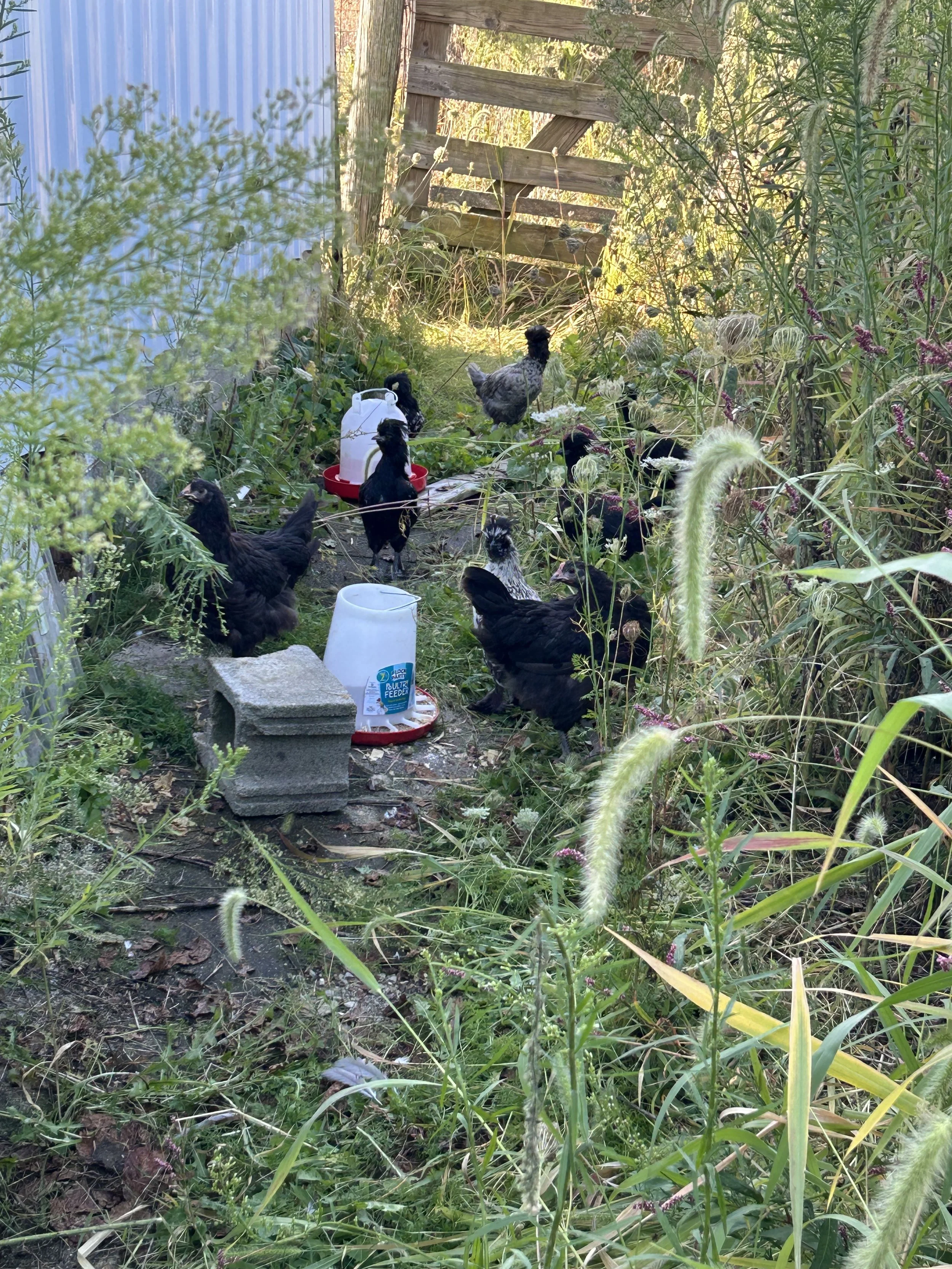
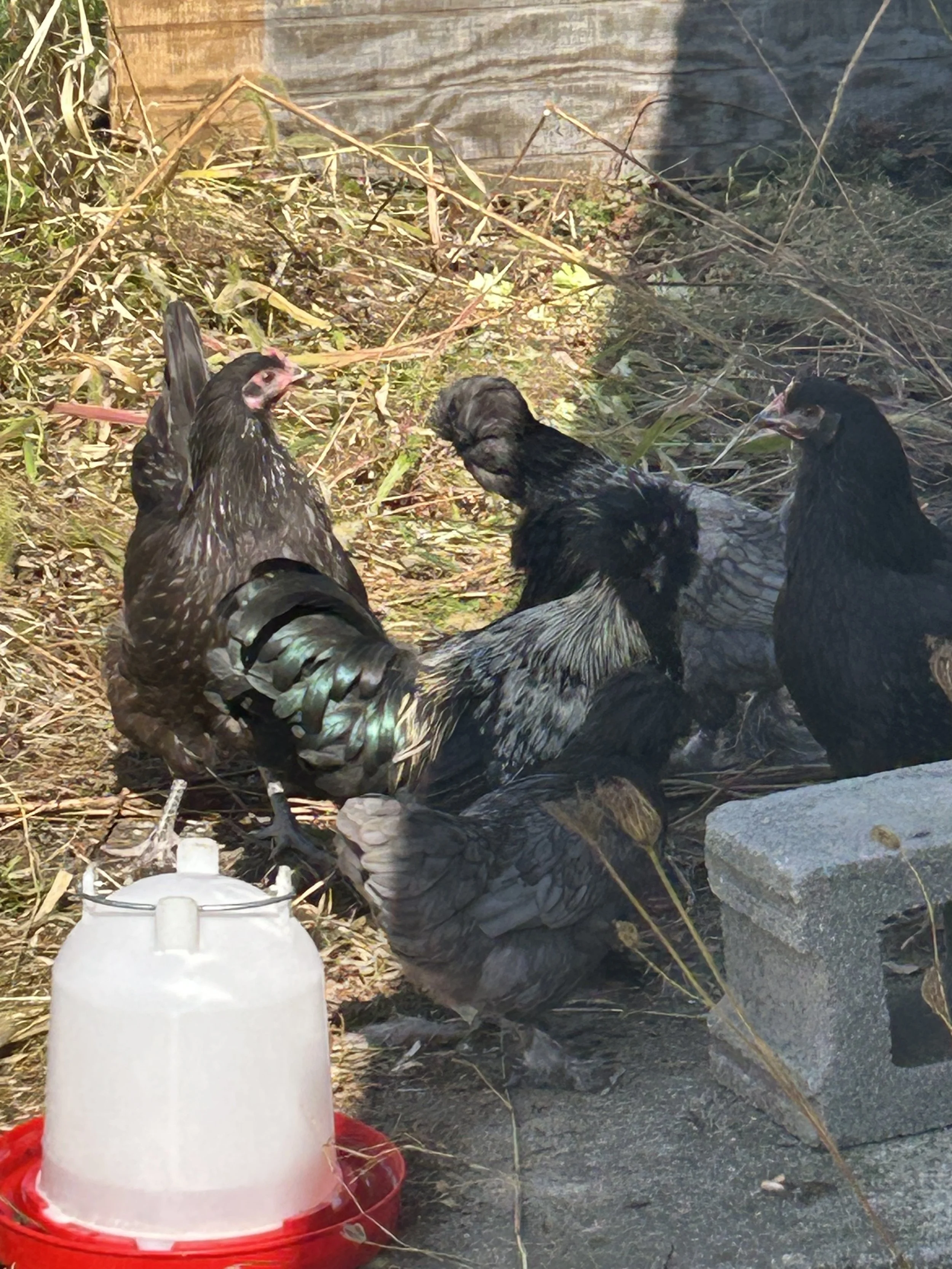
Of the original eleven, we lost two to unknown deaths and one to a hawk, leaving us with two roosters and six laying hens.
They started laying mediocre numbers over the winter and as spring began to arrive, we were up to four eggs a day rather consistently. We knew we’d need to remove one of the roosters and we also intended to build a larger coop and run this spring to allow for a larger flock so we made plans on both fronts. Things were going swimmingly so I ordered 20 mixed breed pullets that arrived in early March.
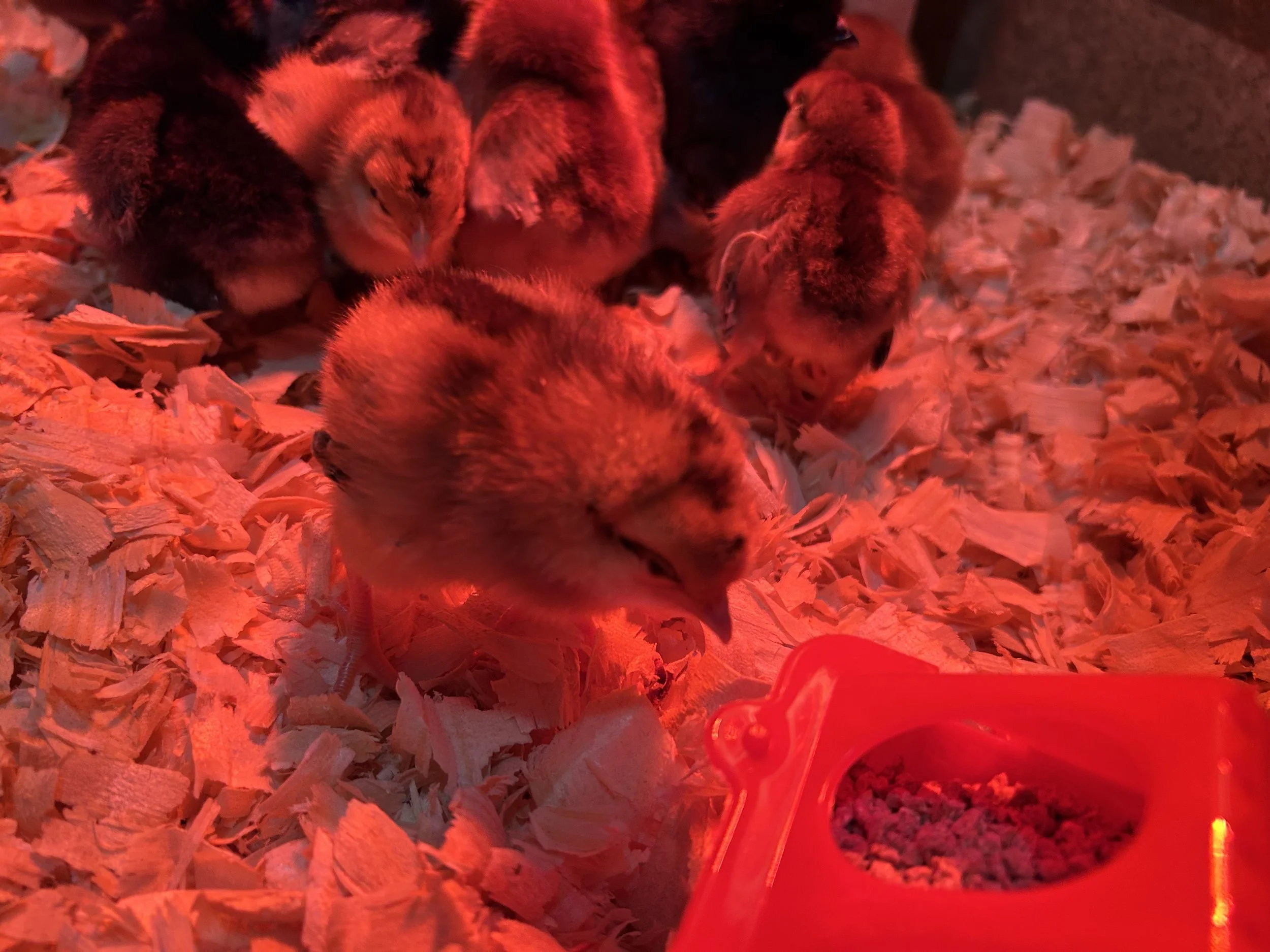
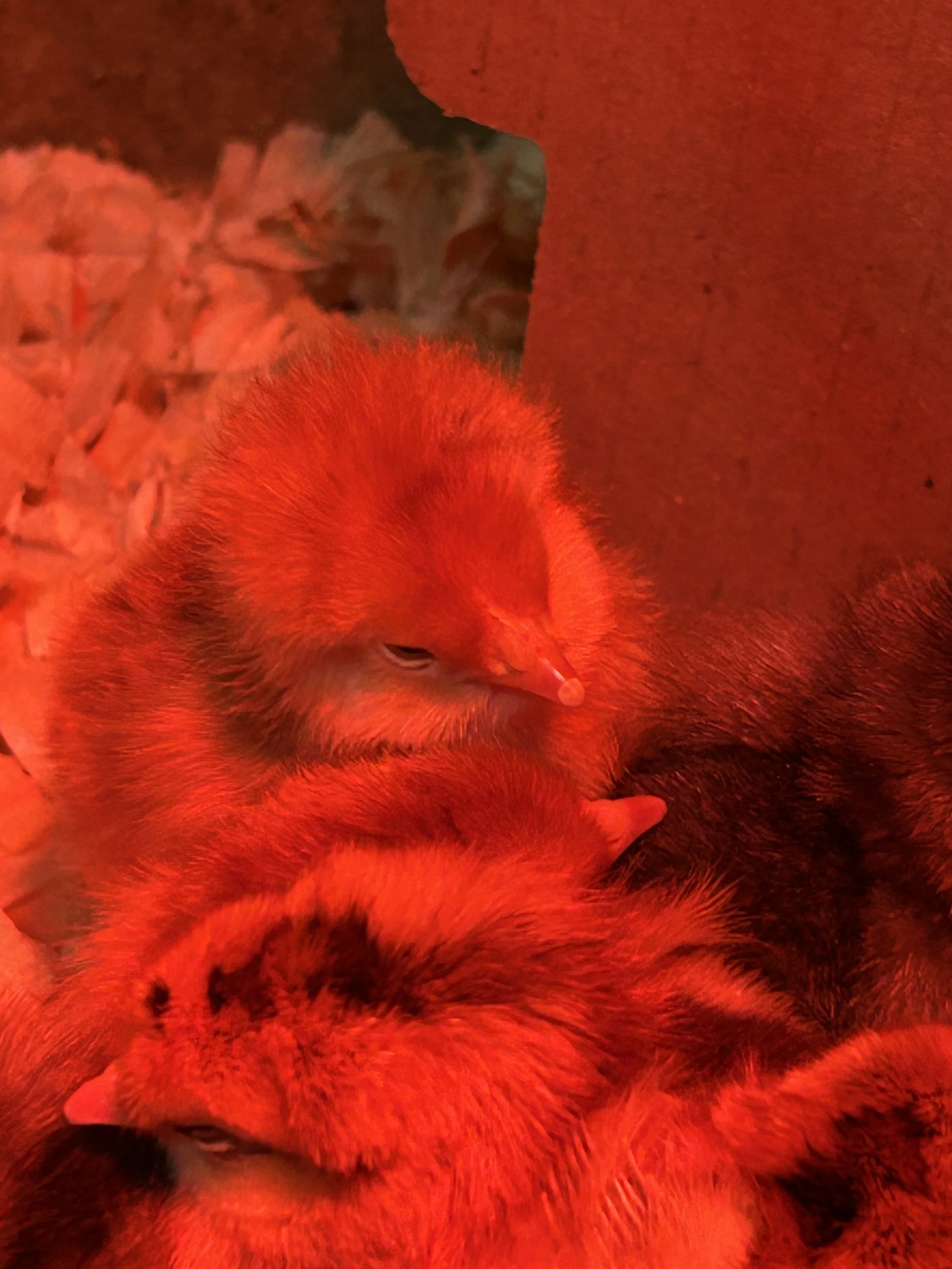
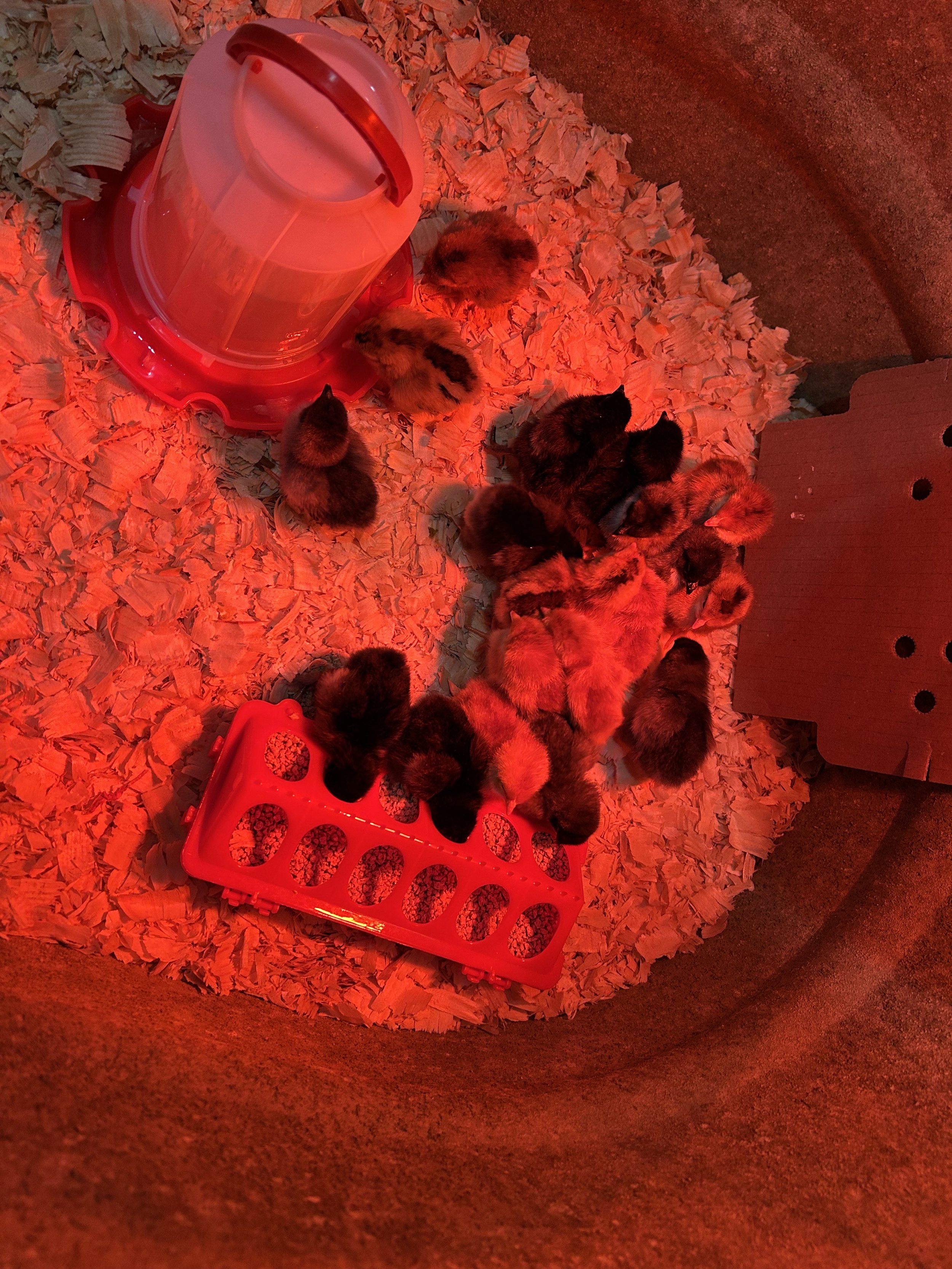
Then, in mid April, my aunt asked if I could take her hens. She had recently retired from work and her and the hubs were wanting to travel, so she was looking to rehome her backyard flock. Six girls were delivered to us along with lots of accessories and a bucket of feed, all for the promise to share some eggs now and then. While they’re older, the new girls still lay enough eggs to make themselves useful and since I didn’t have to invest any money, time, or feed into them, I feel like we got a pretty good deal.
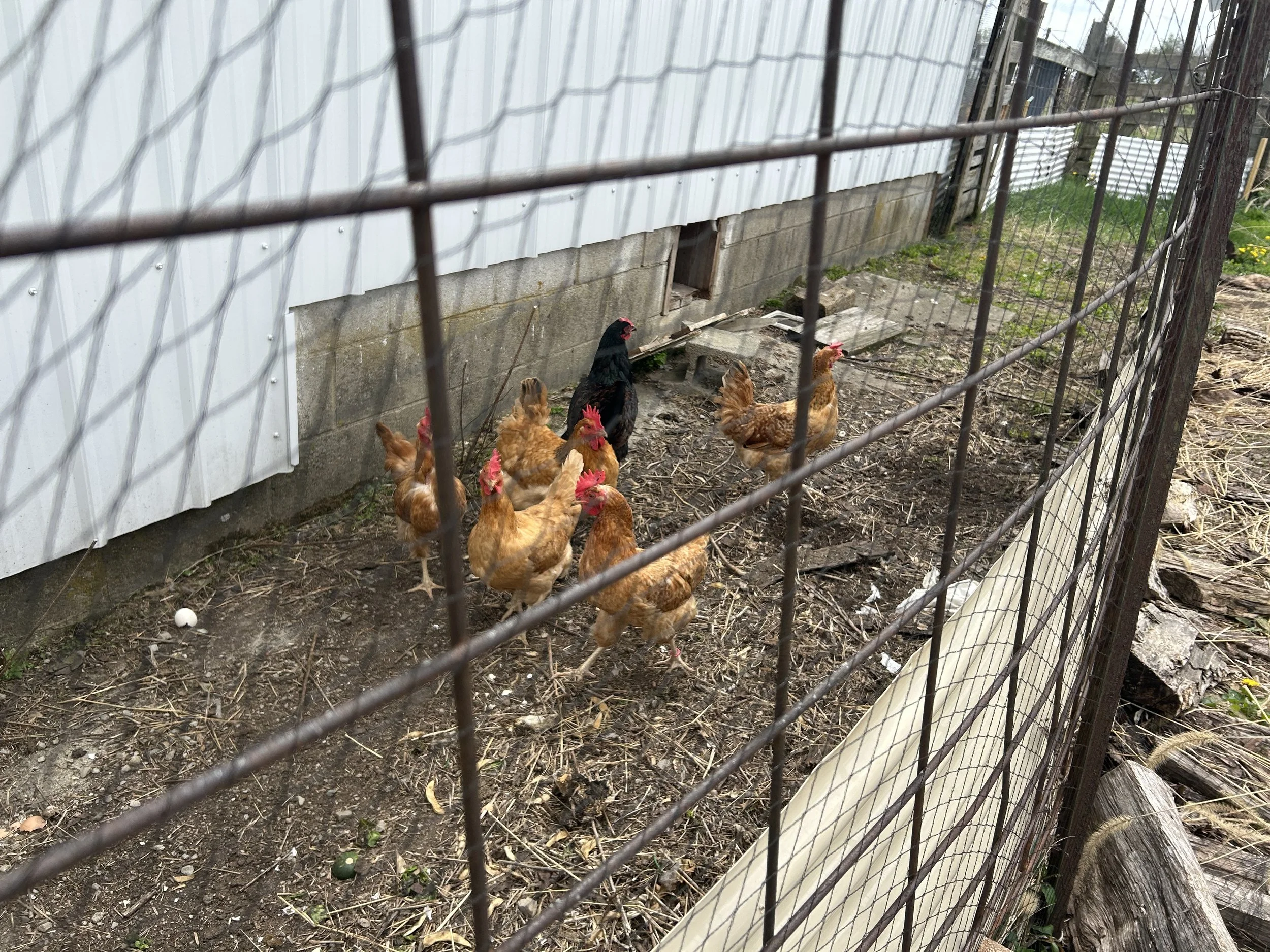
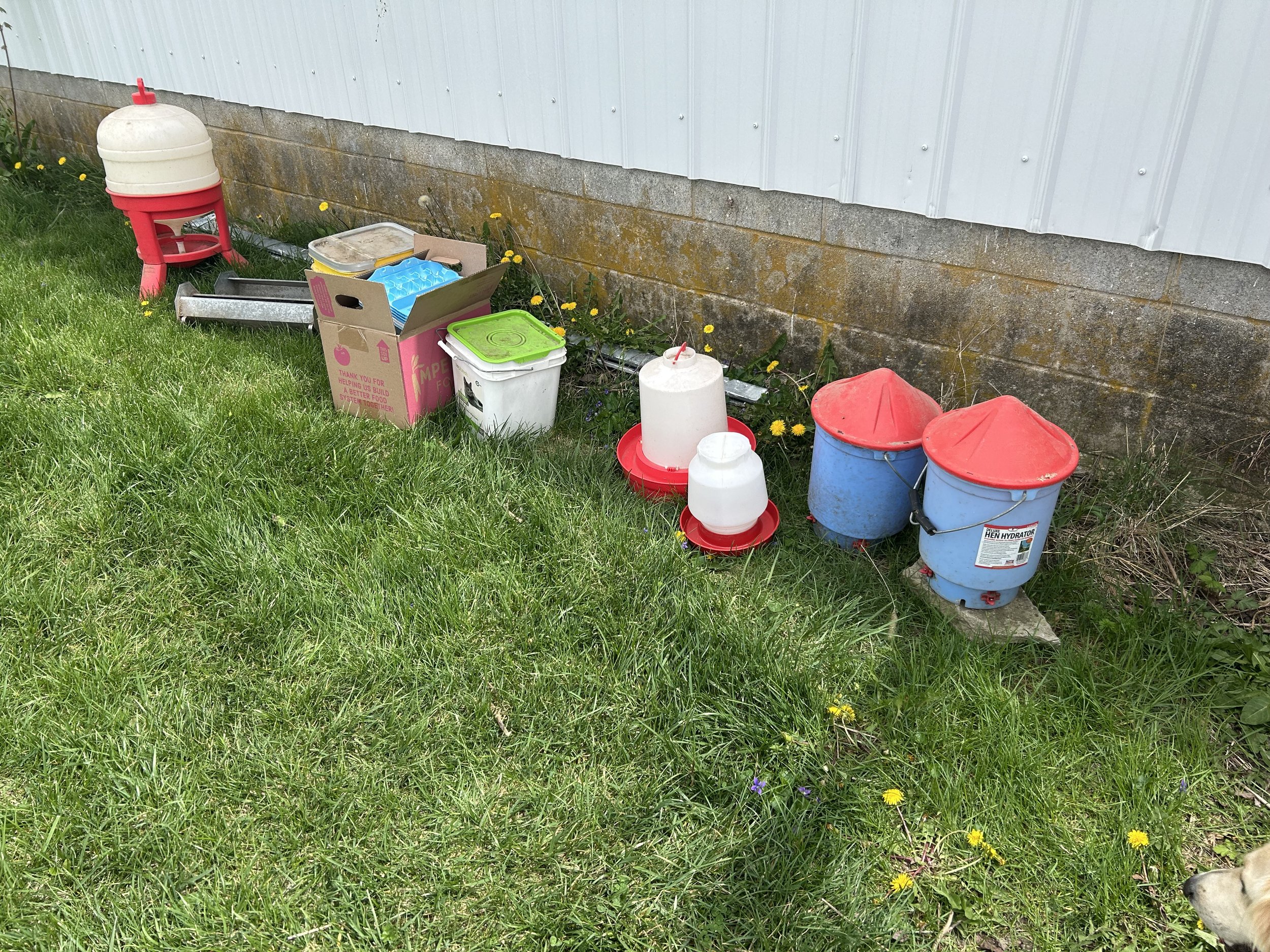
Chicken math FTW! We now had a flock of 14 birds with the little ones soon ready to integrate.
Which meant we needed to get the new coop and run ready asap.
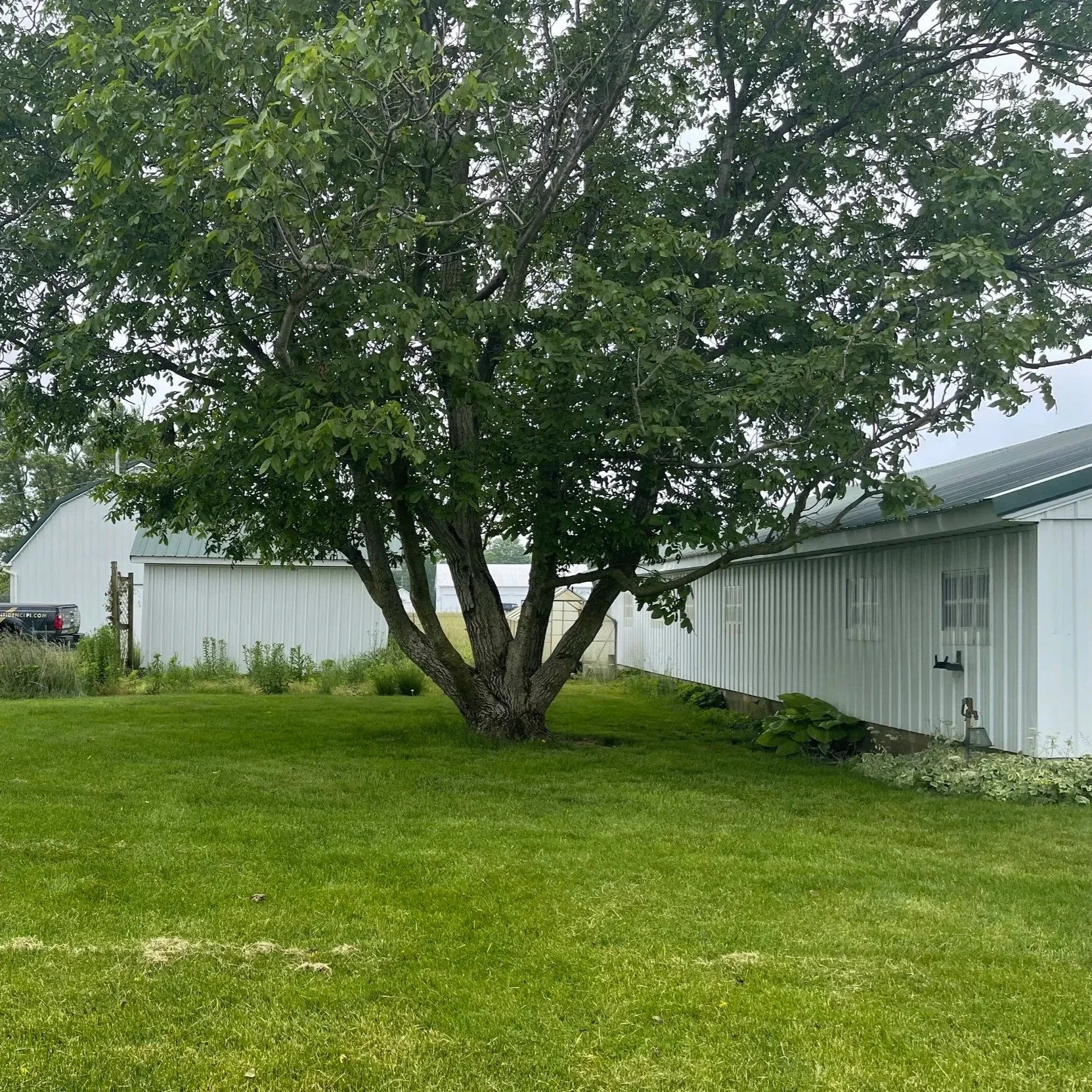
My original plan was to build a new structure for the coop and to fence in the square between the garage and the barn. But that went out the window after we tried a few things, realized how crazy the wind gets out here (and thus how sturdy any structures need to be), and ultimately cowered at the price tag. So we brainstormed and decided to use what we had instead of building a whole new structure. The existing garden shed was oversized for bikes and simple garden tools (which was all we had planned for it) but perfect square footage for up to 50 chickens (which is perfect as long as chicken math doesn’t strike again… too hard). Enclosing the area around the shed instead would allow us to take advantage of the long side of the barn to reduce the amount of fence we’d need to build, provide cover and shade by this mature walnut tree (though we would be losing our tree swings - boo), and put the chickens front and center of the entire farm.
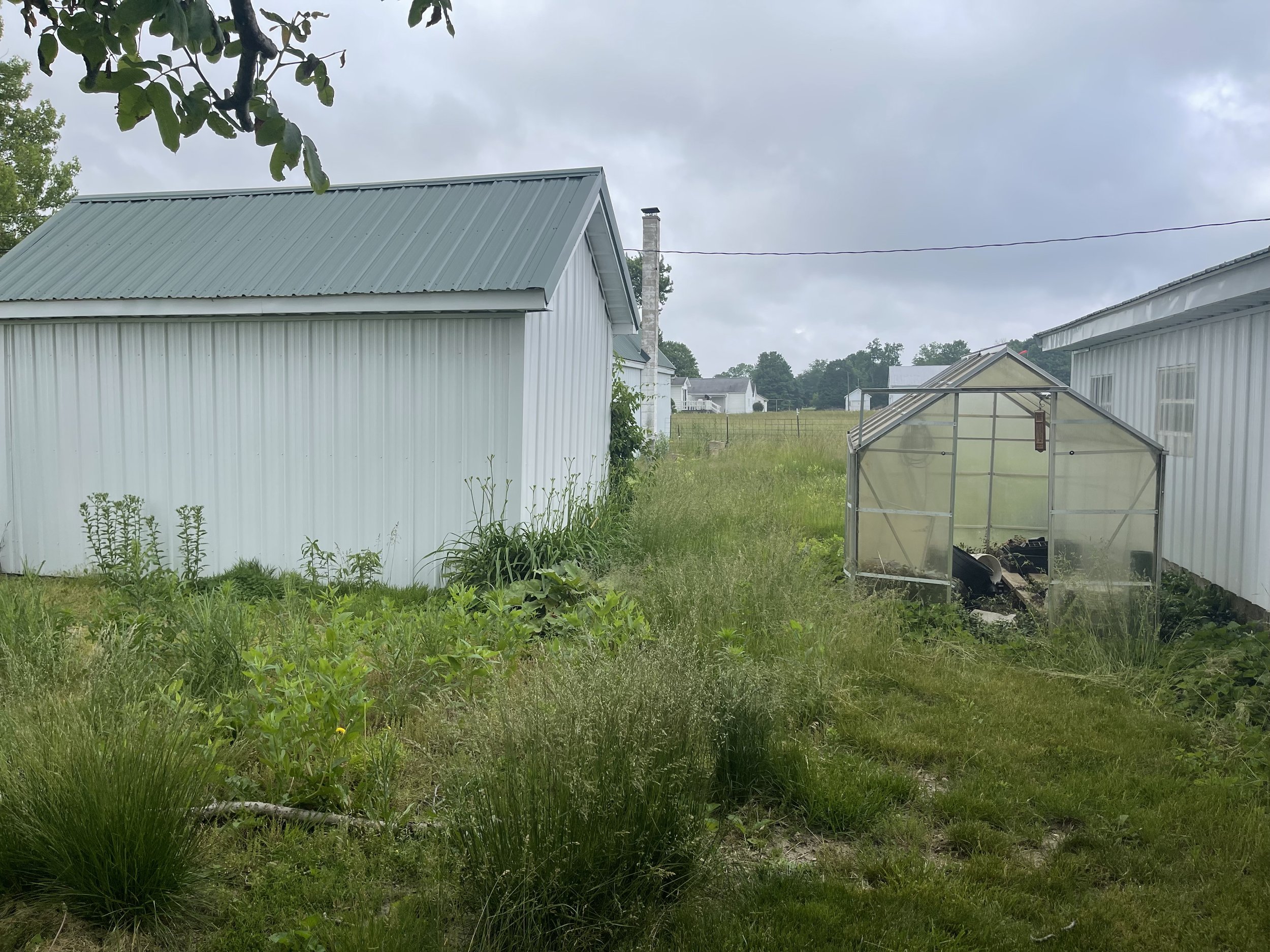
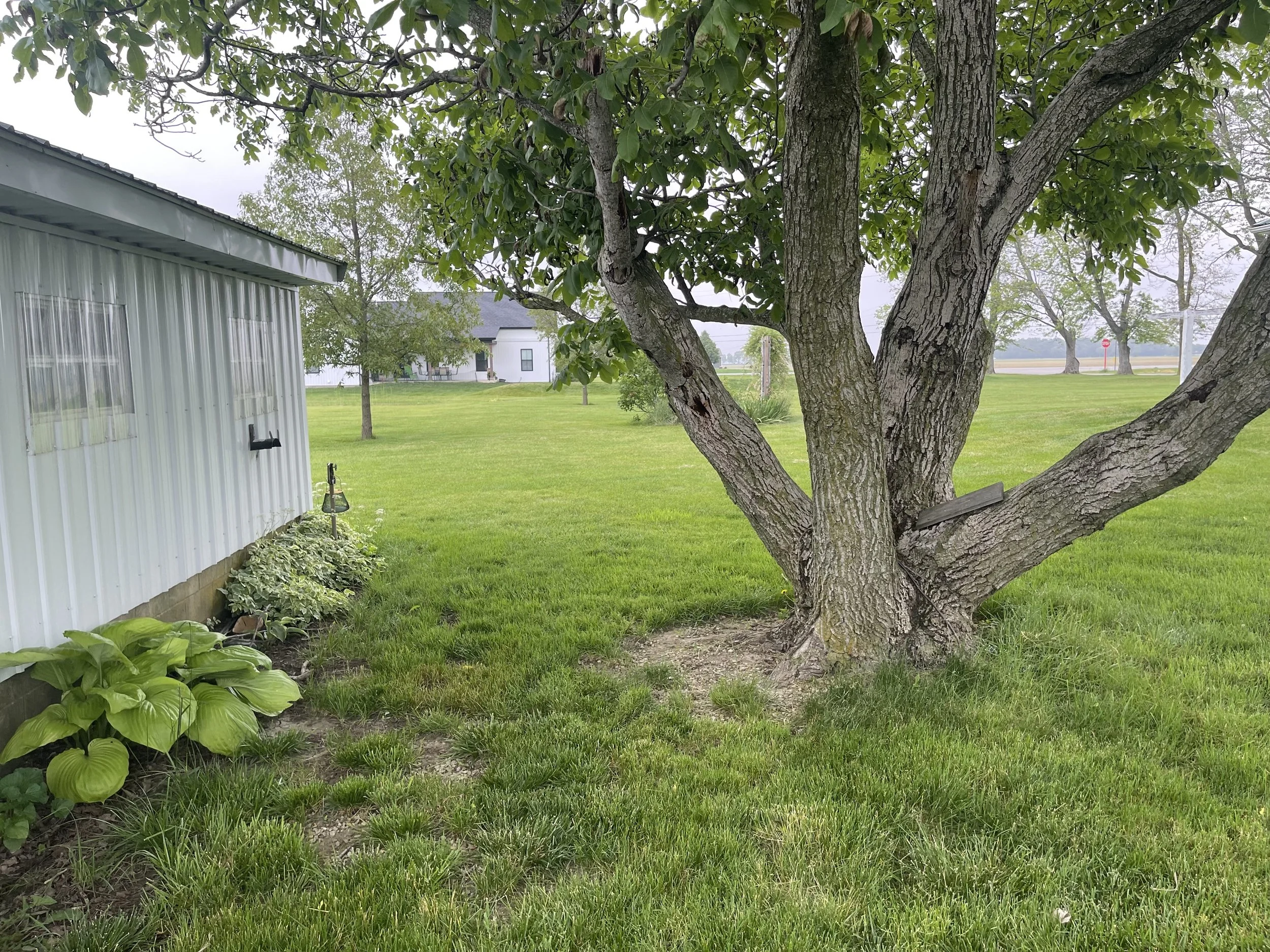
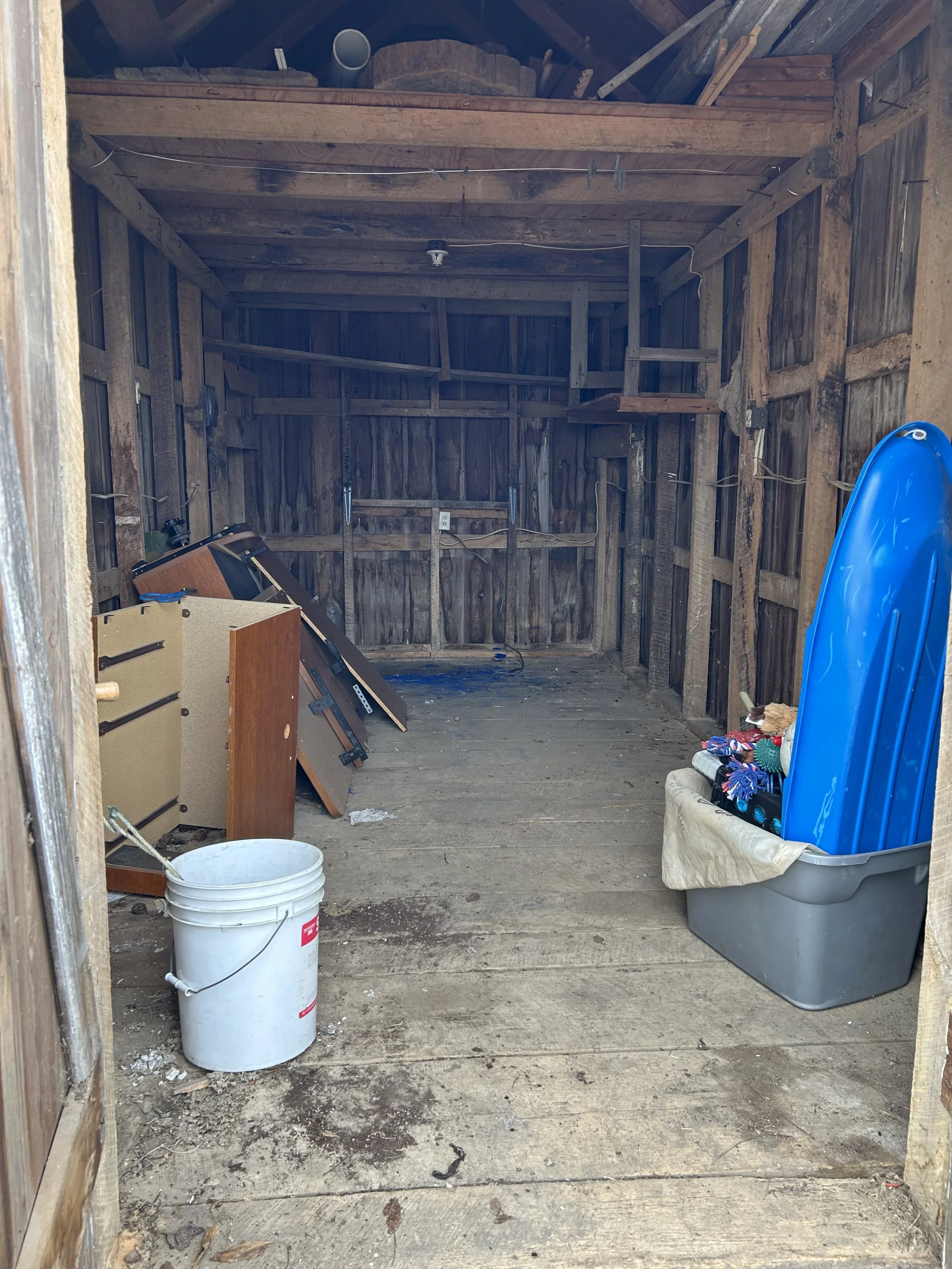
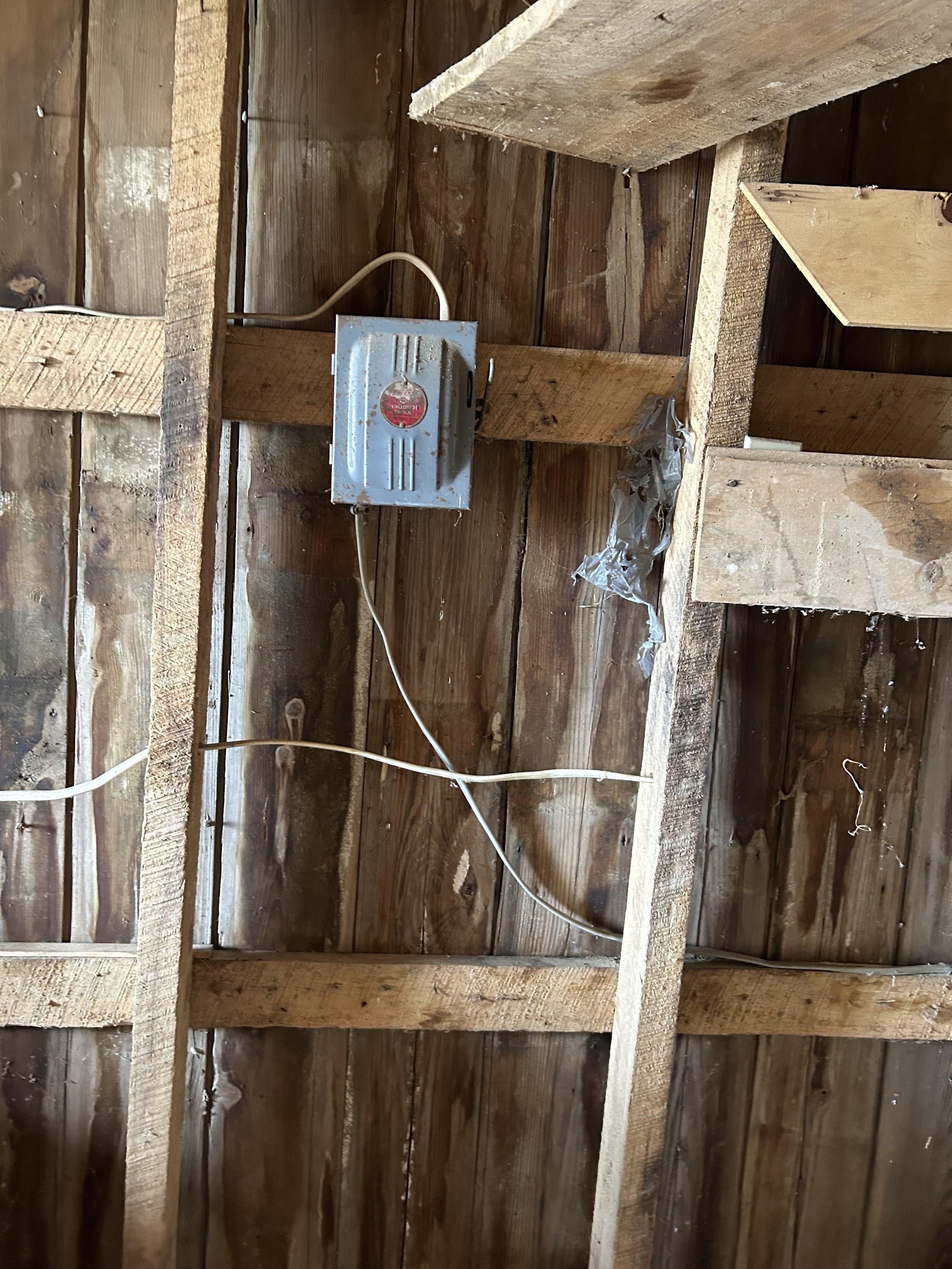
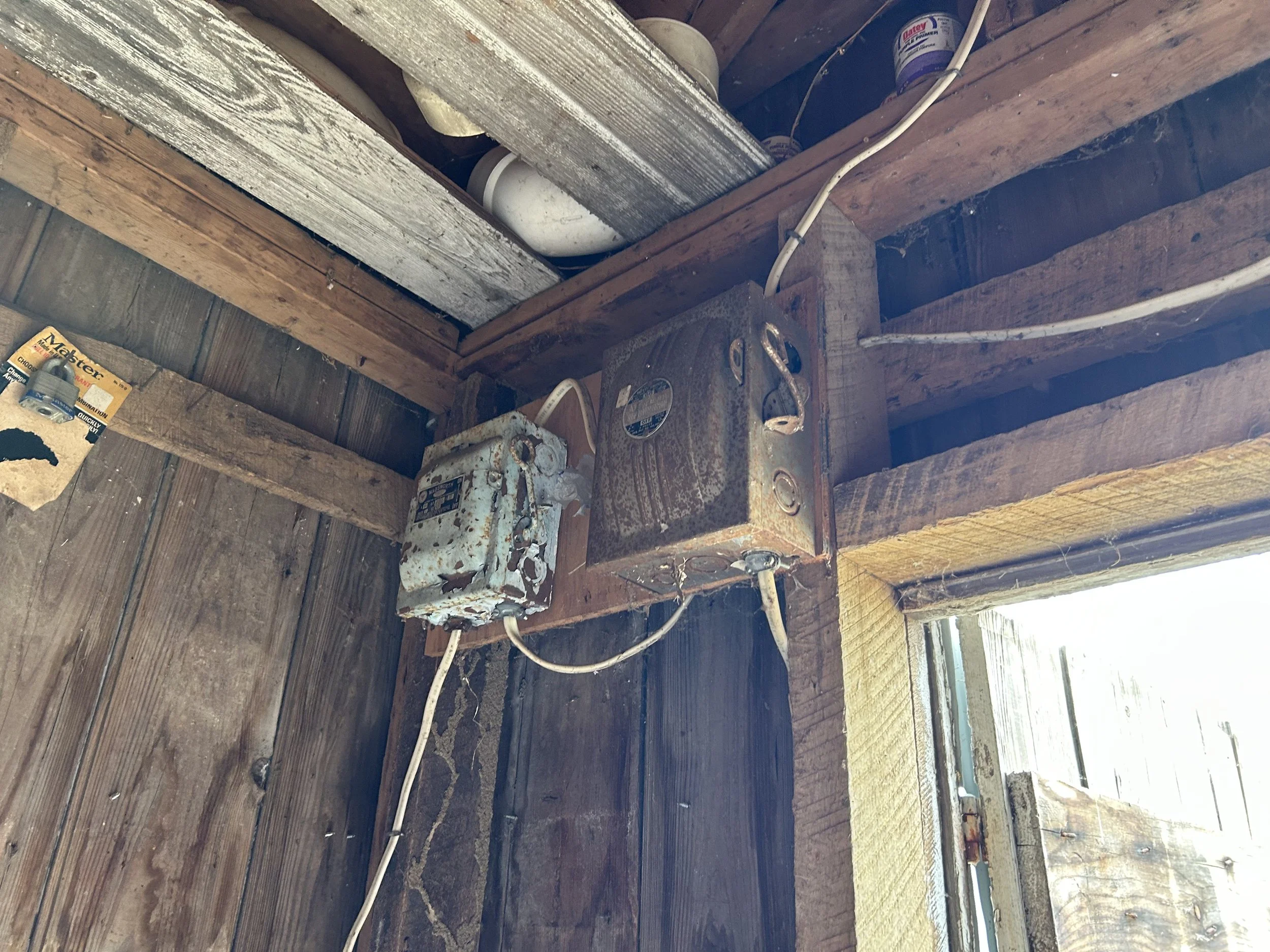
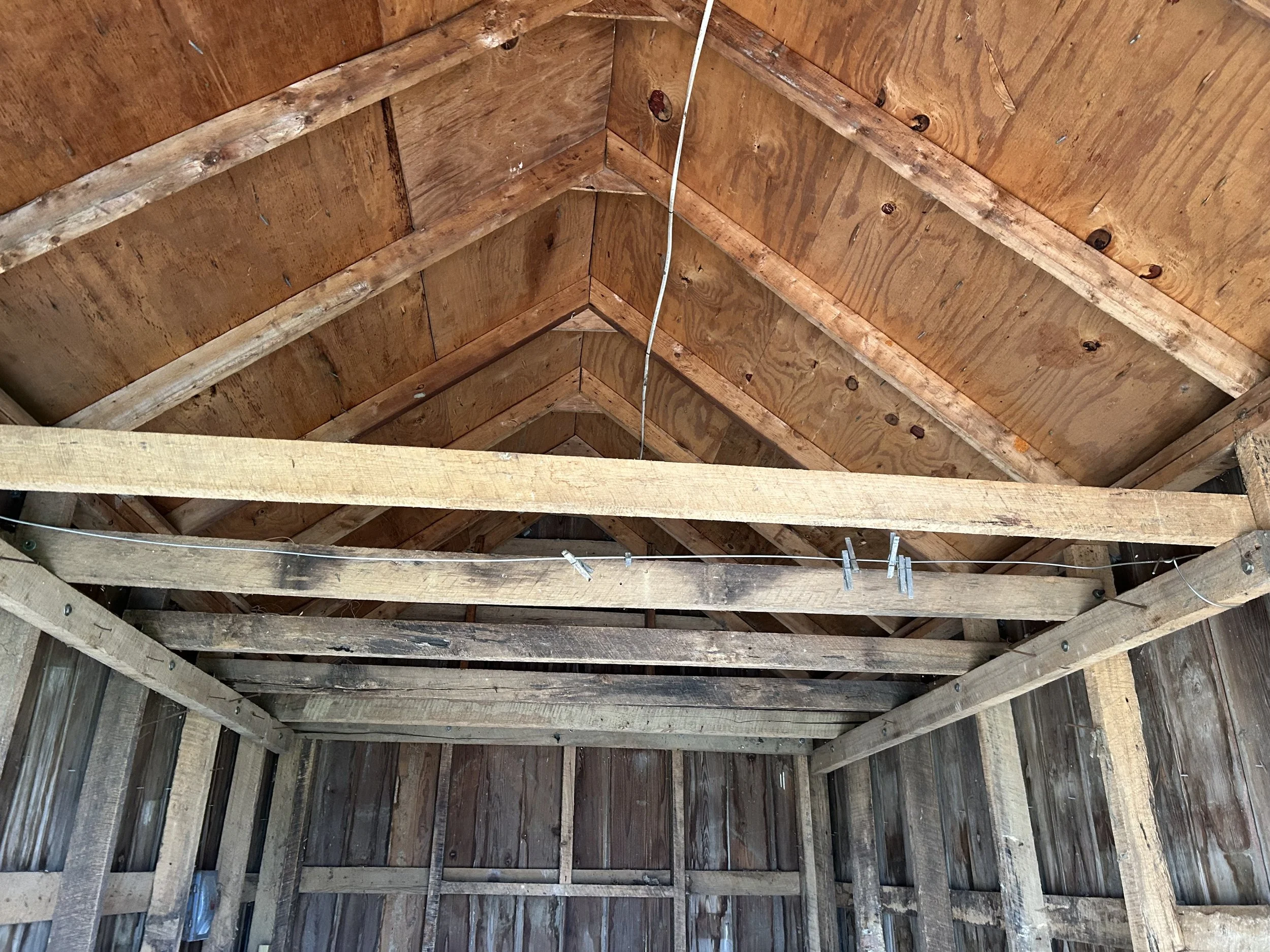
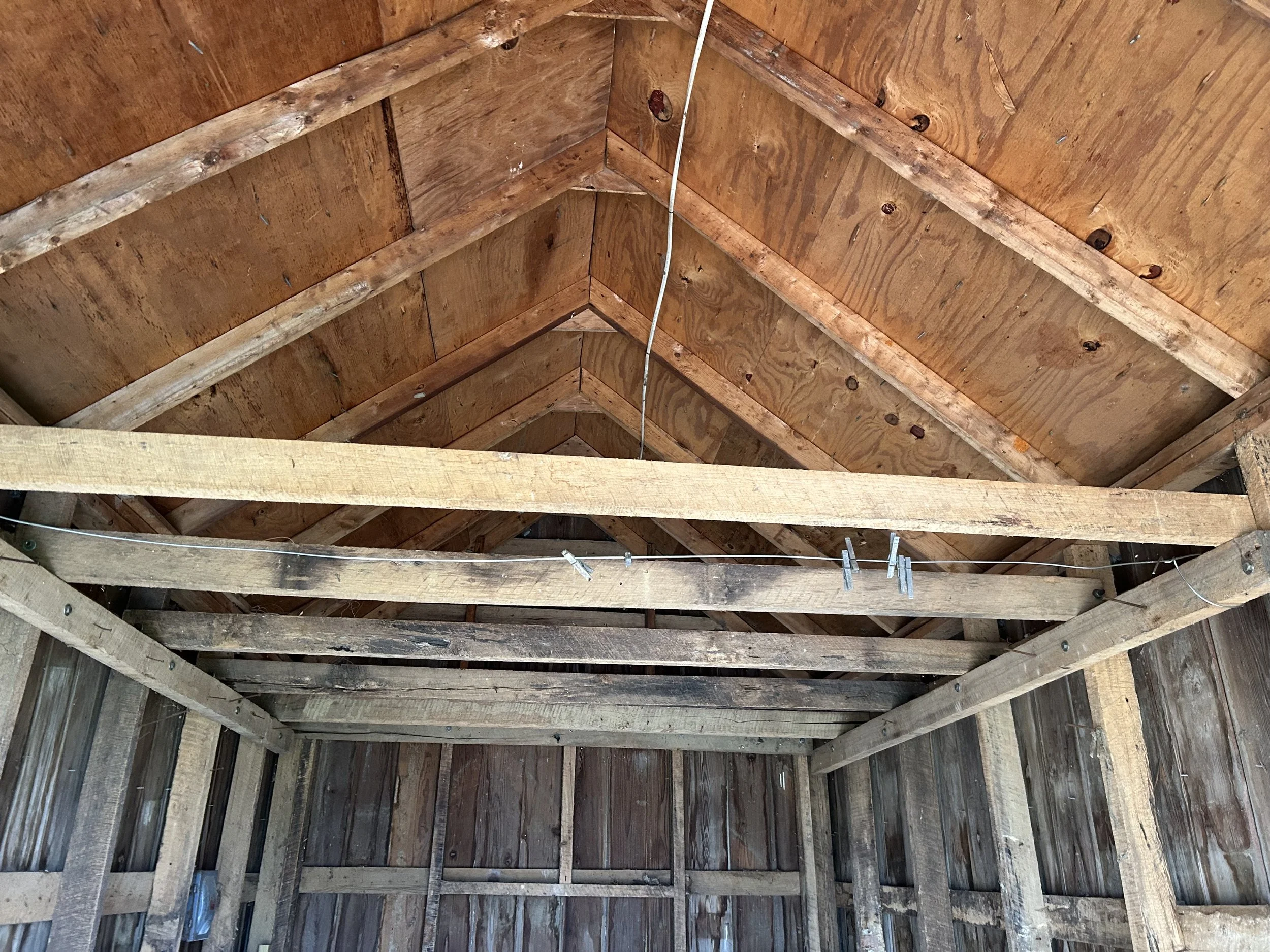
We started by removing the stuff we were storing in the shed, the old electrical wires and boxes, and the old building materials stashed in the “attic”. We tore the plywood floor of the attic out as well to leave just the exposed rafters.
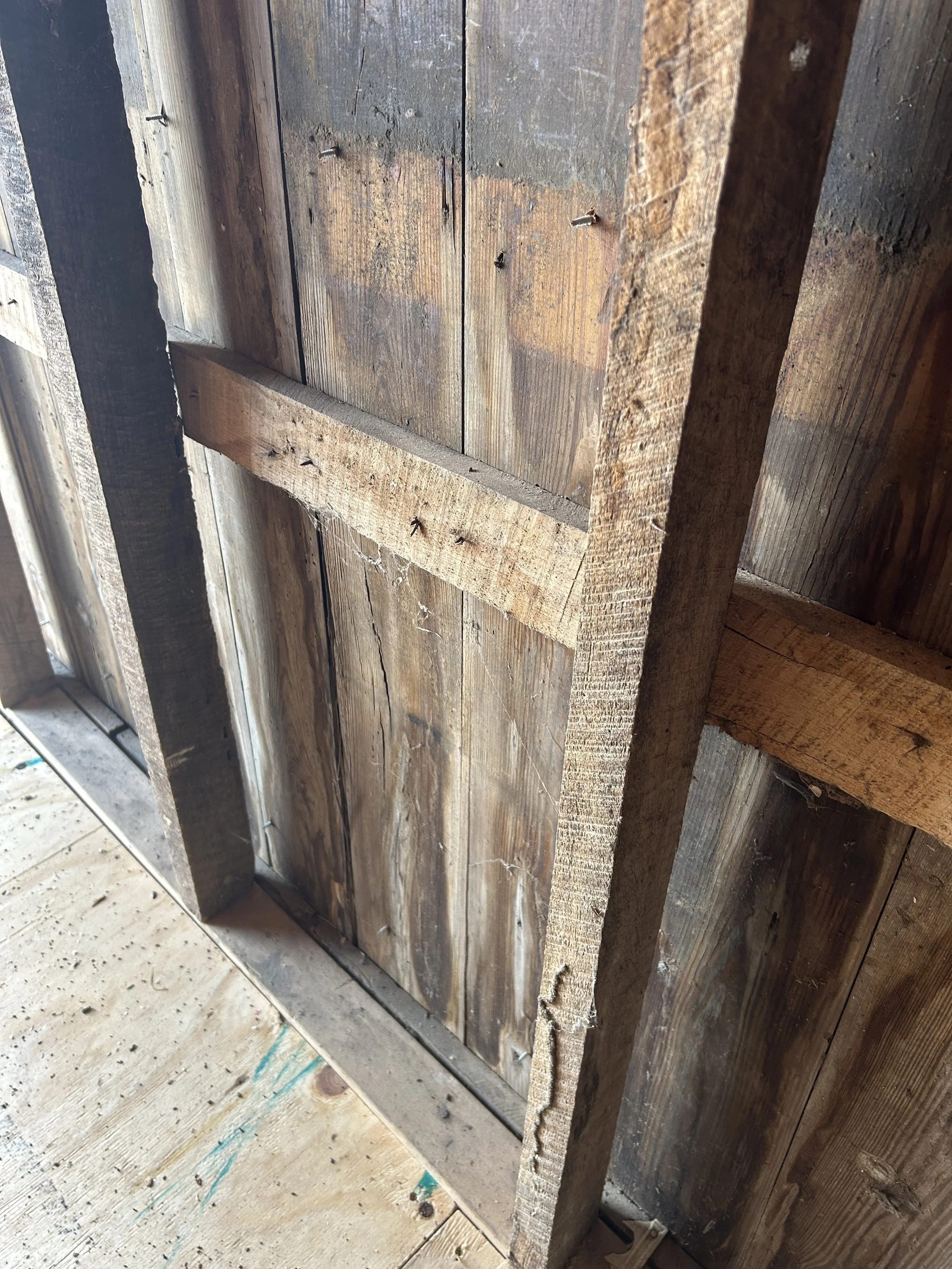
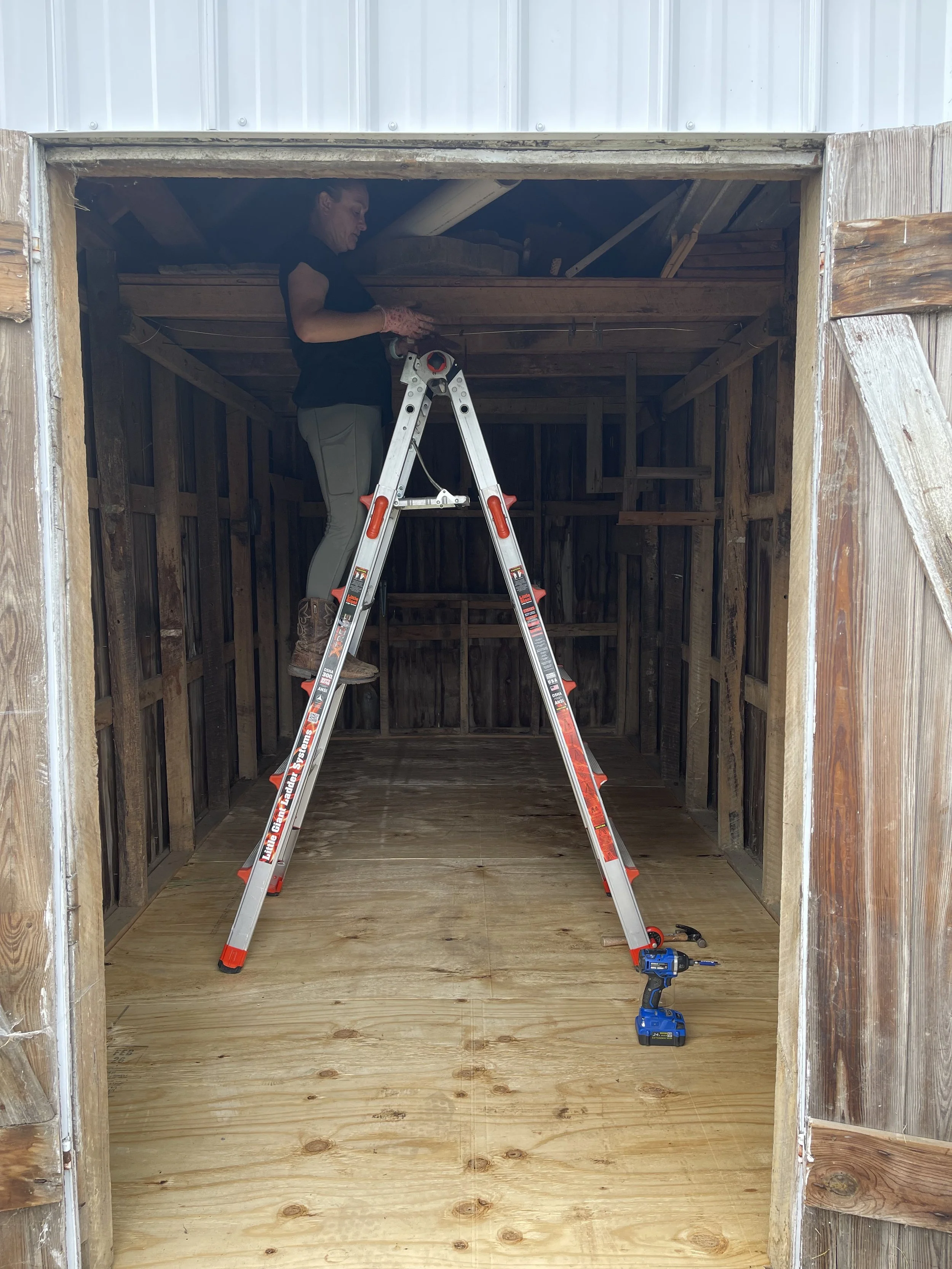
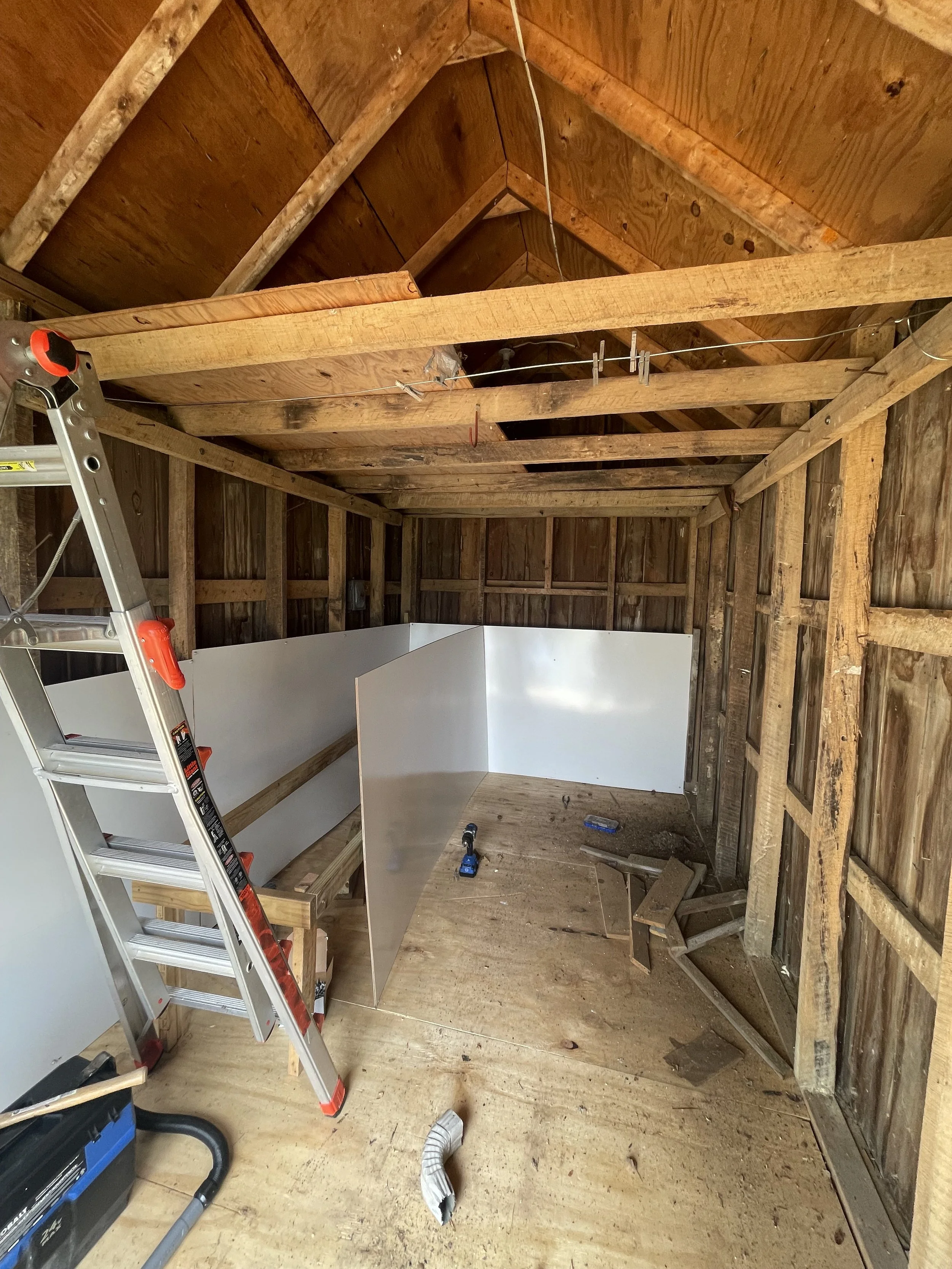
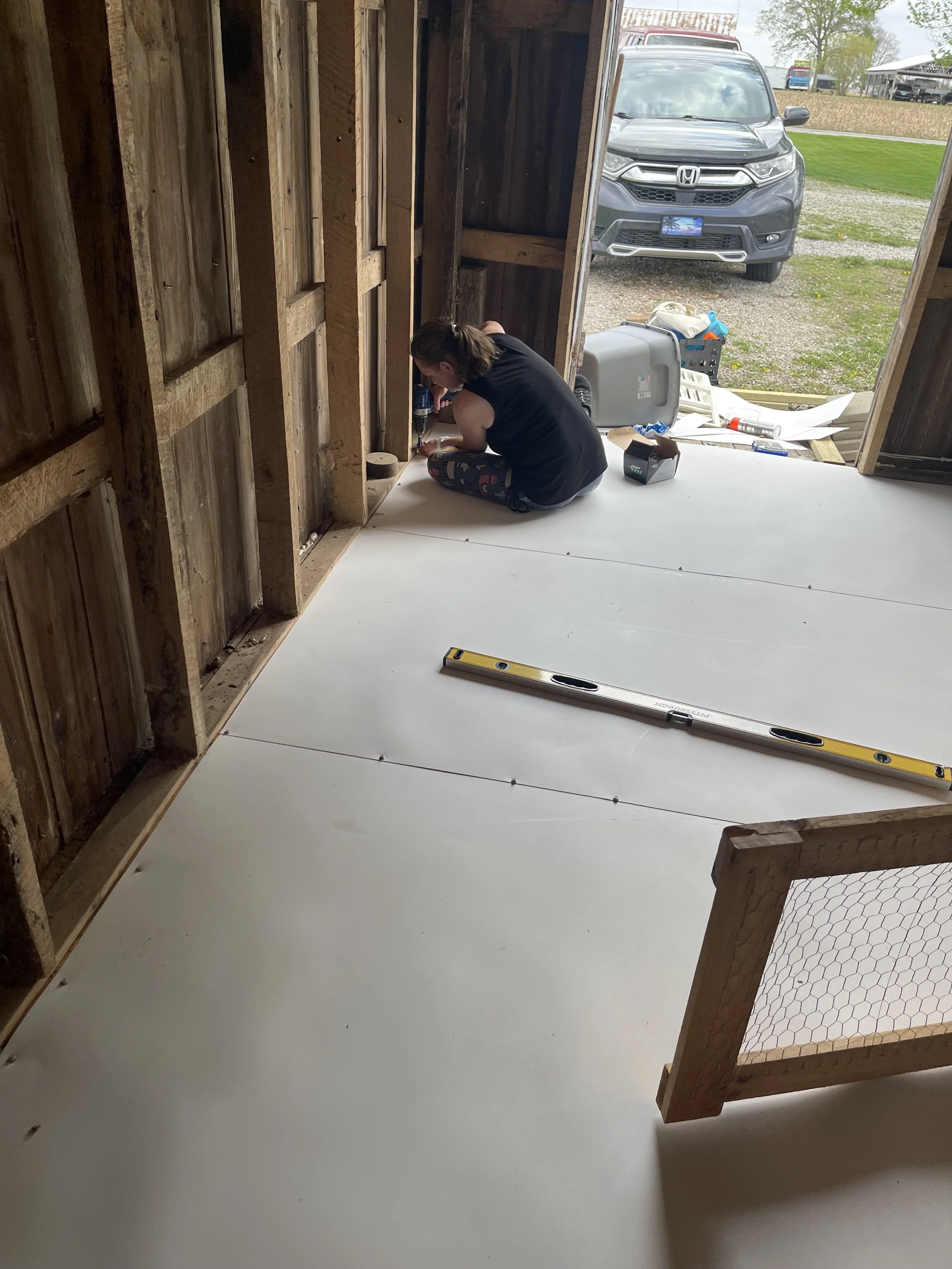
We installed fresh plywood over the existing floor along with plastic sheets laid over and up the walls to make clean up easier and prolong the life of the shed. Then hubs cut some vents in and I got busy building a brooder box for the chicks (they were quickly outgrowing the stock tank they’d been in until now).
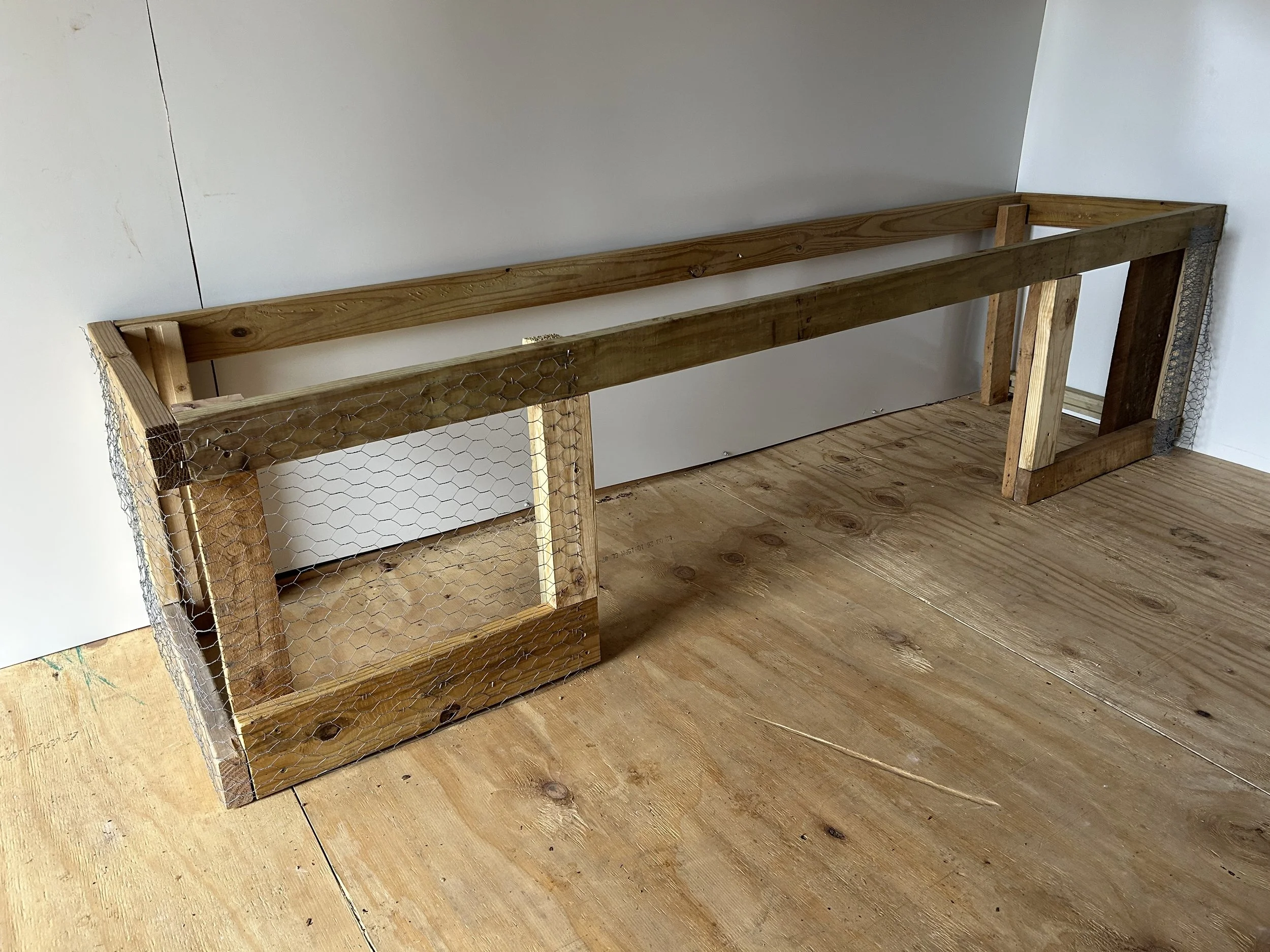
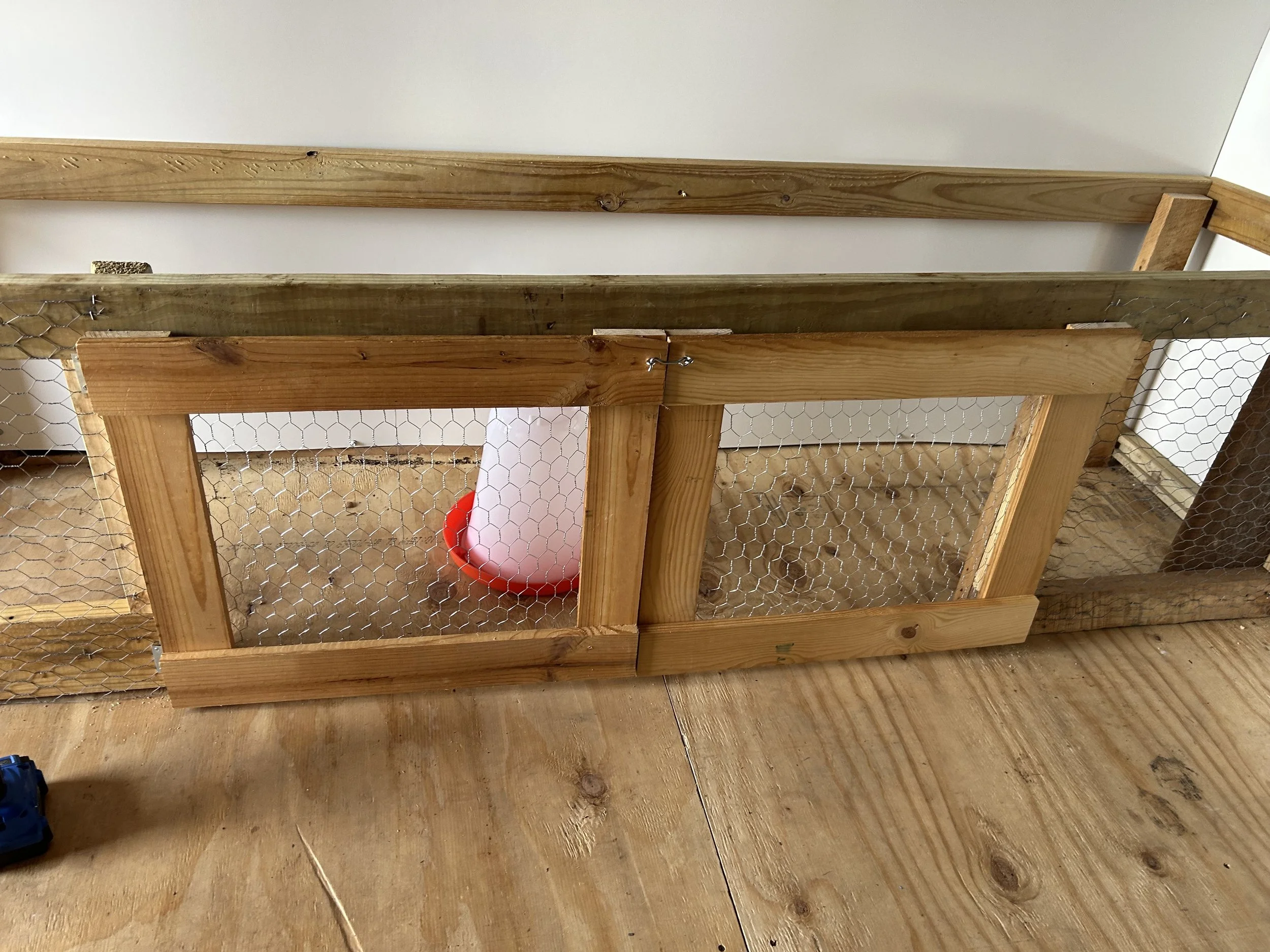
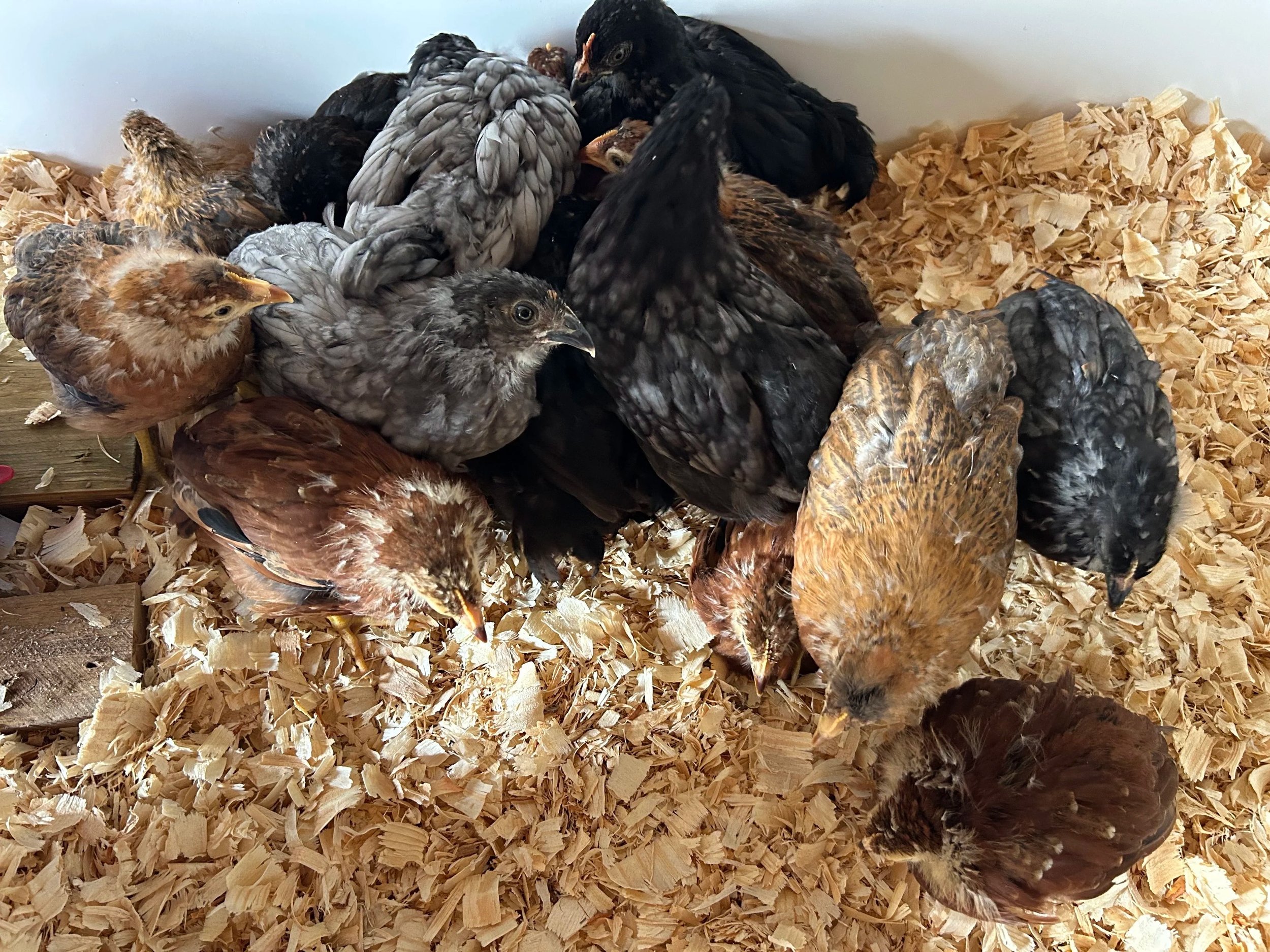
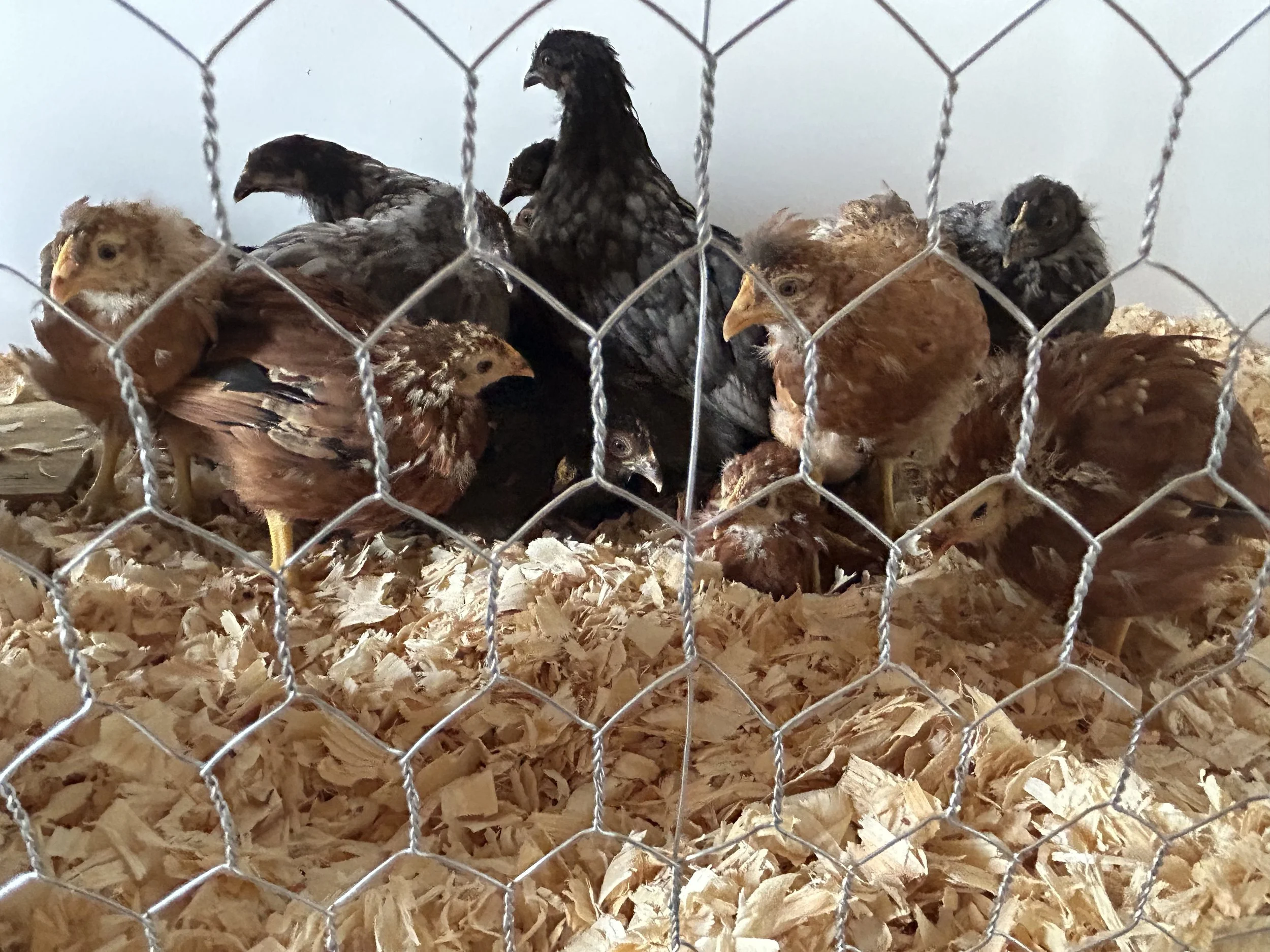
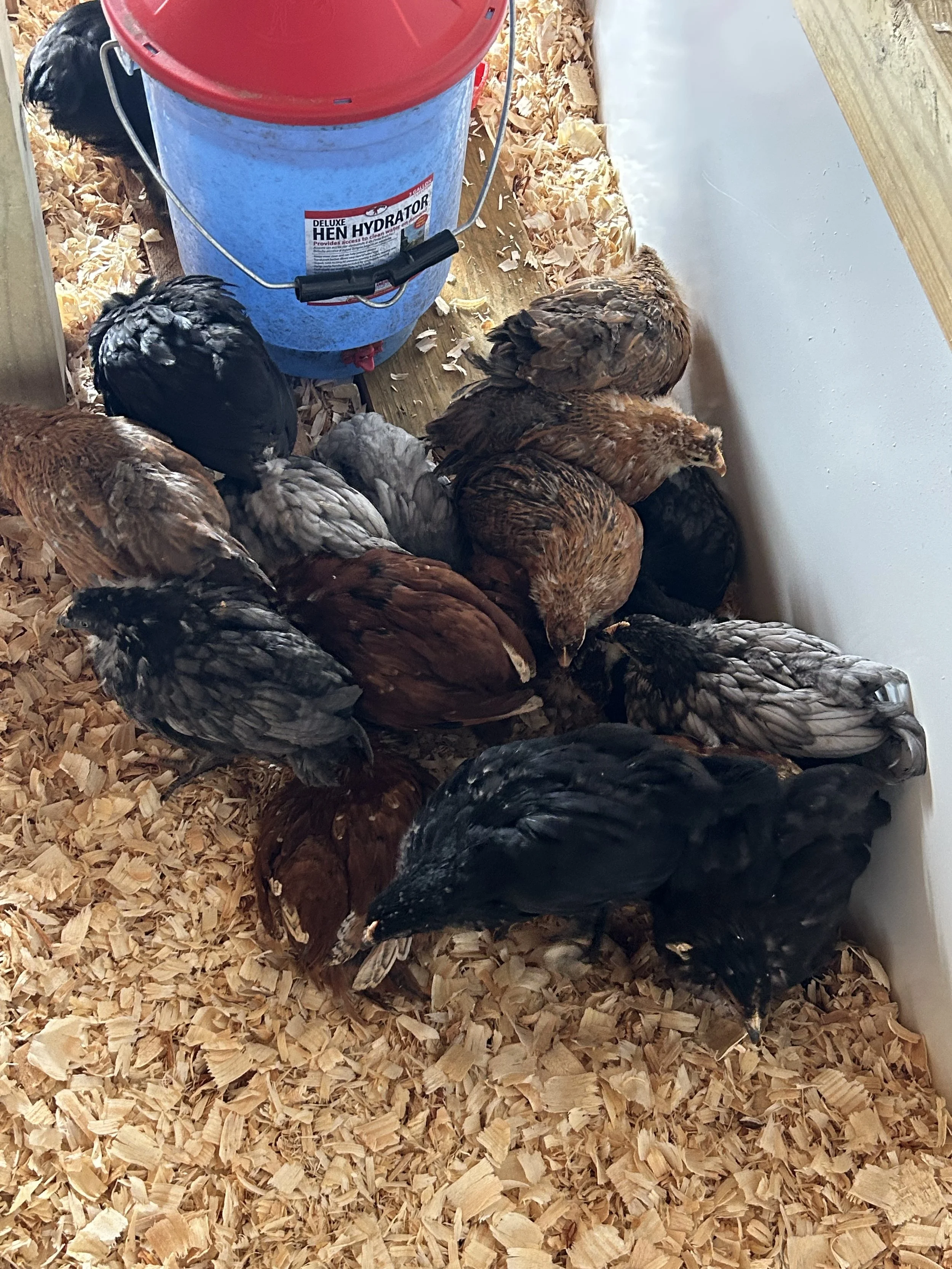
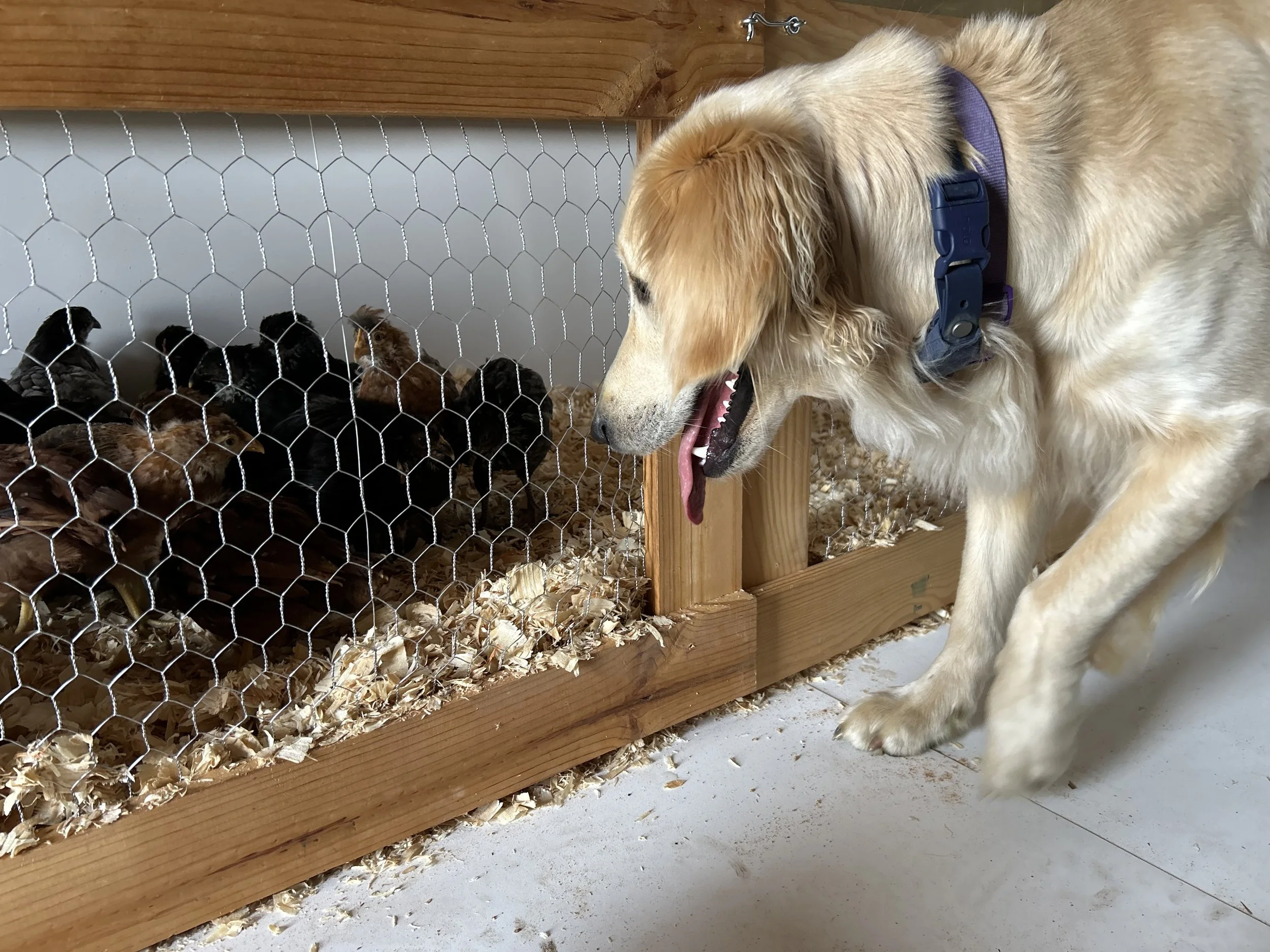
It was about this point when our mentors (aka my GB cousins) came and demonstrated how to process our extra rooster. I will spare the details here, but suffice it to say (as expected) we will not be adding meat chickens to our plans. However, our flock is much happier and calmer now that we’re back in the proper ratio with our 12 hens and a single rooster.
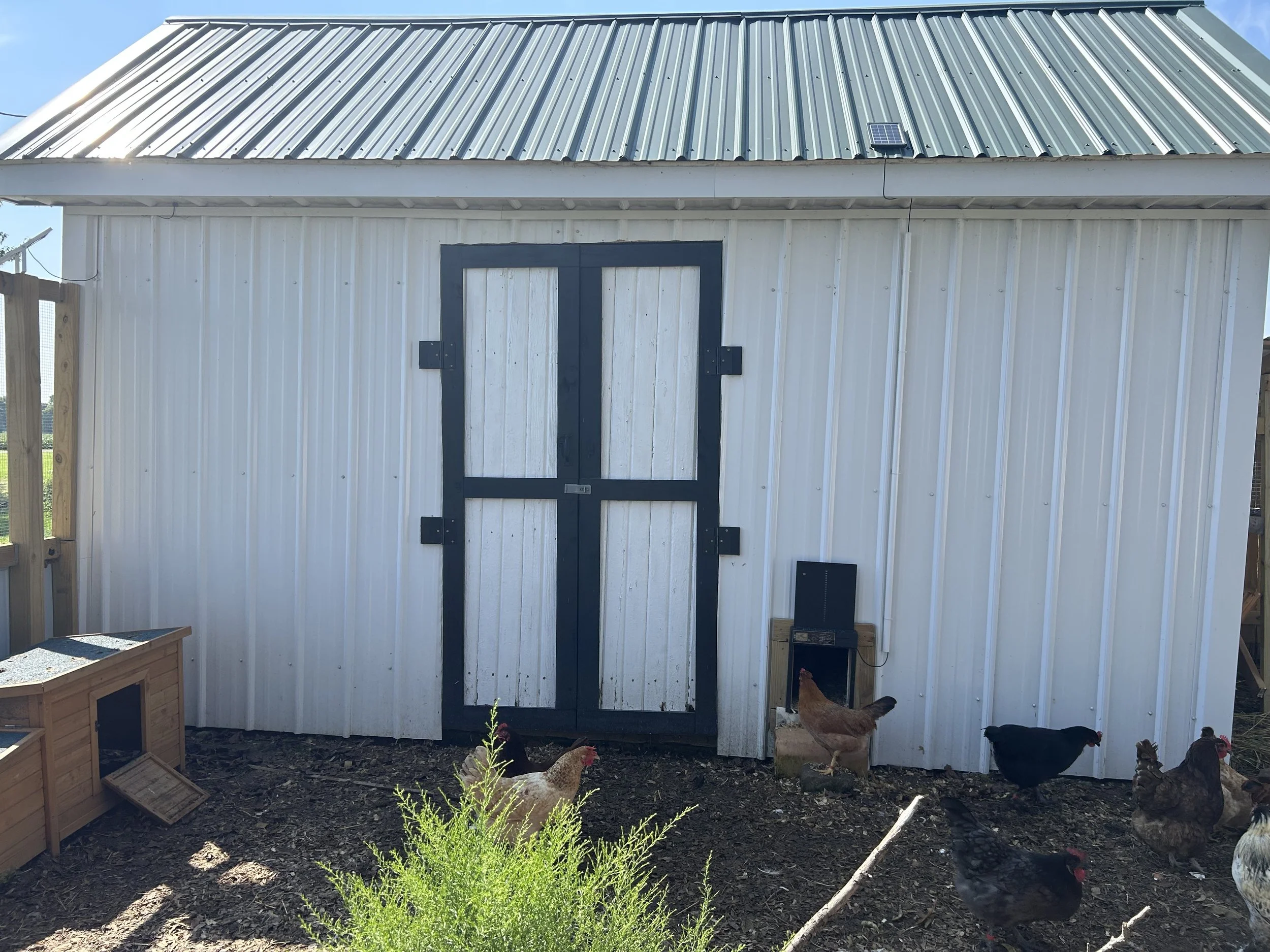
Next was cutting in the doors - both for chickens and for humans. For the chickens, we opted for an automatic door. Highly recommend. Ours is programmable to open and close at a set time each day and is powered by a solar panel. Our ladies love it and it’s nice for us forgetful/inconsistent folks. For the human doors, the existing entrance opened towards the driveway, but I wanted one that would open into the coop so that a) the chickens would not escape (and the dogs would not get in) in the process of me coming and going and b) when cleaning, I can just sweep the bedding out into the chicken yard vs. onto the gravel driveway. Hubby made it happen and we added a bit of trim to up the charm factor. Cute and effective—my favorite combination.
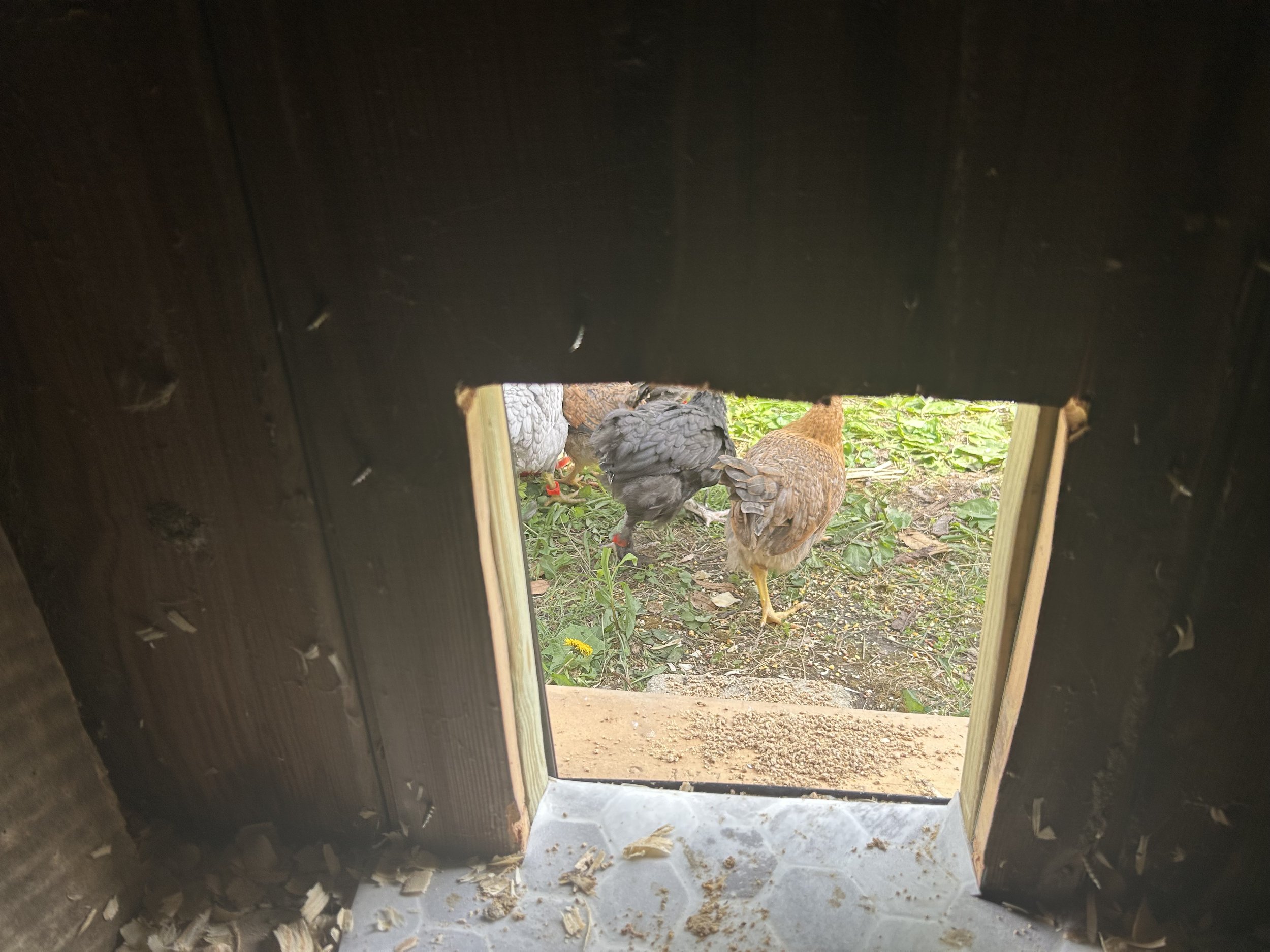
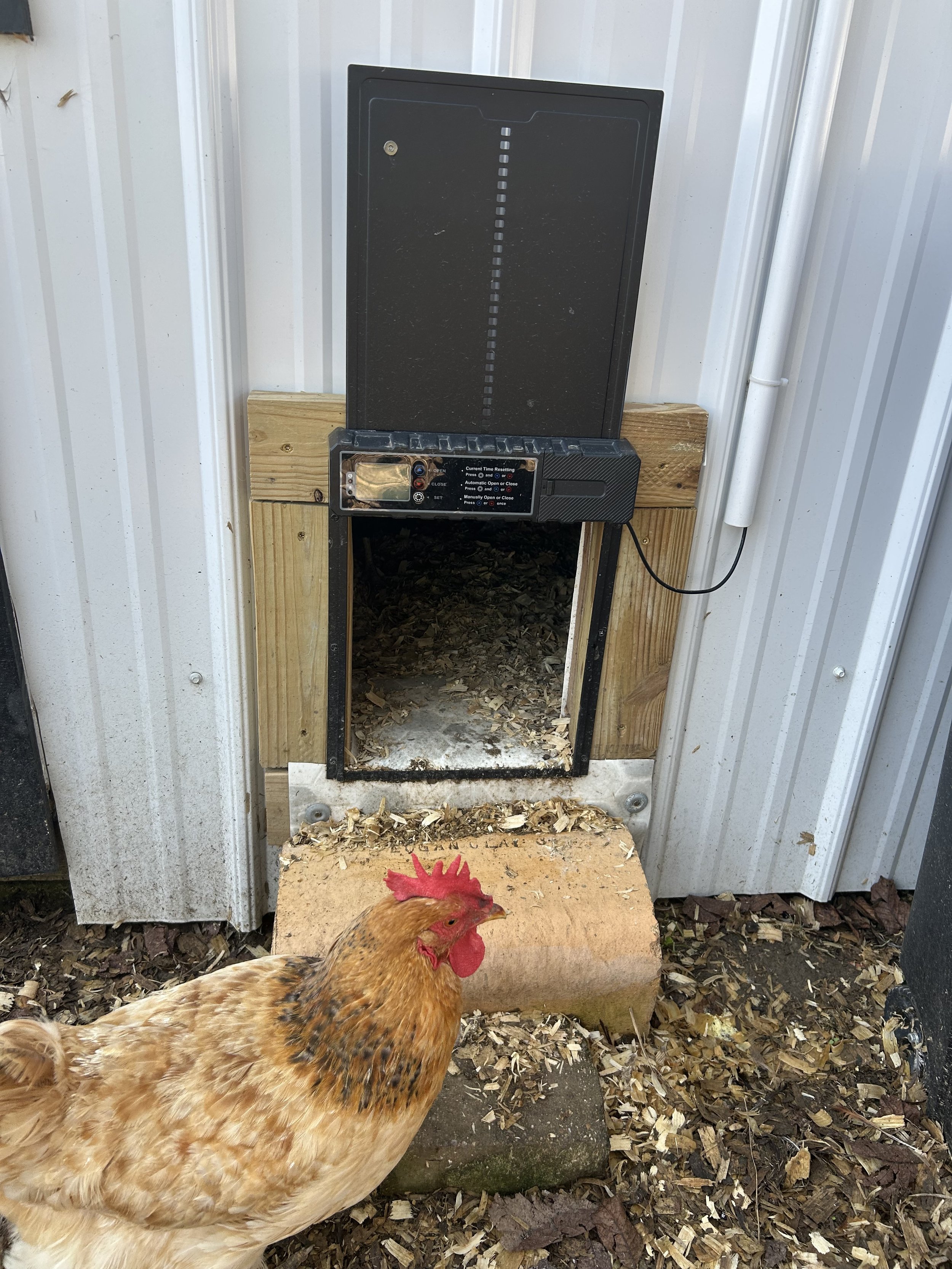
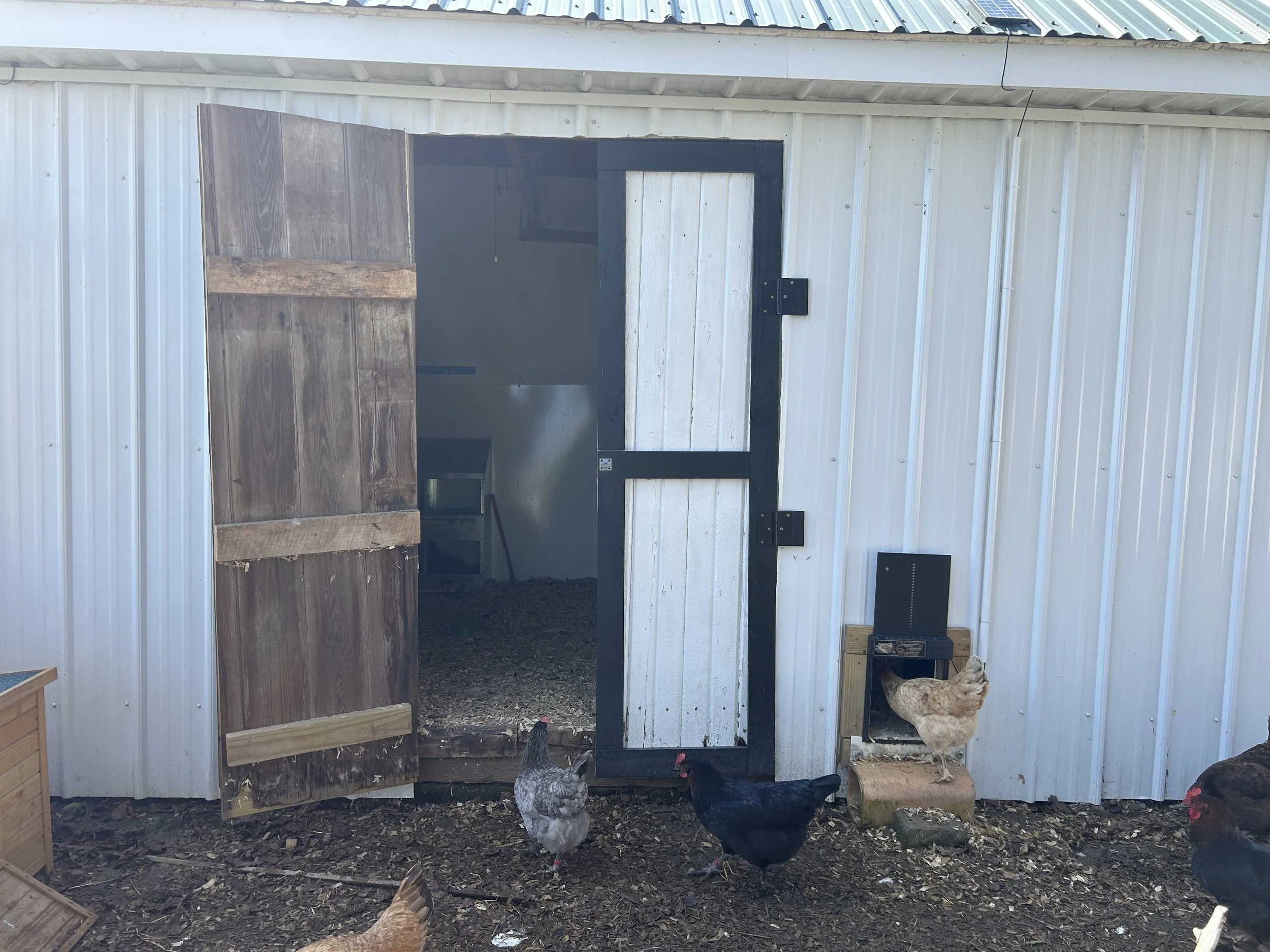
For now, the rest of the interior elements are fairly simple. I opted to purchase nest boxes because the girls originally snubbed my homemade one. Then we moved everybody in and they also snubbed my beautiful natural stick roost ladder and use the existing rafters in the top of the shed.
Whatevs.
Everyone is getting along so far, so I’ll call it a win.
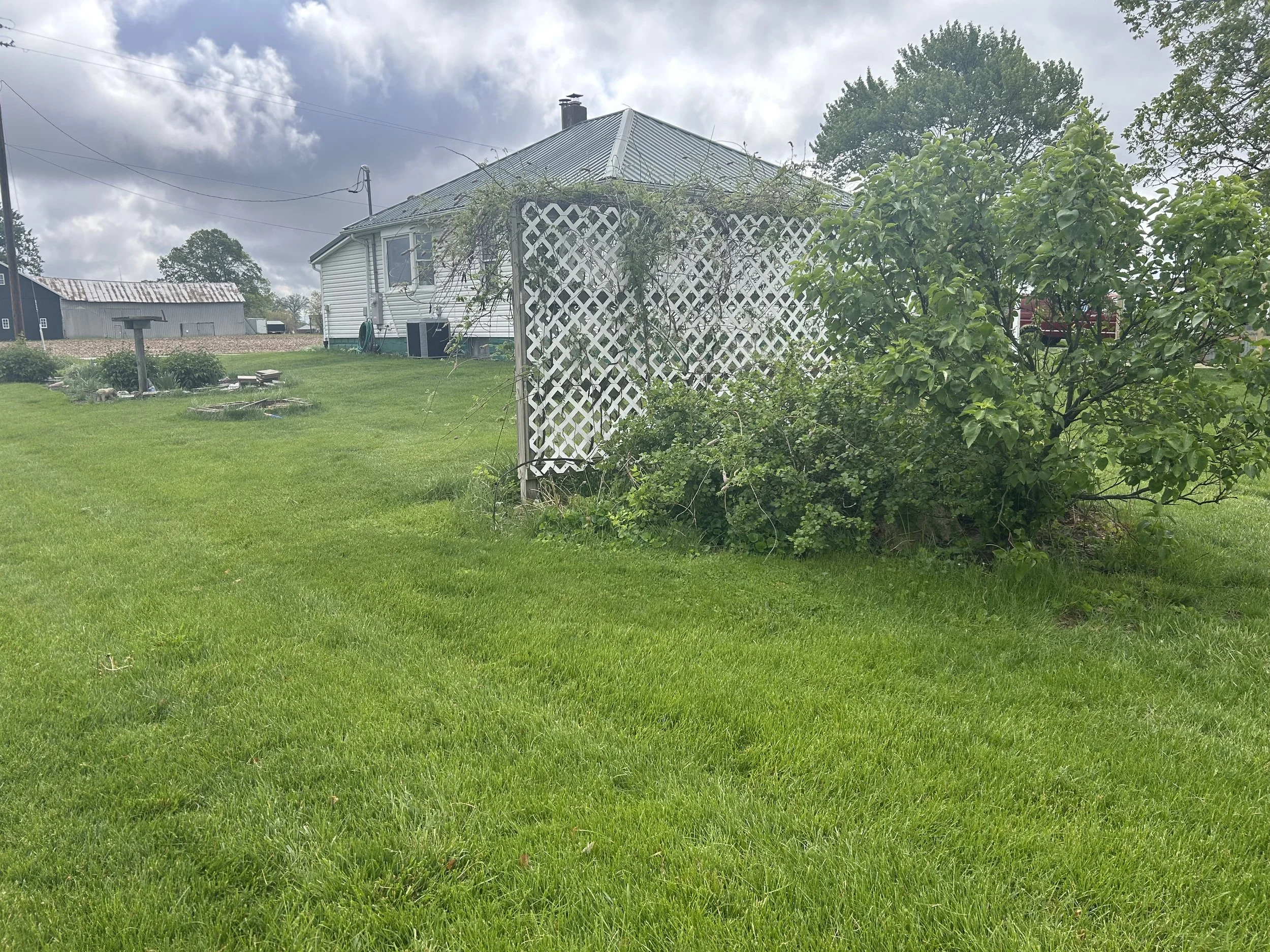
You can also see our chicken pasture
Year One Goals
Task List for year one on the farm.
April 25th 2026 - April 24th 2027
Last week I reflected on our first partial year at the farm, Year Zero.
We also already shared our overarching goals for the future of the farm, which has ironically changed considerably in just the few months since we created it.
But I wanted to take a moment to share our task list for Year One. As a planner, especially with a project as large as a 7-acre farm, it’s important to me to break tasks into smaller pieces. This helps me schedule and stay on track, monitor progress, remind myself of how far I’ve come, and adjust expectations in the future so that I can plan even better next time around.
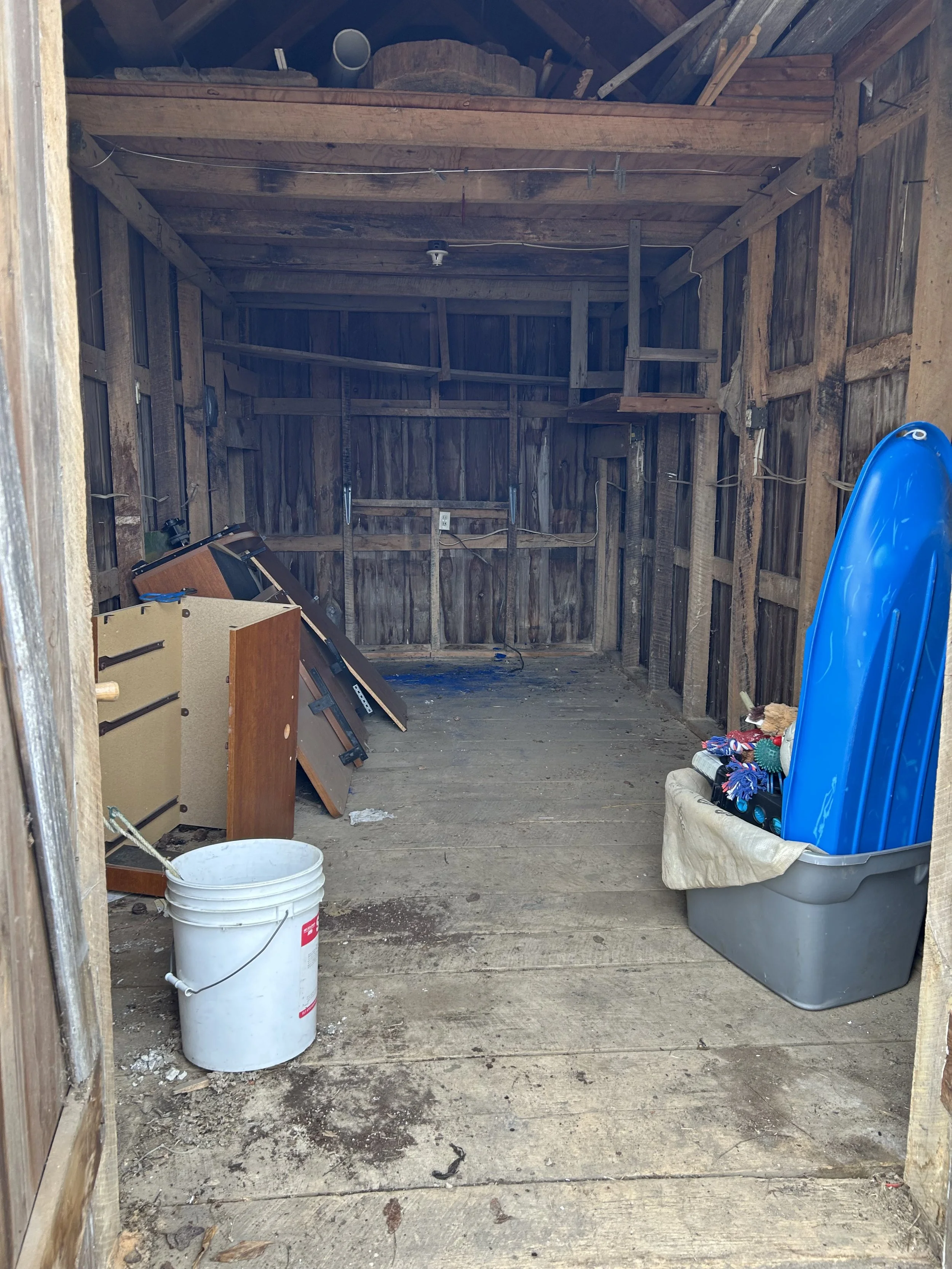
The big goals for this year are to 1) build the small animal house & pasture, 2) start the vegetable garden, 3) set up our recreational space, and 4) fully settle in/unpack. Some things we’ve already begun work on. I’ve added teaser pictures of these, but more posts will come as we complete things.
Year One task list includes:
Chickens and Rabbits
Pasture enclosed and predator proofed
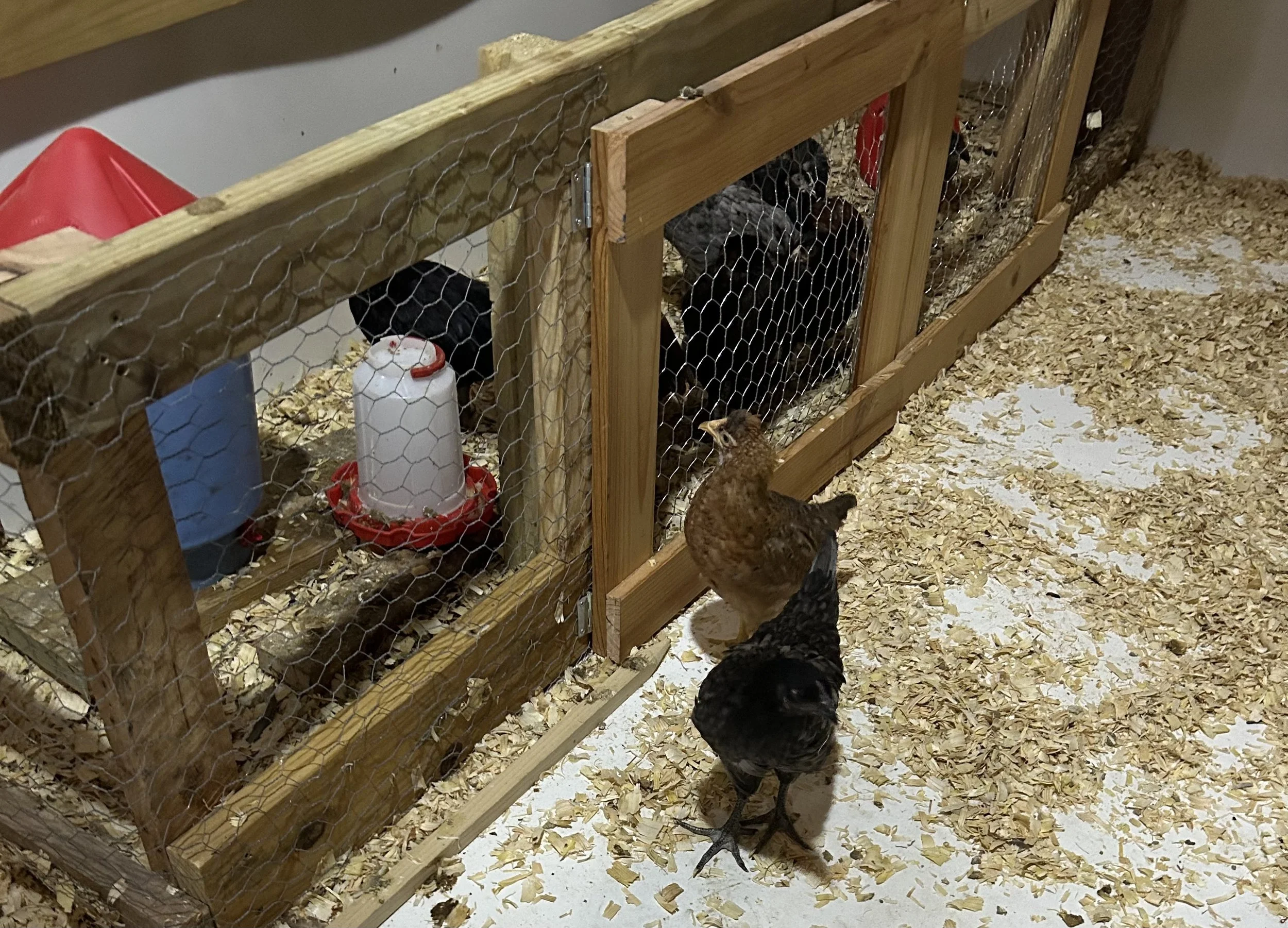
Garden shed converted to chicken house
Enrichment
Food & water management
Vegetable Garden
Place small (existing) greenhouse
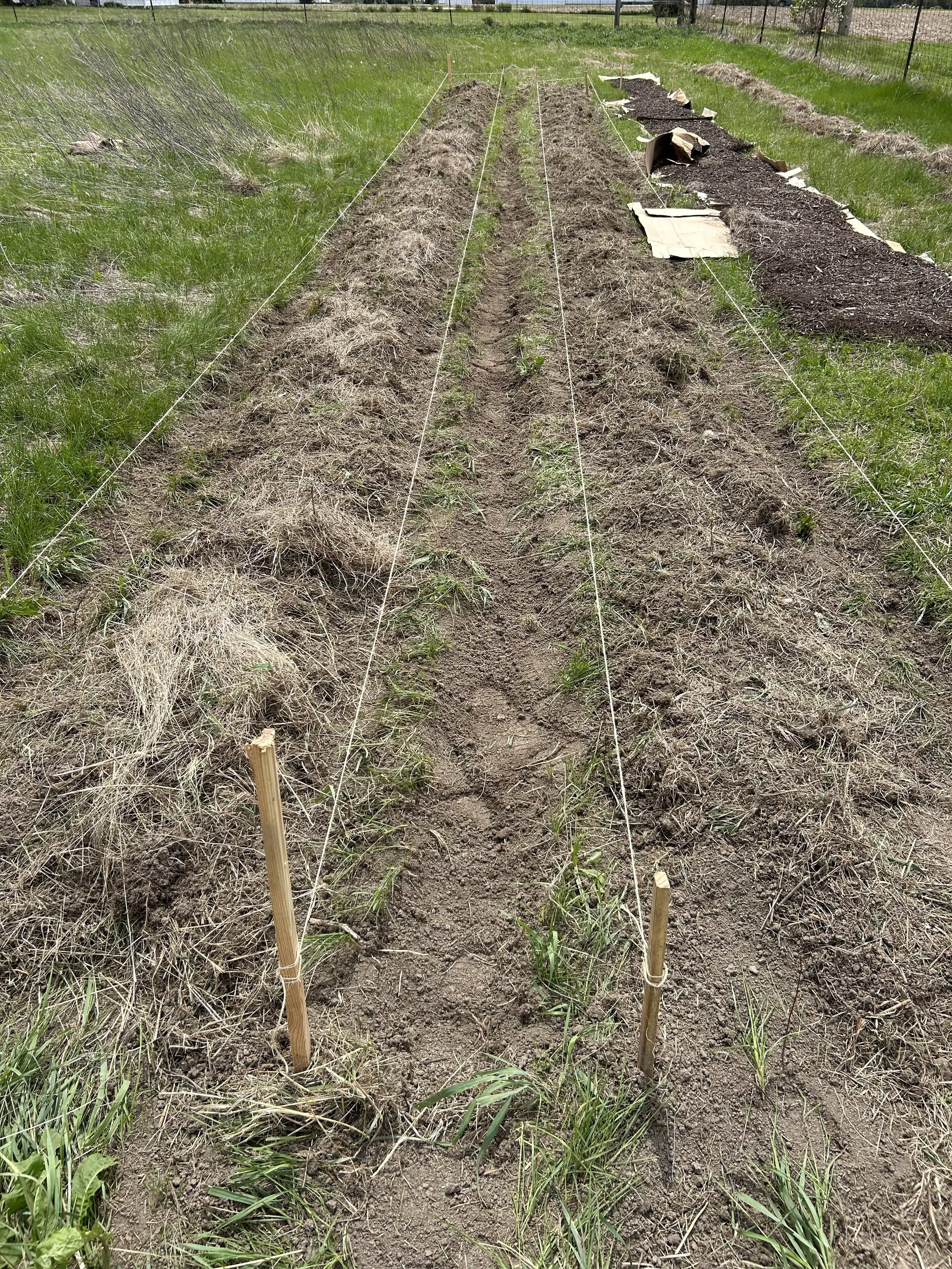
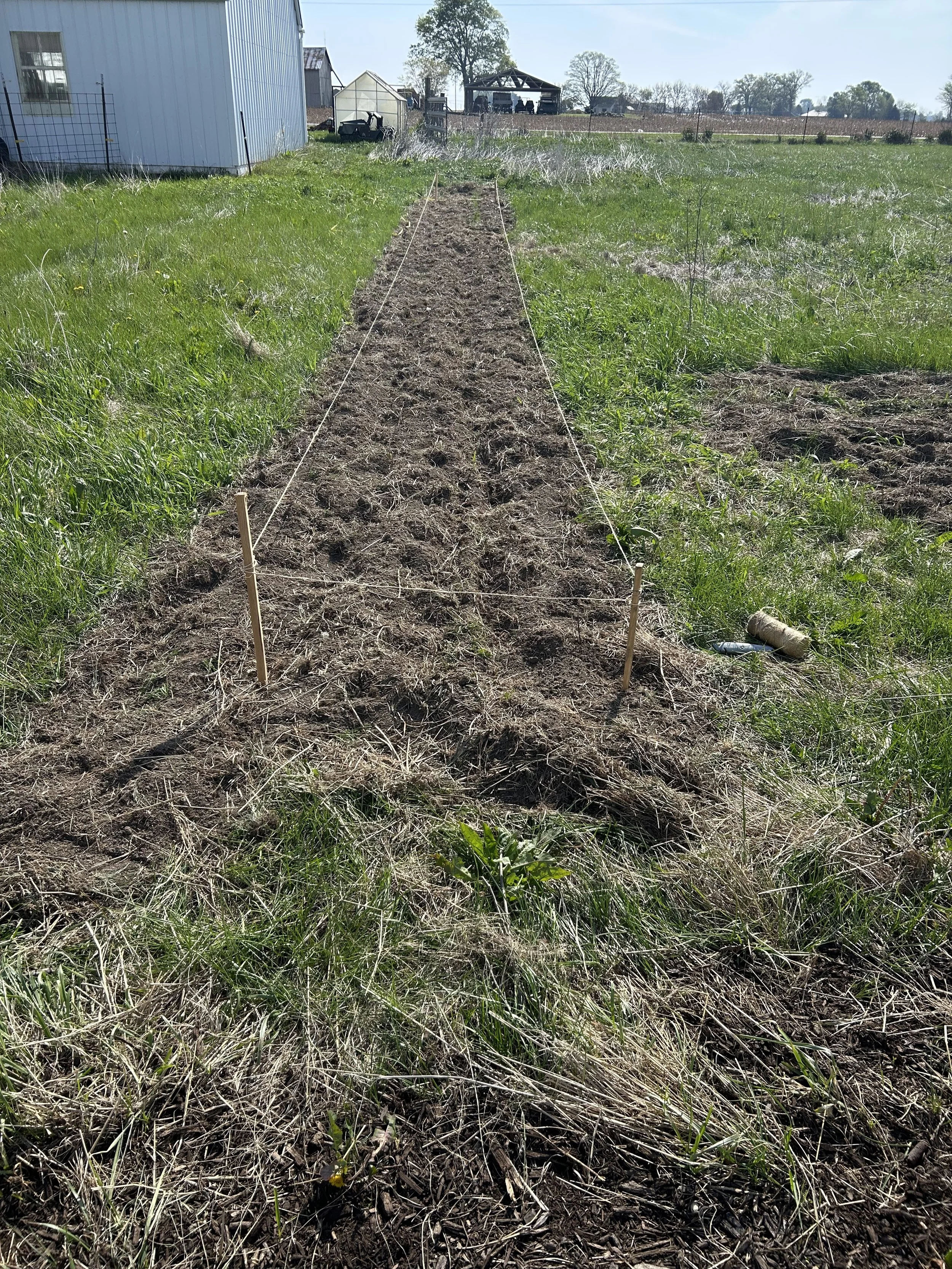
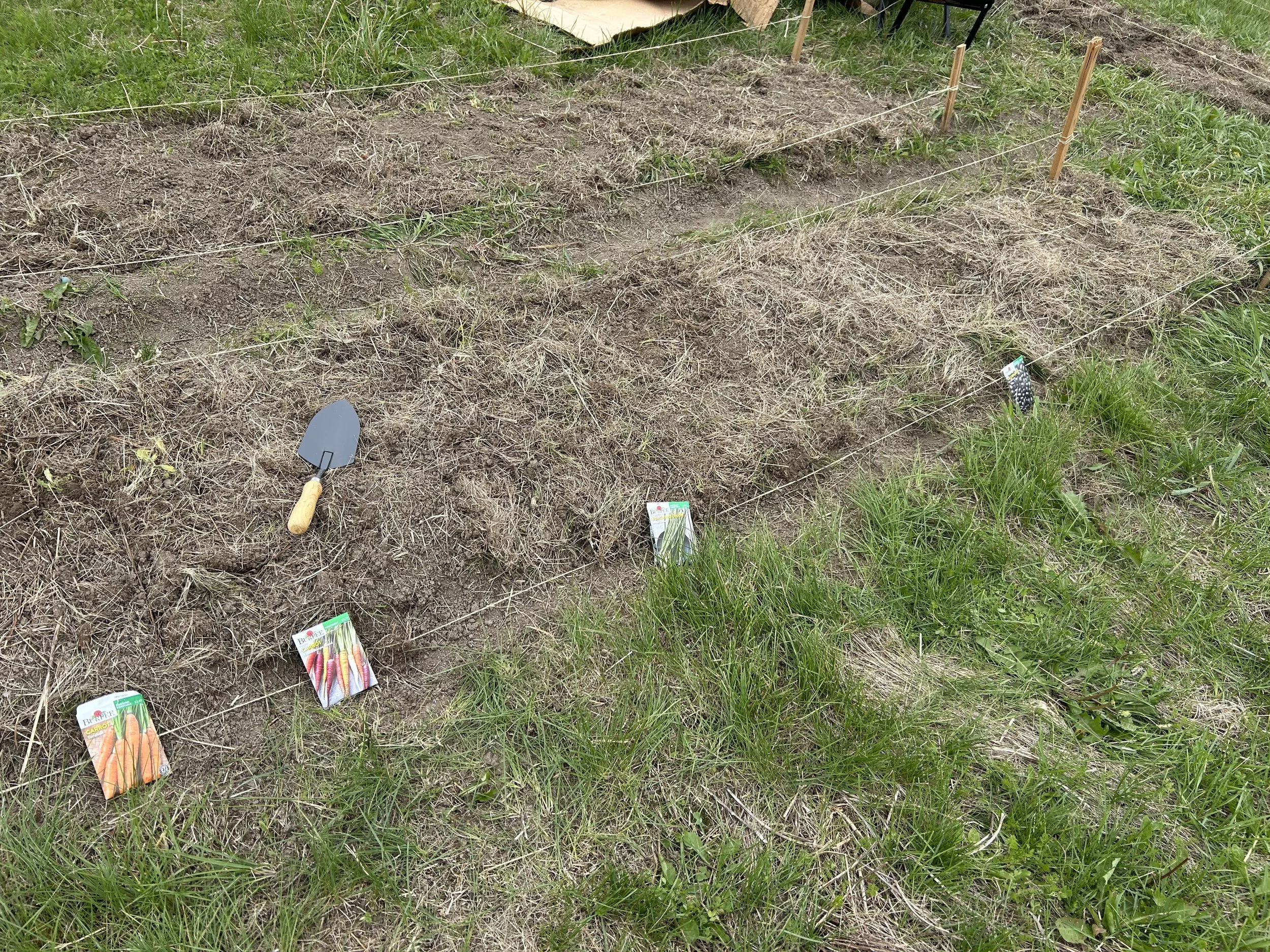
Prep garden beds (4- 30”x50’ rows)
Vegetable garden - 20ish varieties, plant, tend, harvest, preserve
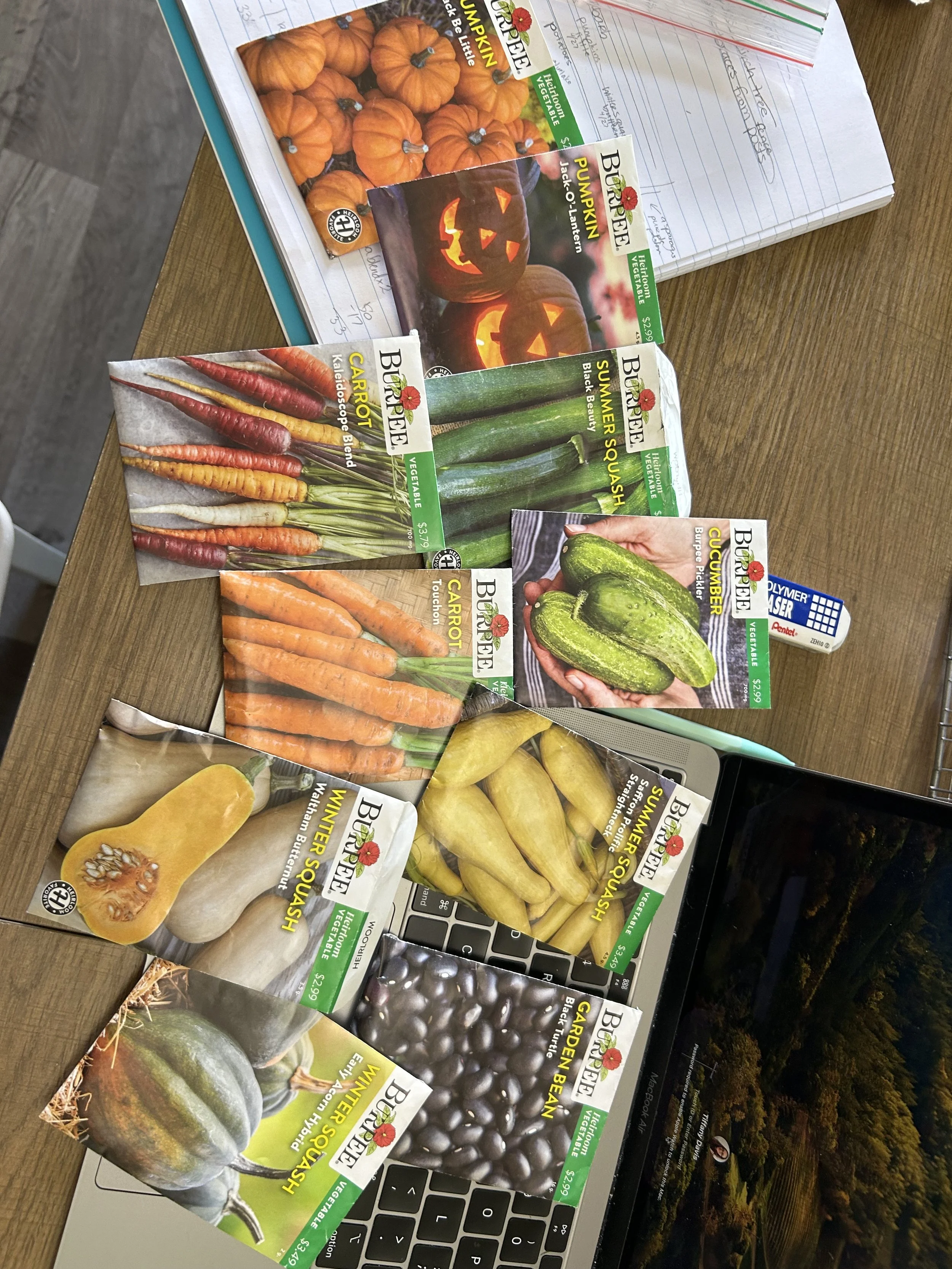
Start food forest
Use existing orchard and add next layers
Berries, horseradish, perennial vegetables
Plant new trees towards front pasture
Plant canopy & border trees
Memorial/Pollinator Garden
Define full garden space
Recreational section - (this began with the idea of recreating my grandmother’s arbor swing but conversation has shifted to include a fire pit, pergola, and picnic table - we’ll see.)
Memorial Plaque and stones
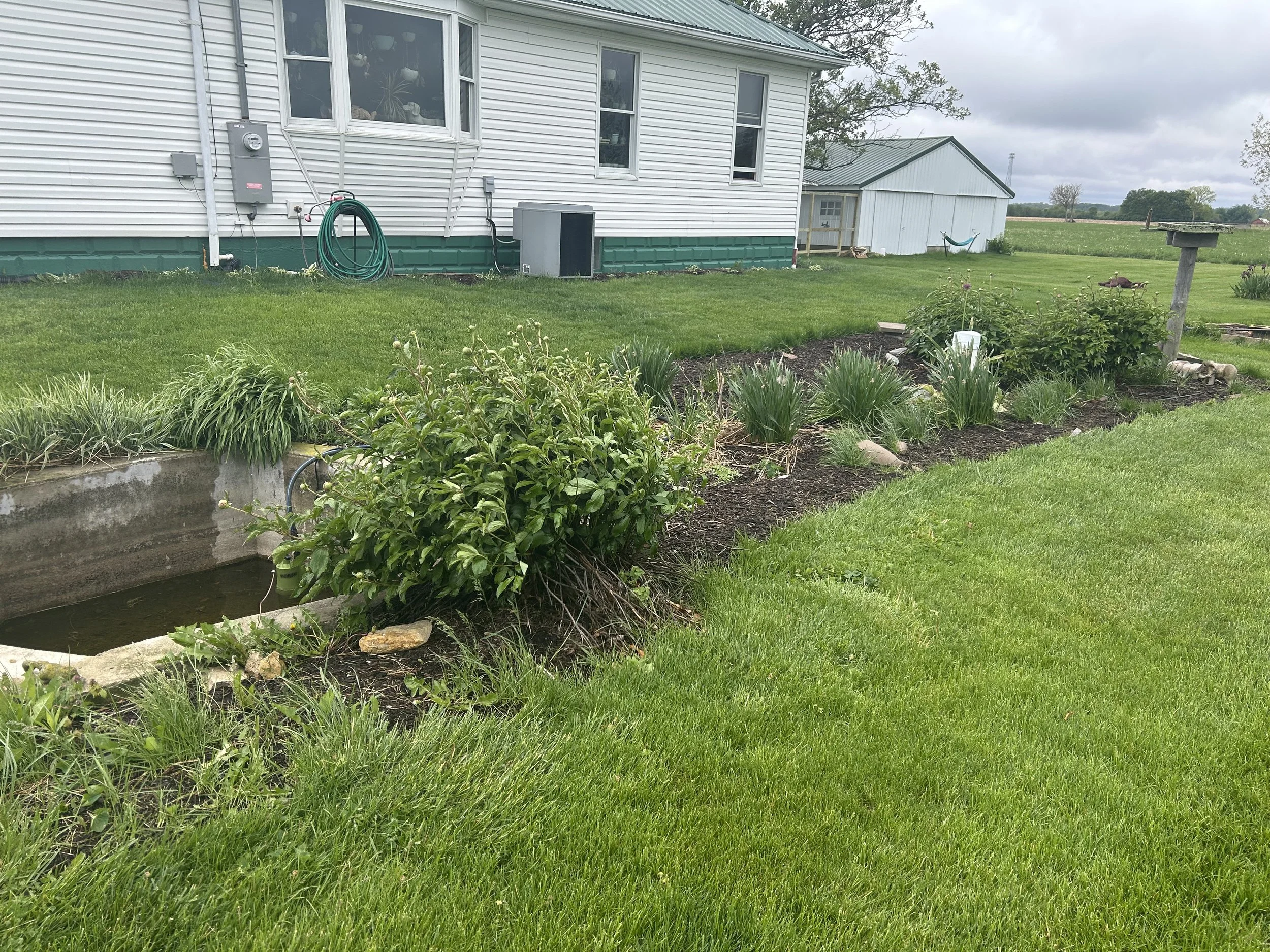
Clean up Pond
Toad haven
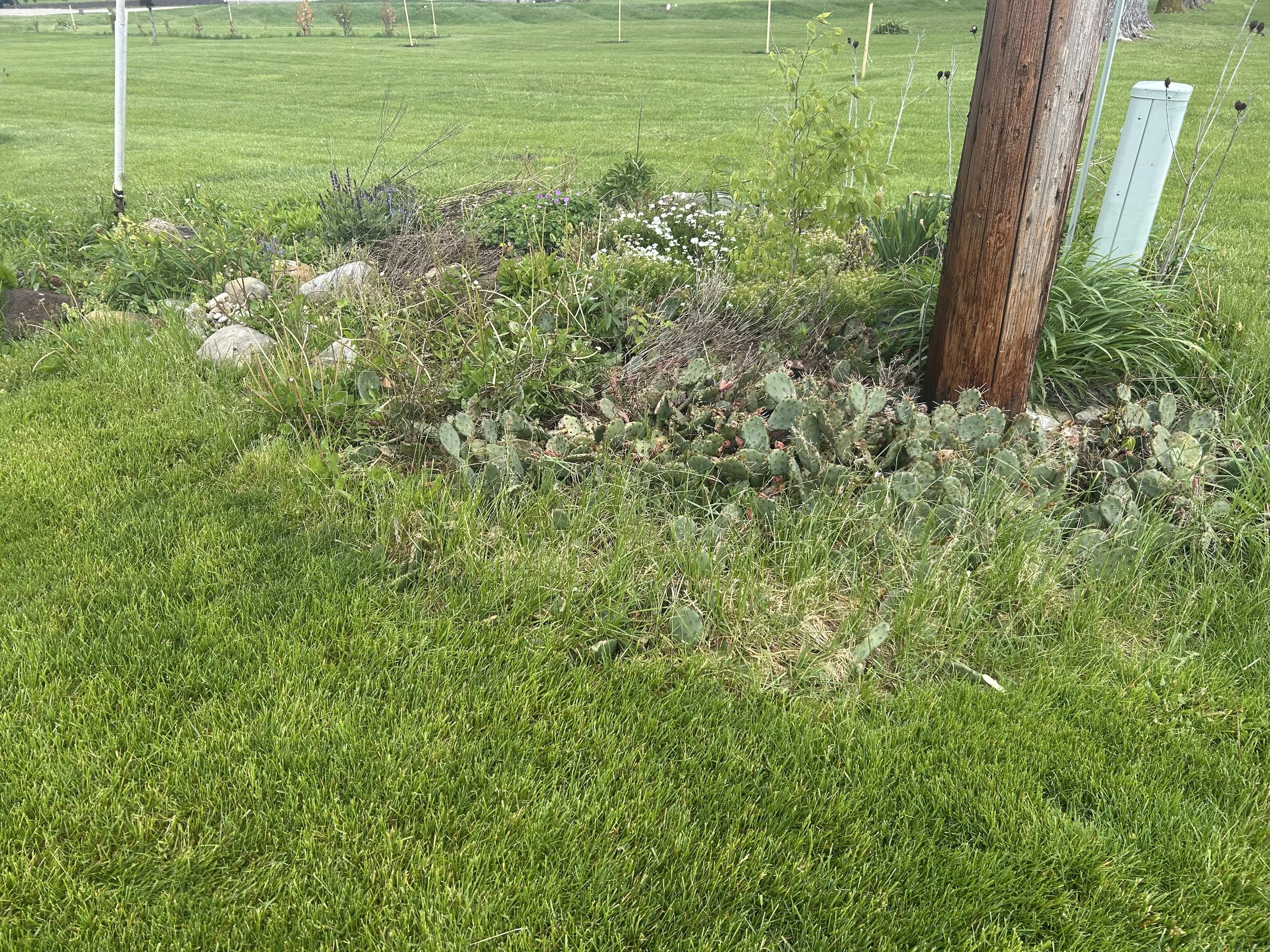
Reinvigorate Rock Garden
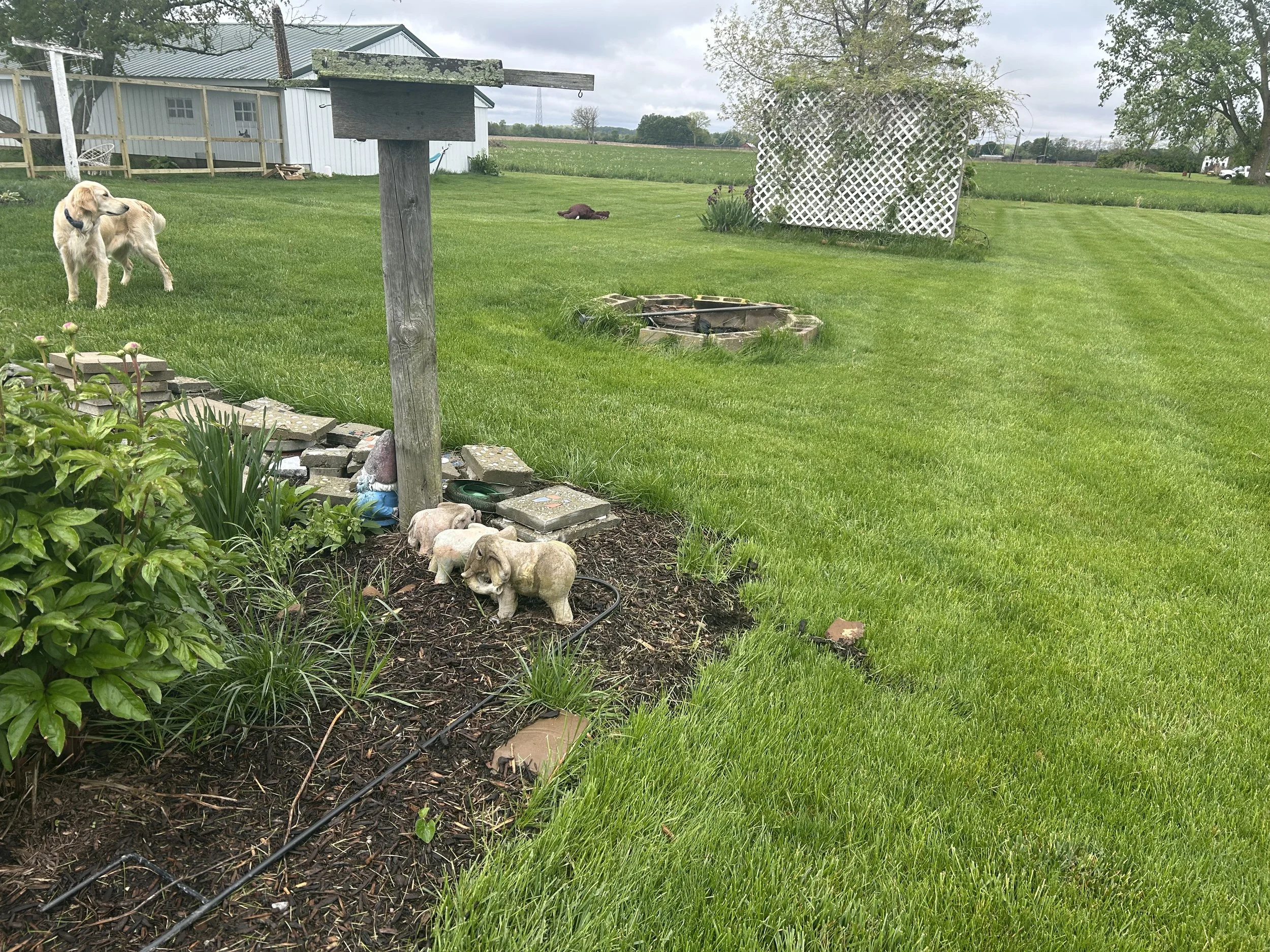
Birdhouses & feeders
Pollinator plants
Finish various house projects/tasks leftover from last year:
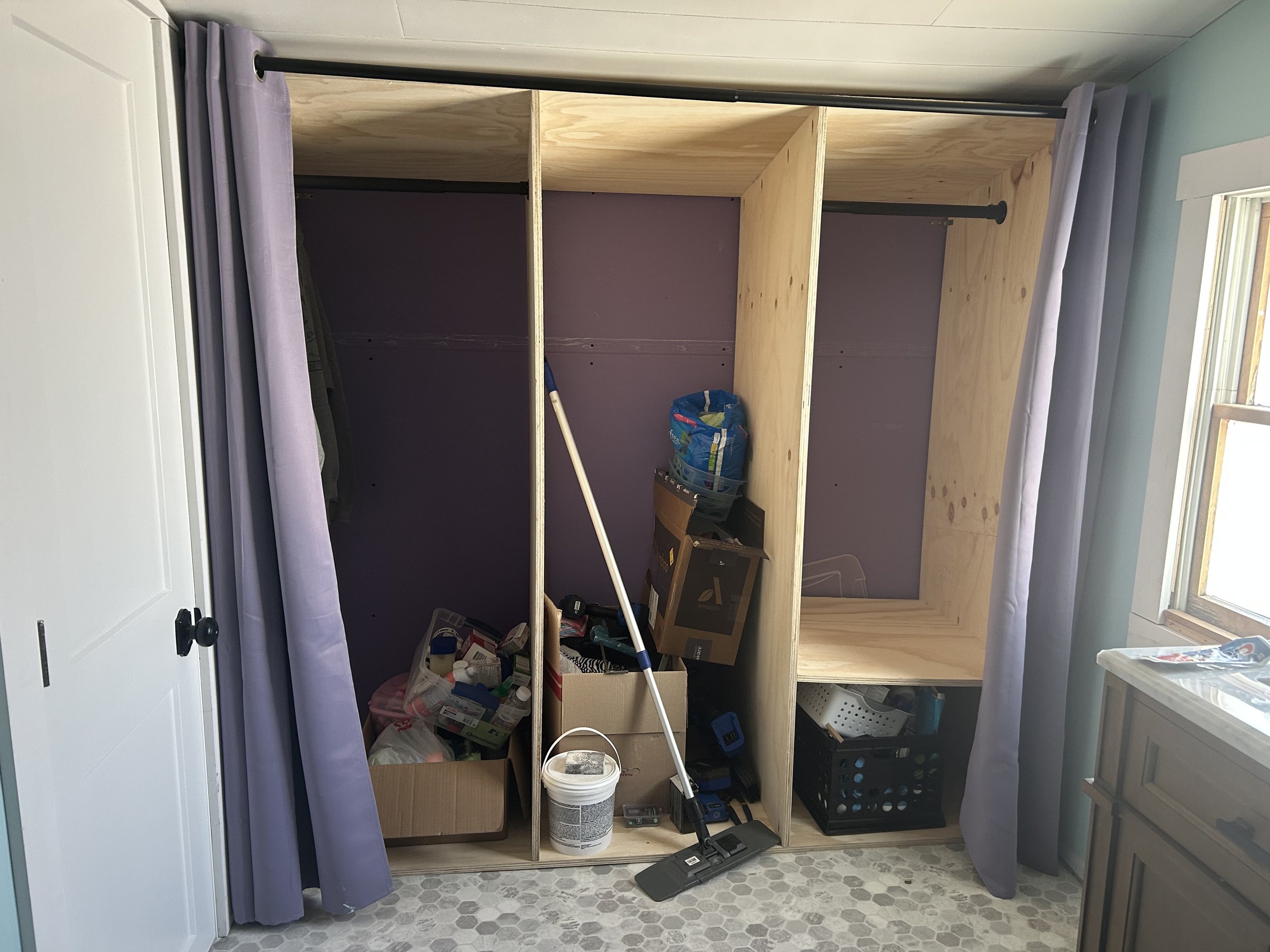
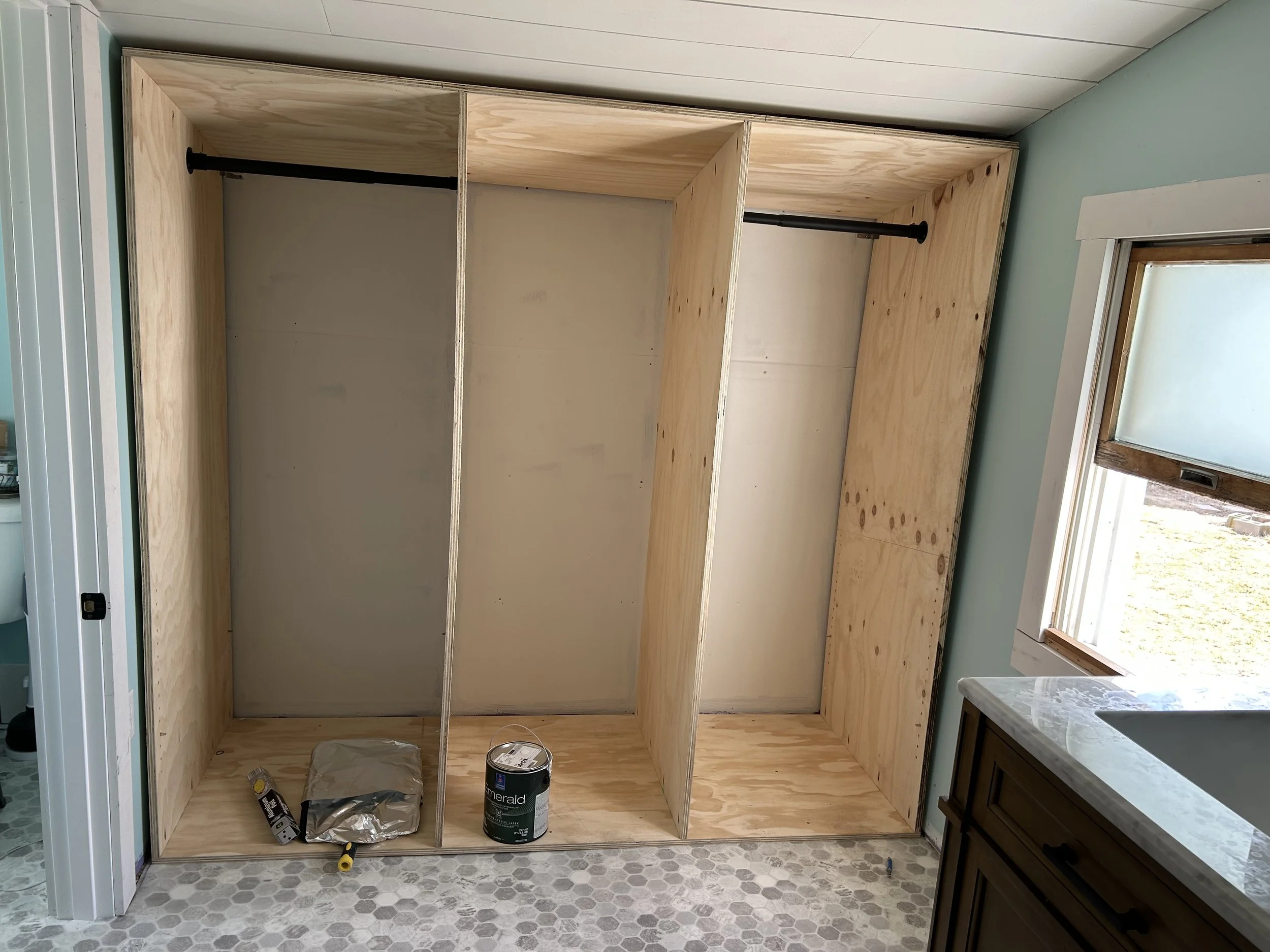
Bathroom closet shelves and doors
Finish caulking bathroom
Find solution for bathroom vanity caulking (it keeps cracking and peeling due to the room’s flexing)
Paint remaining doors and trim (interior)
Reinstall bookshelf trim in front room
Finish trimming out bedroom closet/bookshelves
Finish installing & caulking baseboard and window trim
Finish going through things left behind in barn and garage
New house projects/tasks
Ceiling planks installed/painted
Remove wooden shelving in basement
Use barn wood to build coat rack & a table/magazine rack for bathroom
Well/Septic/Electric updates
Recreation
Zipline
Playground tower
Pool
Farmstand built and opened - this first year the goal is to sell seedlings, eggs, soap, candles, bread, and excess veggies
Farm Sign constructed
Basic rain water collection (storage barrels for existing gutters - house and garage)
Barn
Tear out ceiling and wall coverings
Remove chicken coop
Barn workshop
cabinets/counter for soap & candle making
Lumber rack for storing wood boards and sheets
Update farm plans, tree map, etc. based on changes made throughout the season
Wish us luck! I think we’re going to need it!
Year Zero
Reflecting on our first partial year on the farm
June 26th 2025 - April 24th 2026
Buying a farm at the end of June was, in many ways, not ideal. We missed all the dates to get our garden started, it was too hot to plant trees, and all the animal auctions were past their prime for the year.
It also rose the question of how to count our time here. Many businesses follow a fiscal year rather than the calendar to figure their budgets, metrics, and planning. I’ve also read studies that suggest making resolutions in January is a terrible idea because our bodies and our world are hardwired for new beginnings in the spring. This makes sense to me, as I’m very much the type to begin new things with the start of warmer weather. Thus we decided to mark our time here by the start of the growing season. Therefore, the partial year from the time we took possession to the average last frost date for our area became known as year zero.
In the middle of January, when winter was at its peak, SAD was affecting us all, and we were stuck inside under piles of blankets, it seemed more optimistic to think of all the things we had accomplished rather than lamenting all the work going undone due to the cold and windy weather. Andrew and I took turns reminding each other of all that we’d accomplished when our spirits began to sag.
Our completed tasks for Year Zero include:
Cleared stuff left behind in house
Plumbing:
removed all old copper and galvanized piping and replaced with PEX and new valves.
repaired low water pressure and hot water odor.
Drained water heater and added electric anode rod.
rerouted bathroom vanity piping from single sink via floor to dual sink via wall.
Replumbed for shower
Repaired kitchen sink leak (the only interior plumbing that hasn’t been replaced, will be done with kitchen remodel)
Bathroom:
Removed trim/panelling/carpet
Gutted down to studs
Cleaned crawl space and added vapor barrier. Covered the hole for the old cistern.
Reworked hvac ducting on crawl space/added second vent to bathroom.
Rebuilt interior (reinforced floor and ceiling + new everything), added water closet
New closet/storage (in progress)
learned/ing new tools to cut down plywood, shelf pins, new saws, etc.
Trim (in progress)
Removed panelling and Re-covered walls (living room & dining room), closed doorway by stove & display cabinet opening
Painted bedrooms
Sealed water leak between old front room well pit and basement
Sealed foundation hole under front room closet
Re-drywalled half of front room + removed closet + vinyl plank flooring + added door for use as third bedroom
Refinished hardwood floors (living room, dining room, and 1 bedroom)
Vinyl flooring in second bedroom
Most of the house work was documented in this post.
Electrical:
upgraded electrical service from 100A to 200A, consolidated to single electrical panel in the house.
upgraded service to out buildings from 40A to 100A
replaced old outlets, switches and face places
repaired electrical junction behind wall by adding new outlet to front room.
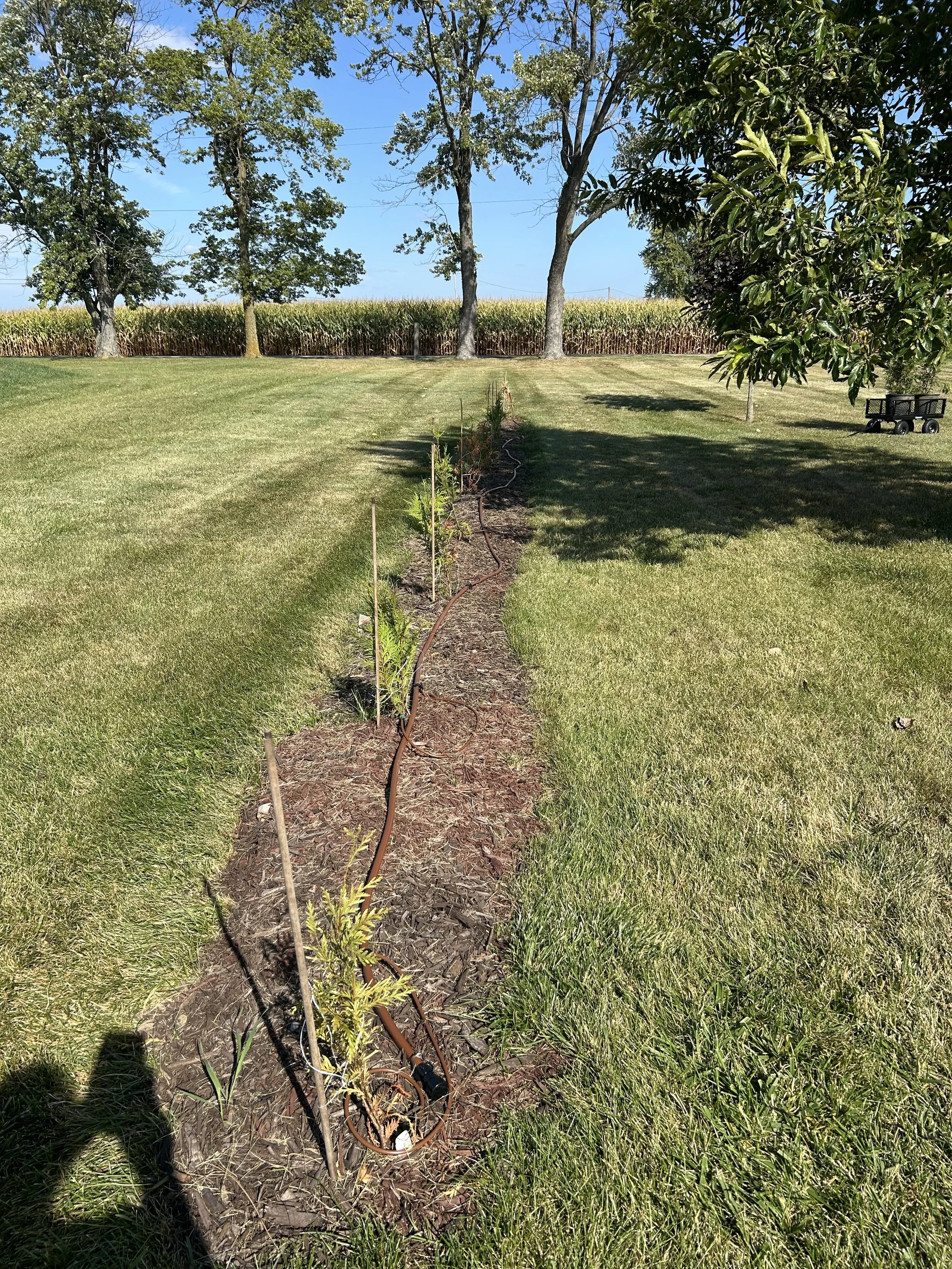
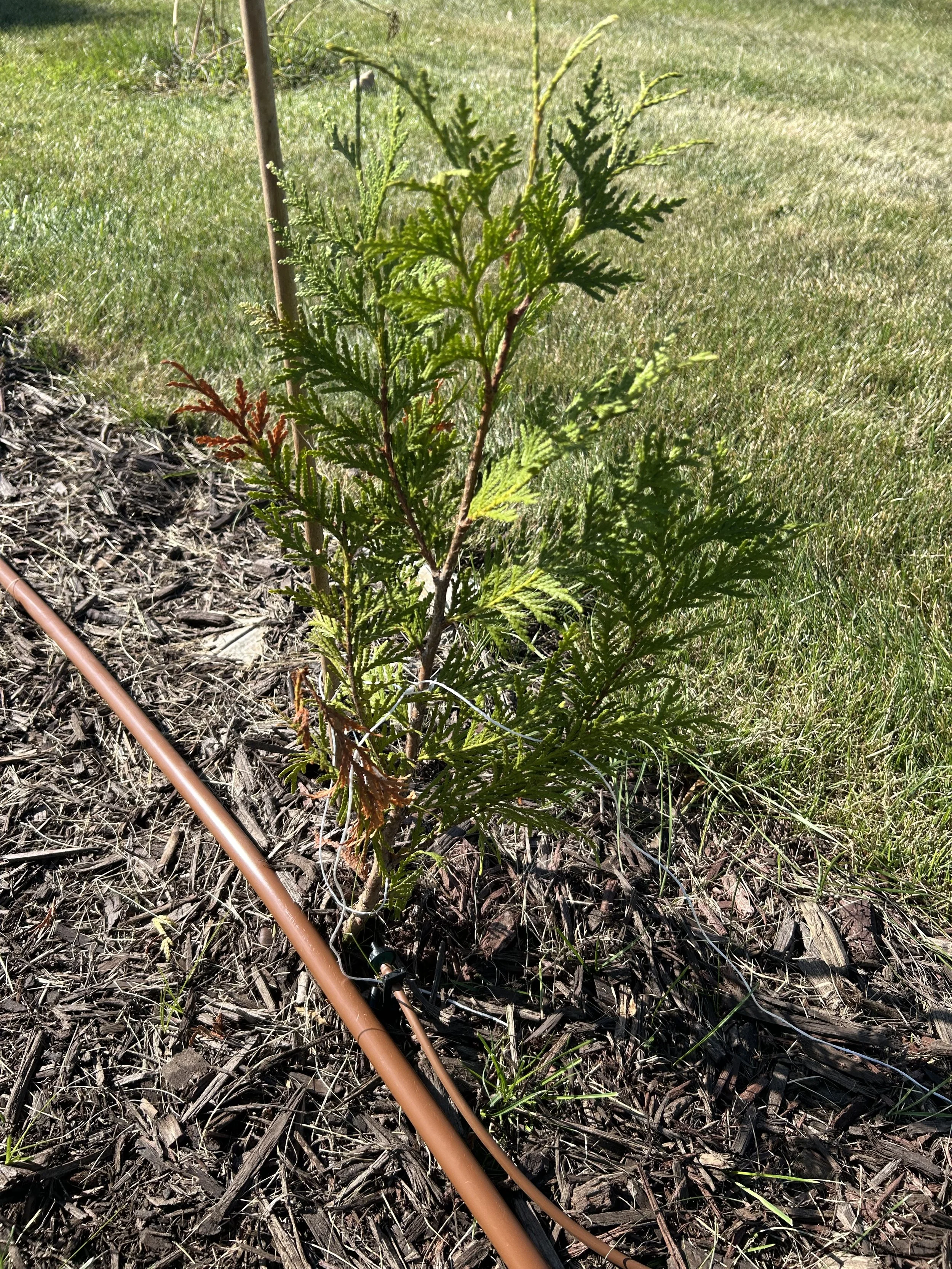
Thuja green giants planted (15)
Replaced light fixtures in Living room and both bedrooms
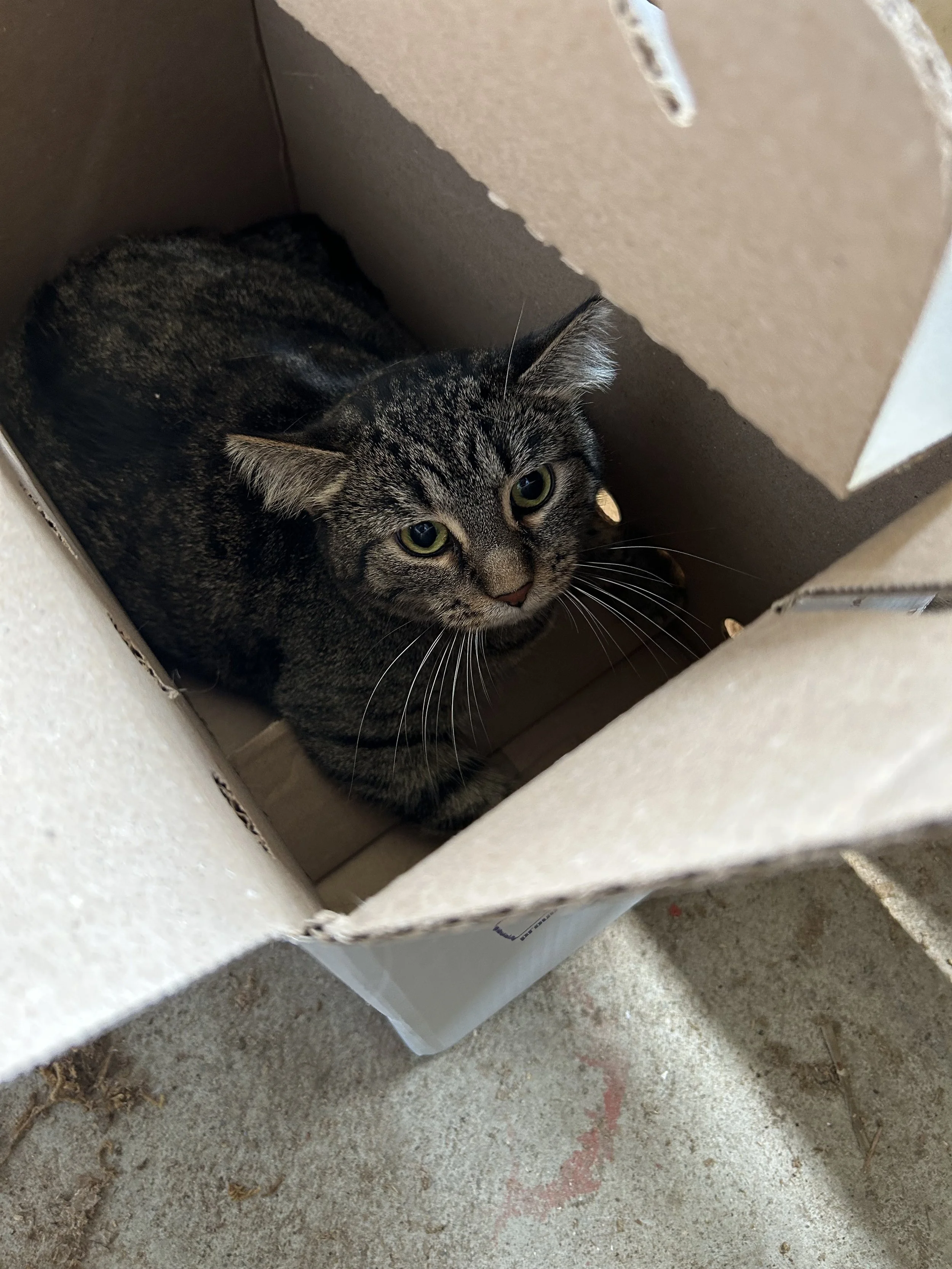
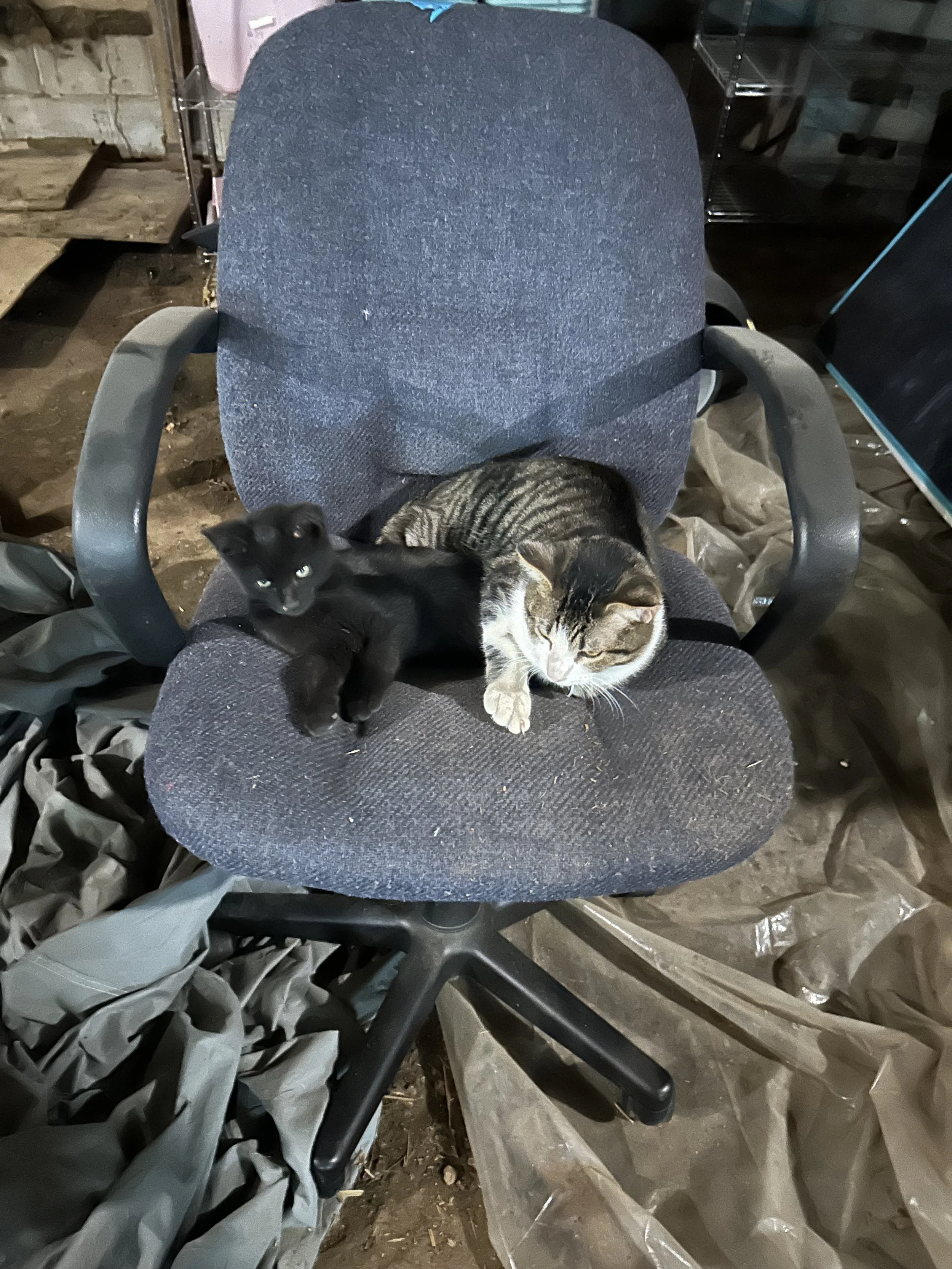
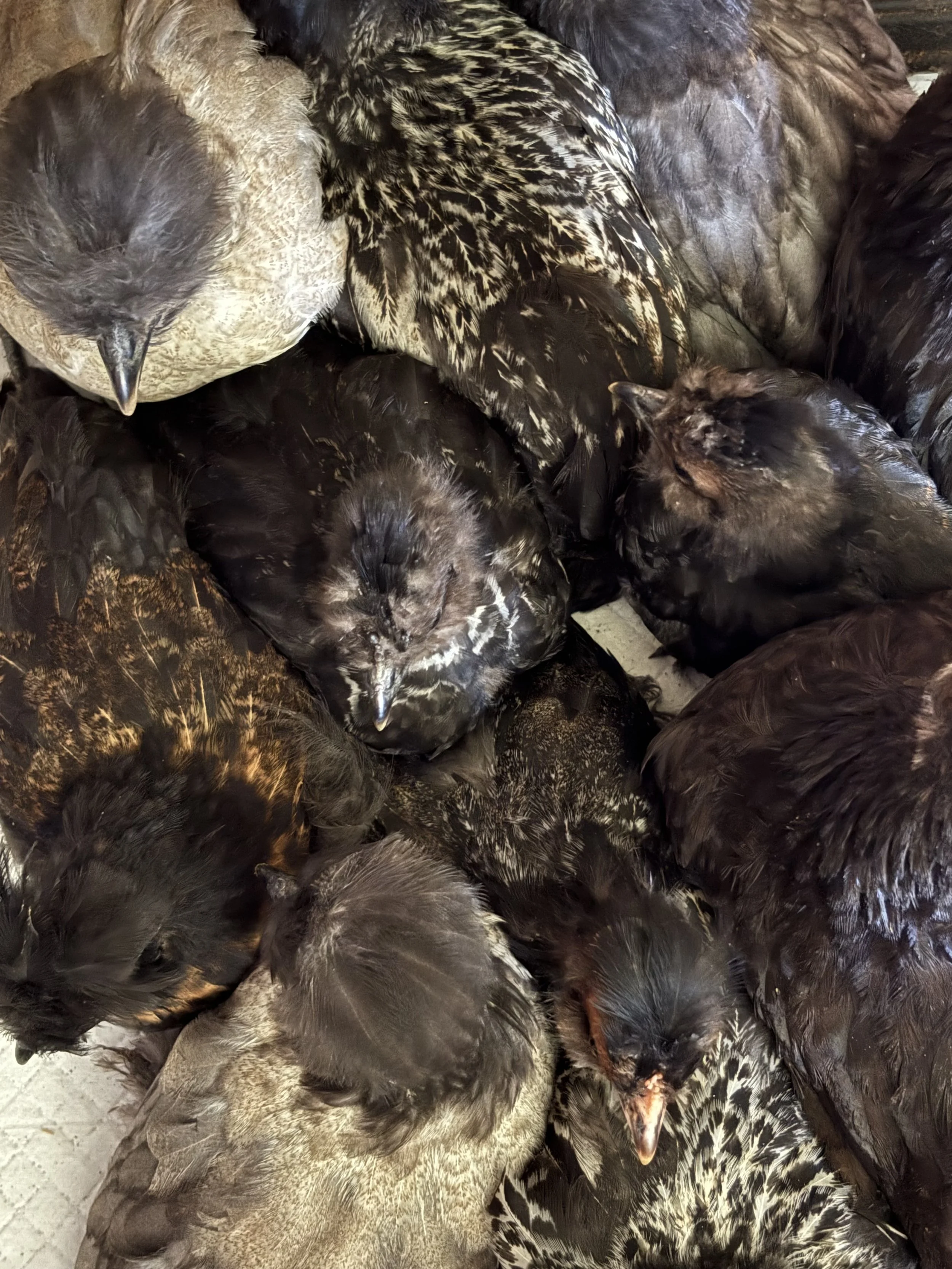
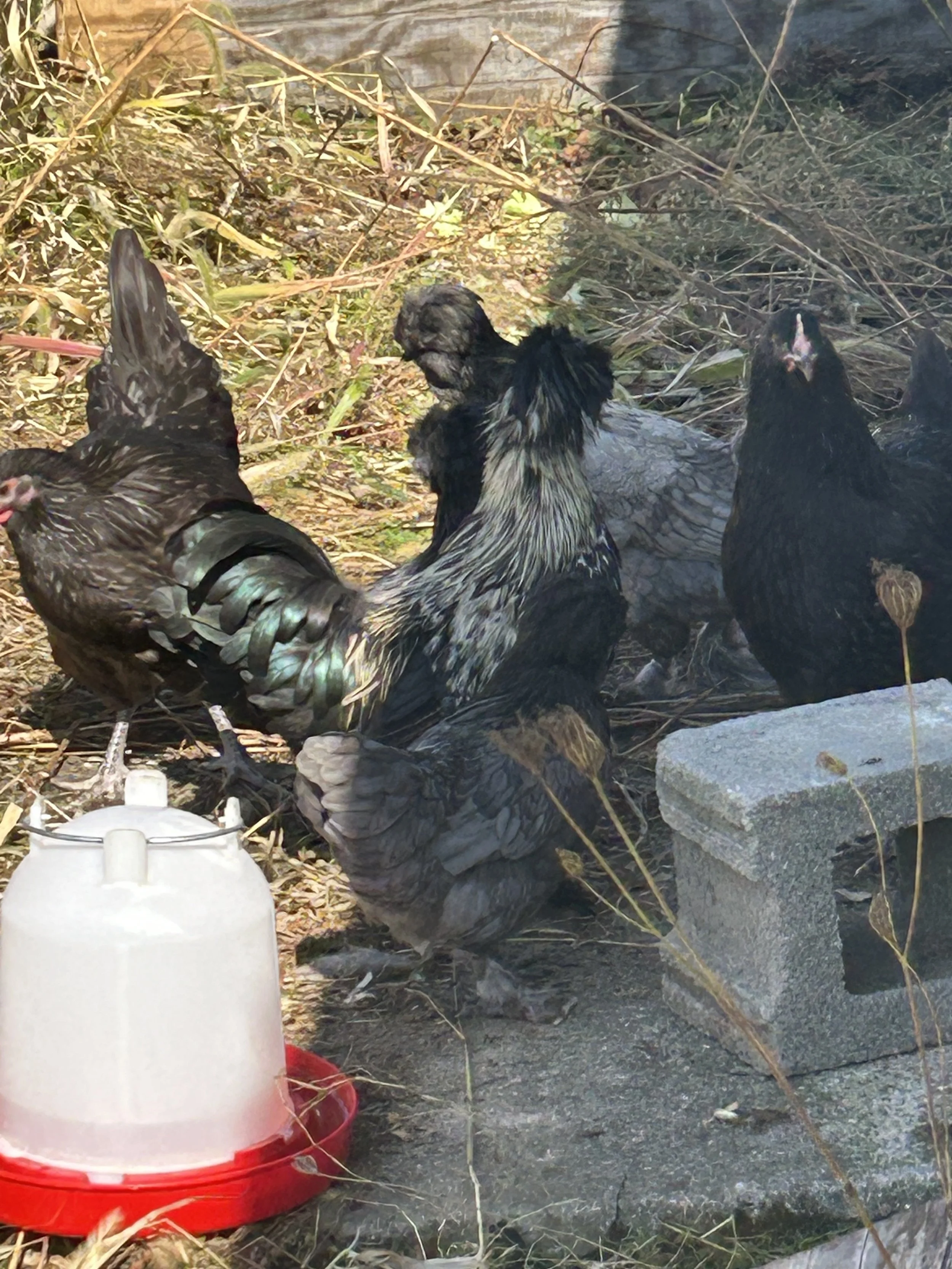
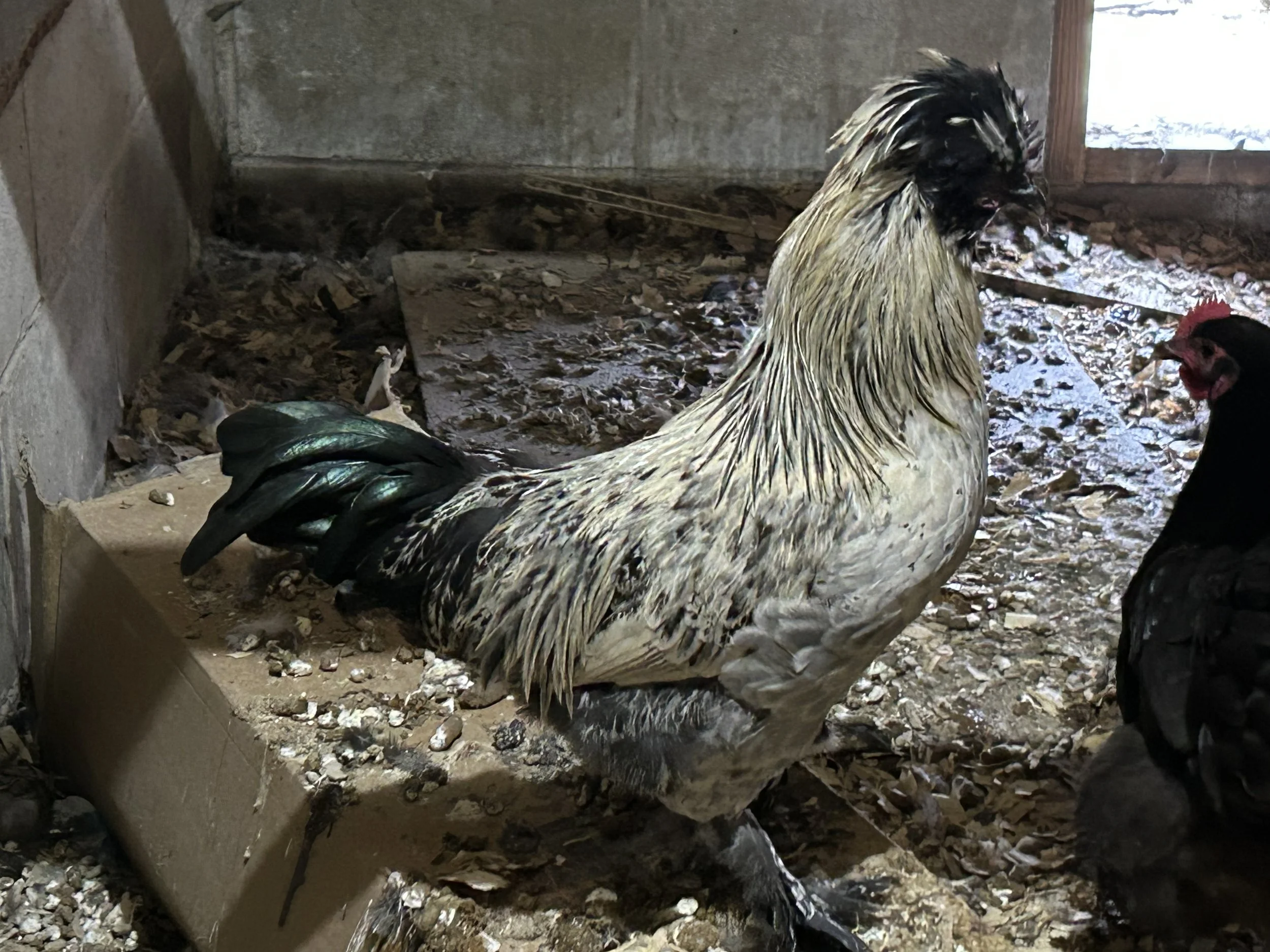
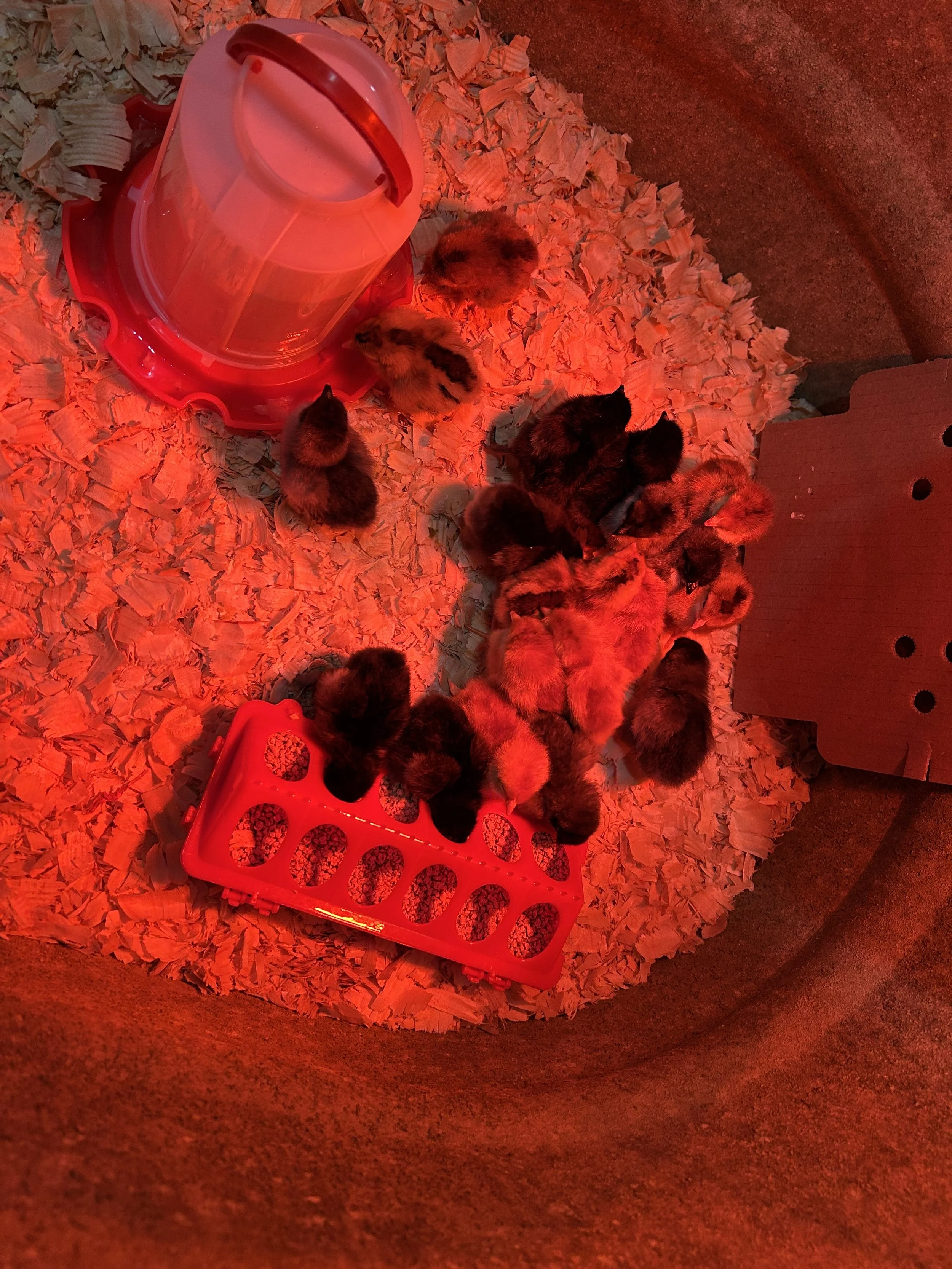
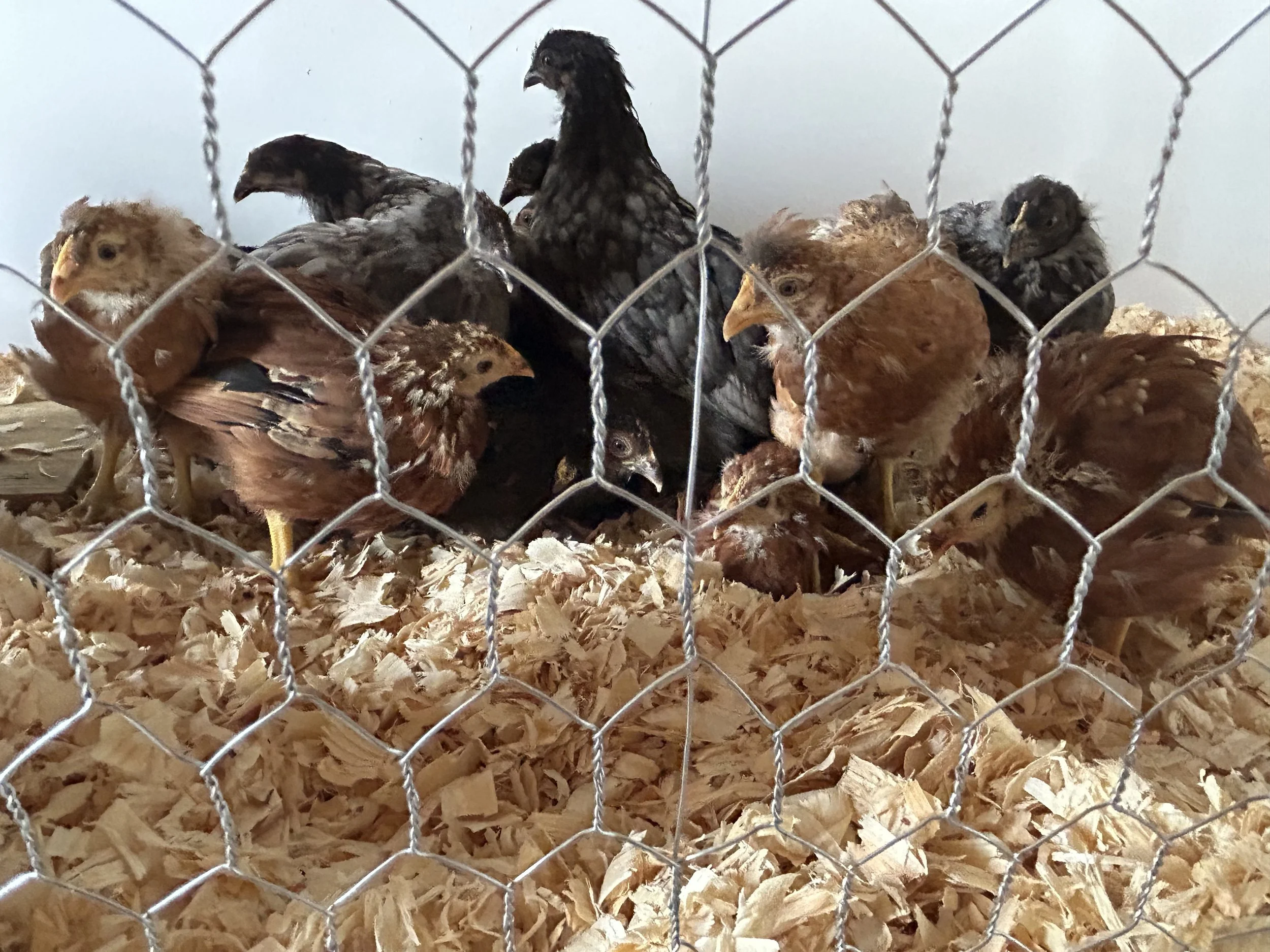
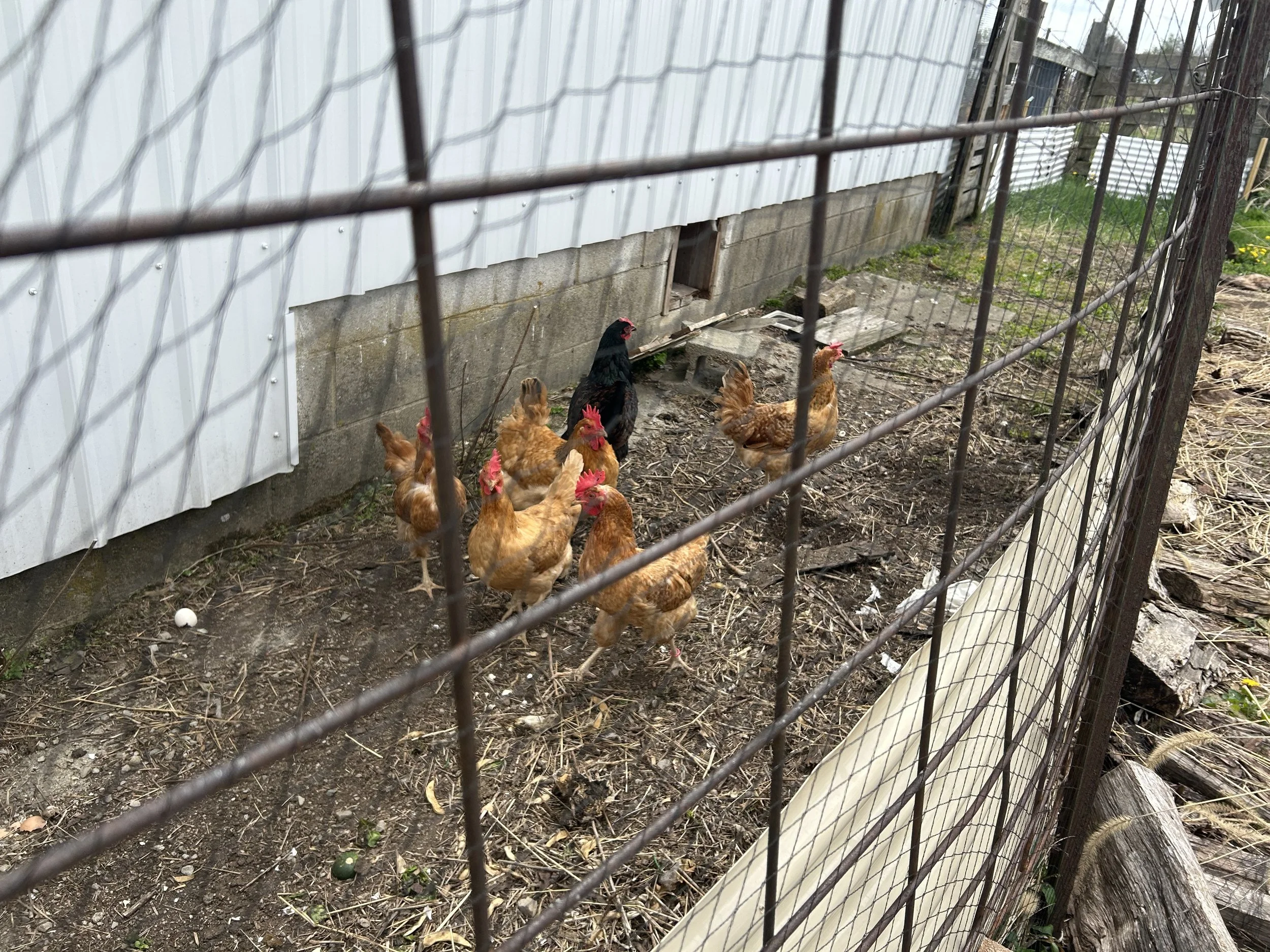
Chickens (8) & Cats (4) moved into barn. Added 20 new chicks in early March. Also added 6 new girls in early April when my aunt retired from work and decided to also retire from raising chickens so she and the hubs can travel :).
Install new trim (Living room, dining room, bathroom)
Chicken outdoor run (and updated a couple of times thanks to the the dog and a hawk) & nest boxes
Purchased Camper
Situated
Skirt insulation
Propane solution
Graywater drain dug
Kitchen
New appliances
Removed trim & decorative pieces around window
Removed paneling and recovered ½ of walls + trim
Moved cantry cabinet to create island
Hoosier cabinet
Dishwasher
Replace garbage disposal under sink switch with button on sink
Drink station
Doorknobs & blinds, Painted hvac vent covers
Homestead mouse war: year 0 = victory
Heating
Furnace maintenance
Chimney clean/maintenance
Firewood & oil delivery
learn(ing) how to heat with wood
Septic:
Tank location confirmed
Leach bed location confirmed
Add exterior septic “clean out”
Sourdough started (and revived a few times)
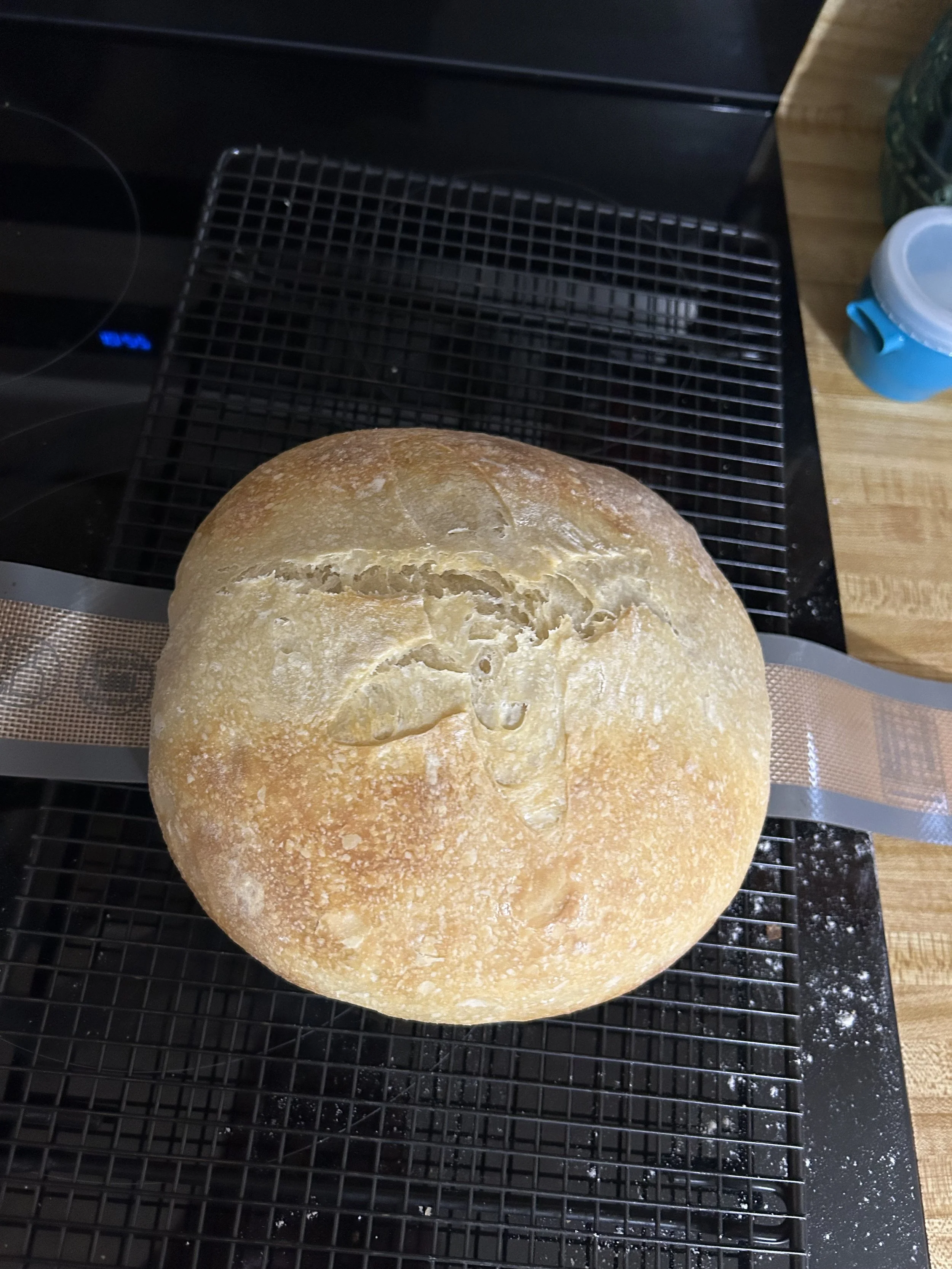
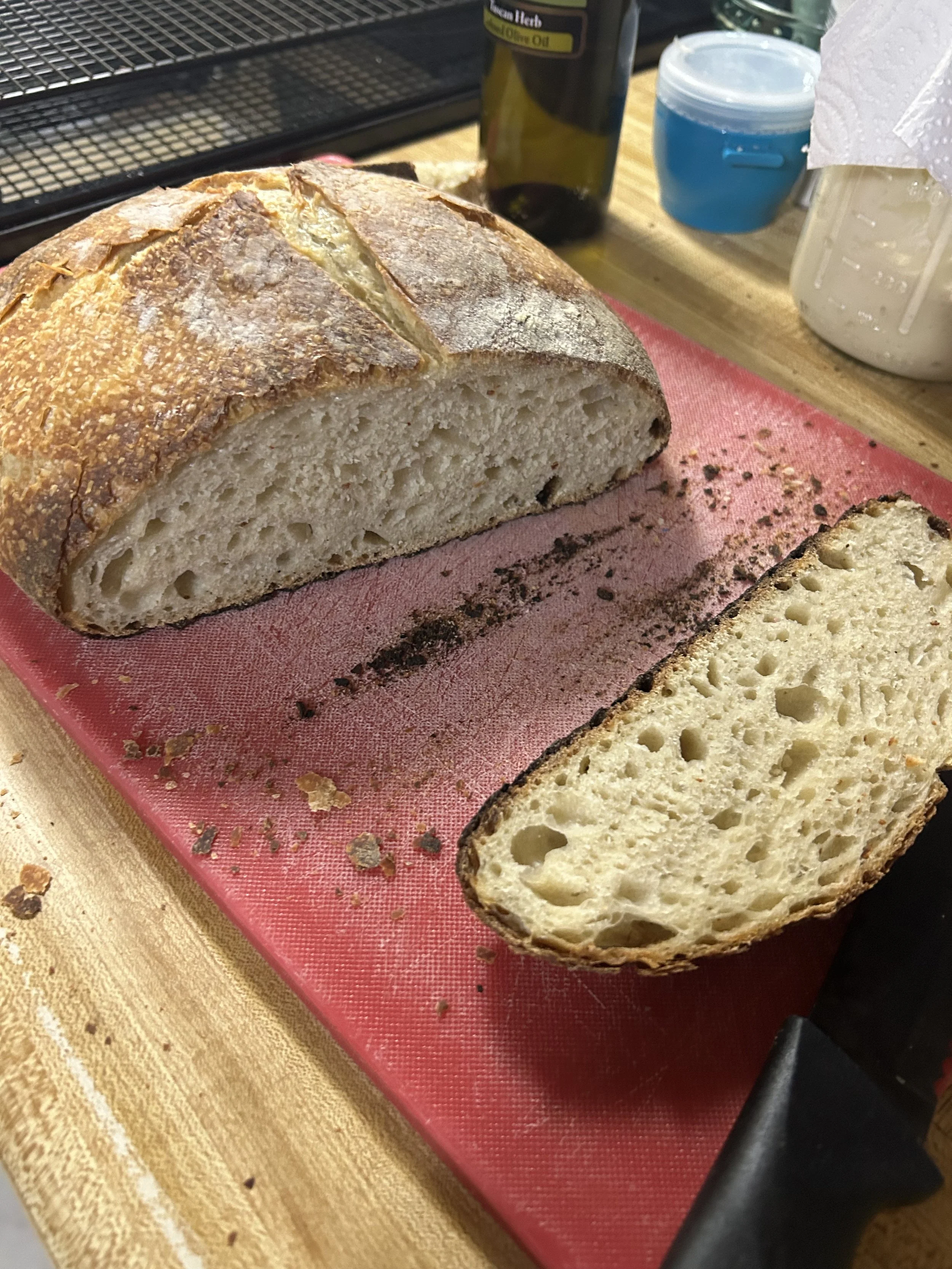


Epic 2-hour bread recipe discovered. Working on mastering. Considering abandoning sourdough.
Houseplants hung and arranged. Pictures and clocks hung. Mounted tv and sound bar.
Found, bought, and moved in extremely heavy china cabinet (like Grandma’s)
Permaculture Design Certificate (detailed property map/plan)
Vinyl floor coverings (living room, dining room, J’s bedroom, redo bathroom)
Planning for Year One tasks including the small animal house, trees, backyard fun (zipline and pool), gardens, and more
Website, social media, and farm logo established
Gutters cleaned and extensions reworked
Basement water issues “dealt with”
Poorly constructed a basement wall leak diverter
Purchased inverter generator and backup pump in case of power outage
Panicked a bit and purchased bookshelves so that all of our books (both my own collection and what I inherited of my grandma’s) could be moved upstairs in case flooding does occur.
Planning better solutions for the future (in progress)
Shocked (treated) well water, created brown water, panicked, learned that bleach interacts with minerals and turns the water yellowish brown and—aside from looking nasty—its fine and fades after a week or two - fun stuff
Repaired(ish) “free” “lawnmower”
Removed evil tree (don’t ask)
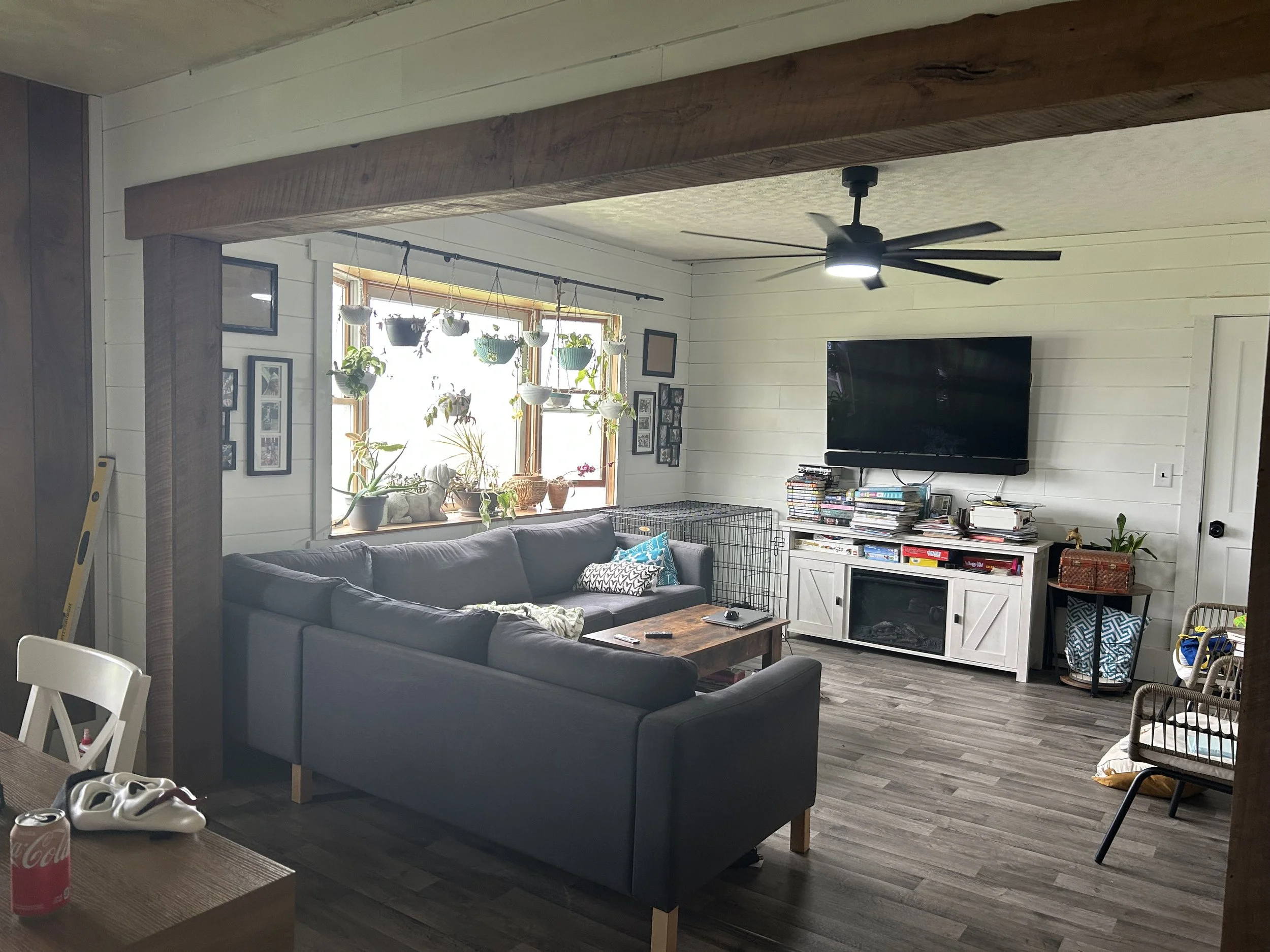
Installed wooden beam in place of “arch" room divider
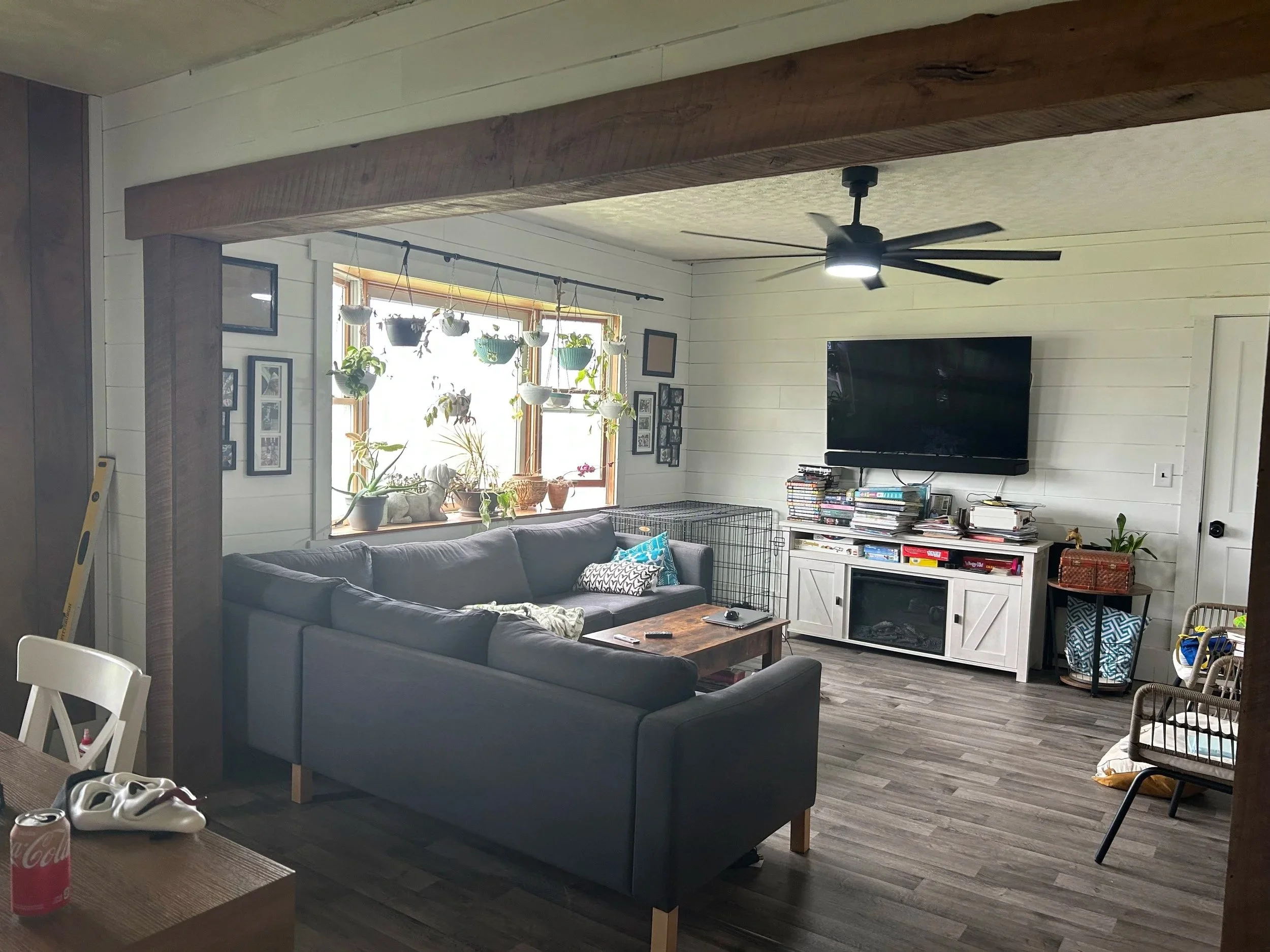
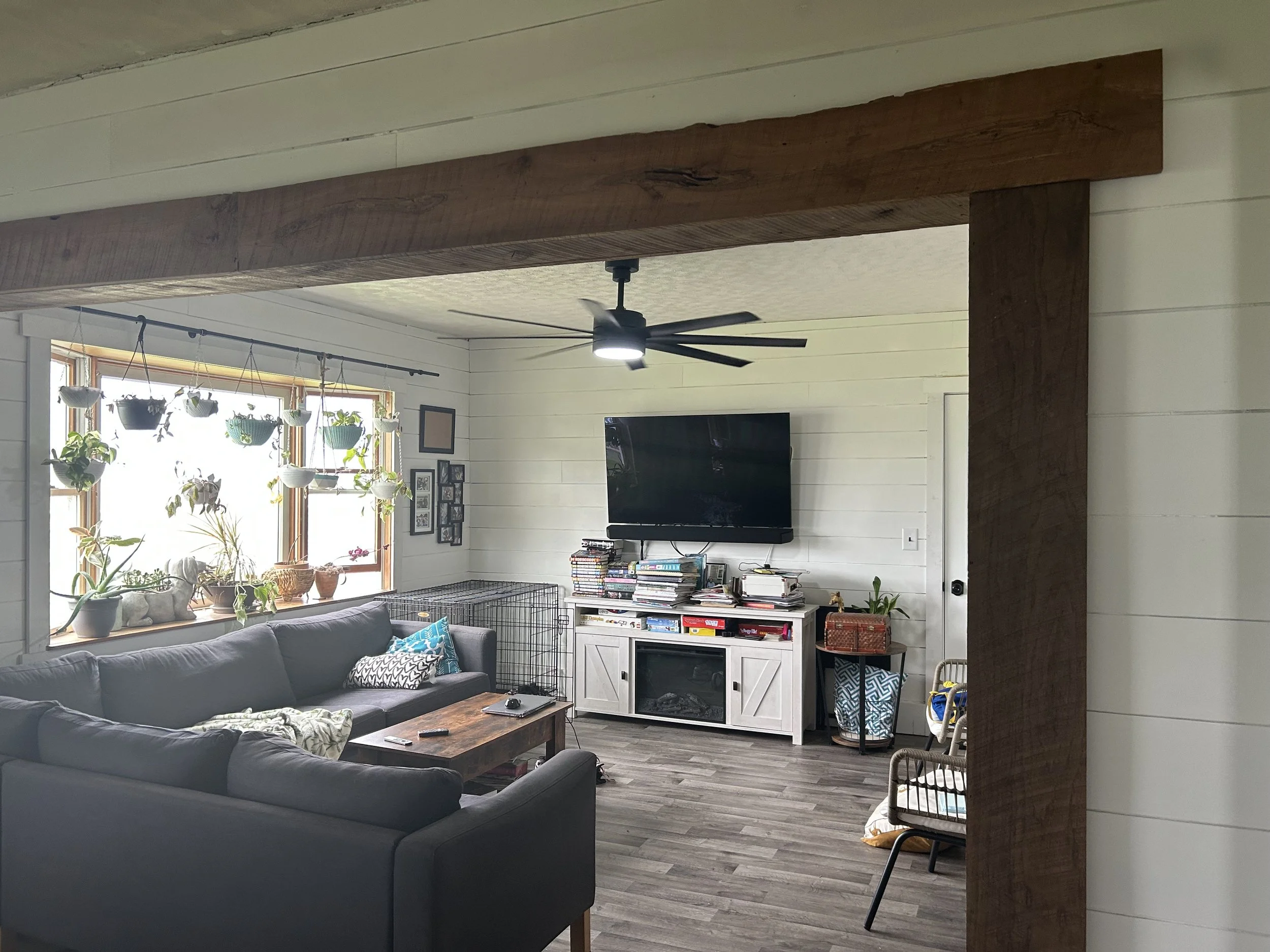
Clearing stuff left behind in garage & barn (in progress - barn nearly done)
Continuing to unpack and “settle in” (in progress)
Started spring projects - vegetable garden, memorial garden, chicken house and pasture, and backyard zipline. More to come on these projects soon!
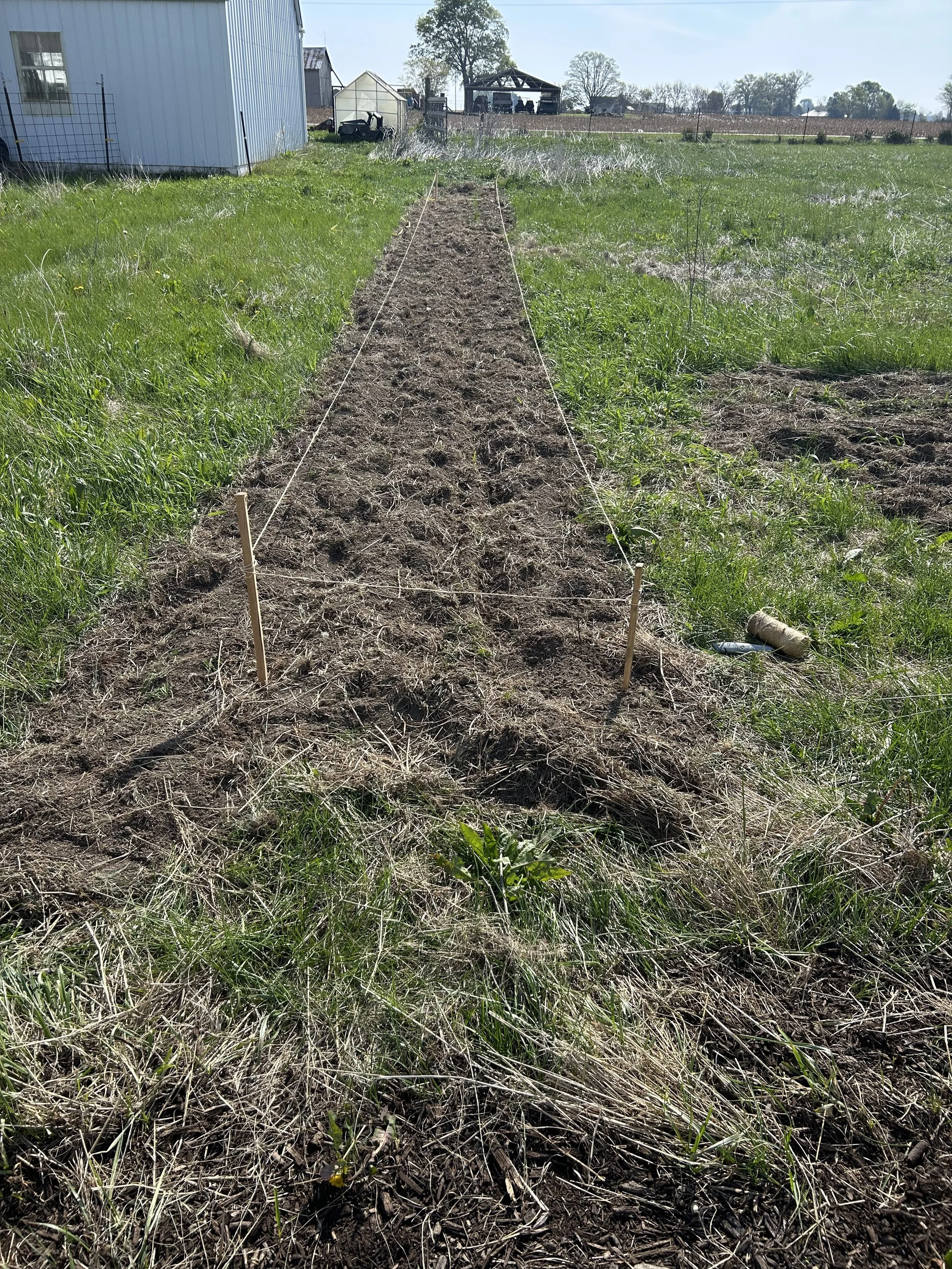
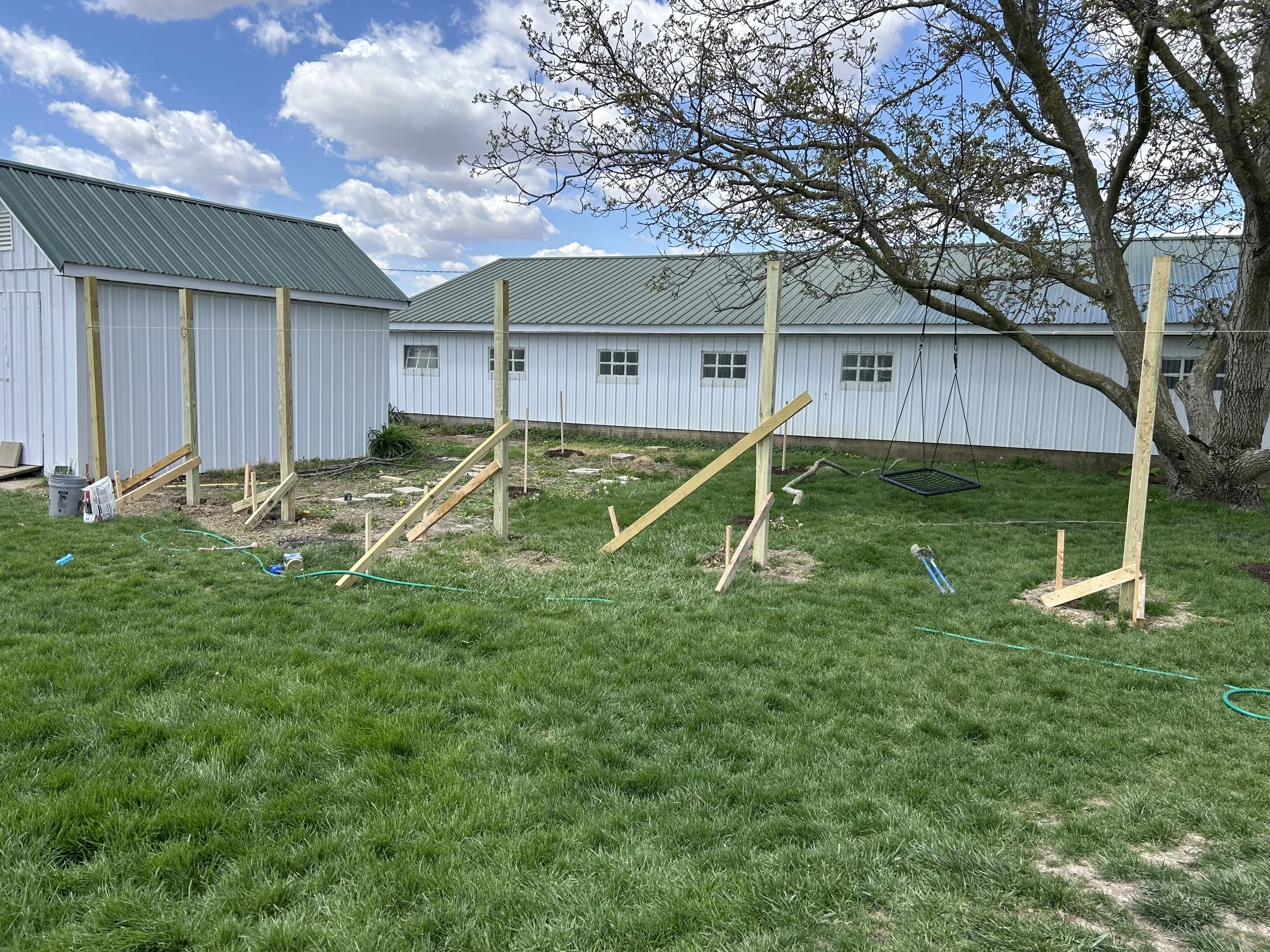
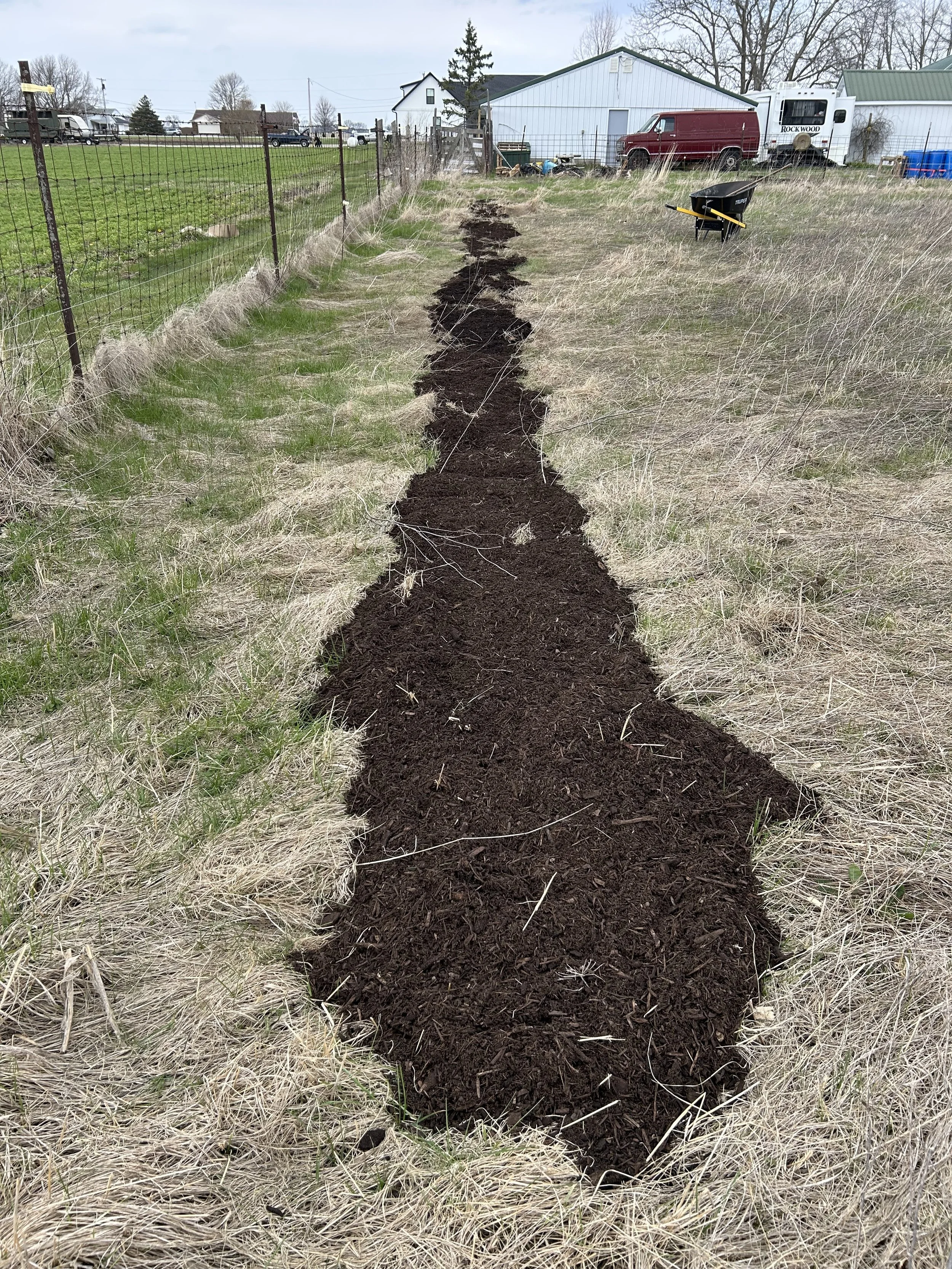
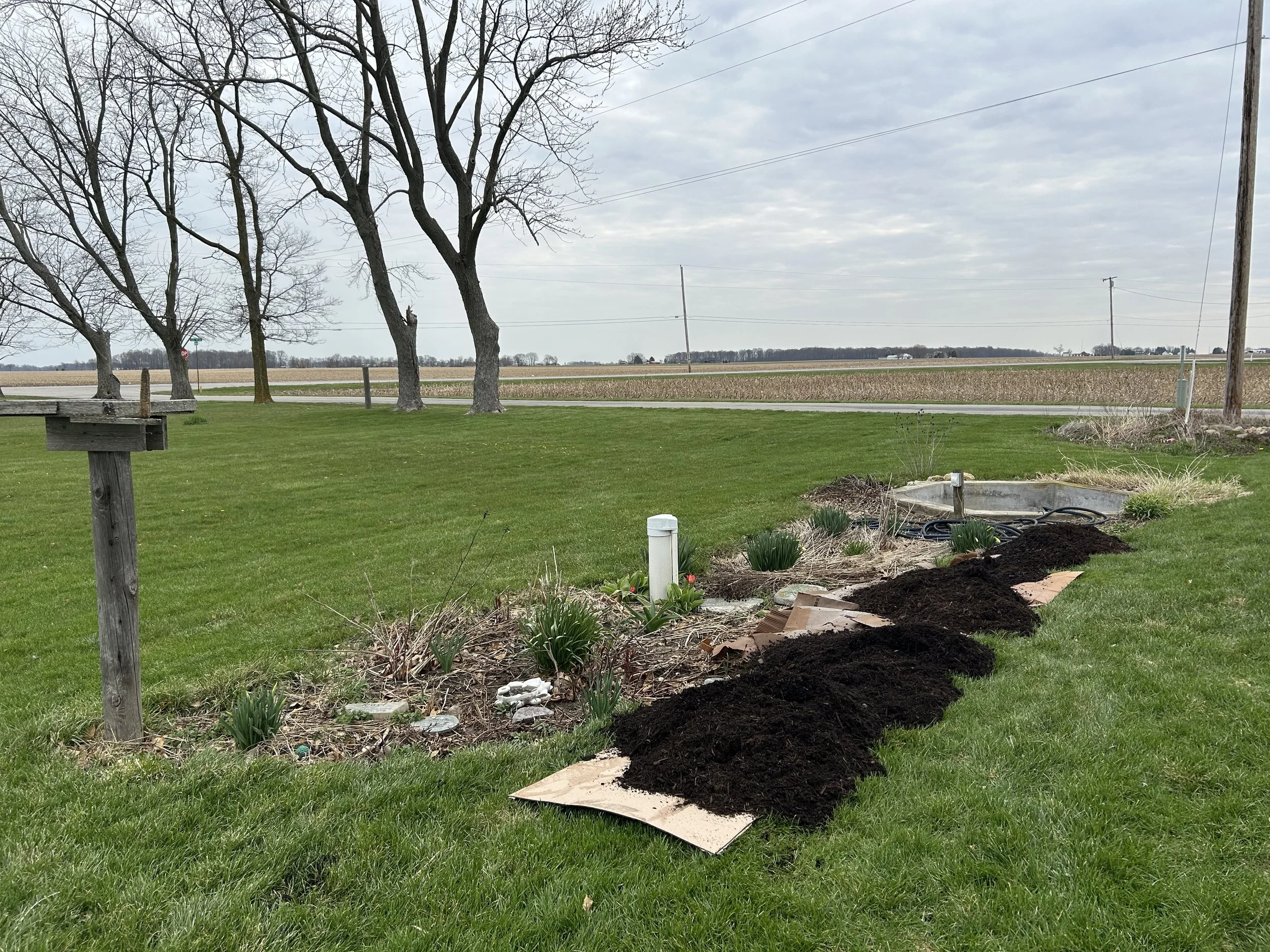
We also realized, that in a lot of ways, the timing was rather perfect. While the weather was nice last summer and fall we were able to get a large amount of the house renovations done. Then we had the whole winter to adjust, settle, and observe. Permaculture techniques advise spending as much as 1 full year simply observing the site so that you are familiar with patterns, energy inputs, and other conditions before beginning the implementation phase.
Through this first winter of observation, we now know:
The majority of our wind comes from the west, that said wind is so strong we’ll need to plan accordingly when building structures and animal shelters, and we have a high need for windbreak trees.
40 degrees F is the threshold for working comfortably in the barn without additional heat, at least until we have more windbreaks to protect from the windchill.
Due to the winds - The position and set up of the barn is less than ideal. The animal stalls and doors are located on the west side of the building, which allows wind and rain to gust into and through their shelters, offering little protection from the elements. Their pasture/run areas are also located to the west of the building.
Where the water flows and pools. Despite how flat our property is, there are minor low spots that get pretty soggy and, thanks to our dogs, quickly turn into muddy pits.
The county zoning department disagreed with some of our original ideas and we had to make significant adjustments to the proposed layout of our property in order to comply.
The farmer who has been working our field has been using non-chemical methods since he took over several years prior, allowing us less concern about the chemical usage on our property and a head start for when we transition from field to pasture and food forest.
Some of these observations triggered modifications to our plans and priorities, allowing us a much more confident plan for beginning the real farm work in the spring.
On a lighter note, we had the pleasure of enjoying a few farm fresh produces that were already growing around the property.
Gooseberries
Blackberries
English walnuts
Winter radishes
Asparagus
There was rhubarb growing near the shed, but I feared we may have trampled it in our efforts to winterize the camper. Fortunately, it started to pop through and I was able to dig it up before it got good and dead. Hopefully it will take to the transplant in our new vegetable garden.
If we ever get around to spraying, there’s a few apple trees already established.
We found a few locals selling eggs and now have 12 hens of our own laying, which has allowed us to stop buying store eggs. As spring arrives, our daily egg count is going up significantly and we are starting to have enough to share.
And we have a freezer full of pork that, while we didn’t raise, we did help butcher. We even bought a slicer and sliced our own bacon!
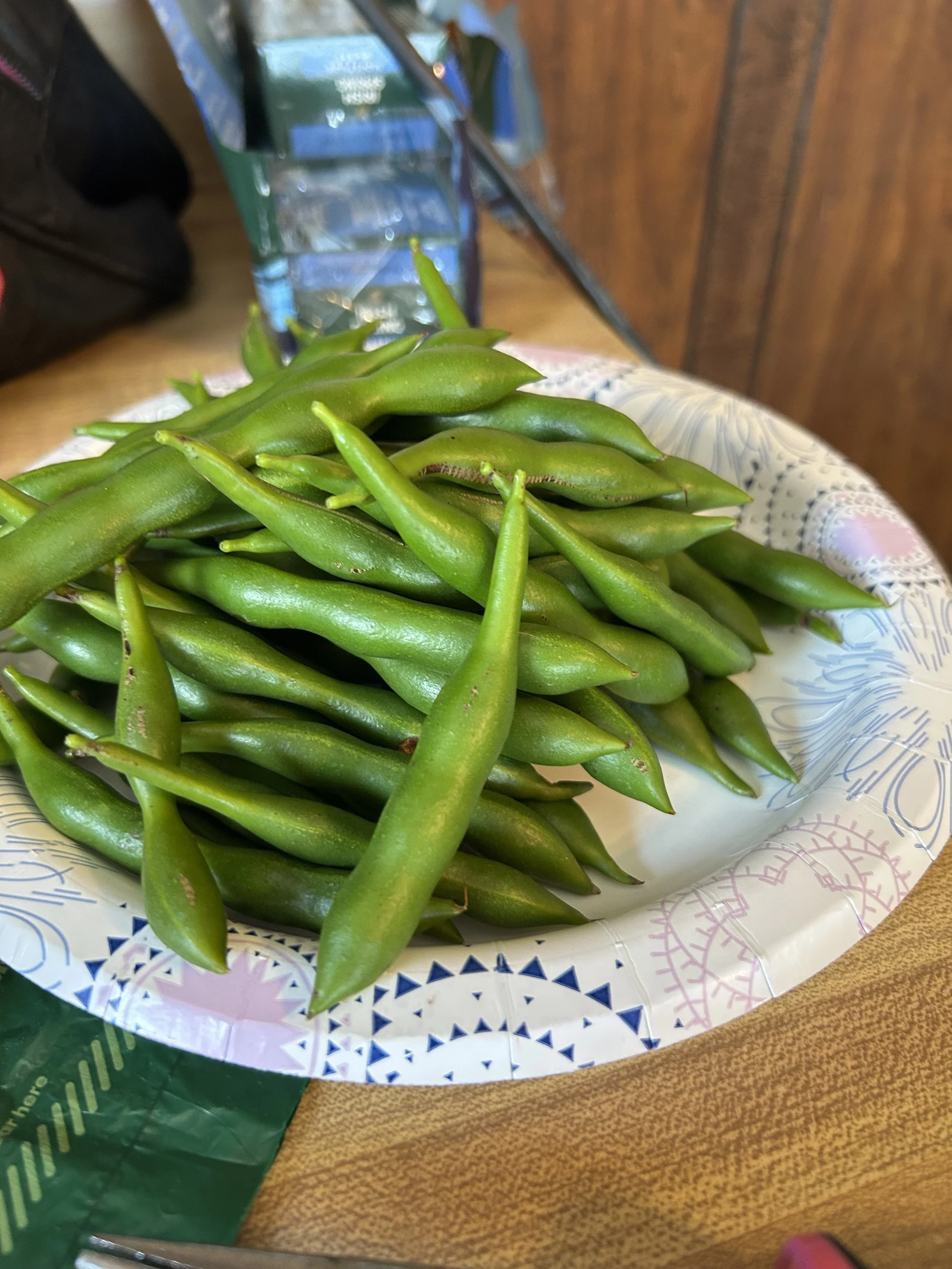
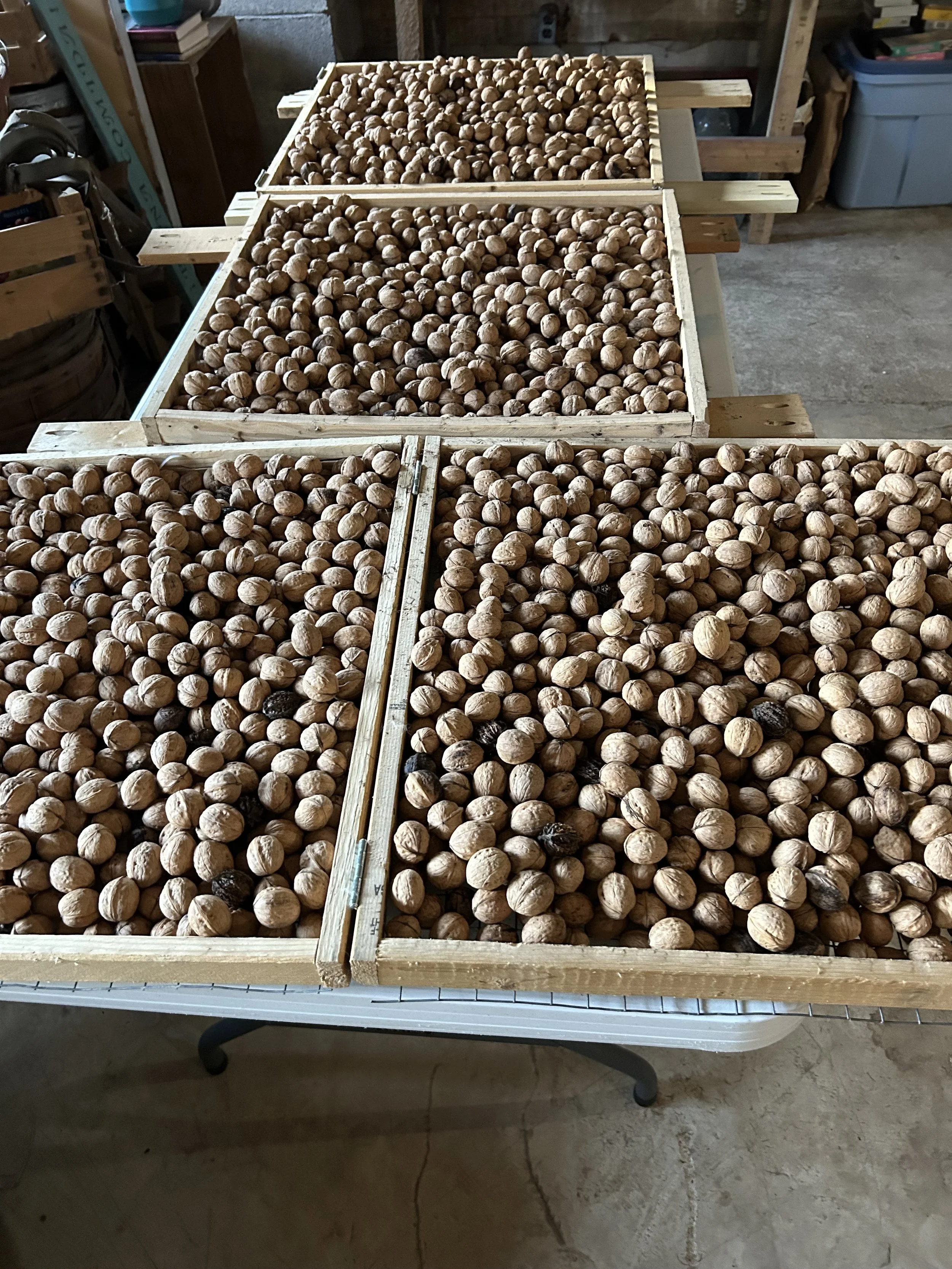
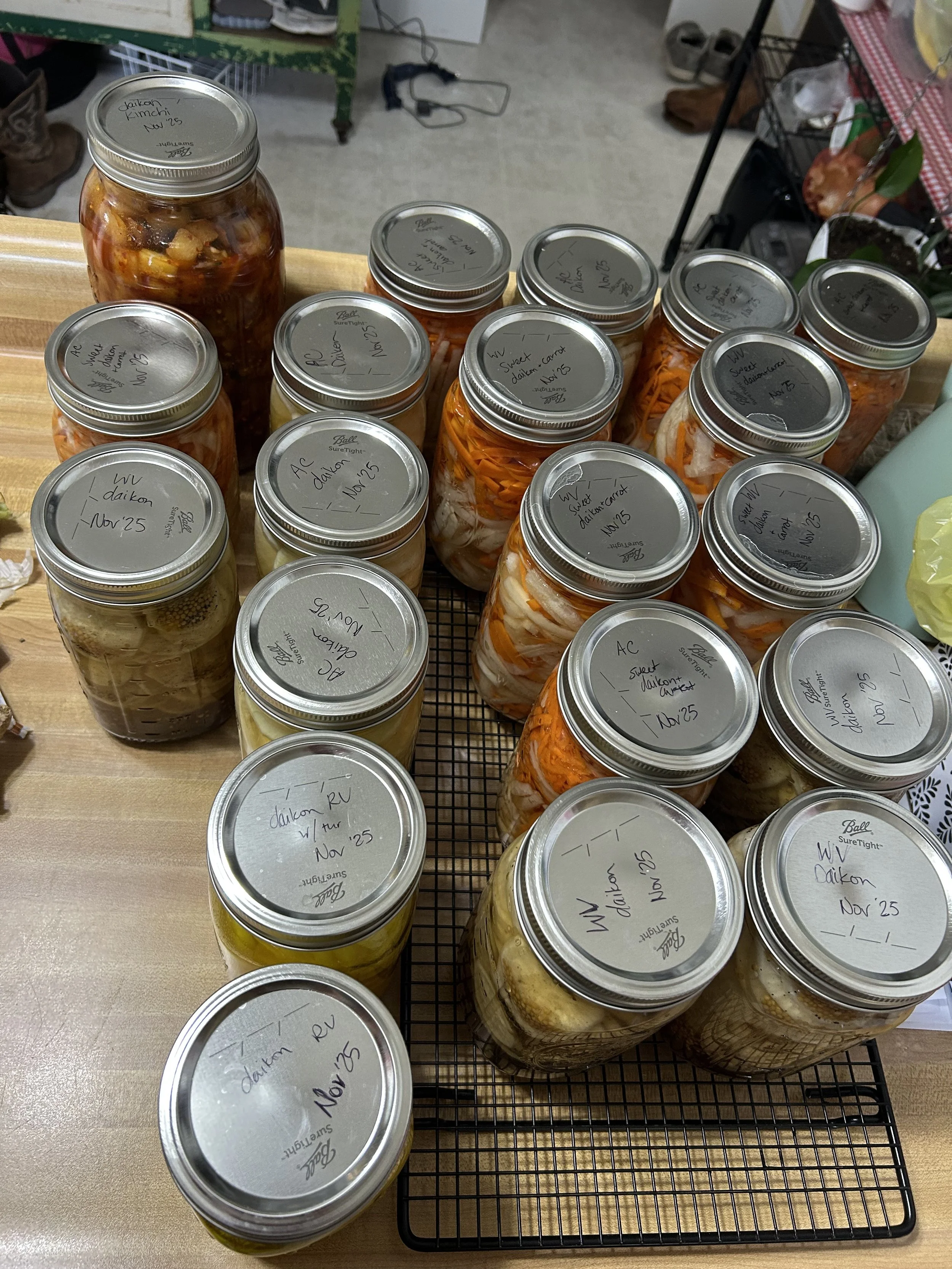
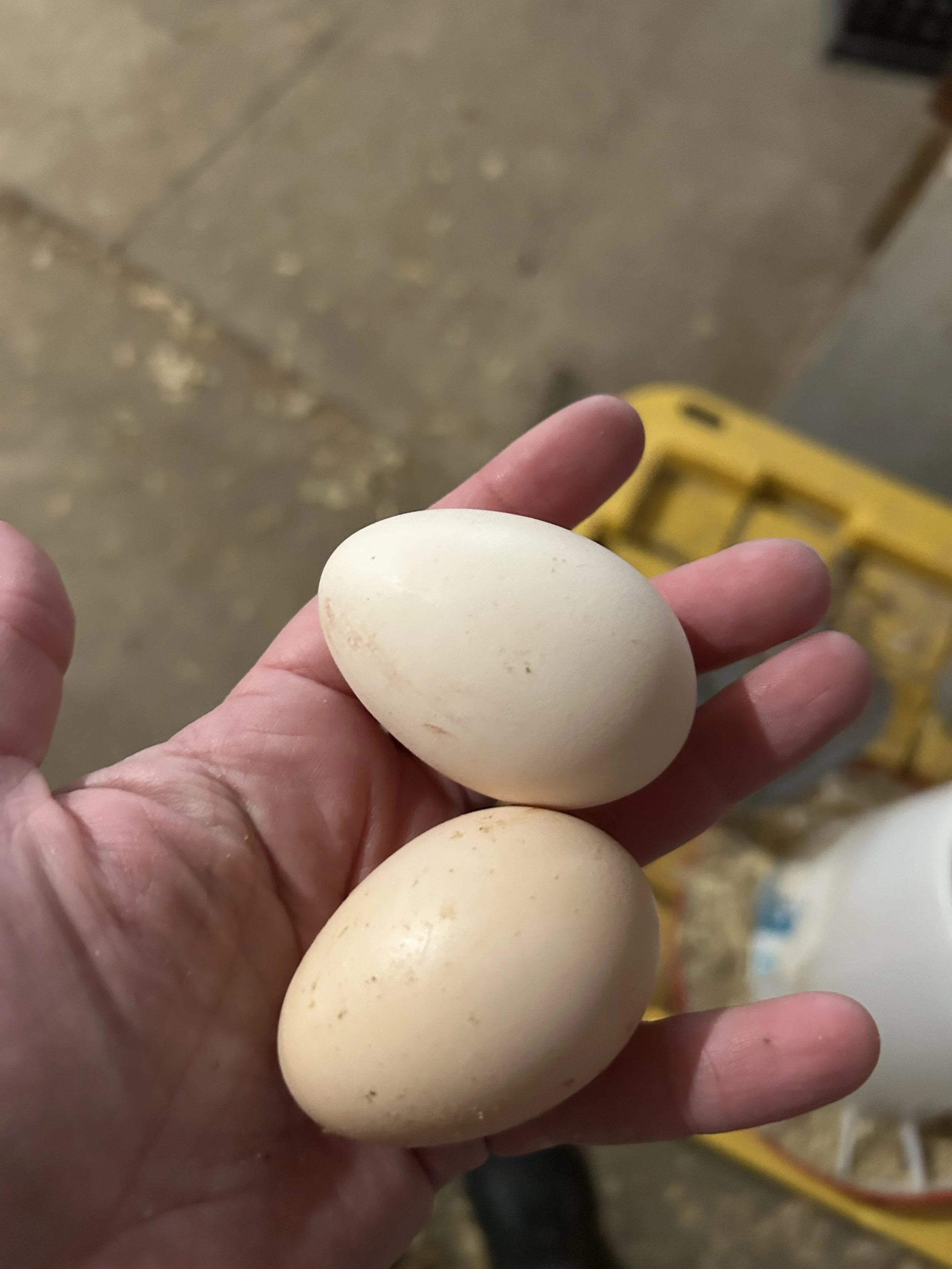
All in all - not too shabby for year zero! We’re pretty excited to see what the first full year on the farm brings!
Demo and Updating
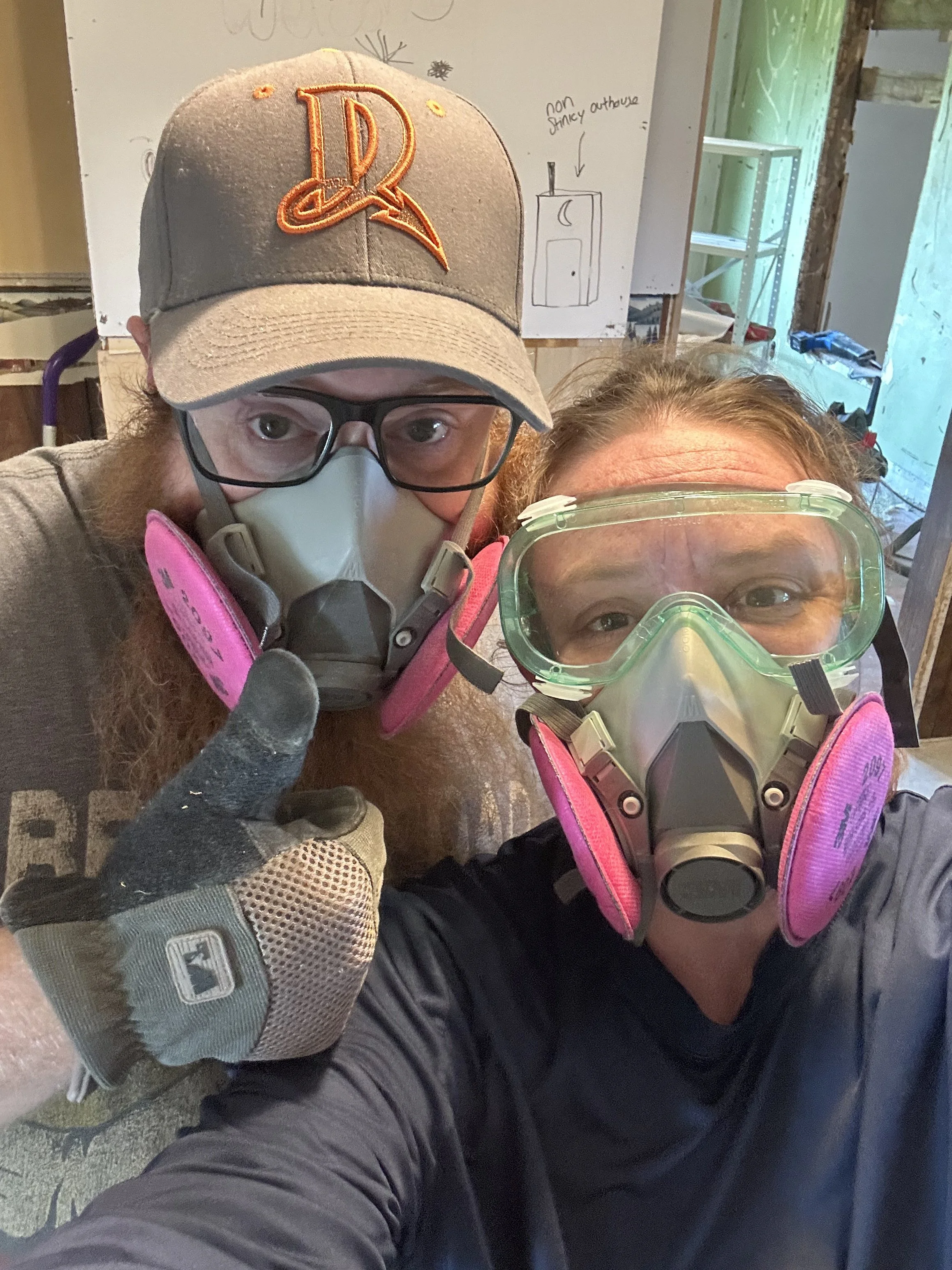
Initial work on the farmhouse consisted of a full gut and remodel of the bathroom, updating flooring, and wall coverings.
Chip and Joana may call it “demo day” but ours took over two weeks.
Not fun.
(You can see the entire “Before” gallery here. )
Flooring was the first thing to go. The carpeting in the front room was the same as when my grandparents first bought the home. They never updated it. I can’t even comprehend what that carpet has seen in its 37+ years. Equally crazy, the carpet in the bedrooms was installed when they bought the home, making it exactly 37 years old. While updated from its original form, the bathroom also had wall to wall carpet. Can you say gross?
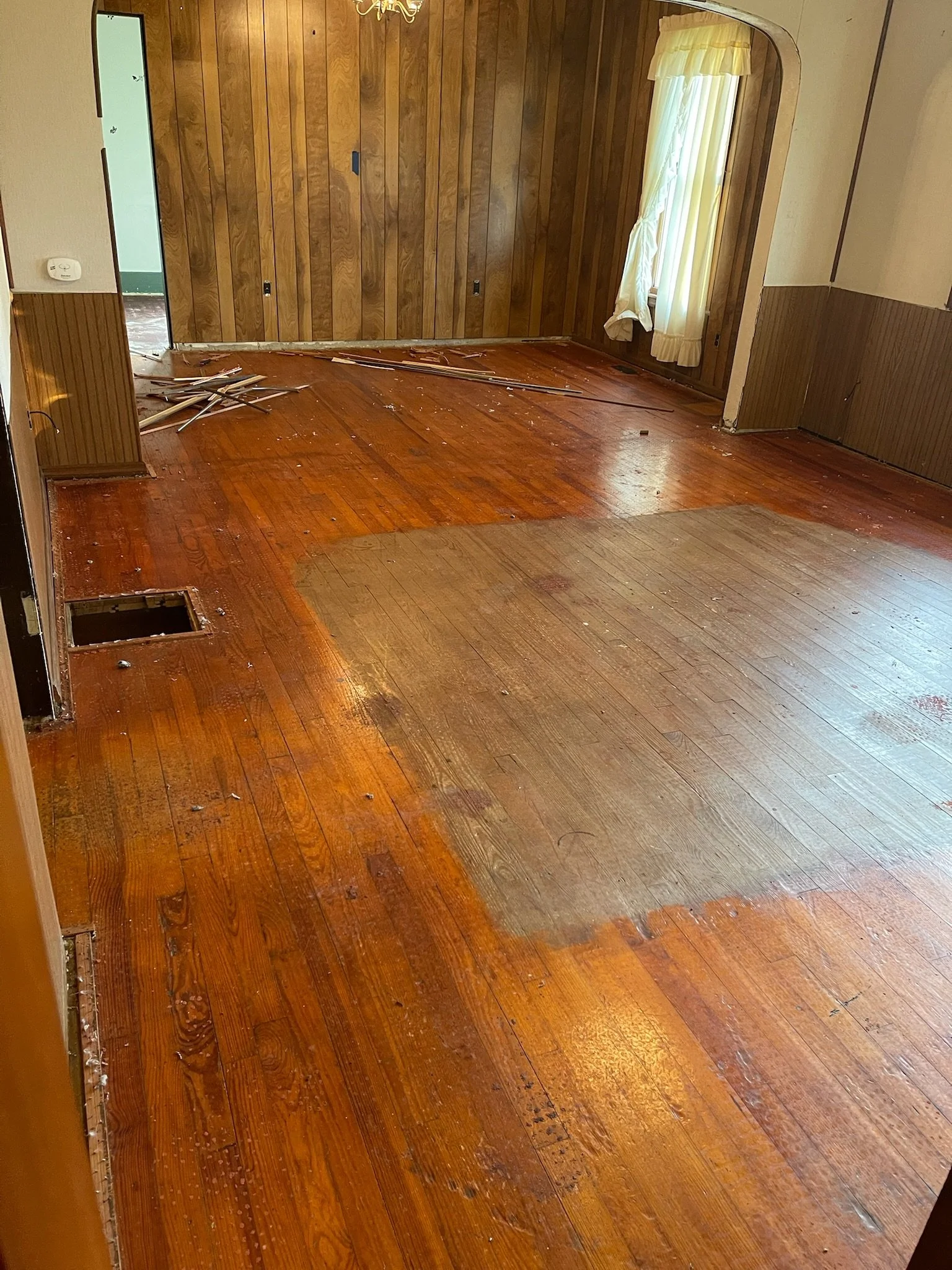
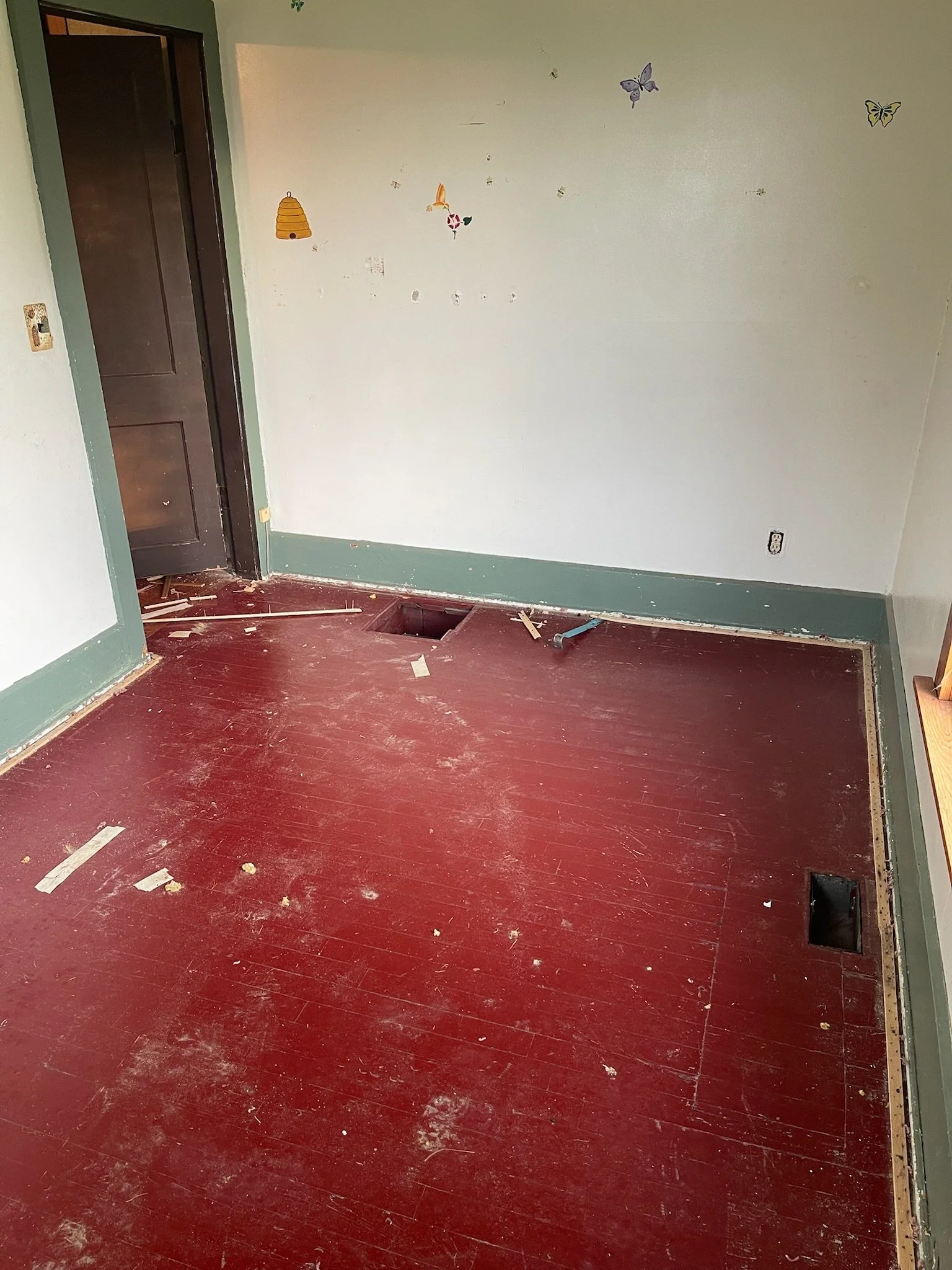
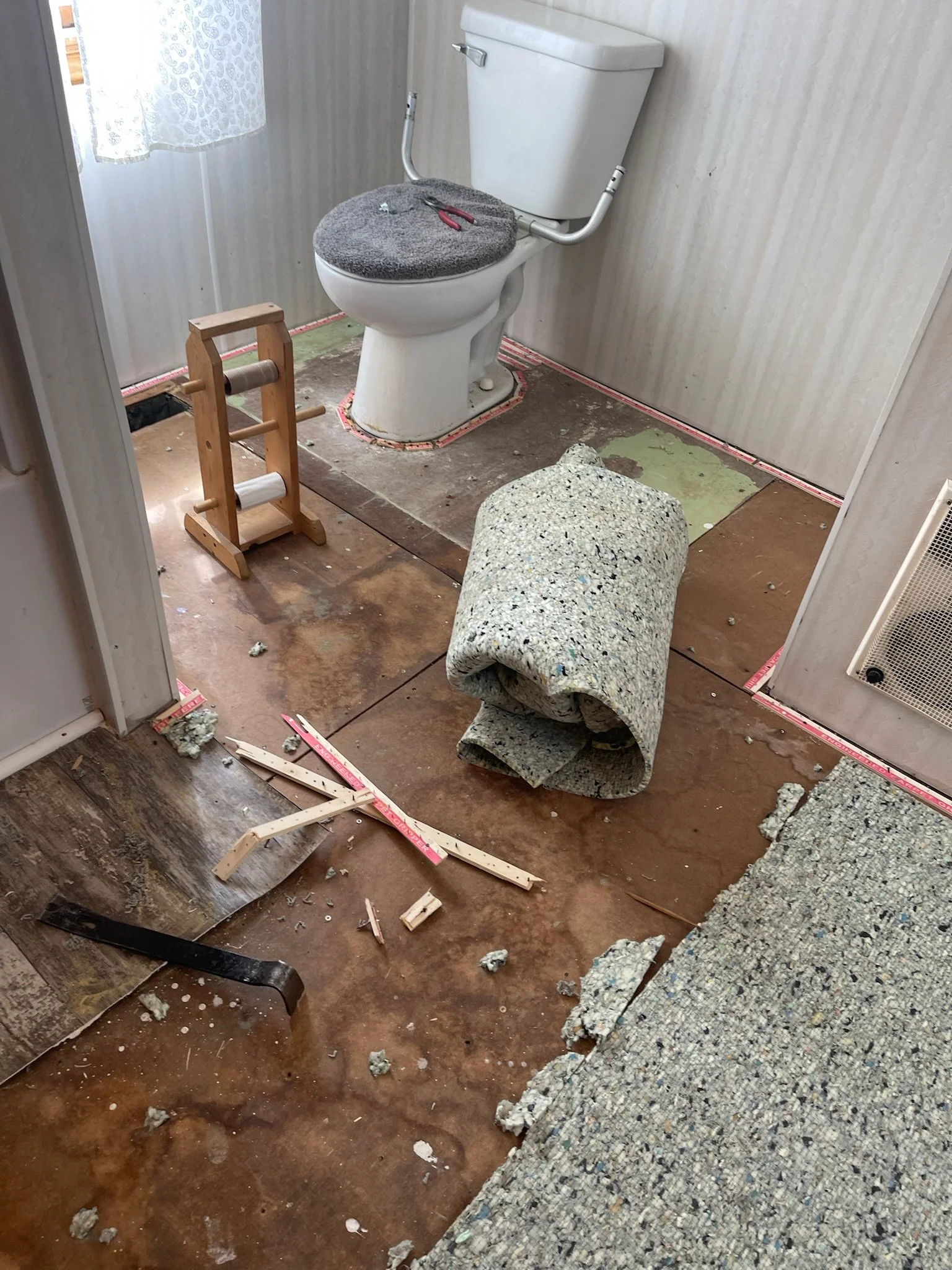
Next to go were a few pieces that bothered me the most - the fixtures throughout, the medicine cabinet, a display cabinet in the living room, and the decorative trim above the kitchen sink.
Then there was the paneling. Originally the whole main area was covered with this dark wood panelling, but over the years, the living room and the kitchen had been replaced. Nonetheless, they were not my style and they had to go. The only paneling that remained was a single wall in the dining room (my girls talked me into leaving it as an accent wall, which I originally resisted but am really thankful for now). Removing them really took a lot of the old house smell out as well.
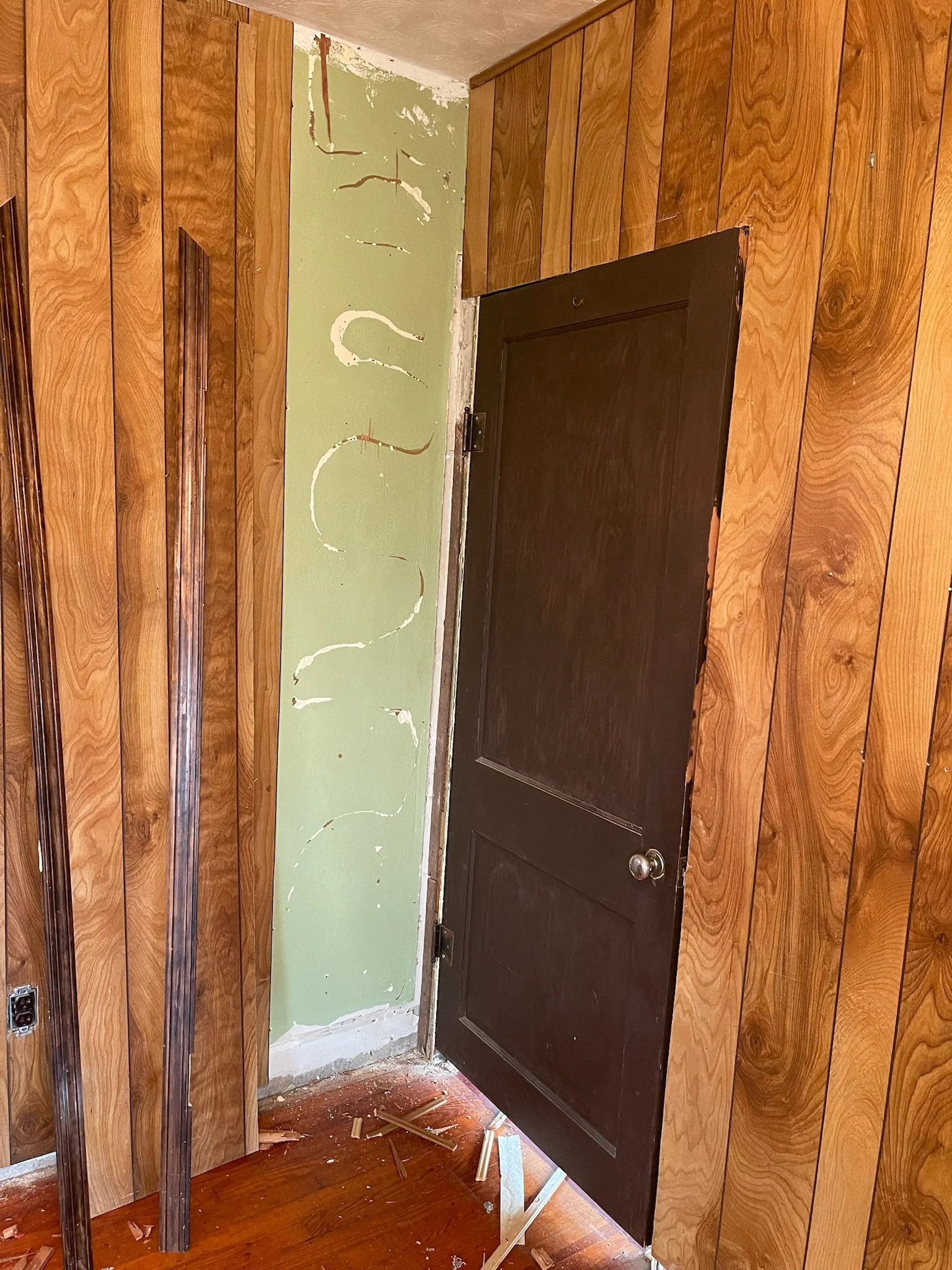
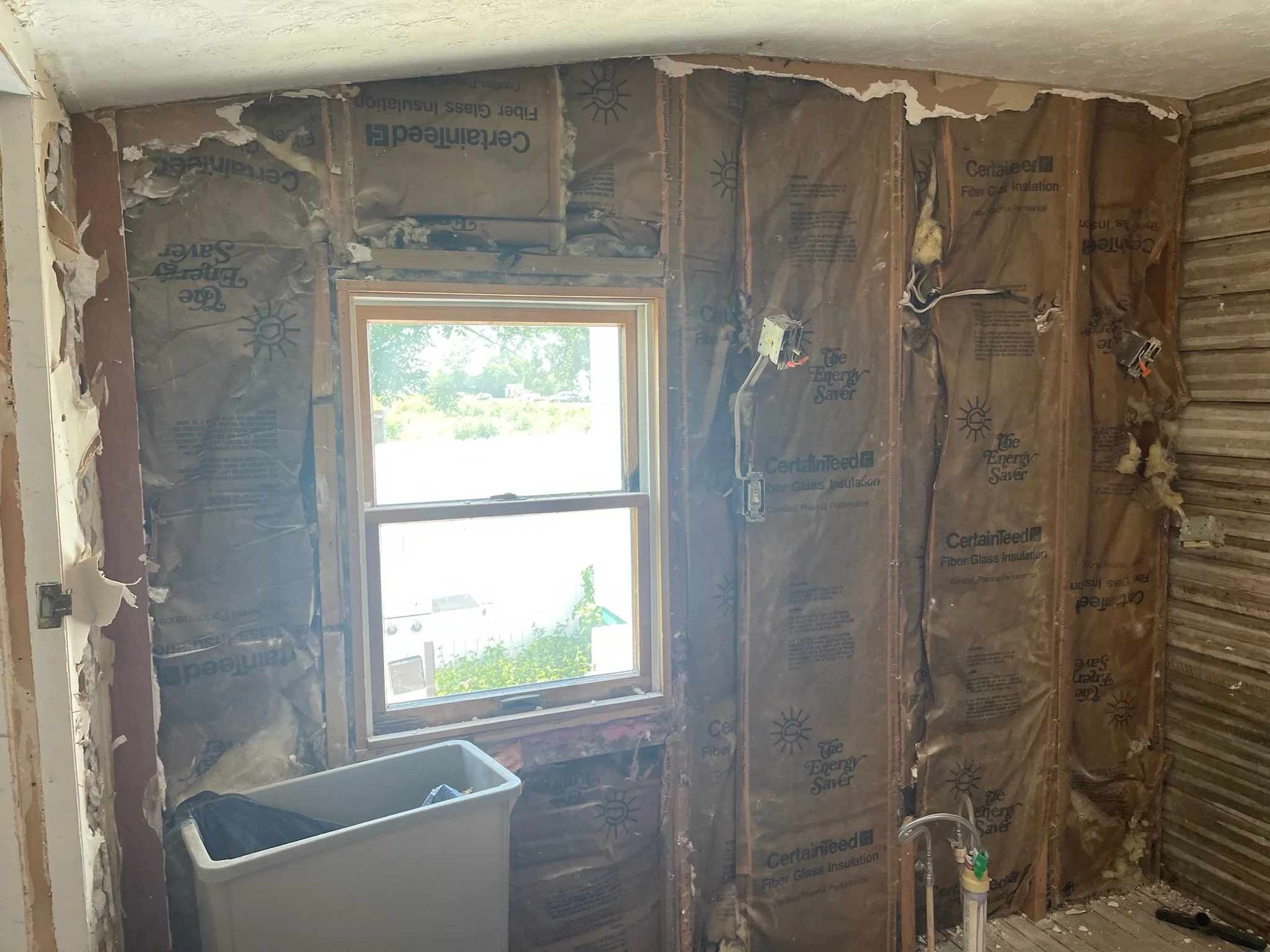
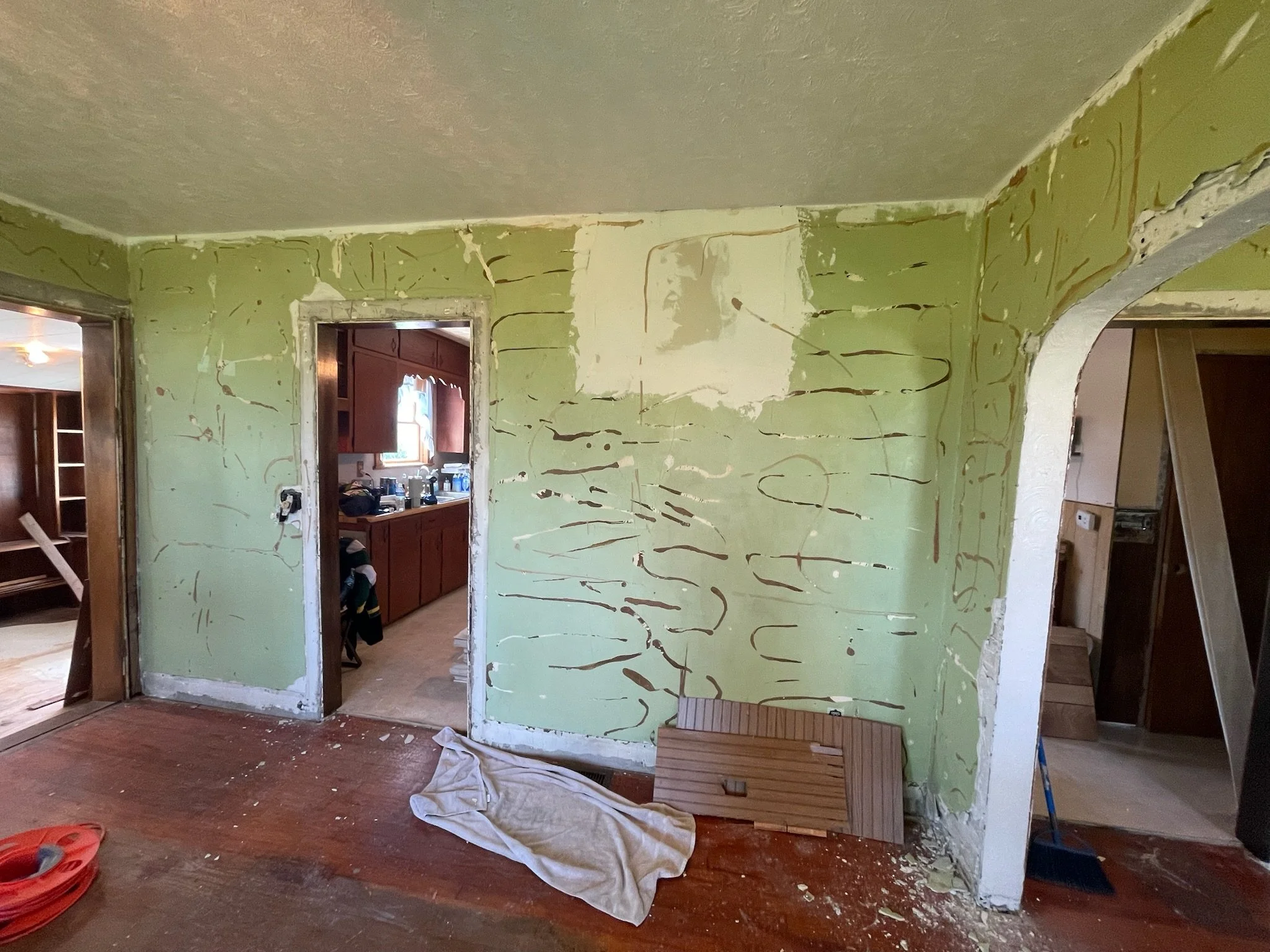
Then there was the kitchen. This was the heart of my grandmother’s home and the vast majority of my happy memories were right here in this very space. My love for it is deep and I wanted to preserve as much of it as I could while also modernizing it and making it more functional for our family. I hoped to keep the cabinets by rearranging them and giving them a makeover. I knew this would be a challenge and a large undertaking, but I also believed it would be worth it in the end. However, a few unpleasant surprises led us to put the kitchen plans on pause. For one thing, the cabinets were not modular. They were entirely custom built in place which meant that removing them would be a very big chore, they would not be as easily re-used, etc.
For another thing, we discovered that the bathroom could not wait.
Originally I had hoped to replace the floor and rebuild the awkward corner closet. It was a wonky, inconvenient configuration and with only three closets in the entire home, they were all going to have to pull their weight. This one just wasn’t going to work. Out it came.
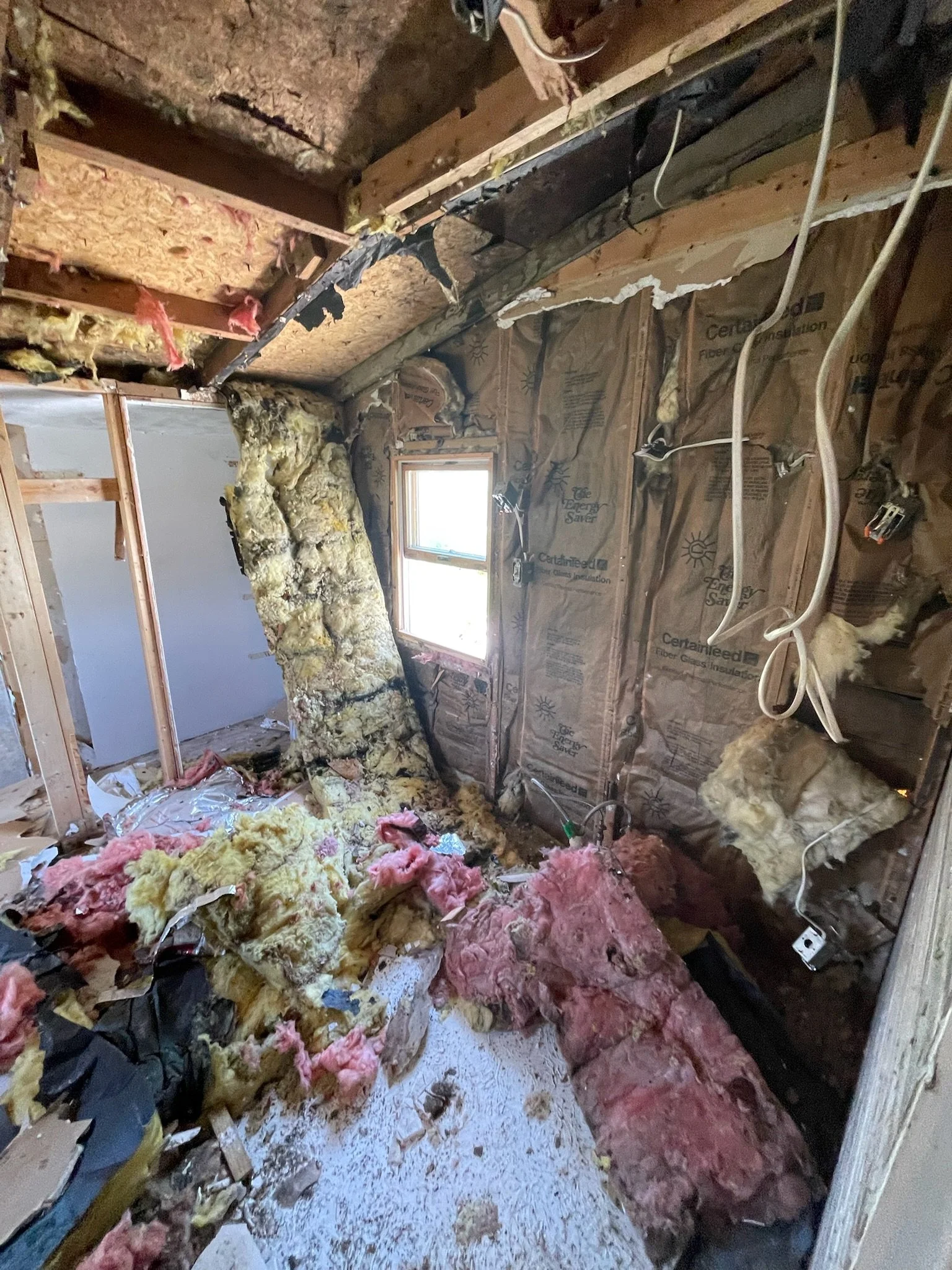
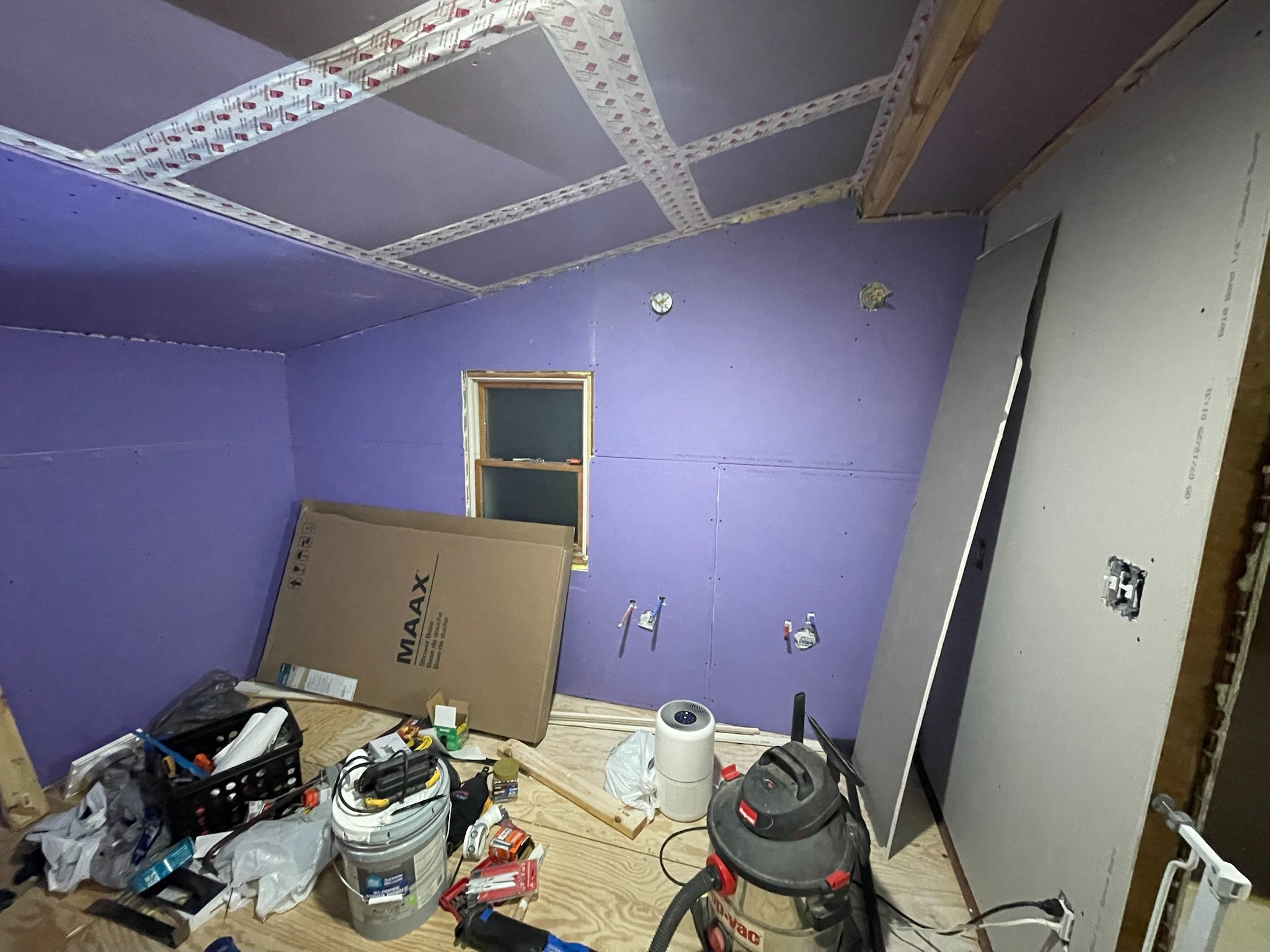
Unfortunately, removing the walls of this closet exposed the poor state of the ceiling. The drywall was “squishy” and it became quite obvious the entire ceiling was sagging. The floor was already questionable, but with this discovery, a full gut and remodel was the only way to go. We stripped the room to the bare studs, which revealed a few electrical, insulation, and framing problems and reassured us we’d made the right choice. Also, with the full gut, we discovered that rather than removing building materials during previous remodels, they had merely layered them. We were able to strip out the layer of old wood siding and turn this dividing wall into a proper width interior wall, gaining inches inside the room.
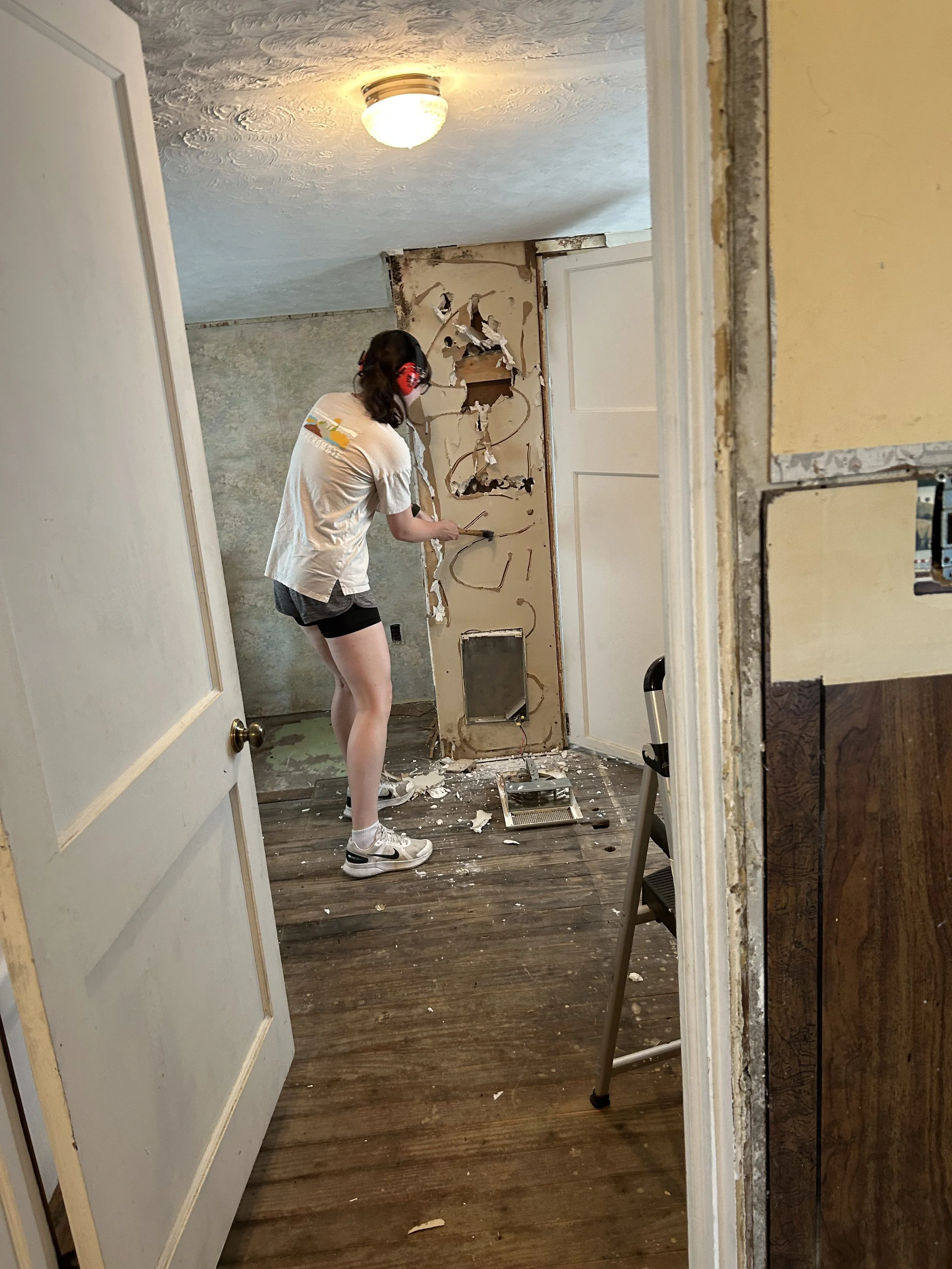
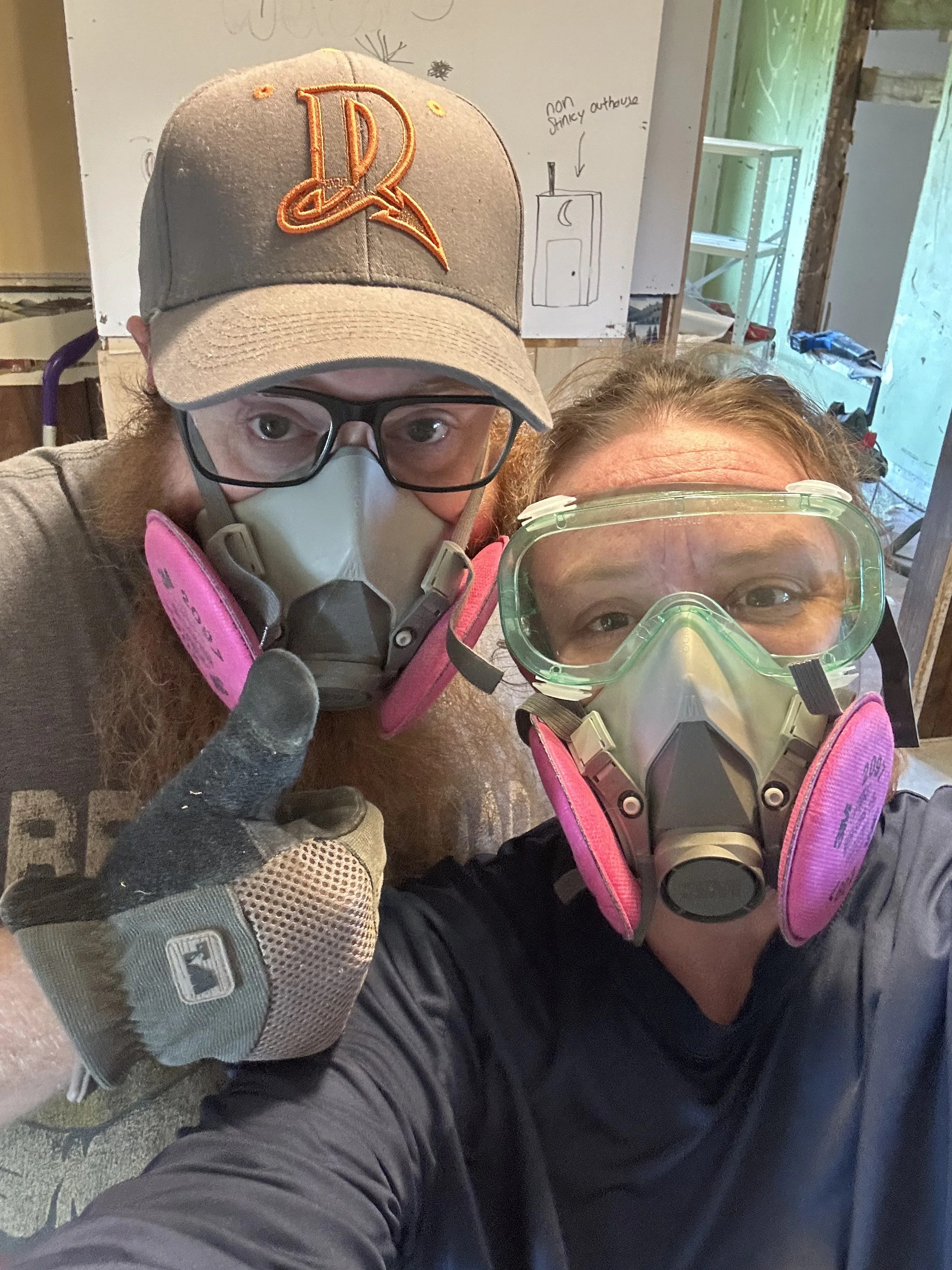
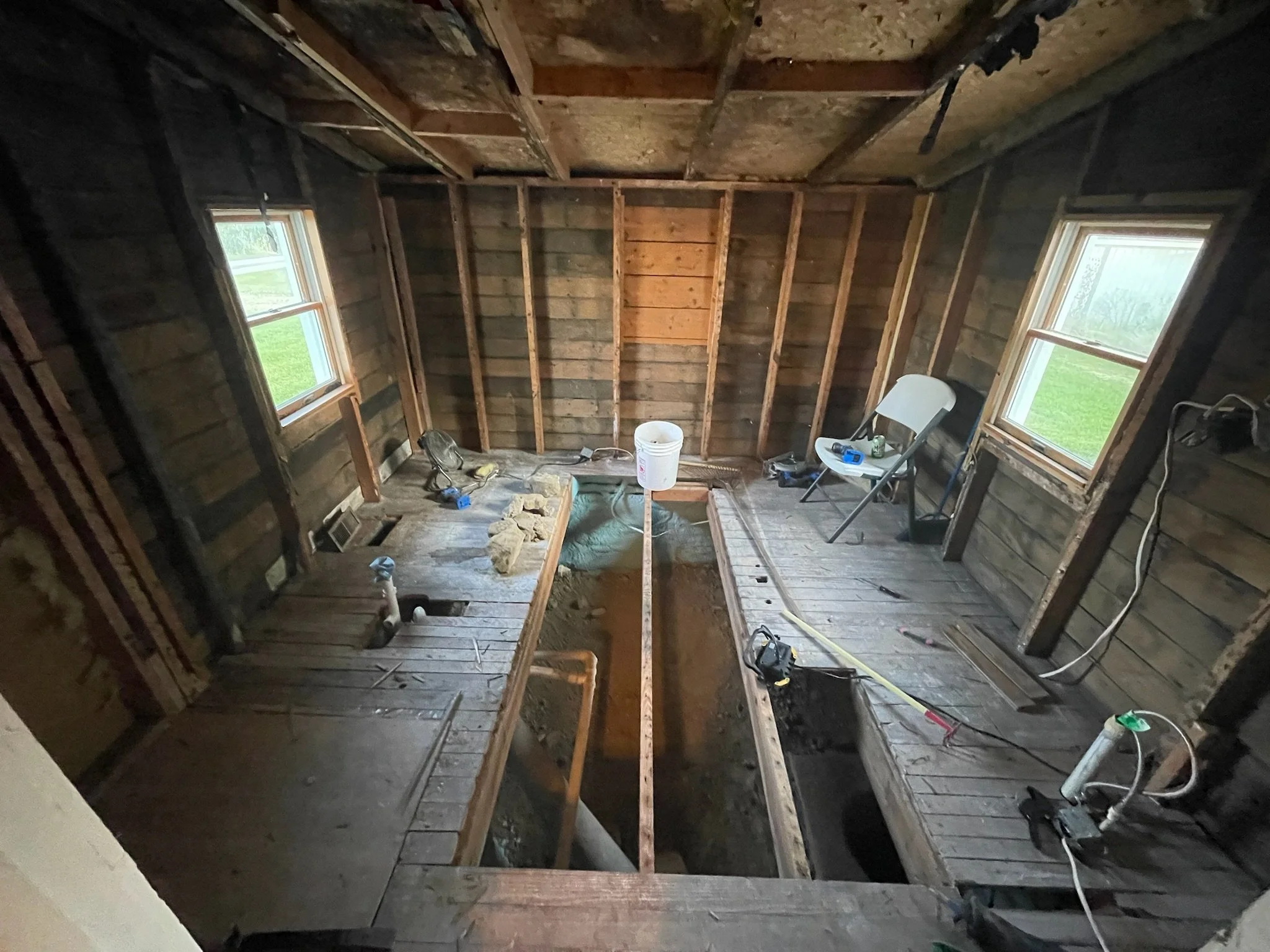
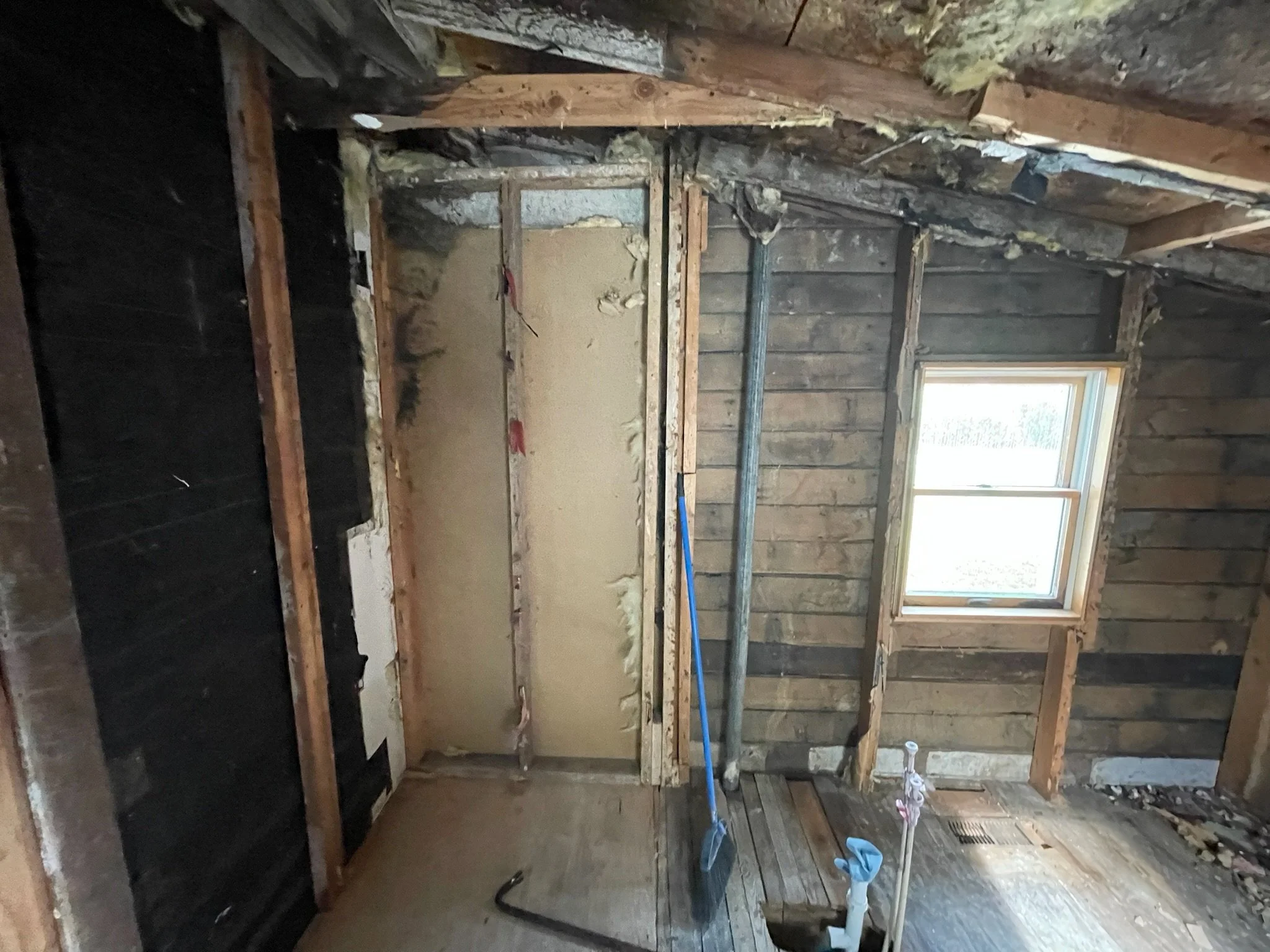
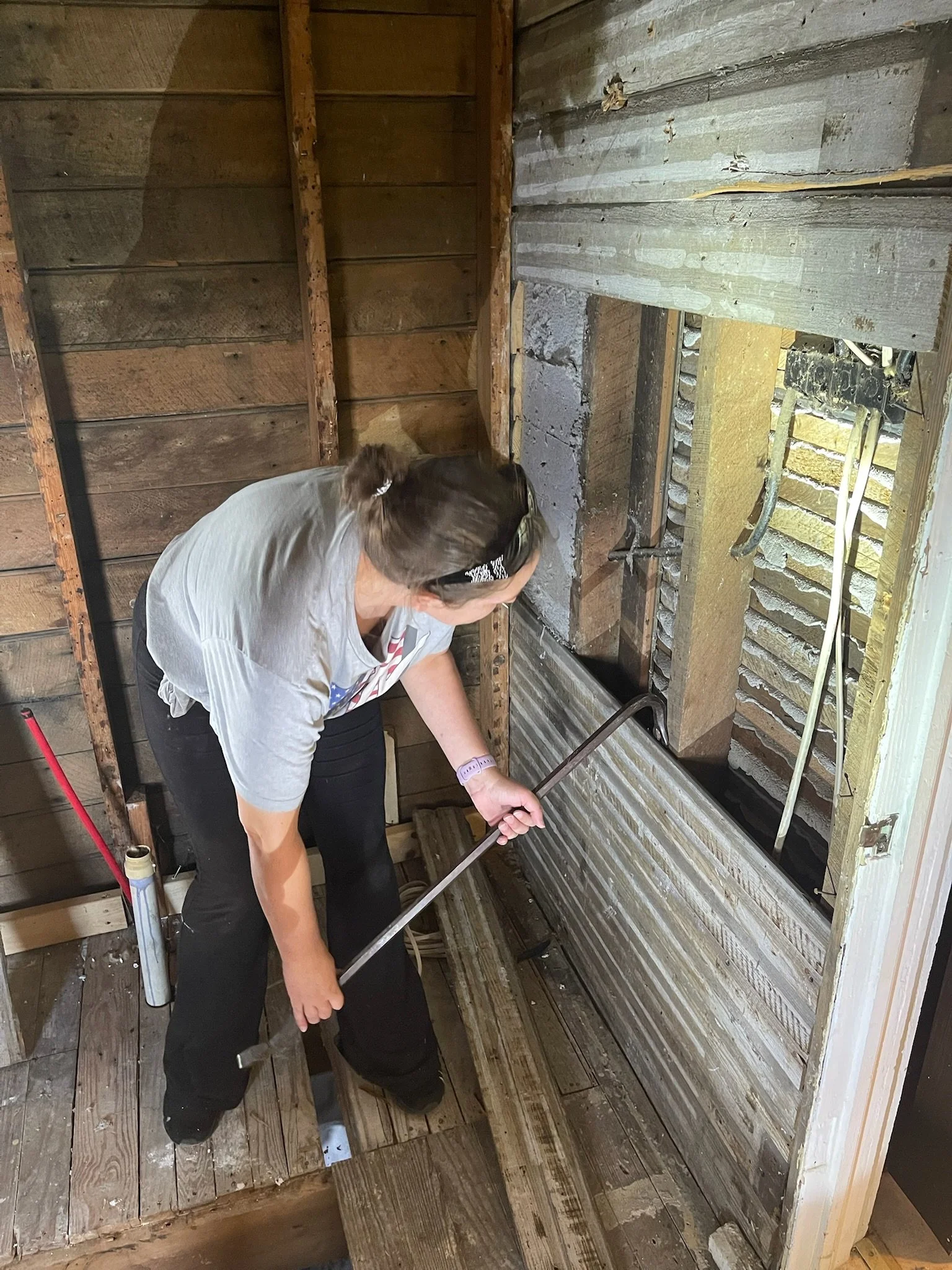
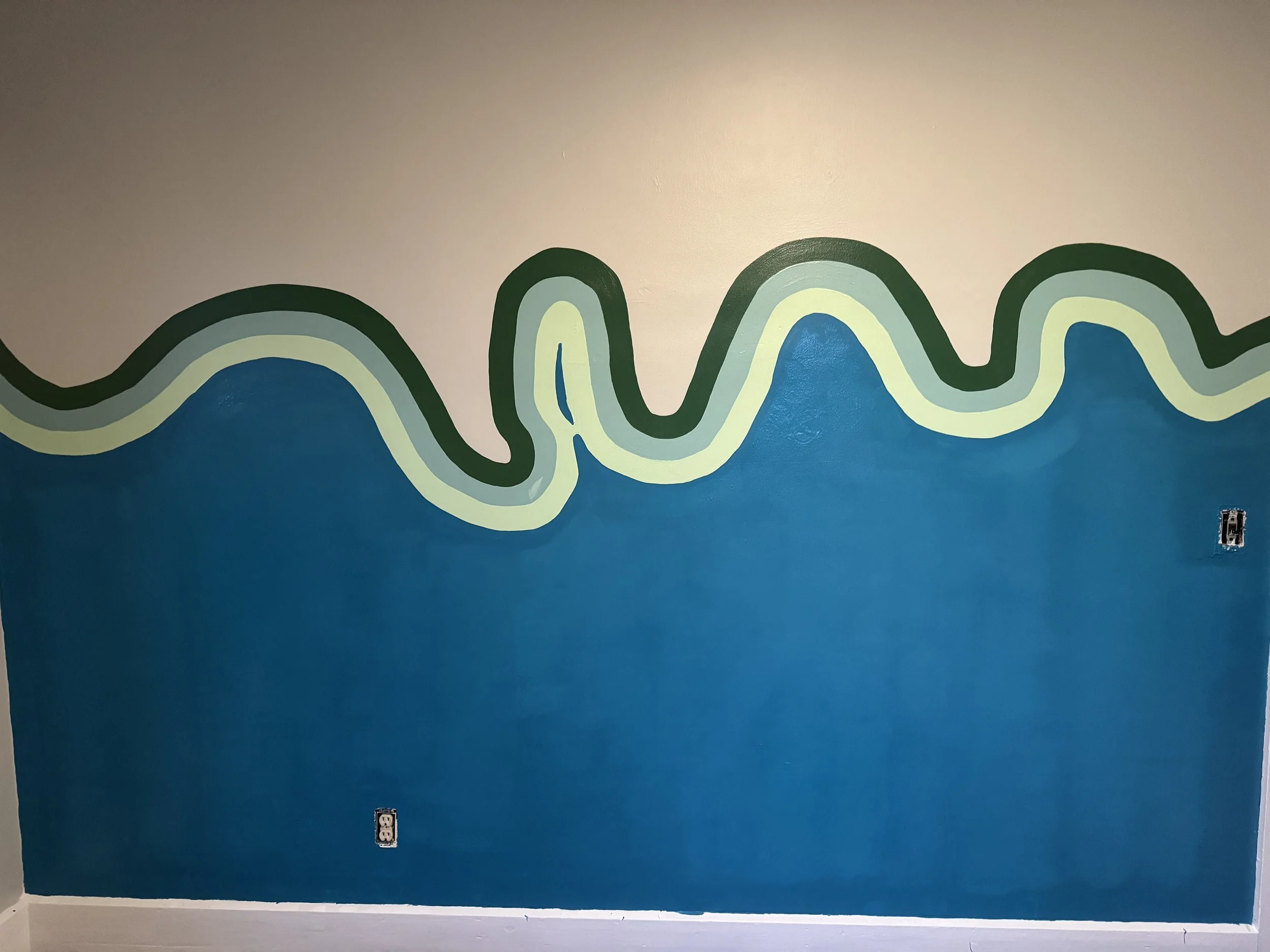
Then, finally, construction began. I started in the bedrooms since these would be the quick and easy areas. They got a fresh paint job, new lights, and some blinds. (Swirl wall for J’s bedroom, drawn and painted by A with help from M)
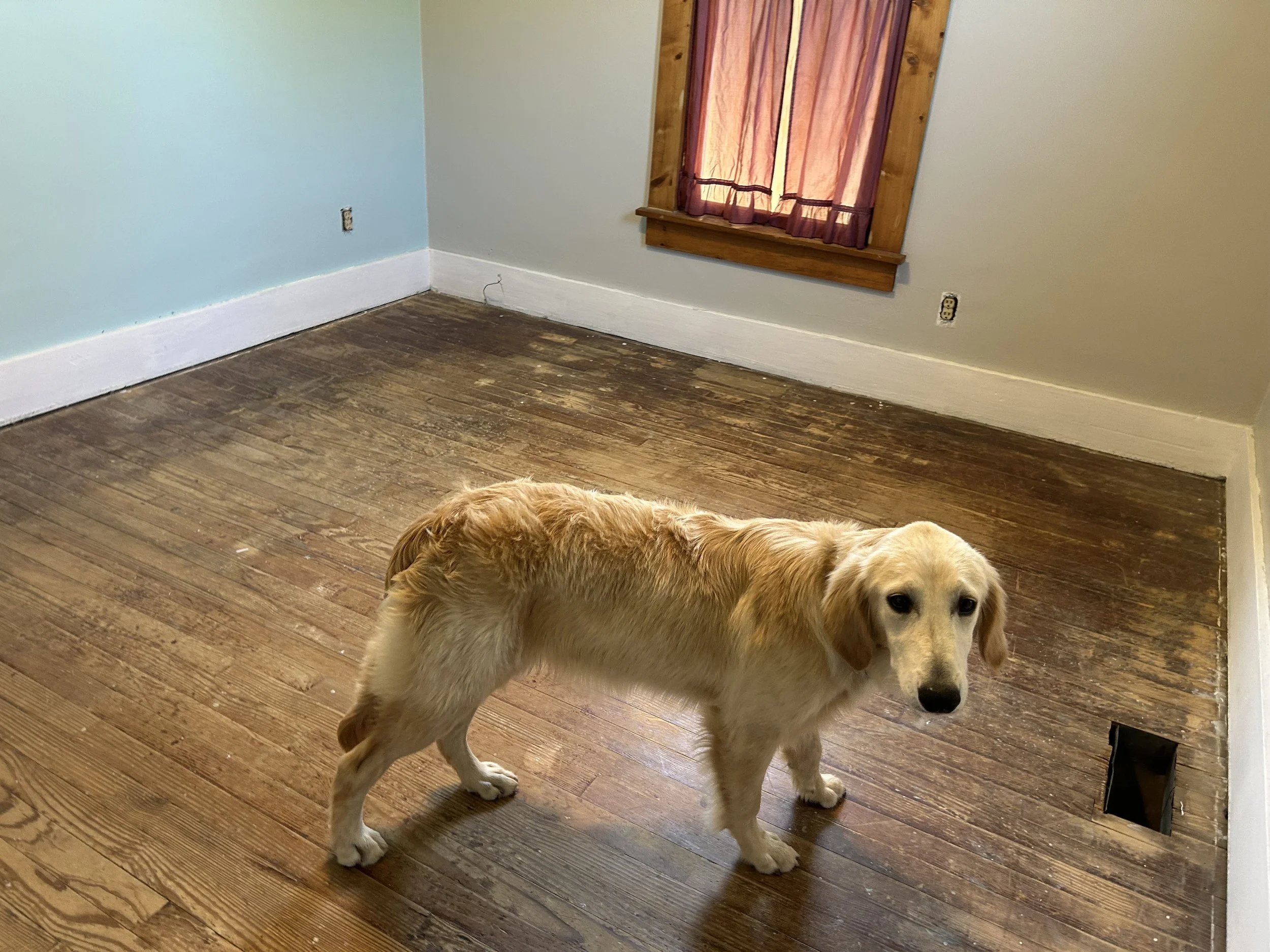
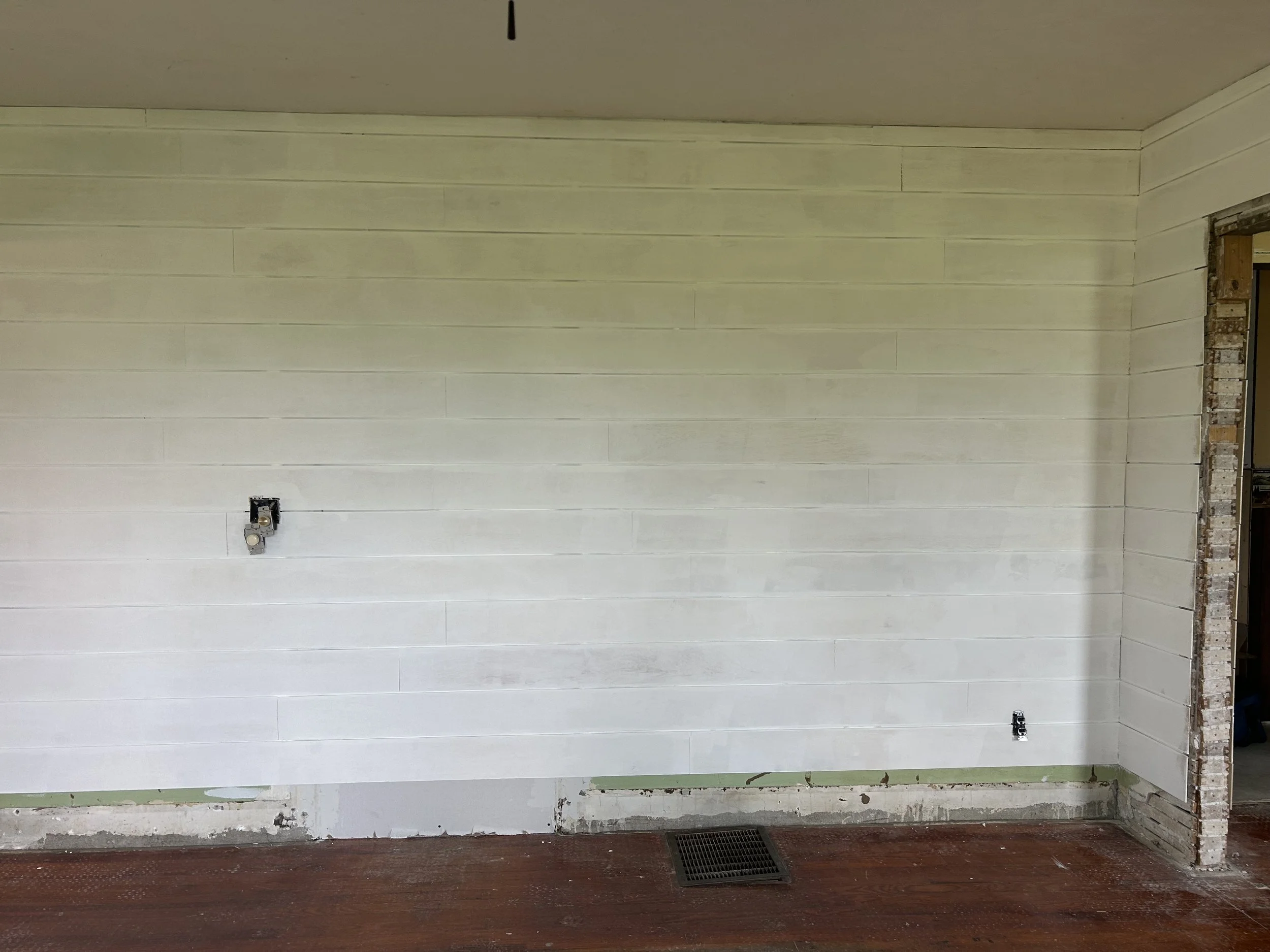
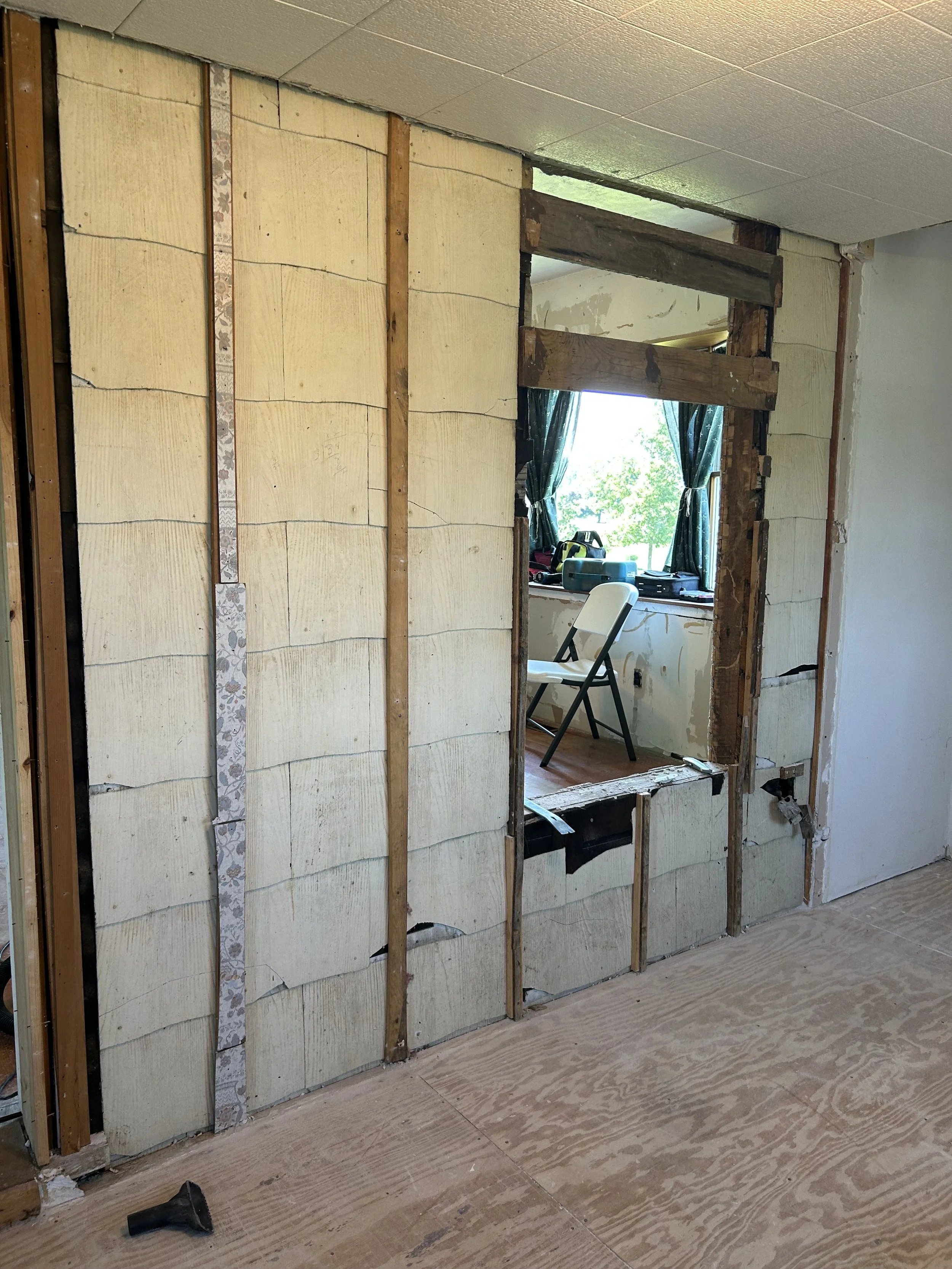
The living and dining rooms got new planked walls, fresh trim, and refinished floors. In the process of recovering the walls, we also closed in the window/display case (that used to be a window before the front porch was enclosed) and the pass through door from the kitchen to the living room. Losing this door would change the flow of the home, but set the stage for a better kitchen layout in the future. The living room also got a new light. The existing chandelier in the dining room will be left for now, as a nod to the past (its original to my grandparents purchase of the home). My children also begged me to keep some of the old paneling - they loved it and I had no idea why, lol. We compromised by keeping just the one wall as an accept piece, and I have to admit, I’m really glad they talked me into it.
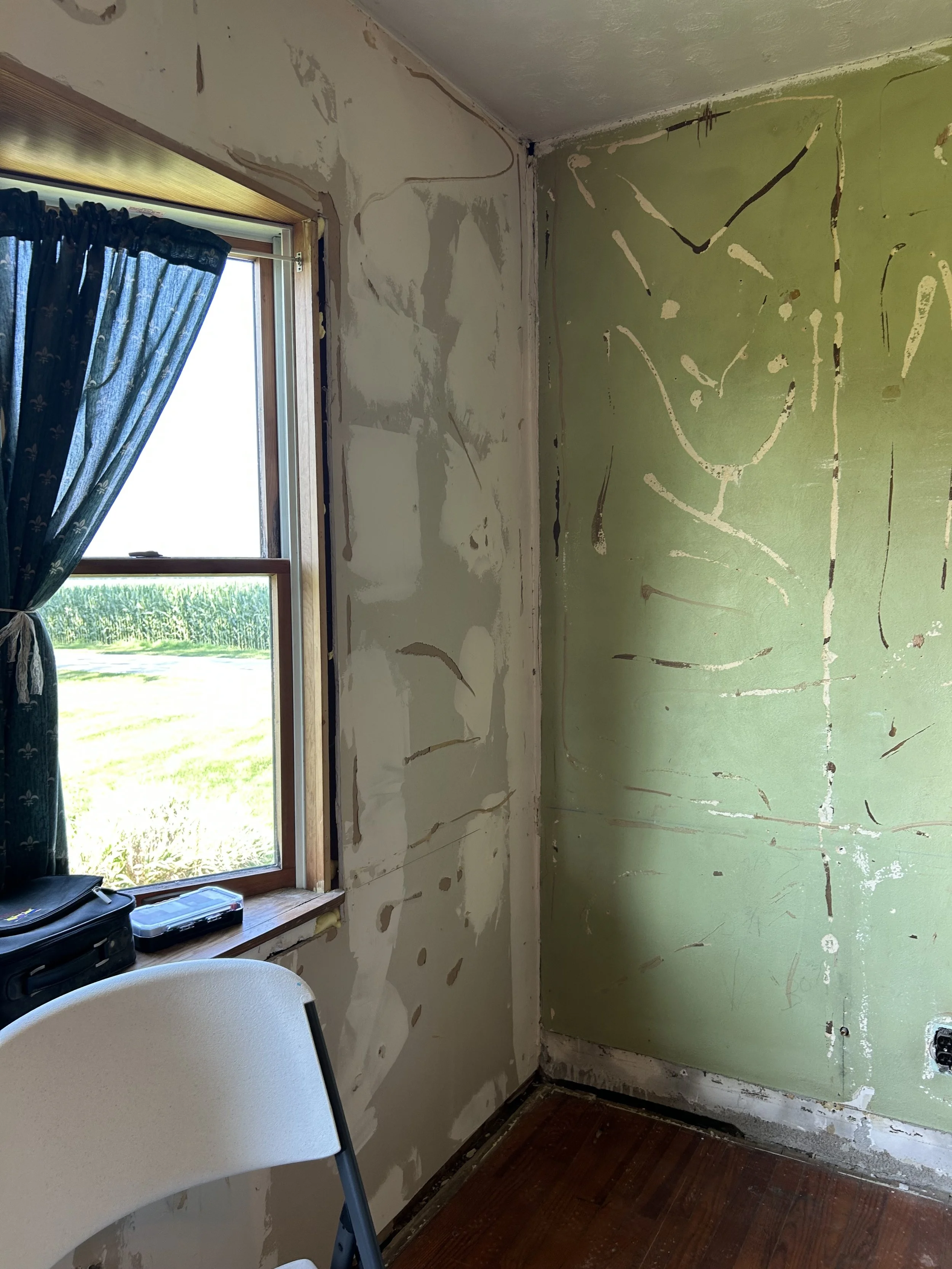
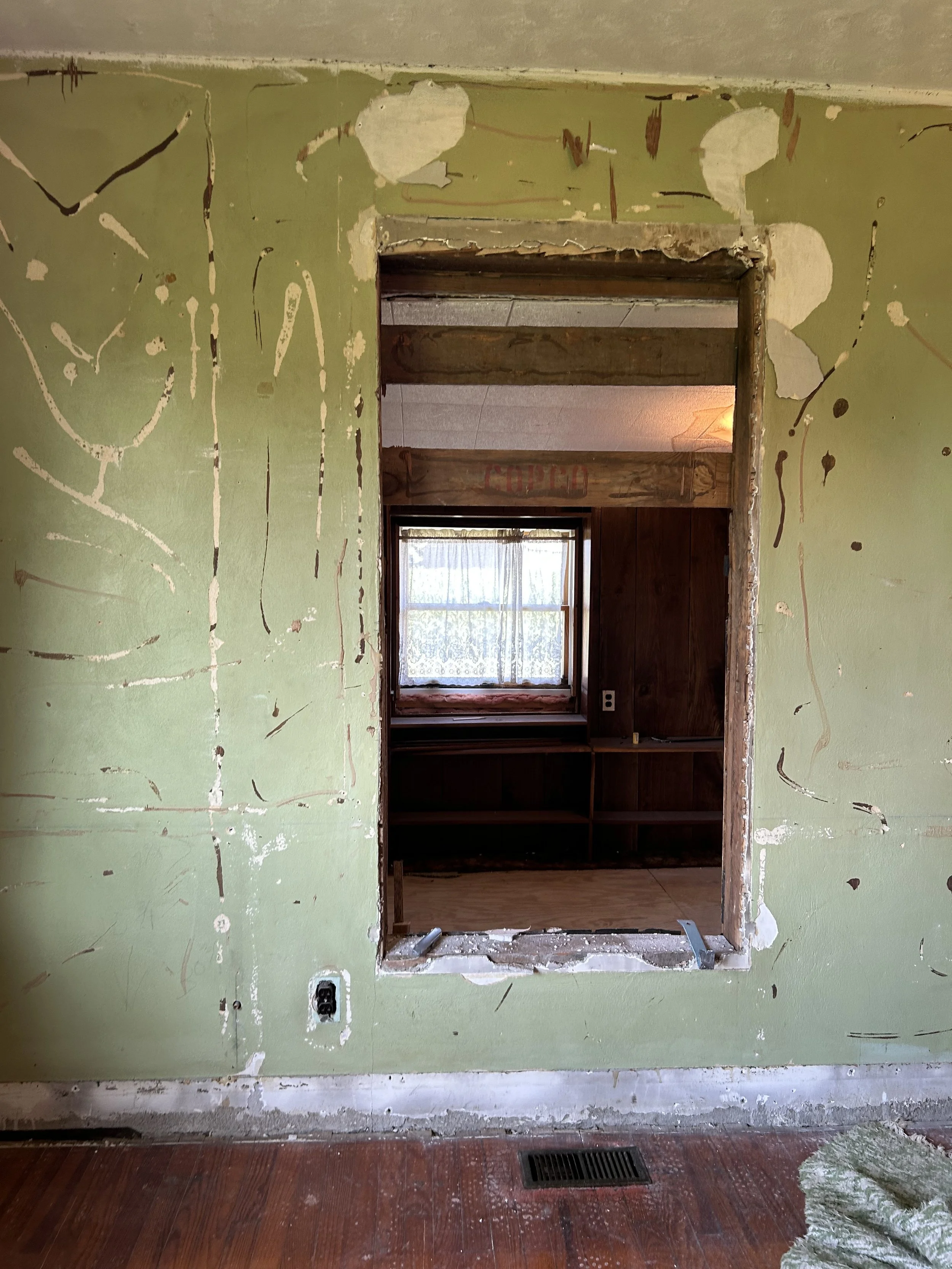
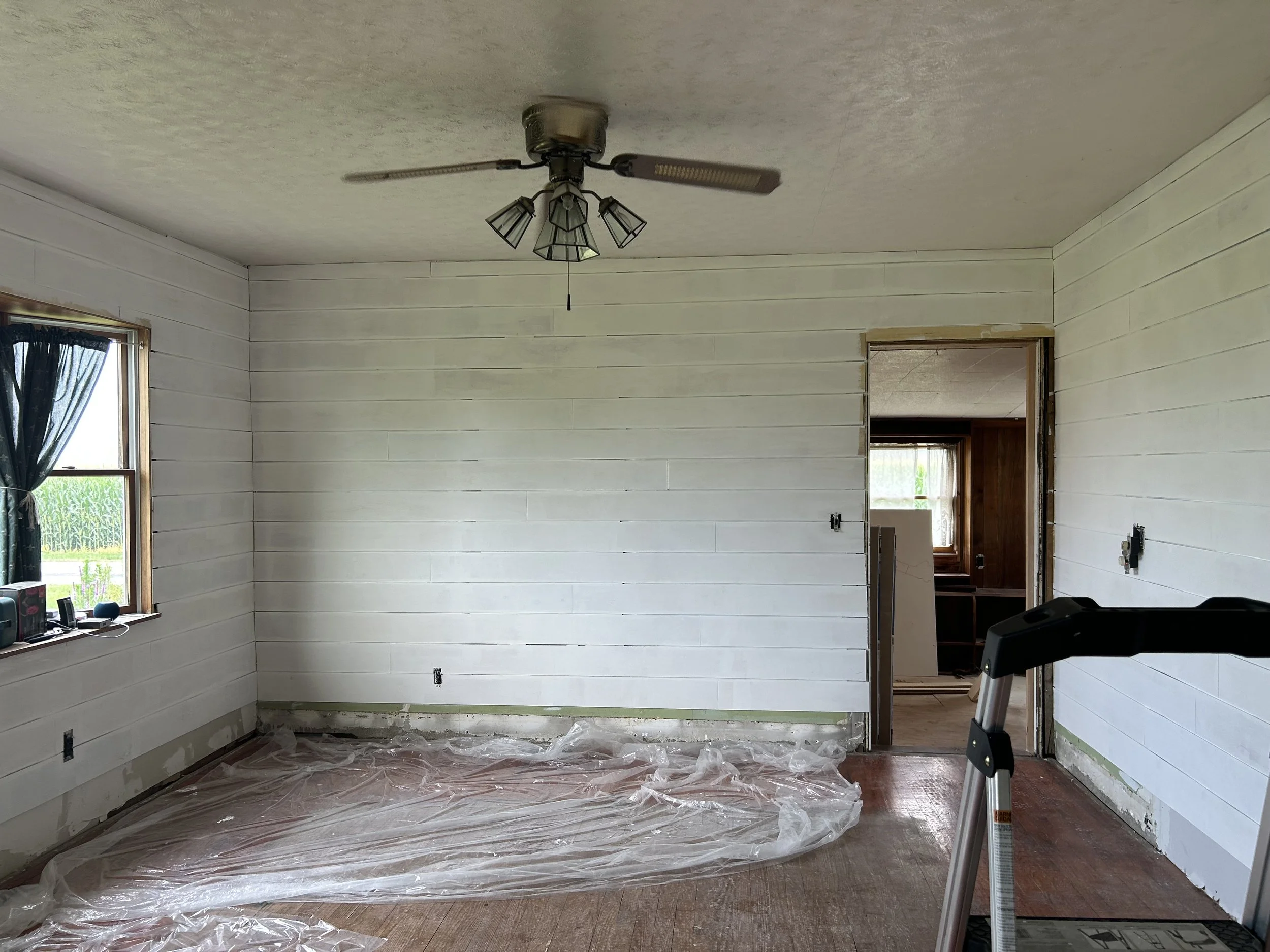
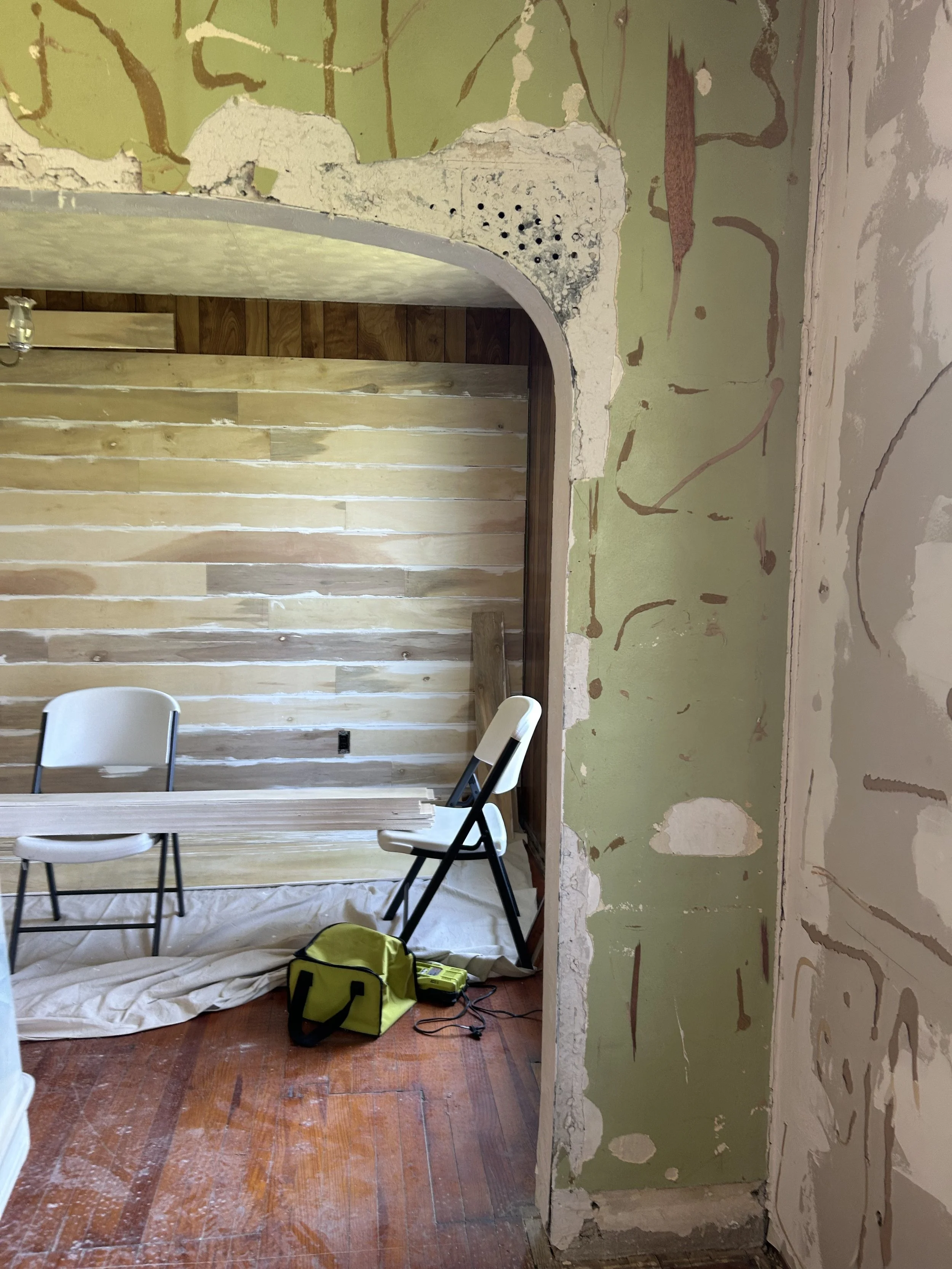
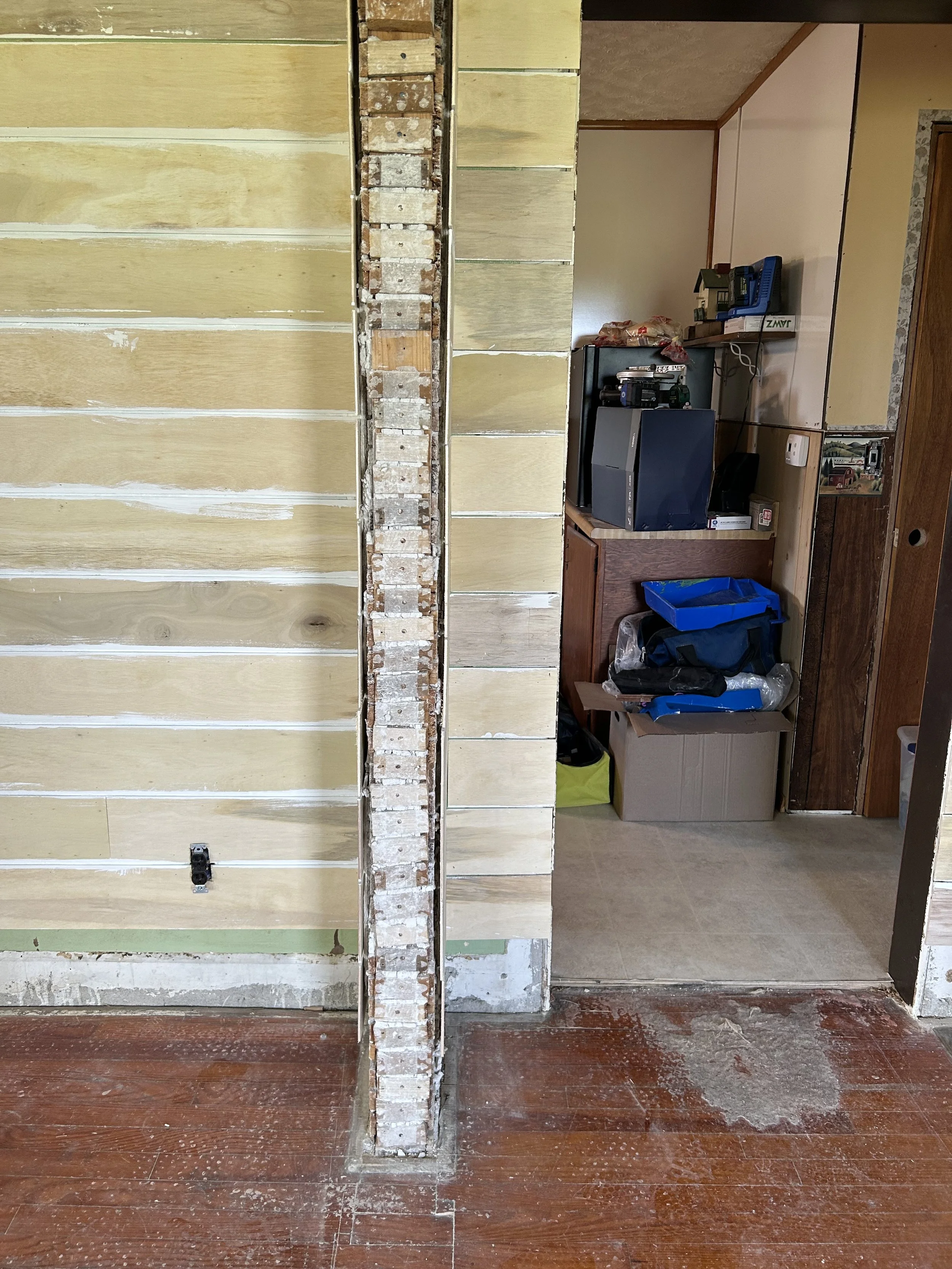
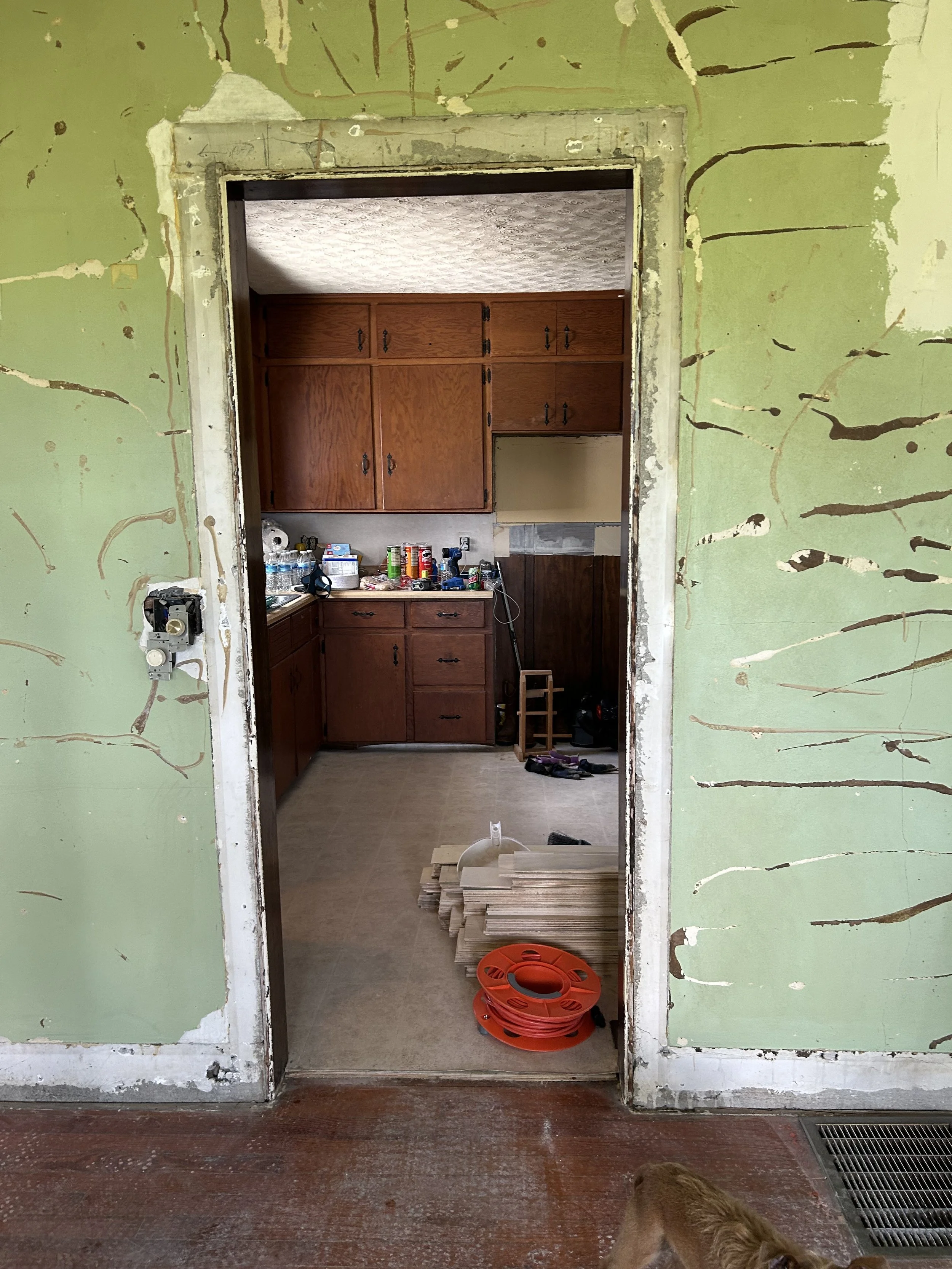
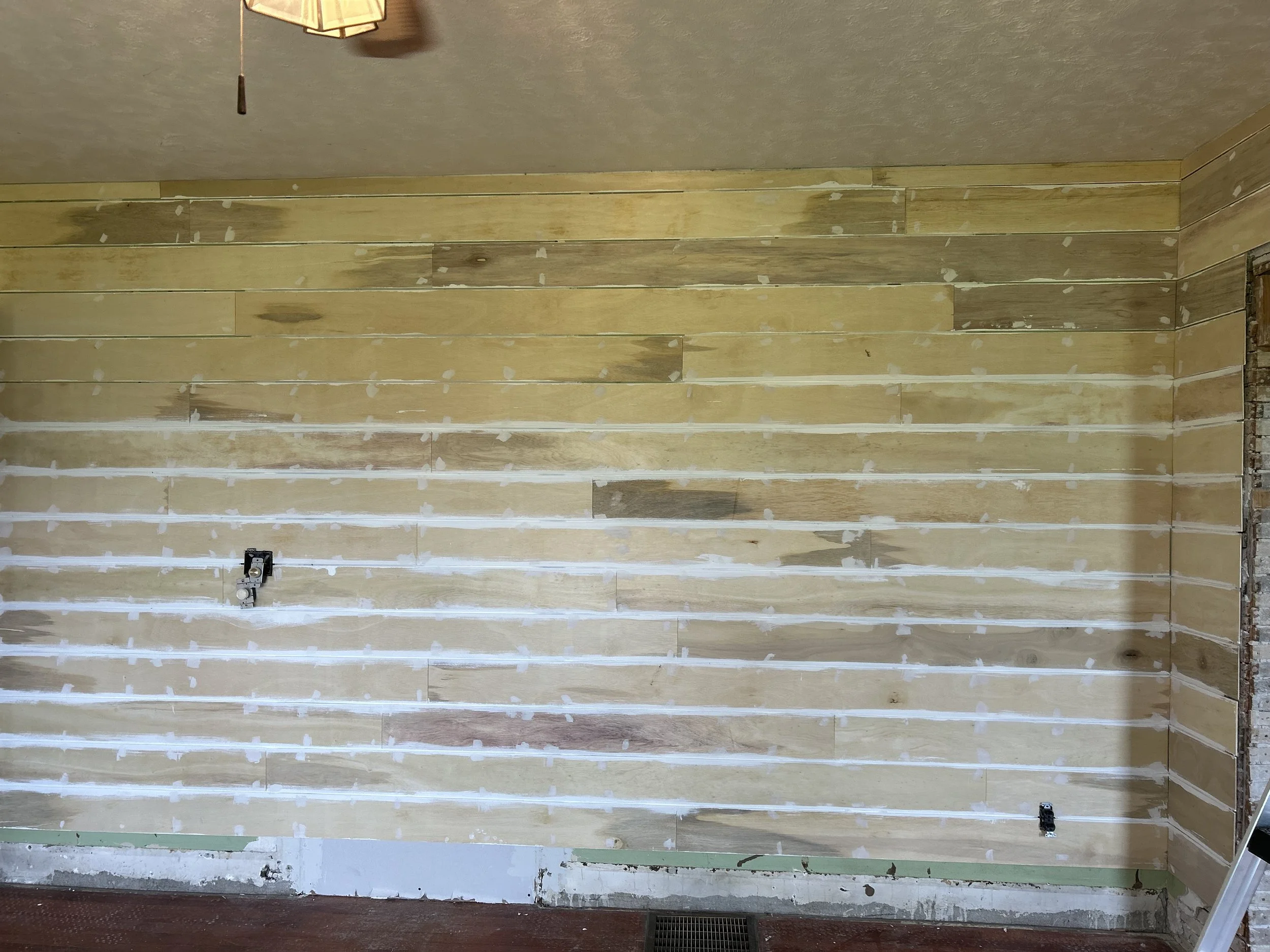
We added a door to the front room to turn it into a third bedroom for our college-aged daughter, removed half of the closet, replaced the light fixtures, painted the exposed walls, and installed new flooring. The bookshelves were left alone until we decide what to do with them. They are dark, but I love them (my grandparents custom built them and grandma had them crammed full with books) and can’t quite bring myself to remove them just yet. I also have a lot of books and would like to eventually make this my library.
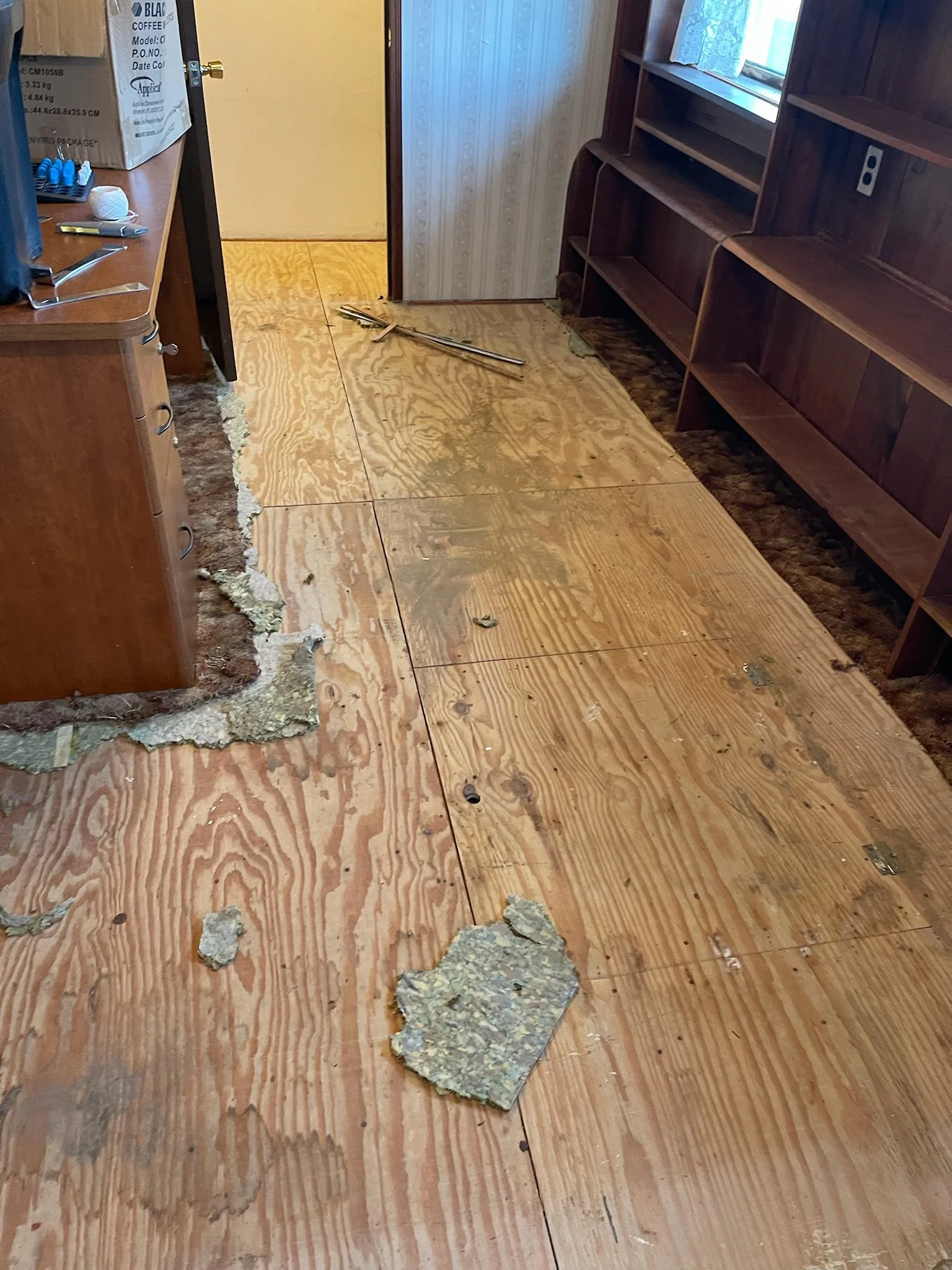
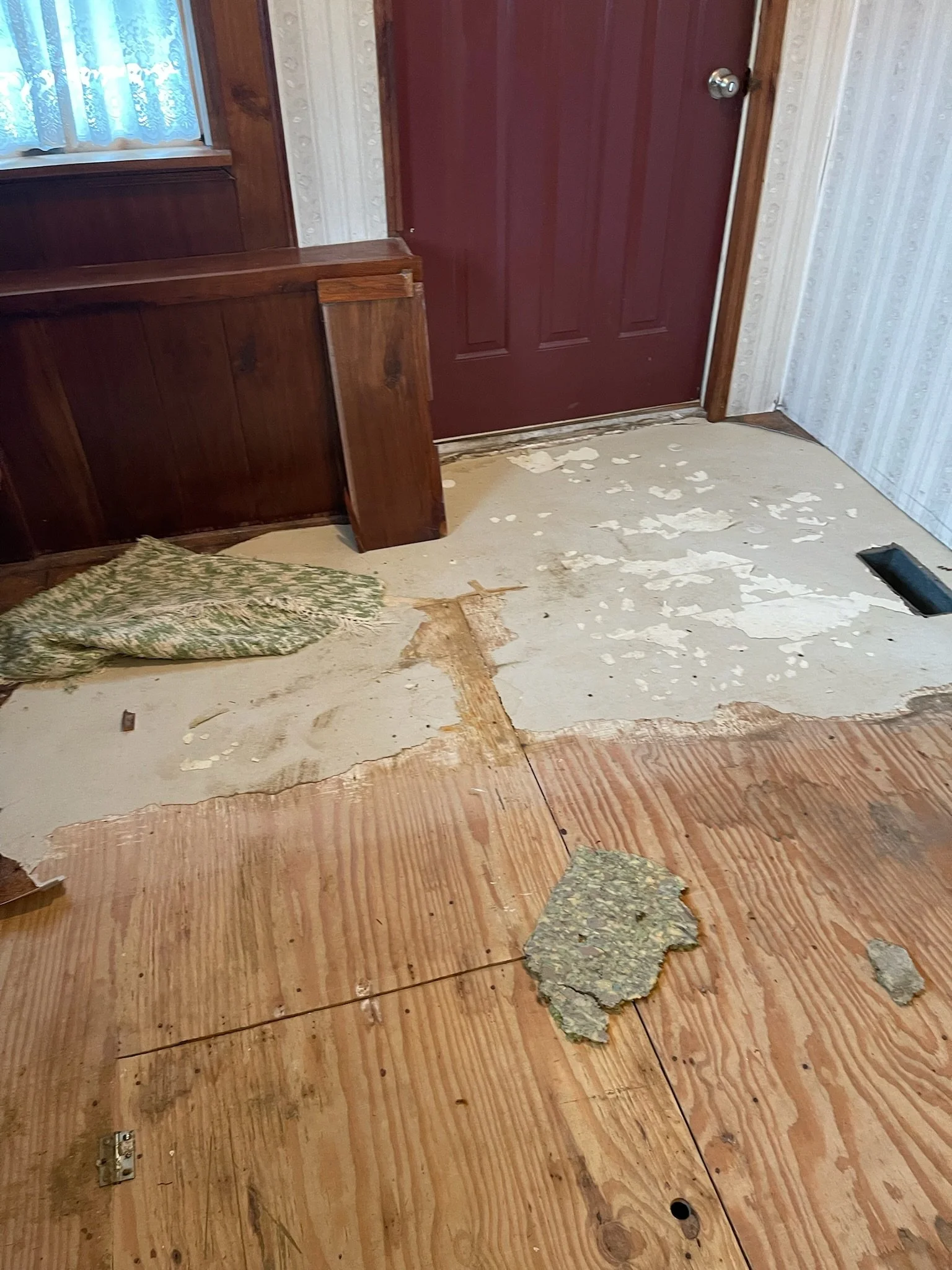
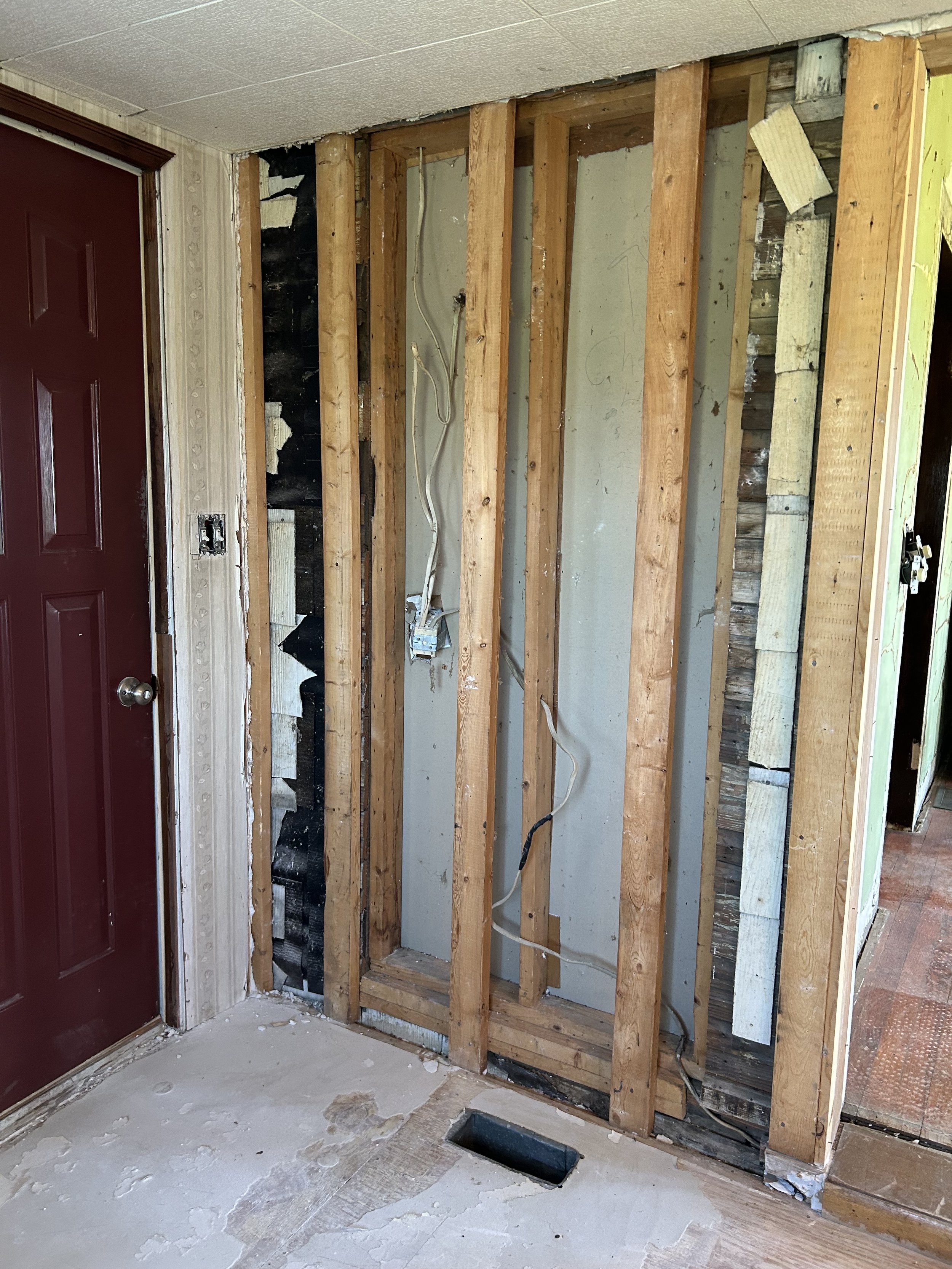
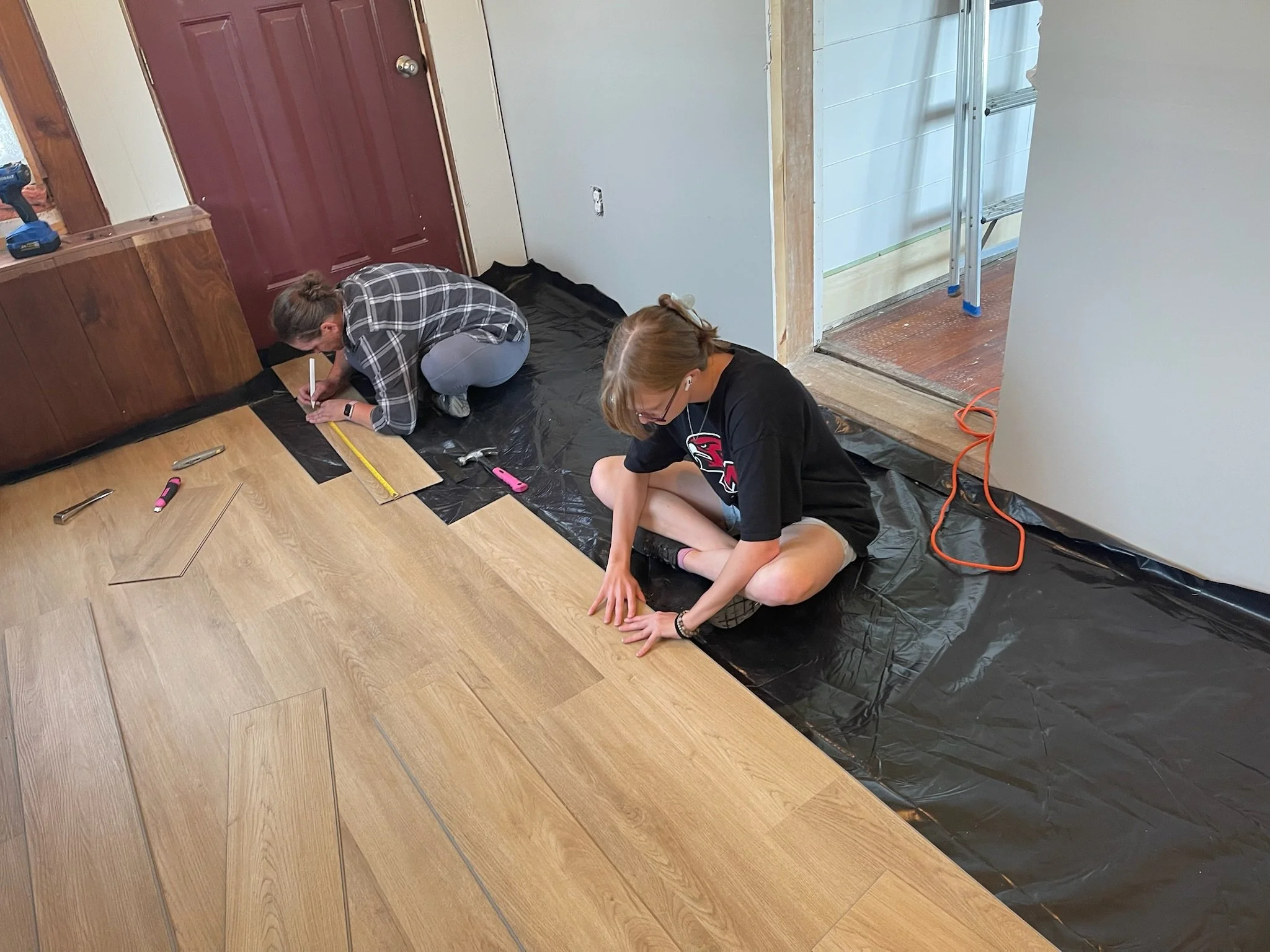
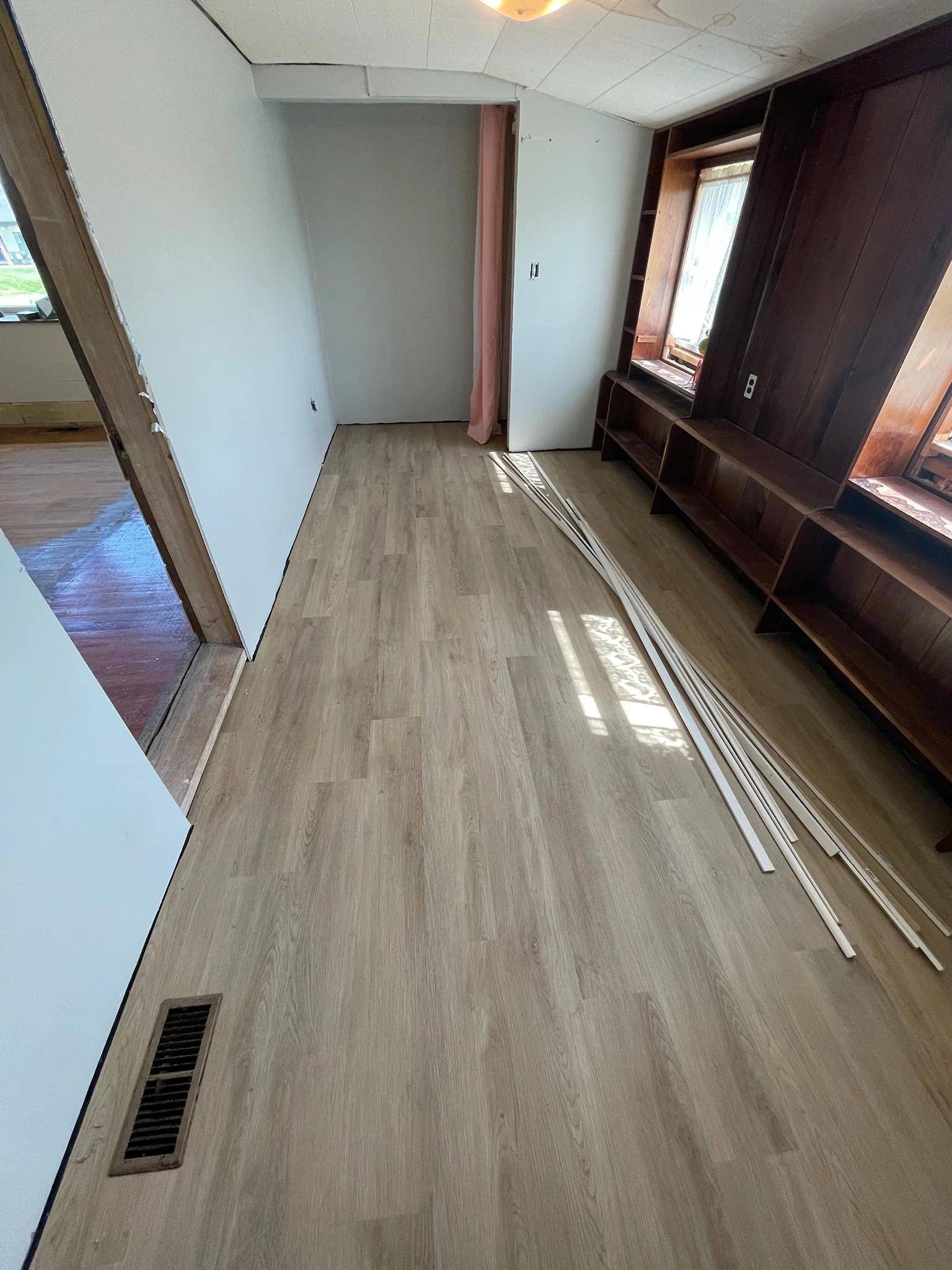
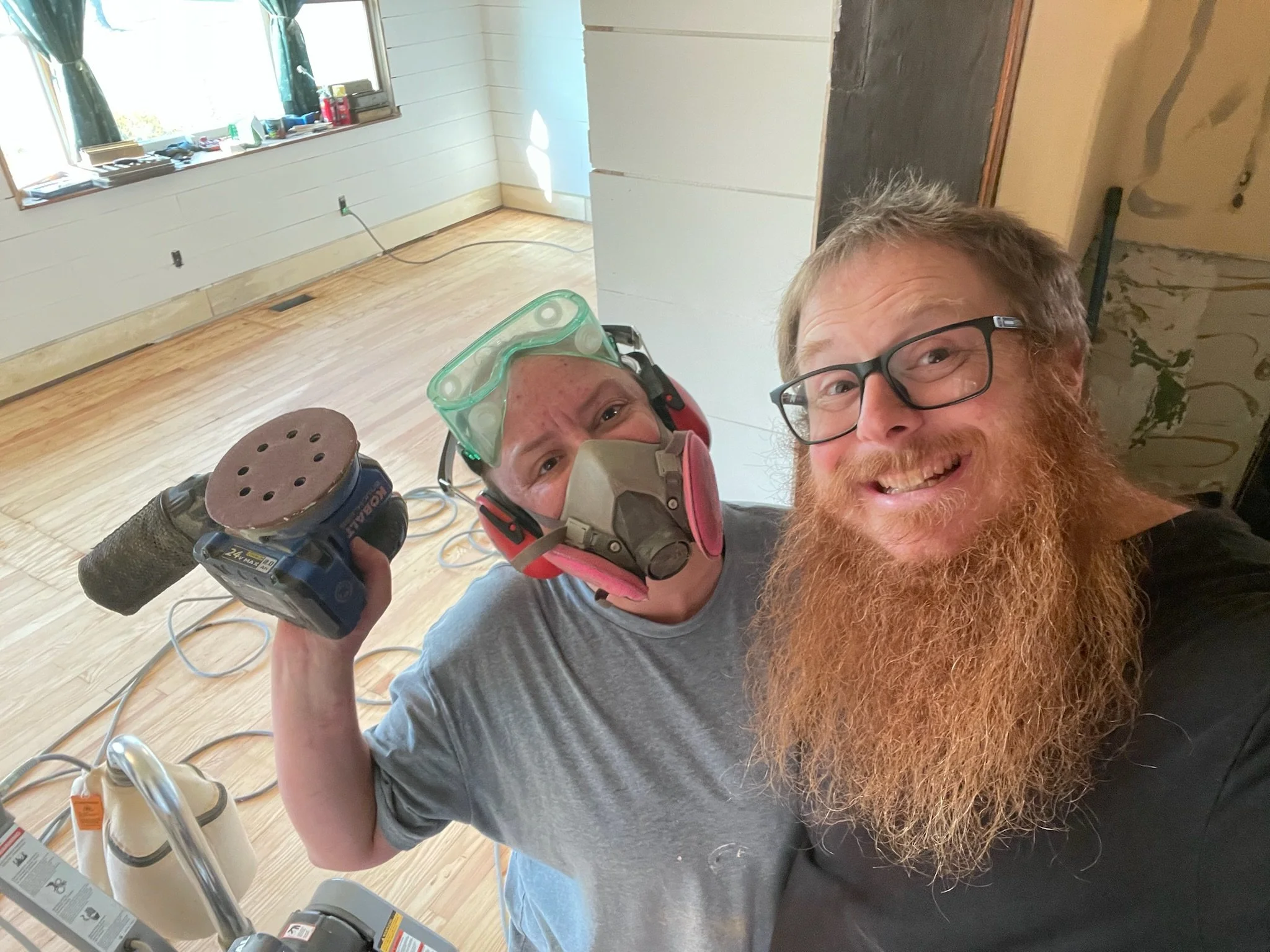
We also spent a couple of very long days and nights refinishing the hardwood floors.
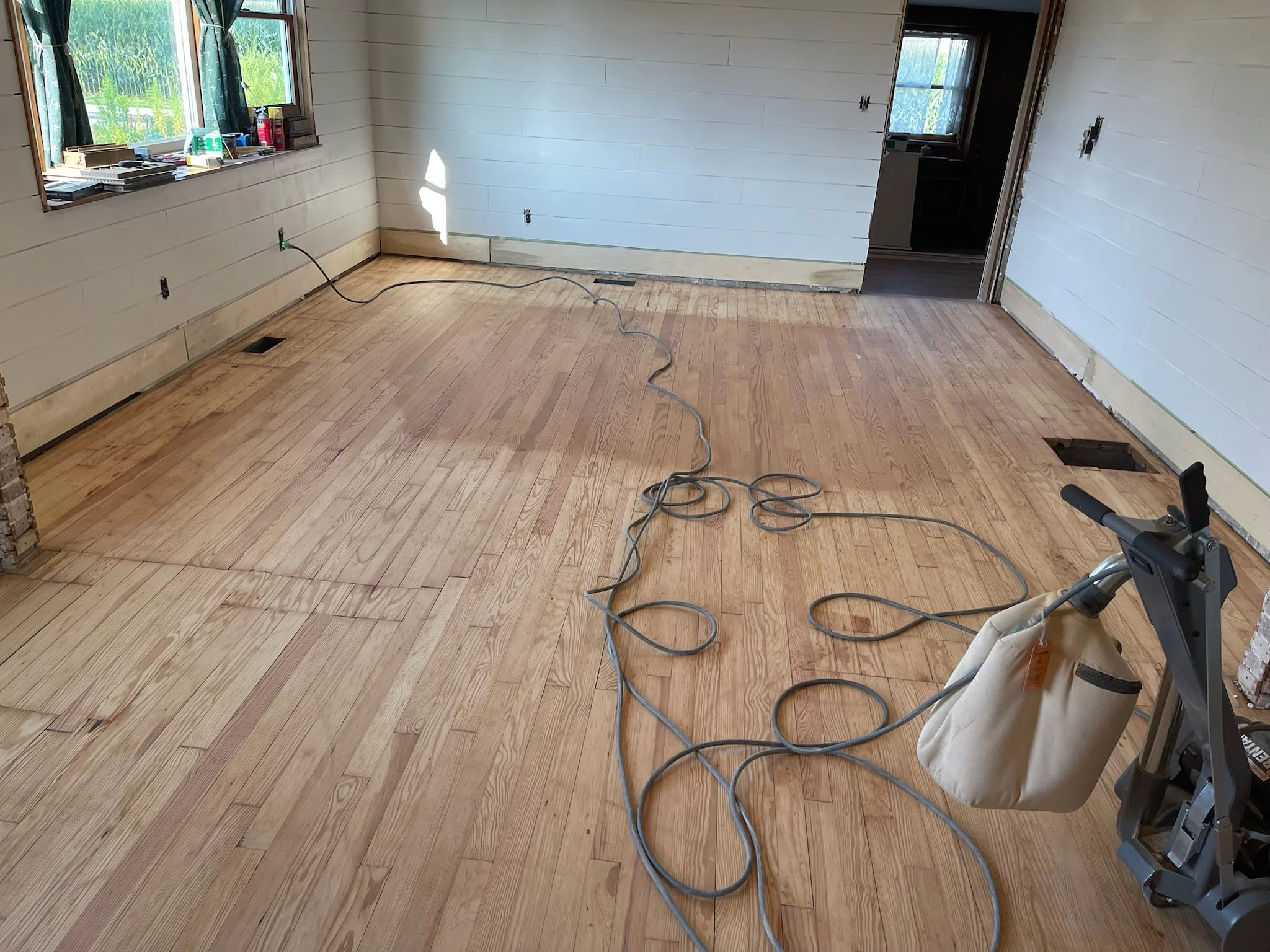
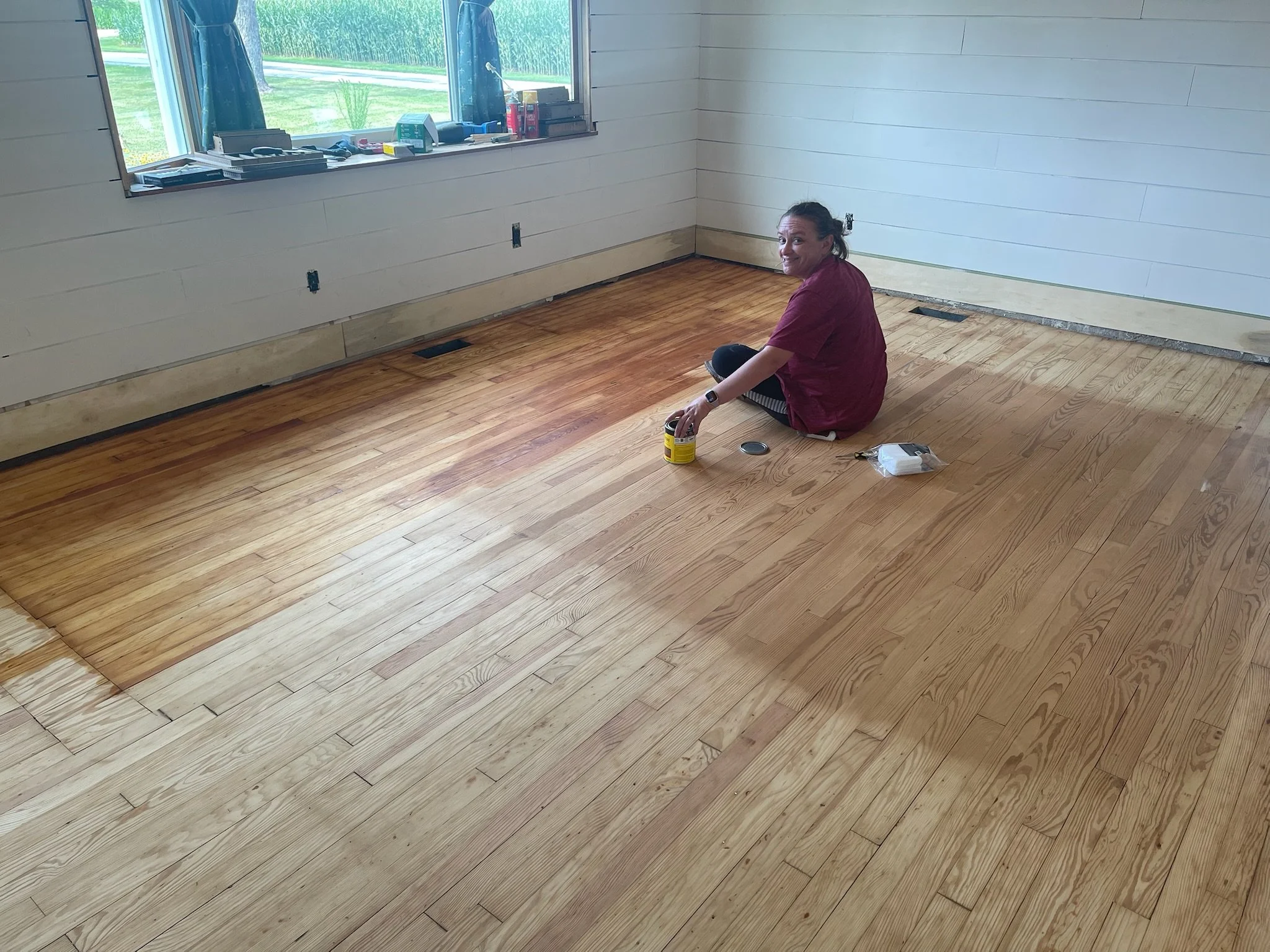
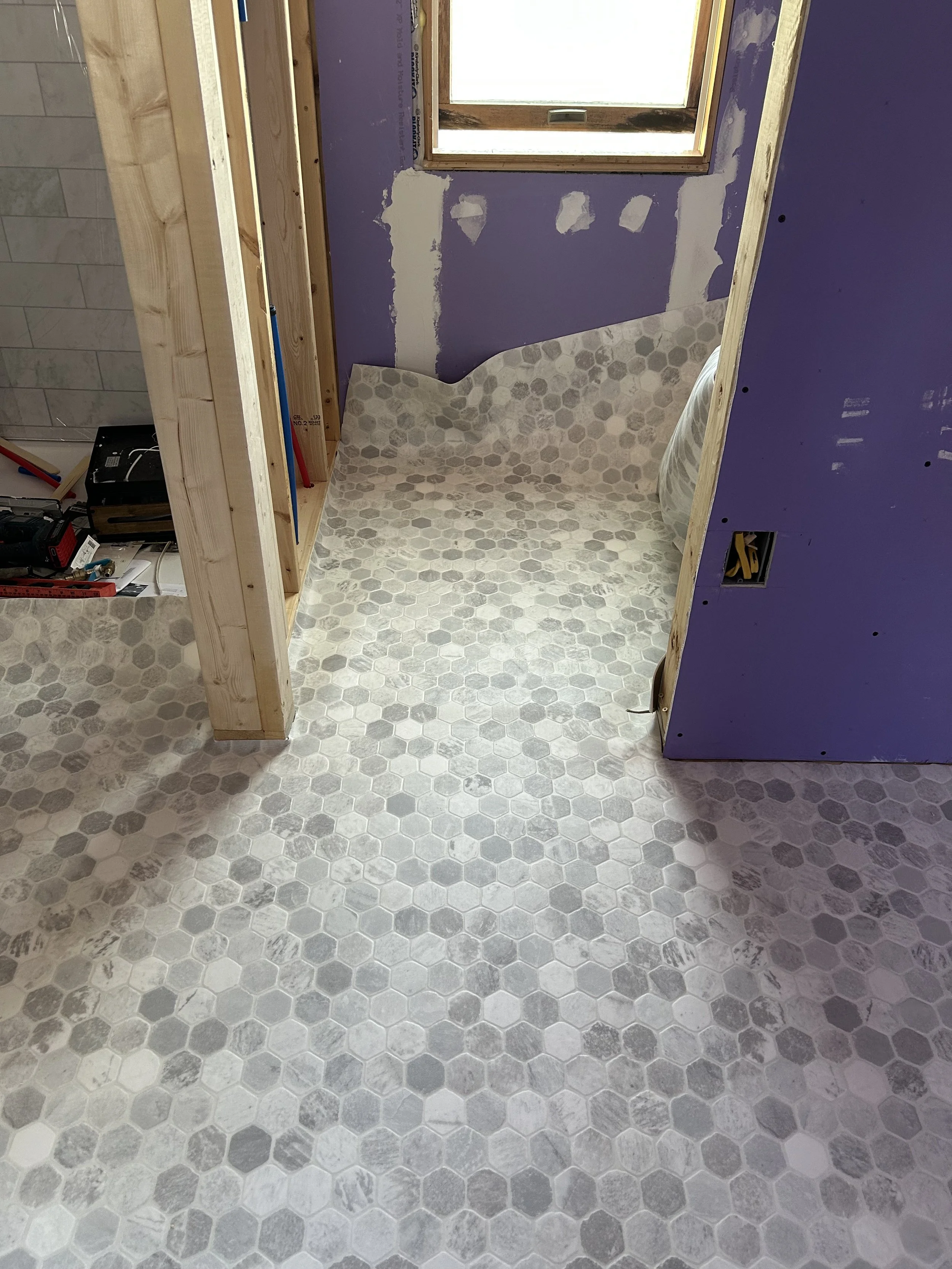
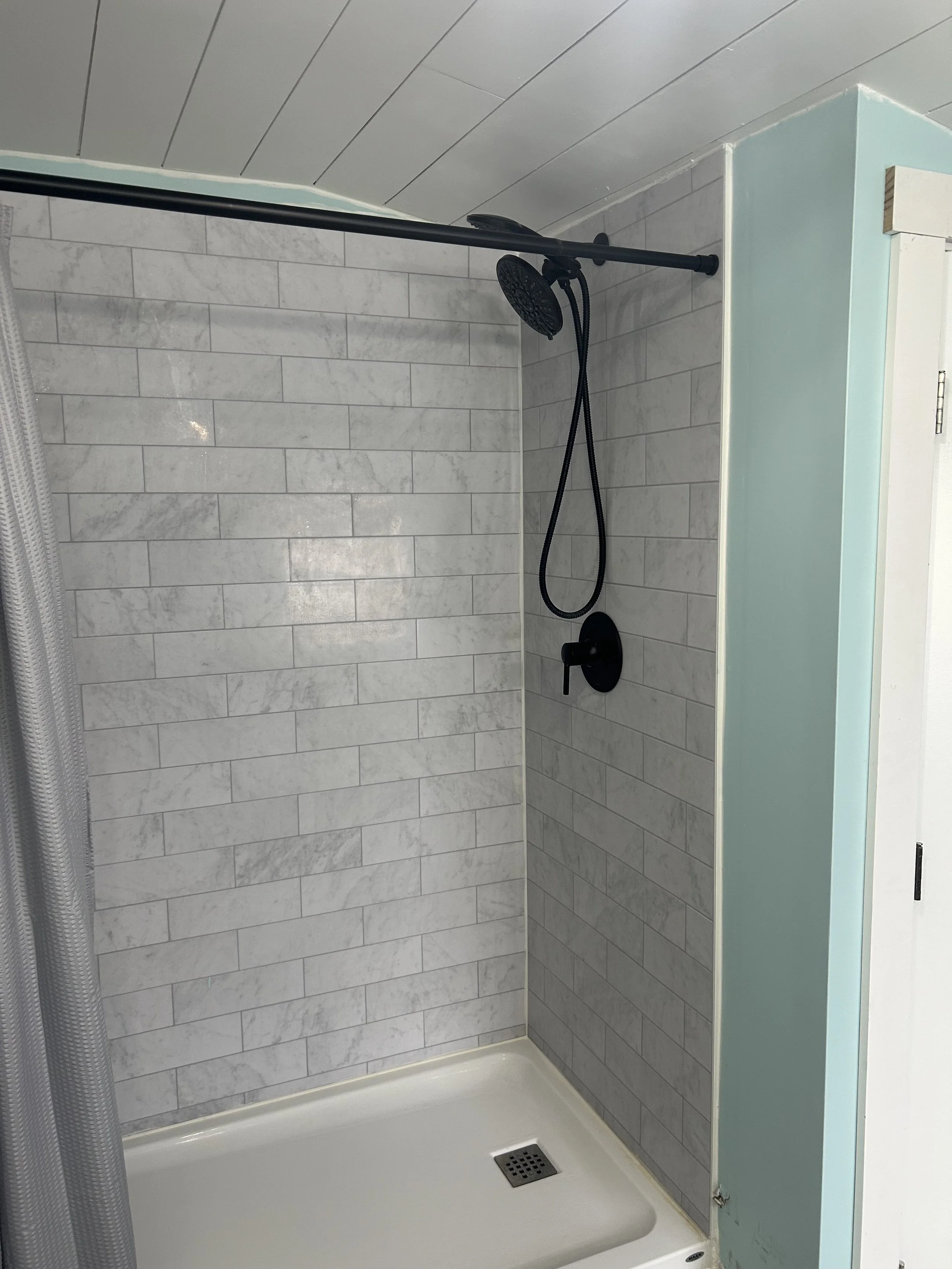
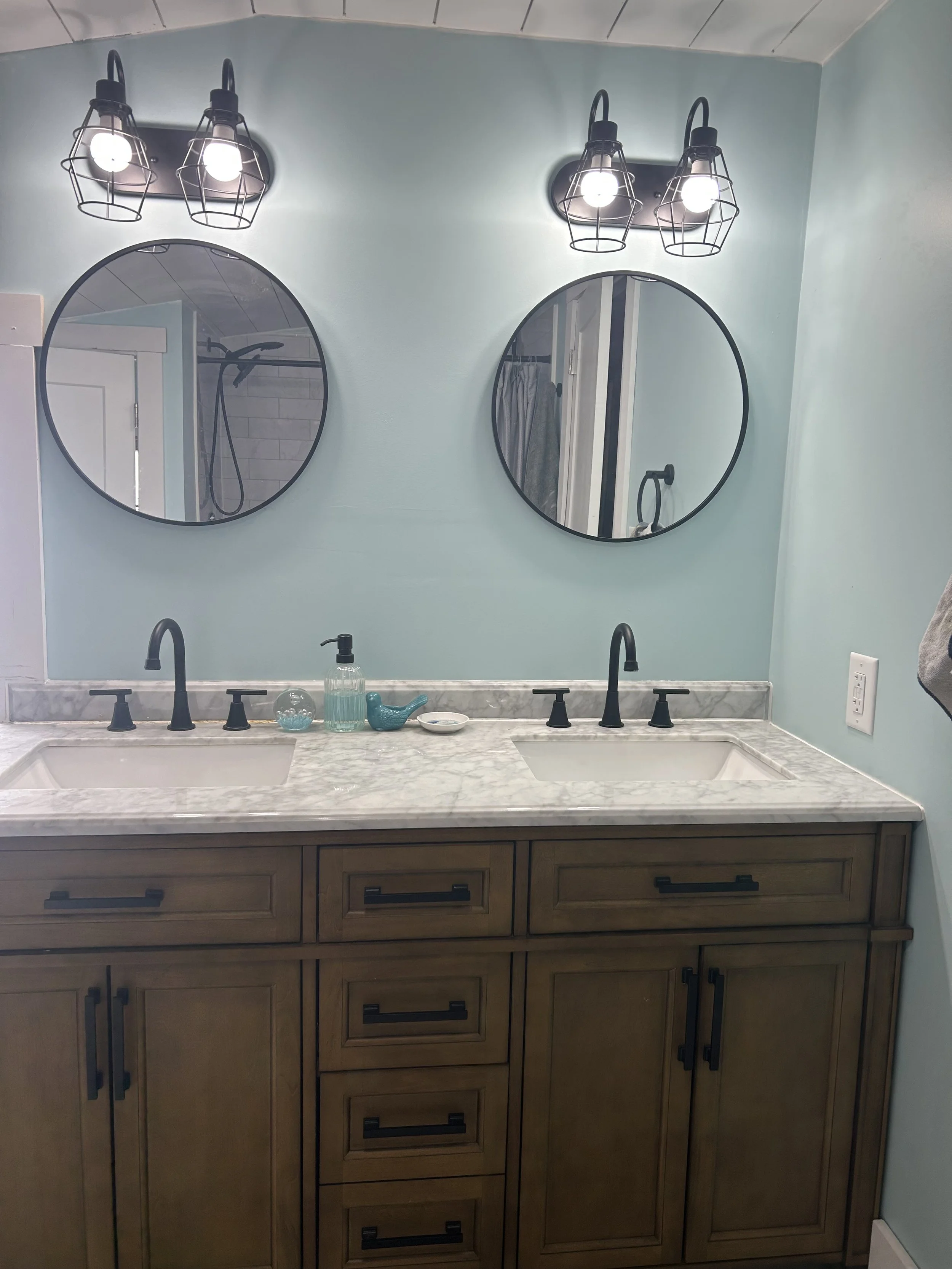
Then there was the bathroom. After gutting the room, hubs worked hard to overhaul the electric and plumbing, reinforce the floor and the ceiling, build a water closet, and hang drywall. He also replaced the old vanity with a double (thanks to the inches gained by removing old layers of construction material), installed a new shower, the vinyl floor, the planked ceiling, and some modern fixtures.
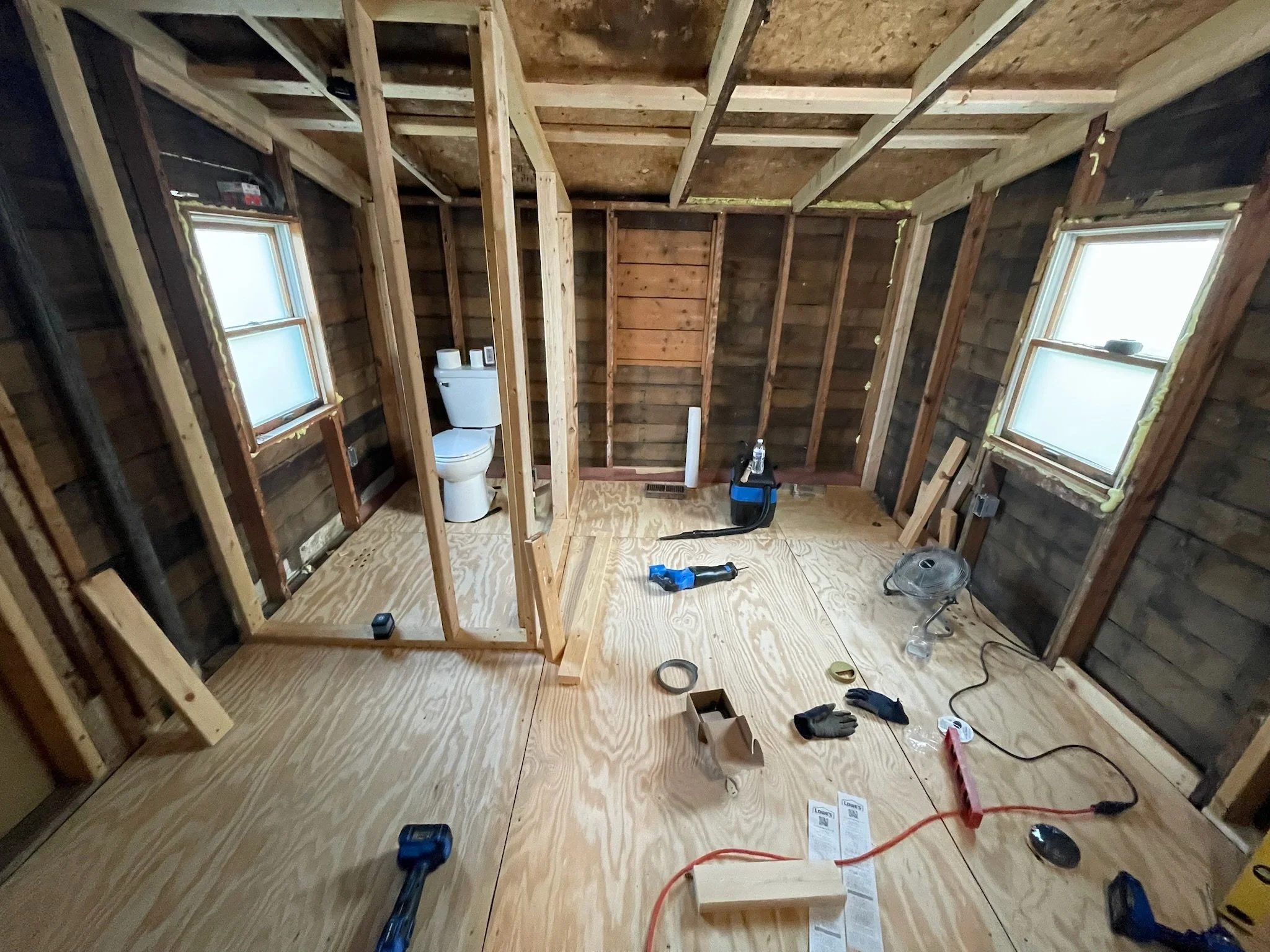
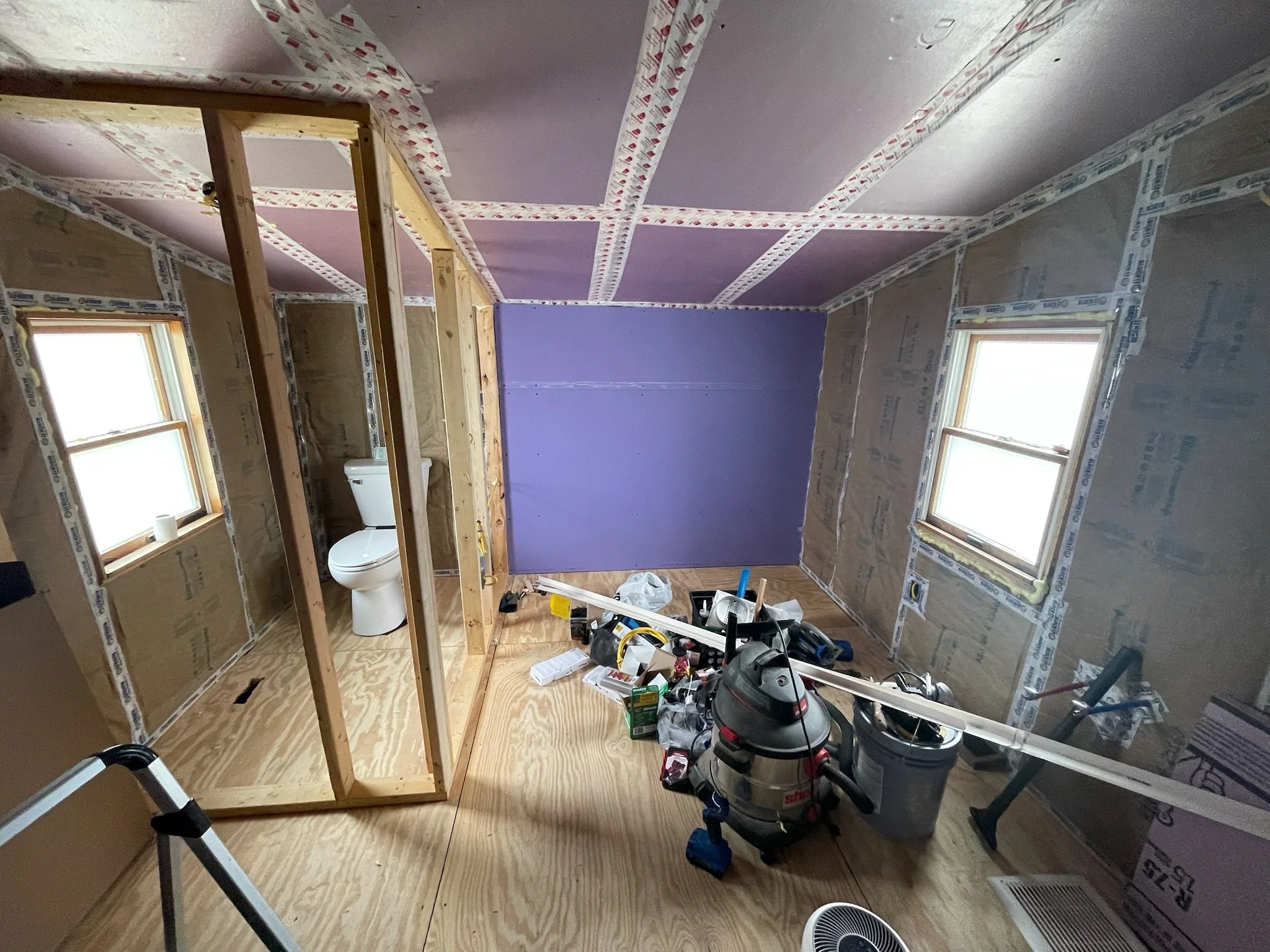
After a month of hard work to update the interior of the house, we moved into the home with our youngest in the fall of 2025.