The Farm History & Story
My grandparents bought the property in 1987 with the intention of homesteading for personal use. It was the first and only property they ever owned, after raising their five girls in a rented farmhouse the next town over.
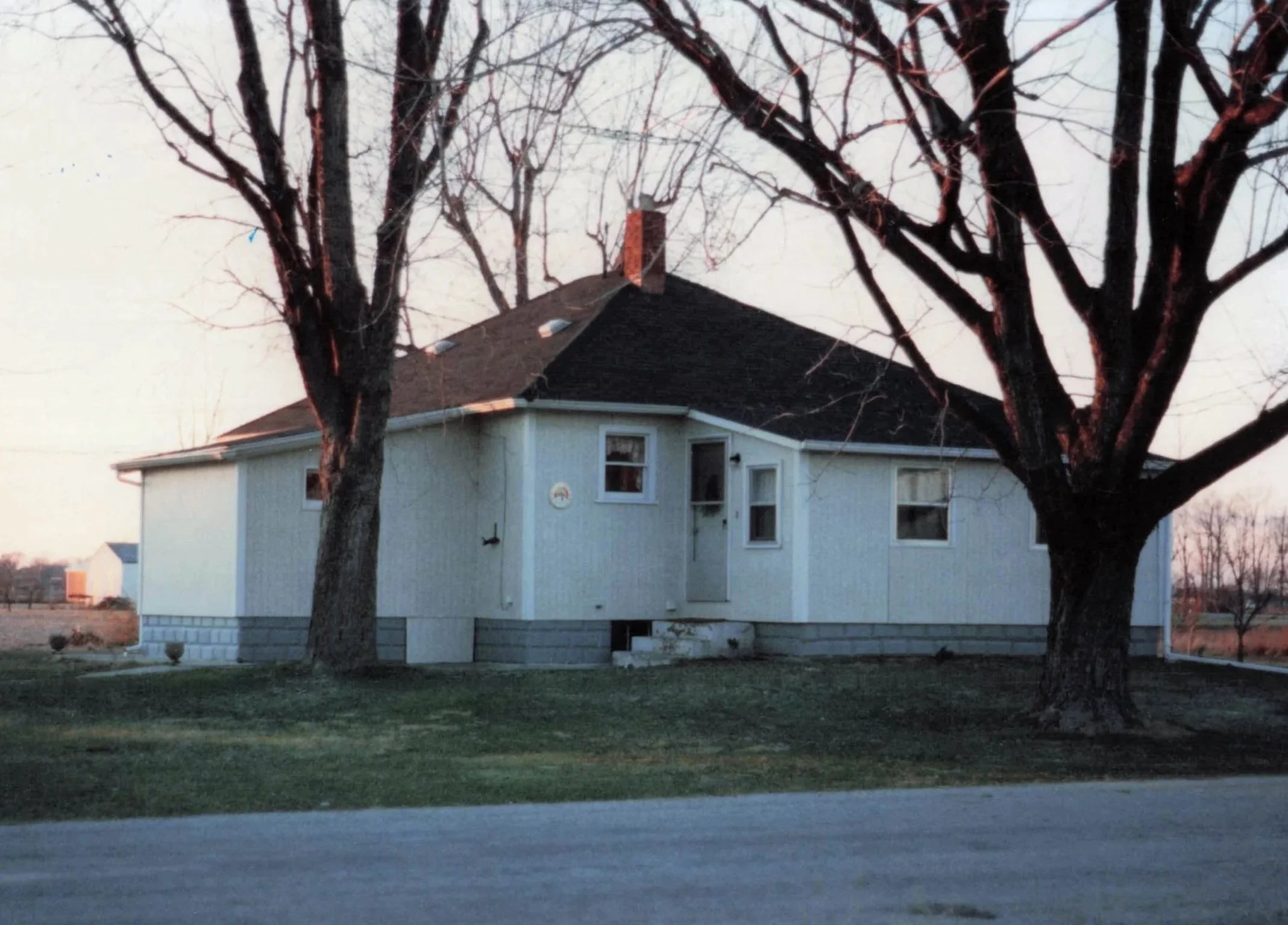
The house in 1988.
They converted the original barn to a workshop for my grandpa’s mechanical and welding pursuits that we would always refer to as ‘the garage’ and the chicken house into what we call ‘the barn.’
Over the years, they raised a variety of animals including chickens, geese, turkeys, quail, cows, and horses. Though both worked full time jobs, they spent every spare moment on the farm. My grandmother created a large pollinator garden where she tended roses with names that symbolized each of her grandchildren and hung her hummingbird feeder, attracting as many creatures as she could. Later she added the pond water feature, arbor swing, and a rock garden. She also maintained a large herb garden complete with a path and an antique water pump, a large vegetable garden where she grew most of the vegetables for the family, and flower beds along the buildings and property edges. Grandpa tended the small apple orchard, worked the fields with his collection of antique John Deere tractors, restored a couple of antique cars, and was a general tinkerer of all things.
In 1990, I moved in with my grandparents and, even after moving out a few years later, I continued to spend much of my time there until Andrew and I married in 2002. However, despite growing up on my grandparents farm and spending copious amounts of time with German Baptist cousins, my childhood interests led me indoors with crafty and intellectual pursuits. As a child, it annoyed my grandmother to no end that the closest I came to spending time outside was reading on the garden swing. It wasn’t until my early twenties, after already having three children and living in our starter home in the suburbs, when I came across Animal, Vegetable, Miracleby Barbara Kingsolver, that I jumped on the local food movement and began to dream of one day moving back to a farm and the lifestyle I grew up in. The moment I realized my thumbs were not naturally green and that gardening involved a lot more than plopping seeds in the dirt and waiting for them to grow, I started to lament all the knowledge I’d lost along with my grandma when she passed in 2006 and regretted not listening to more of her gardening wisdom.
What she did successfully pass on though, in abundance, were the memories of how much joy the gardens had brought to her. The work ethic, perseverance, and happiness she had found among the flowers and dirt and within the kitchen where she shared her efforts with the family. The days when every available kitchen surface was covered in jars and the pans steamed from morning to night. The seed catalogues that were scattered throughout the house with dog-eared pages and the way she would gaze out the bay window on her garden everyday after dinner was done and the dishes were cleaned but before she sat down in her recliner to relax. Her “oh” of delight when catching sight of a rare hummingbird at the feeder she diligently kept. The rainy days, even when she had plans to work in the garden, that she would faithfully devote to crafting, board games, and puzzles with me and my cousins. The stories she would tell about her own childhood, the family anecdotes she passed on, the history facts she could work into any relevant conversation, and the way she could find joy in the face of any adversity. In all these ways she instilled a passion for nurturing life, preserving memories, cherishing the “little” things, and caring for others that I will always aspire to emulate.
After my grandfather passed, my husband and I had the opportunity to purchase the property. At the time, three of our four children were young adults and beginning to venture off to live their own lives. Still, downsizing from our “built this century” five-bedroom, three bath, two-story with finished basement of nearly 3,000 sqft in the suburbs to an old farmhouse with two-bedrooms, only one bath, and less than 1,000 sqft in the sticks was a daunting challenge. But the promise of 7 acres, “free” eggs, and the memories of the best parts of my childhood ultimately pulled us thirty miles north to start our new life on the farm.
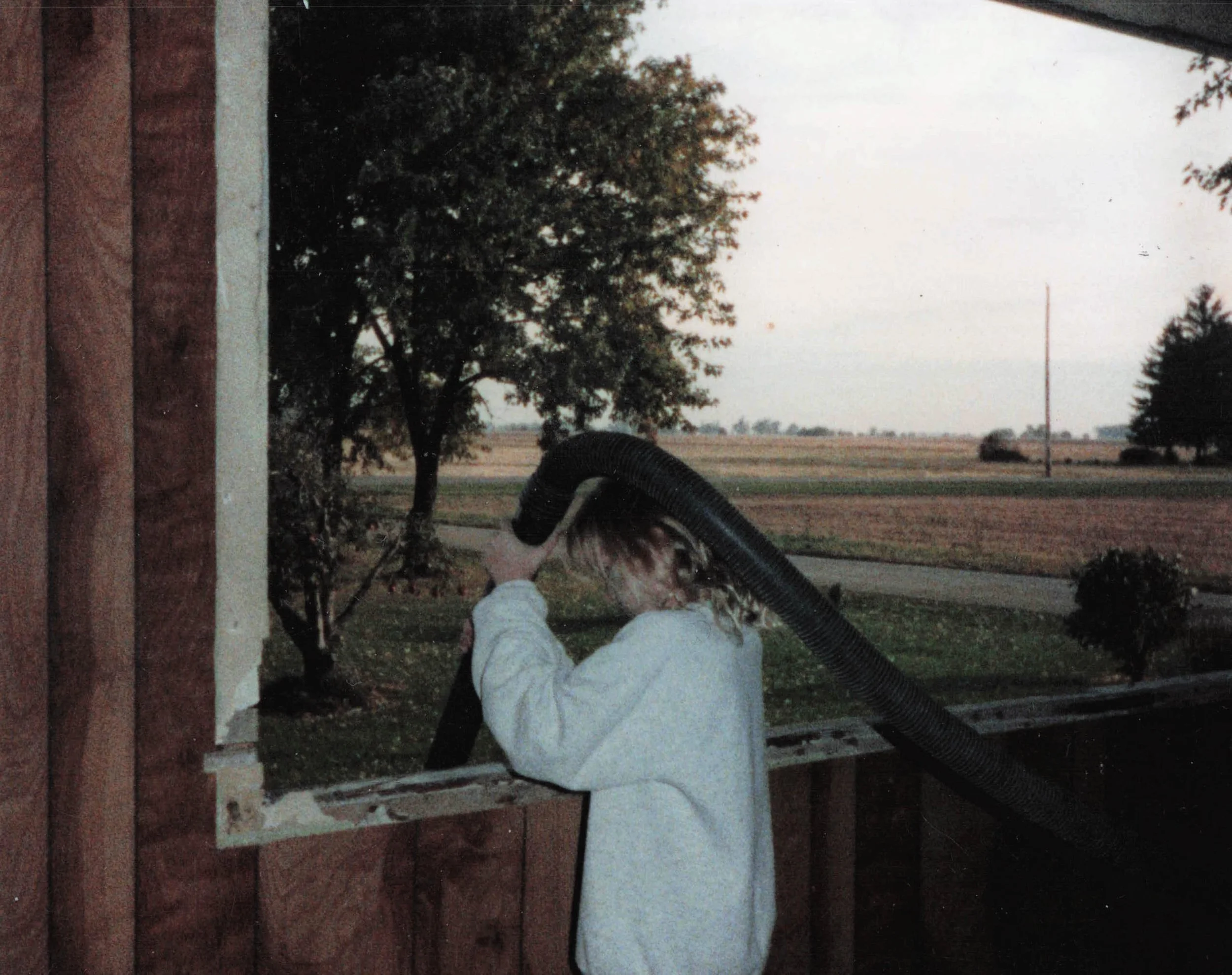
Among the things left behind when we took possession, we found a box of old photos from when my grandparents first fixed things up during the late 80s (you can see the entire gallery here) that helped me piece together a few things. For instance, I did not remember that the hall closet and library shelves were things they had added. I also had long since forgotten that I “helped” with the installation of the bay window that my grandmother loved so much. The display case that we removed from the living room had originally been a window back when the front room was still a porch, was turned into a small inset shelf, until finally Grandpa turned it into a glass display case for his toy JD tractors in the mid-late 90s. And yes, I do in fact have a faint memory of the lovely stone and countryside panelling in the living room.
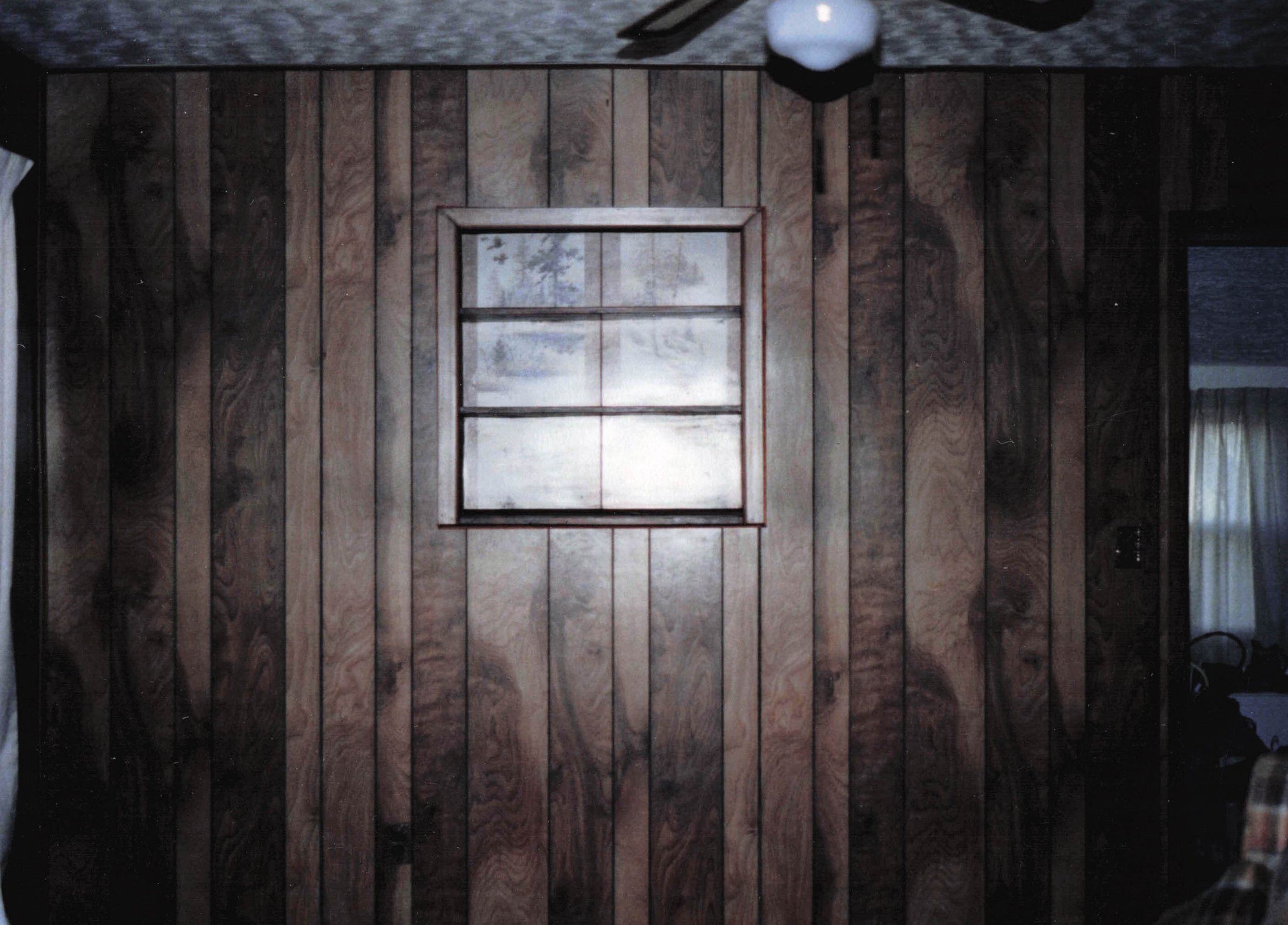
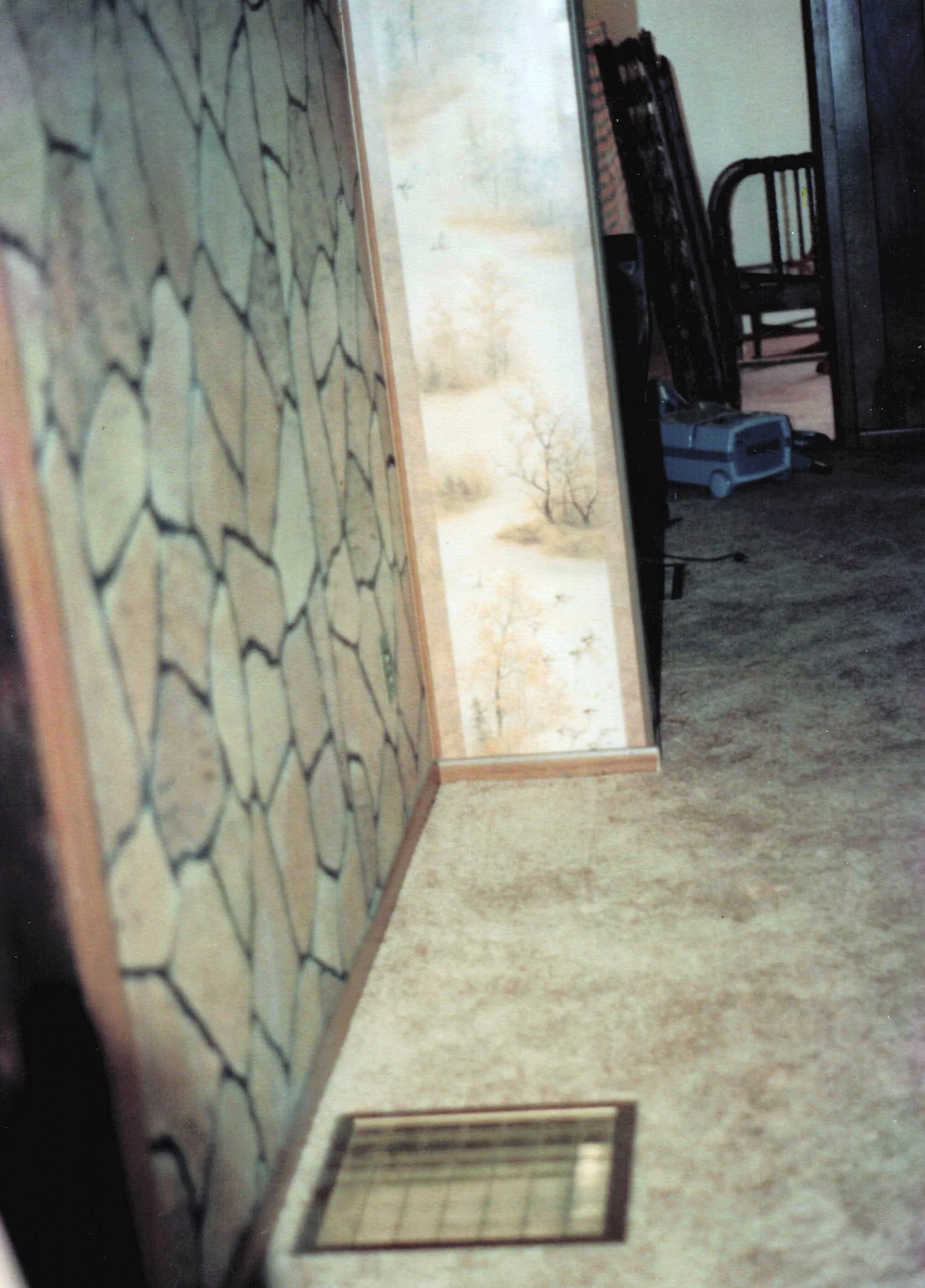
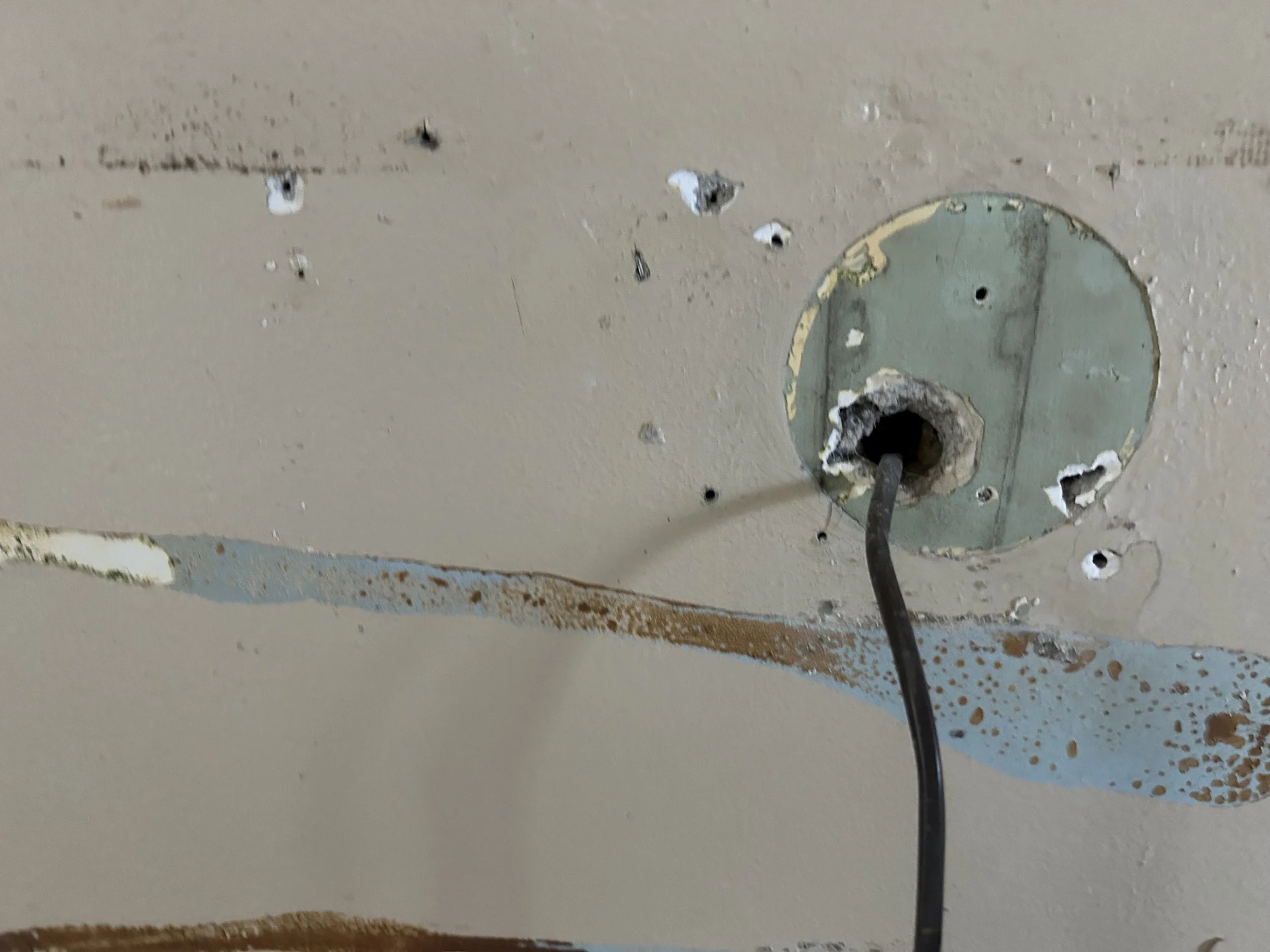
While remodeling the house, Andrew and I tried our best to discovery the story of how and when things were built. The county records say the home was built in 1947, originally consisting of just the 32’x26’ main area (living room, kitchen, 2 bedrooms, and a full basement. At some point before 1987, the front porch was enclosed and the bathroom was added. Some family members claim that the original home was built in the 1800s and originally had a coal shoot (we were able to locate the concrete under the bathroom where we believe it was located). When we began remodeling, we discovered that in many places, the previous material had simply been covered rather than removed, resulting in a sort of living document to the paint colors, wallpaper, wood siding, linoleum, etc. through the decades. Andrew also found many instances where it seemed lumber from the original construction had actually been reused, we presume from a previous dwelling. All of this has left us curious and searching for more information.
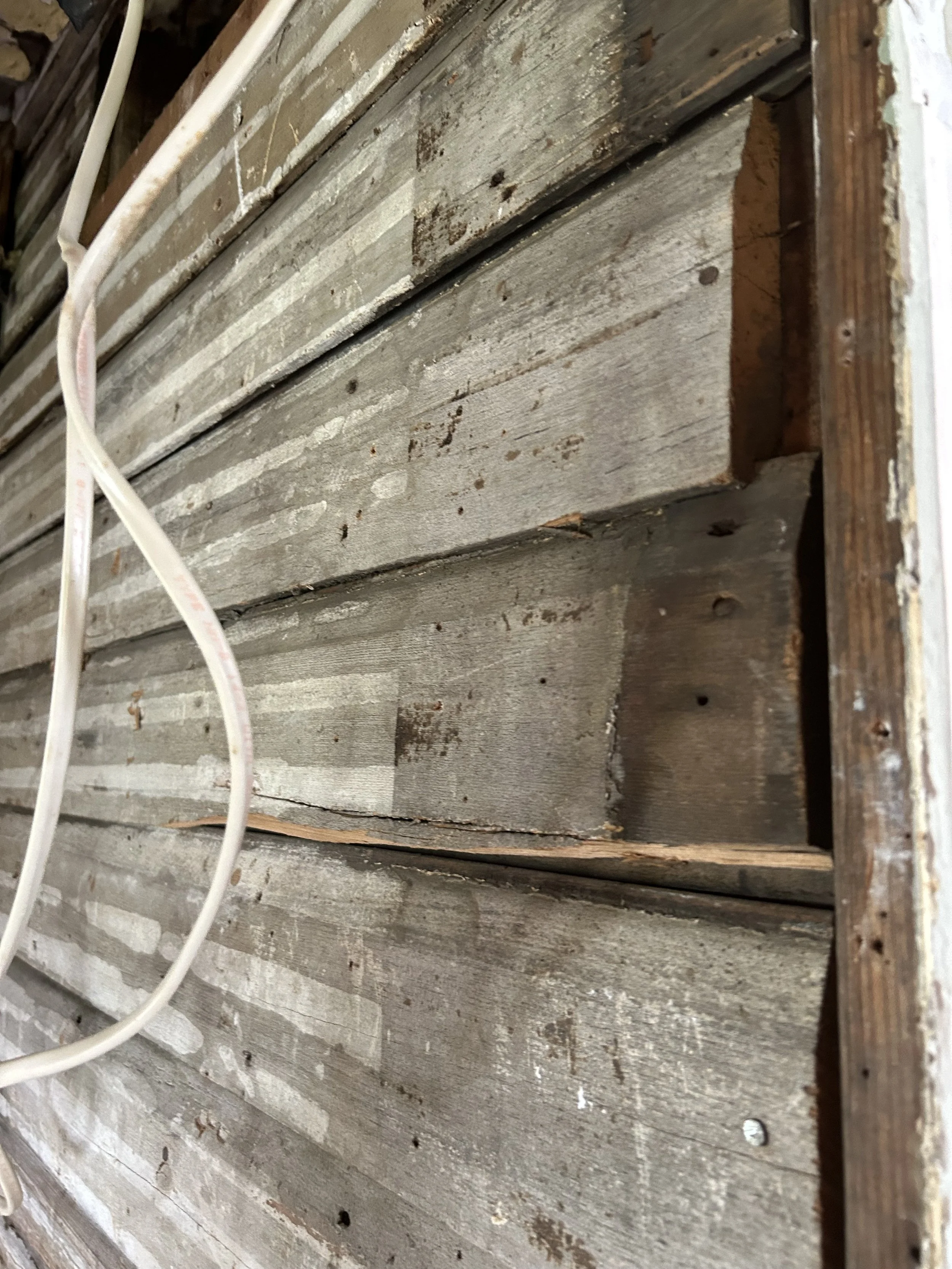
Left: Wood siding on the old exterior wall, now the bathroom - left of door.
Right: Kitchen wall, revealed under removed panelling. There are four distinct paint colors/layers visible.
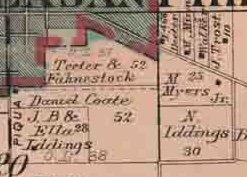
Once we moved in and renovations slowed, Andrew took great care to trace public records for the property and previous owners. Many old records have been scanned/digitized, but remain unsorted or searchable. Finding the trail of old deeds required him to go page by page through the handwritten tombs. He successfully traced the deeds as far as 1884, but a survey map from 1856 shows the original owner to be one of the towns founders (Pleasant Hill was established in 1866). We are the 10th owners of the property (not counting deed transfers upon death).
Andrew also spent time tracking down historical aerial photos of the land, newspaper articles, and other public records to learn what we could about previous owners and timeline.
1856: Survey shows land owned by J.K. Teeter - one of the founders of Pleasant Hill.
1884: Sold to John B Hostetter
1888: Sold to M. & Susan Myers (Both passed away while owning property, it was sold by son John G Meyers who was the executor)
1919: Sold to Joseph Earl & Ina Flory
1941: Sold to Earl & Nettie Beard
1946: Sold to Donald & Helen Laughman
1955: Sold to Dessie Bowman - a German Baptist widow turned the property into a “modern” chicken farm. At that time the property was 13 acres and we believe it was she who had the long barn built. (Dayton Daily News.)
1968: Sold to Floyd & Mollie Madewell - continued the chicken farm and operated a market garden as well. We randomly met someone who had grown up with their son while buying our camper!
1987: Sold to Ronald & Juanita Kay Mead
2025: Sold to Andrew & Tiffany Davis